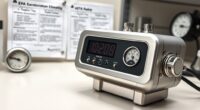
Integrating IAQ certification into your building’s life-cycle assessment helps you prioritize indoor air quality from design through operation, ensuring healthier, more sustainable spaces. By addressing aspects like material selection, ventilation systems, and ongoing maintenance upfront, you create better environments for occupants and boost long-term value. This approach aligns with sustainable practices and promotes continuous indoor air quality improvements. Keep exploring to discover how this integration can make your building both healthier and more efficient.

Get garden gear delivered free — and shop member deals
- Fast, free delivery on millions of items
- Access to Prime Big Deal Days deals on October 6–7
- Prime Video, Amazon Music and more included
Key Takeaways
- Incorporate IAQ standards early in the design phase to select low-emission materials and optimize ventilation strategies.
- Use IAQ certification criteria as benchmarks during construction to ensure proper installation and material choices.
- Integrate ongoing IAQ monitoring and maintenance plans into the building’s operational lifecycle for sustained air quality.
- Document IAQ compliance and performance metrics throughout the building’s lifecycle to inform future assessments.
- Leverage IAQ certification achievements to enhance building value, occupant health, and sustainability credentials over time.

Integrating Indoor Air Quality (IAQ) certification into building design and management is vital for creating healthier indoor environments. When you prioritize IAQ, you’re actively improving the quality of indoor air, which directly impacts occupant health, comfort, and productivity. Certification standards serve as a clear benchmark, guiding you through the necessary steps to guarantee your building meets high-quality indoor air criteria. These standards set specific requirements for ventilation rates, air filtration, pollutant sources, and material selections, helping you create a space that minimizes indoor air pollutants like volatile organic compounds (VOCs), particulate matter, and other airborne contaminants.
Prioritizing IAQ certification standards ensures healthier indoor environments by reducing pollutants and enhancing occupant well-being.
As you incorporate IAQ certification standards into your building’s lifecycle, you begin with the design phase. Early planning allows you to select appropriate materials, optimize ventilation systems, and implement air quality monitoring strategies. This proactive approach ensures that IAQ considerations are integrated from the outset, rather than added as an afterthought. During construction, adherence to certification standards guides your choices in construction materials and methods, reducing the release of indoor pollutants and ensuring that ventilation systems are correctly installed and balanced. This helps prevent issues like mold growth, off-gassing, or inadequate airflow, which can compromise indoor air quality.
Once the building is operational, maintaining IAQ becomes an ongoing process. Regular monitoring and maintenance of ventilation systems, air filters, and pollutant sources are essential to uphold certification standards. You’ll need to perform periodic air quality assessments, ensuring that indoor air remains within healthy levels. If issues arise, adjustments or upgrades to filtration systems, or improvements in source control, become necessary. Achieving certification isn’t a one-time task; it requires continuous attention and management to sustain the high standards you’ve set. Incorporating Regular monitoring and maintenance into your strategy helps ensure ongoing compliance and a healthy indoor environment.
Incorporating IAQ certification into your building’s life-cycle assessment also influences occupant well-being. When indoor air quality is certified to meet rigorous standards, you foster a healthier environment that reduces respiratory issues, allergies, and other health concerns. This, in turn, can improve overall occupant satisfaction and productivity. Furthermore, certification can boost your building’s market value and appeal, demonstrating your commitment to sustainable and healthy building practices.
Ultimately, integrating IAQ certification standards into every stage of your building’s life cycle ensures you’re not only constructing a healthier space but also maintaining it over time. It’s a strategic choice that aligns with best practices in sustainable building design, guaranteeing indoor air remains clean and safe for everyone who uses the space.
As an affiliate, we earn on qualifying purchases.
Frequently Asked Questions
How Does IAQ Certification Impact Property Value?
IAQ certification boosts your property value by highlighting its commitment to healthy indoor air. When you obtain certification benefits, you attract tenants and buyers who prioritize indoor air quality, increasing demand. This certification also signals good building management, which can lead to higher resale prices and rental income. Ultimately, investing in indoor air quality demonstrates your dedication to occupant health, making your property more appealing and valuable in a competitive market.
What Are the Main Challenges in Integrating IAQ Into Existing Assessments?
You face the challenge of data integration, which can feel like fitting puzzle pieces together, and stakeholder engagement becomes essential yet tricky. As you attempt to embed IAQ into existing assessments, you discover gaps in data consistency and resistance from stakeholders uncertain about the benefits. Overcoming these hurdles requires clear communication, strategic collaboration, and robust systems to guarantee accurate, seamless integration that benefits everyone involved.
Are There Regional Differences in IAQ Certification Standards?
Yes, regional standards vary considerably, impacting IAQ certification disparities across different areas. You’ll find that some regions prioritize strict indoor air quality criteria, while others have more lenient guidelines. These differences influence certification processes, making it challenging to maintain uniform standards globally. When working across regions, you need to understand local regulations and adapt assessments accordingly to guarantee your building meets the specific regional IAQ certification standards.
How Often Should IAQ Be Re-Evaluated During the Building’s Life Cycle?
Indoor air quality should be re-evaluated regularly, ideally every 3 to 5 years, to stay aligned with certification standards and ensure a healthy environment. While initial assessments set the baseline, ongoing monitoring captures changes caused by occupancy, renovations, or environmental shifts. You should also re-assess after major renovations or if indoor air issues arise, maintaining compliance with evolving standards and safeguarding occupant health over the building’s lifespan.
What Training Is Required for Assessors to Certify IAQ?
To certify IAQ, assessors need training in indoor air quality and certification standards. You should complete courses that cover IAQ measurement techniques, ventilation systems, and pollutant sources. Certification programs often require understanding industry standards like ASHRAE or WELL. By gaining this knowledge, you guarantee accurate evaluations and uphold certification standards, helping to improve indoor air quality throughout the building’s lifecycle.
Conclusion
By integrating IAQ certification into building life-cycle assessments, you’re opening the door to healthier, more sustainable spaces. Think of it as weaving an invigorating thread into the fabric of your project, ensuring quality from start to finish. This approach not only boosts occupant well-being but also strengthens your commitment to environmental responsibility. Embrace this integration, and watch your building transform into a renewal of fresh air—truly a game-changer in sustainable construction.
Fall yard work Picks
leaf blowers
As an affiliate, we earn on qualifying purchases.