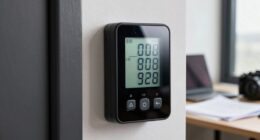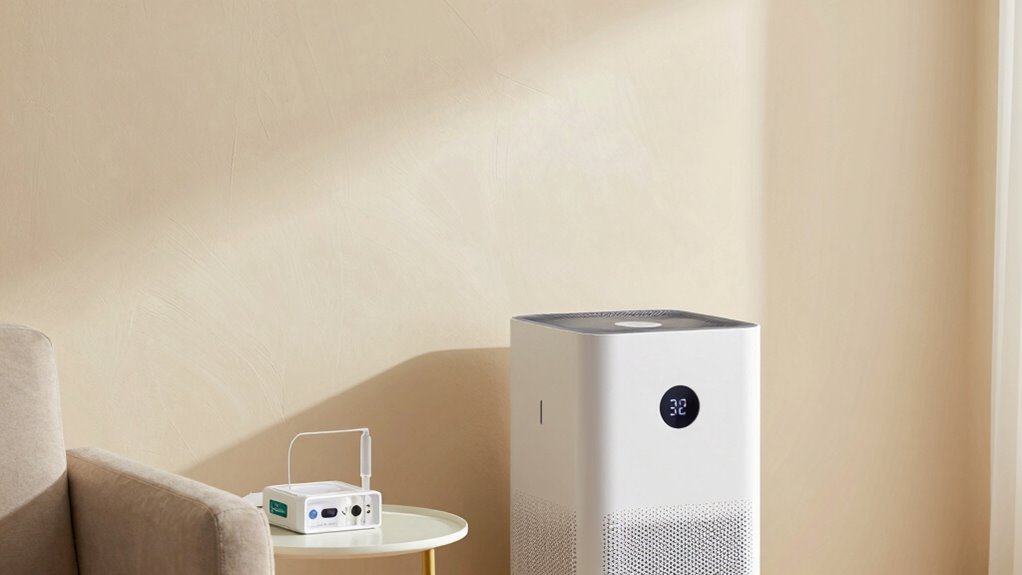
To measure VOC off-gassing from new paint at home, use a portable air quality monitor designed to detect total VOCs. Place it in the painted room and check the levels regularly, especially during the first few days. Good ventilation, such as opening windows and using fans, helps reduce VOCs faster. Monitoring these levels lets you know when air quality improves and it’s safe to stay indoors comfortably. Keep going to discover tips on how to best manage and reduce VOC exposure.
Key Takeaways
- Use a portable VOC monitor to measure total VOC levels in indoor air during and after painting.
- Take multiple readings over several days to track VOC decline and assess off-gassing duration.
- Focus on environmental cues like persistent odors and odor intensity as indicators of ongoing VOC emissions.
- Improve ventilation by opening windows and using fans to reduce VOC concentration and accelerate off-gassing.
- Consider low-VOC paints and air purifiers with activated charcoal or carbon filters to minimize and monitor VOC levels.

Many consumers and manufacturers are now facing a new challenge with paint products: volatile organic compounds (VOCs) emissions. These emissions can markedly affect air quality inside your home, especially after a fresh coat of “new paint.” When you paint a room, VOCs are released into the air as the paint dries and cures. This off-gassing can linger for days or even weeks, depending on the type of paint and ventilation. Poor air quality caused by high VOC levels can lead to immediate health impacts, such as headaches, dizziness, respiratory irritation, and allergic reactions. Long-term exposure may increase risks for more serious health issues, including asthma, respiratory illnesses, and even some neurological effects. Because of these concerns, understanding how to measure off-gassing at home becomes vital for your safety and peace of mind.
VOCs from new paint can affect indoor air quality and health—measuring off-gassing is essential for safety.
To effectively monitor VOC emissions from your newly painted spaces, you’ll want to start with simple, accessible tools. Portable air quality monitors designed to detect VOCs are widely available and easy to use. These devices work by sampling the air and providing real-time readings, helping you determine whether VOC levels are within safe limits. When choosing a monitor, look for one that specifically measures total VOCs (TVOCs), as these give a good overall indication of the air quality. Keep in mind that readings can fluctuate depending on ventilation, temperature, and humidity, so it’s best to take measurements at different times of the day.
Properly evaluating off-gassing also involves observing your environment. You should notice a strong smell or chemical odor during the initial days after painting, which indicates ongoing VOC release. If the smell persists beyond a week, or if your air quality readings remain high, it’s time to improve ventilation. Open windows, use fans, and increase airflow to help disperse VOCs more quickly. Testing the air regularly during this period can give you a clearer picture of when VOC levels decline to a safer range, reducing health impacts associated with prolonged exposure. Additionally, selecting low-VOC or no-VOC paints can significantly reduce the amount of off-gassing from the start.
Additionally, consider using DIY methods to supplement electronic monitors. Some people use activated charcoal filters or DIY air purifiers with HEPA and carbon filters to help absorb VOCs. While these don’t replace proper measurement, they can support improving air quality during the off-gassing phase. Remember, the key is to stay vigilant and proactive—monitor the air, ventilate thoroughly, and give the paint enough time to off-gas before spending long periods in the room. By taking these steps, you protect your health and ensure your home’s air quality remains safe and comfortable.
Frequently Asked Questions
How Long Does VOC Off-Gassing Typically Last After Painting?
VOC off-gassing from new paint typically lasts from a few days to up to two weeks, depending on factors like paint type and room ventilation. During this time, the paint curing process helps reduce odor dissipation. To speed up the process, keep windows open, use fans, and maintain good airflow. Usually, after about two weeks, the smell and VOC levels drop markedly, making your space safer and more comfortable.
Are There Safe, Non-Toxic Paint Options Available?
Imagine a safer, healthier home—yes, it’s possible with eco-friendly coatings and natural pigments. These non-toxic paint options are designed to reduce VOC emissions, making your space safer for everyone. By choosing natural pigments and eco-friendly coatings, you avoid harmful chemicals and off-gassing. Look for certifications like VOC-free or low-VOC labels to verify your paint is genuinely safe. Your home deserves the best, naturally.
Can Air Purifiers Effectively Reduce VOC Levels Indoors?
Air purifiers can be effective in reducing VOC levels indoors, especially if you choose models with activated carbon filters designed for VOC removal. Their effectiveness depends on air purifier effectiveness and proper placement. Combine this with other VOC removal techniques like increasing ventilation and using non-toxic paints to improve air quality. Regularly maintain your air purifier to guarantee it continues to effectively reduce off-gassing from new paint and other sources.
What Are the Symptoms of VOC Exposure in Homes?
You might notice indoor air symptoms like headaches, dizziness, or respiratory irritation if VOC exposure occurs in your home. To identify these issues, VOC detection methods such as air quality testing can help you monitor off-gassing from new paint or furniture. Pay attention to persistent odors or allergy-like symptoms, and use detection tools to confirm if VOC levels are high, so you can take steps to improve your indoor air quality.
How Often Should I Test My Home’s Air Quality for VOCS?
You should test your home’s air quality for VOCs every month if you’ve recently painted or used new furniture, or if someone in your household has symptoms. Regular VOC monitoring helps catch off-gassing before it fills your entire house like a cloud of invisible fog. For stable environments, quarterly testing suffices. Think of it as regularly checking your home’s breath—keeping the air clean and safe for everyone inside.
Conclusion
Now that you know how to measure off-gassing at home, you can take control of your indoor air quality. Imagine painting a new room and then using a simple VOC test kit, just like Sarah did, to make certain her family stayed safe from harmful fumes. By staying proactive, you create a healthier environment for everyone. Don’t wait—trust your instincts and measure those VOCs to keep your home safe and fresh.