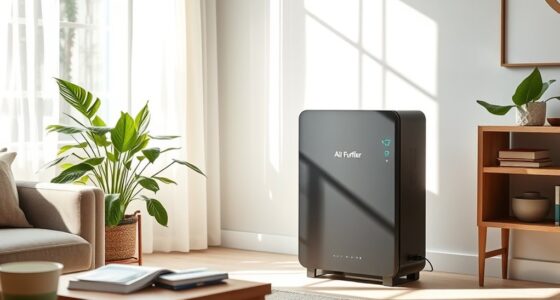
Using multiple air purifiers can be more effective than relying on a single large unit because they provide better coverage, targeted cleaning, and adaptable airflow across different rooms or zones. They allow you to optimize placement for maximum efficiency and reduce dead zones, ensuring more consistent air quality. While they may cost more initially, the improved performance and flexibility are worth considering. Keep exploring to discover how to choose the best setup for your space.
Key Takeaways
- Multiple units offer better coverage and targeted air cleaning in larger or multi-room environments.
- They create dynamic airflow patterns, improving overall air circulation and reducing dead zones.
- Smaller units are easier to maintain and replace filters, simplifying upkeep.
- A single large purifier reduces the number of filters needed but risks higher repair costs and system-wide failure.
- Multiple purifiers provide greater adaptability, allowing customization for specific zones or changing needs.
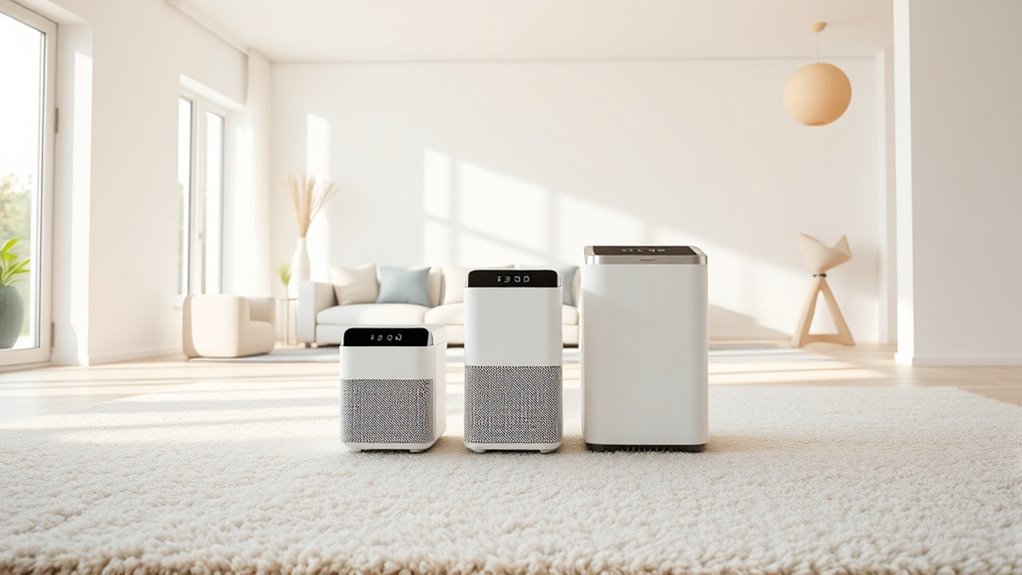
When choosing an air purification setup, you might wonder whether to invest in multiple smaller units or rely on one large purifier. This decision hinges on factors like airflow efficiency and maintenance costs. Multiple purifiers can be strategically placed throughout your space, allowing for better coverage and targeted air cleaning. With smaller units, you can optimize airflow efficiency by positioning them in areas where air circulation needs the most help. This setup often results in more consistent air quality throughout different rooms, especially in larger or multi-room environments. In contrast, a single large purifier may struggle to distribute clean air evenly, which can lead to dead zones with less effective filtration. However, large units typically have a higher airflow capacity, making them suitable for open spaces where centralized purification is preferred.
When considering maintenance costs, multiple purifiers might initially seem more expensive, given the need to service each unit separately. Each small device will require its own filters, replacing them periodically, and these costs can add up over time. However, because smaller units usually have less complex mechanisms, their maintenance can be quicker and less costly per unit. You might find it easier to swap out filters in a compact unit than dealing with a large, intricate system. On the other hand, a single large purifier consolidates maintenance into one device, often reducing overall costs and effort. You only need to monitor and replace filters for one unit, which can be more convenient and economical in the long run. But if that large unit breaks down, the entire air purification system could be compromised until it’s repaired, potentially leading to higher repair costs and downtime.
Airflow efficiency also plays a vital role in your decision. Multiple units can work together to create a more dynamic and effective airflow pattern, especially if your space has multiple zones or rooms. They can be synchronized or operated independently based on need, maximizing purification where it’s most needed. A single large purifier, while powerful, may not be as adaptable to different spaces within your environment, possibly resulting in less optimized airflow and less effective purification in certain areas.
Frequently Asked Questions
How Do Maintenance Costs Compare Between Multiple Purifiers and a Single Large Unit?
Multiple purifiers typically have a higher cost comparison due to increased maintenance frequency, as each unit requires regular filter changes and checks. A single large unit usually costs less overall since maintenance is concentrated, reducing labor and part replacement expenses. However, if one purifier fails, the others continue functioning, potentially lowering downtime costs. Overall, consider your space and needs to determine the most cost-effective solution.
Which Option Offers Better Energy Efficiency Over Time?
You’re better off with multiple purifiers for energy efficiency, as they can target specific areas and reduce overall power consumption—think of it as hitting two birds with one stone. This setup often offers greater cost savings over time and lowers environmental impact since you can run only what you need. A single large unit might seem simpler, but it usually uses more energy constantly, making it less efficient in the long run.
Can Multiple Purifiers Effectively Cover Irregularly Shaped Spaces?
Yes, multiple purifiers can effectively cover irregularly shaped spaces by optimizing airflow and targeting hard-to-reach areas. You should strategically place them to guarantee even space coverage, preventing dead zones. This approach allows for better airflow optimization, so the air circulates more efficiently throughout the room. By doing so, you improve overall air quality, especially in tricky, uneven layouts where a single large unit might struggle to reach every corner.
Are There Differences in Noise Levels Between the Two Setups?
You’ll notice differences in noise levels between multiple purifiers and one large unit. Multiple purifiers often produce less noise individually, making sound comparison favorable for smaller units running simultaneously. However, the combined noise can sometimes be more noticeable than a single large unit, especially if all are operating at high settings. Consider your space’s acoustics and purifier placement to minimize disturbance and find the setup that offers quieter operation for your environment.
How Does Filter Replacement Frequency Vary Between Multiple Units and One Large Purifier?
With multiple units, your filter lifespan tends to be shorter overall because each purifier’s filter requires replacement more frequently, leading to a more complex replacement schedule. Conversely, a single large purifier usually has a longer filter lifespan, meaning less frequent replacements. You’ll need to monitor each unit’s filter condition regularly, but managing one device simplifies your replacement schedule compared to maintaining several smaller units.
Conclusion
So, why settle for just one mighty purifier when you can juggle several and turn your home into a chaotic, squeaky-clean circus? Who needs simplicity when you can have a smorgasbord of filters, maintenance headaches, and confusing controls? After all, more purifiers mean more fun—or at least more chances to accidentally break something. So go ahead, spread those units around—because nothing says “clean air” like a cluttered, high-maintenance fortress of filters!

In the dynamic world of air purifiers and clean air advocacy, Aire stands out as a beacon of knowledge and passion. As the Editor in Chief of Aero Guardians, Aire has been instrumental in shaping the platform’s voice and direction, ensuring that every piece of content resonates with clarity, authority, and authenticity.