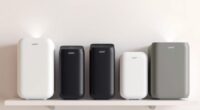
Air purifiers can’t replace the need for air duct cleaning because they mainly filter airborne particles like pollen or pet dander, while duct cleaning removes hidden debris, mold, and dust inside your ducts. If your ducts are dirty, allergens can keep circulating even with purifiers running. Combining both solutions offers the best indoor air quality. Keep exploring to learn how these methods work together to create a healthier home environment.

Get garden gear delivered free — and shop member deals
- Fast, free delivery on millions of items
- Access to Prime Big Deal Days deals on October 6–7
- Prime Video, Amazon Music and more included
Key Takeaways
- Air purifiers filter airborne particles but do not remove debris or mold from inside ductwork.
- Duct cleaning physically removes accumulated dust, mold, and allergens hidden within the system.
- Relying solely on air purifiers leaves contaminants stored in ducts unaddressed.
- Combining duct cleaning with air purifiers offers a comprehensive approach to indoor air quality.
- Both methods are necessary; purifiers improve air circulation, while duct cleaning eliminates hidden pollutant sources.
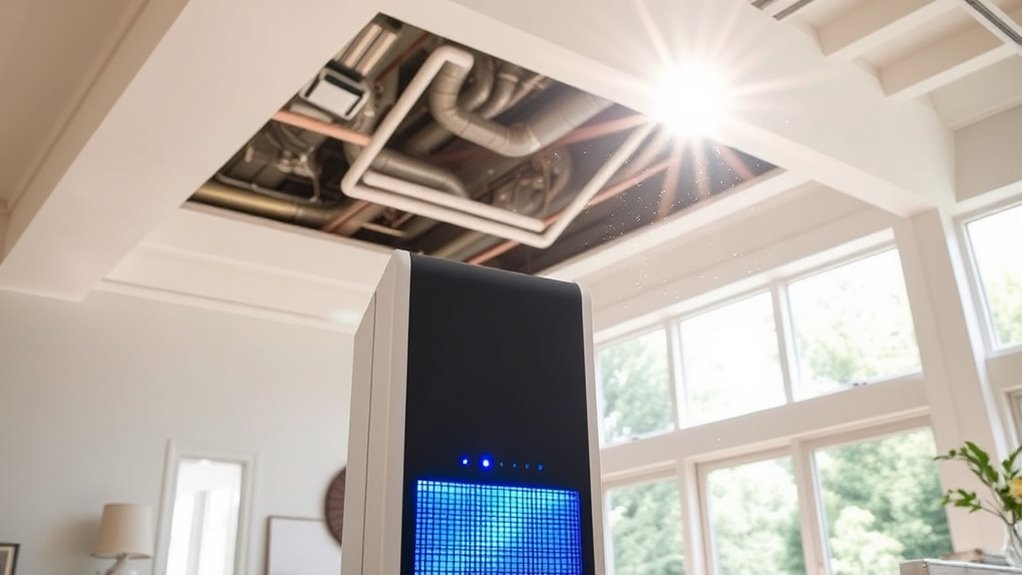
Air purifiers and air duct cleaning are essential tools for improving indoor air quality, especially if you or your family suffer from allergies, asthma, or other respiratory issues. While air purifiers are designed to filter airborne particles and improve the air you breathe, they don’t replace the need for regular HVAC maintenance or professional air duct cleaning. Each plays a unique role in maintaining a healthy indoor environment. Air purifiers excel at capturing indoor allergens like pet dander, pollen, and dust mites that circulate in the air, but they don’t remove the buildup of debris inside your ductwork. Over time, dust, mold spores, and other contaminants can accumulate within your air ducts, which can then be redistributed throughout your home whenever your HVAC system runs.
Air purifiers filter airborne allergens, but regular air duct cleaning removes debris buildup inside ducts for healthier indoor air.
The key to truly improving indoor air quality is understanding that air purifiers and air duct cleaning are complementary rather than interchangeable. HVAC maintenance involves inspecting, cleaning, and servicing your heating and cooling system to ensure it operates efficiently. Regular maintenance can prevent mold growth, reduce indoor allergens, and improve airflow, which helps your air purifier work more effectively. Meanwhile, air duct cleaning is a professional service that clears out the accumulated debris and contaminants from within your ductwork, removing sources of indoor allergens that might be invisible to the naked eye. Without this step, air filers and purifiers are working against a clogged system that can’t deliver clean air efficiently. Additionally, understanding the importance of indoor air quality can guide homeowners toward comprehensive solutions.
If you’re relying solely on an air purifier, you might still be breathing in allergens and pollutants trapped in your ductwork. This is especially true if your home has pets, smokers, or if you live in an area with high pollution levels. In such cases, air duct cleaning becomes necessary to eliminate the sources of indoor allergens that circulate through your HVAC system. Regular HVAC maintenance ensures your system’s filters are working properly and that your ducts aren’t harboring mold or dust. When combined with a good air purifier, these measures markedly reduce airborne allergens and improve overall air quality.
Ultimately, while an air purifier can make a noticeable difference in filtering out airborne irritants, it doesn’t eliminate the buildup within your ducts. To fully safeguard your indoor air, you need both proper HVAC maintenance and occasional air duct cleaning. These steps work together to reduce indoor allergens, prevent respiratory issues, and create a healthier living environment. Relying on just one or the other won’t address all sources of indoor air pollution, but combined, they provide a thorough approach to cleaner, healthier air.
Frequently Asked Questions
Can Air Purifiers Eliminate Mold From Air Ducts?
Air purifiers can’t eliminate mold from air ducts effectively, as they mainly target airborne particles and odors. For proper air duct maintenance, you need professional cleaning to remove mold buildup. Keep in mind, air purifier limitations include their inability to fully eliminate mold spores within ducts. Regular inspections and cleaning are essential to prevent mold growth, ensuring healthier indoor air quality beyond just using an air purifier.
Do Air Purifiers Remove Dust Mites and Pollen?
Did you know that air purifiers can substantially improve indoor air quality? They do remove dust mites and pollen, helping with dust mite reduction and pollen removal. While they aren’t a complete solution, using an air purifier can reduce allergy symptoms and create a healthier environment. Keep in mind, regular air duct cleaning is still essential for removing accumulated dust and allergens that filters alone might miss.
How Often Should Air Ducts Be Professionally Cleaned?
You should schedule professional air duct cleaning every 3 to 5 years to maintain good HVAC maintenance and indoor air quality. Regular cleaning helps remove dust, pollen, and allergens that can accumulate over time, improving airflow and reducing health risks. If you have pets, allergies, or notice musty odors, consider cleaning more frequently. Proper maintenance guarantees your HVAC system runs efficiently and keeps your indoor environment healthier.
Are HEPA Filters Effective Against Airborne Viruses?
Did you know HEPA filters can remove up to 99.97% of airborne viruses? They’re highly effective against virus removal, capturing tiny particles as small as 0.3 microns. HEPA filtration is a proven method to improve indoor air quality and reduce infection risk. So, if you’re concerned about airborne viruses, using a HEPA filter in your air purifier can considerably help, but regular air duct cleaning remains important for overall home health.
Can Air Purifiers Reduce Indoor Pet Odors?
Yes, air purifiers can considerably reduce indoor pet odors. They work by filtering airborne particles and using odor absorption techniques like activated carbon filters to trap smells. To maximize pet odor control, choose a purifier with a high-quality filter and run it regularly, especially in rooms where your pets spend most of their time. This helps keep your air fresh and minimizes lingering pet odors effectively.
Conclusion
Think of air purifiers as vigilant guardians patrolling your home’s air, catching pollutants before they settle deep inside your ducts. While they’re excellent at filtering the air you breathe daily, they can’t sweep away the dust and debris hidden within your ductwork like a skilled janitor. To keep your indoor air truly pristine, consider using both—air purifiers as your frontline defenders and duct cleaning as your deep-cleansing shield. Together, they keep your home’s air fresh and healthy.
Fall yard work Picks
leaf blowers
As an affiliate, we earn on qualifying purchases.