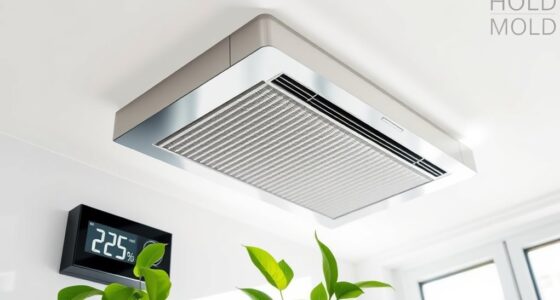
Occupancy sensors help you manage ventilation efficiently by detecting when spaces are occupied and signaling your system to activate or adjust airflow accordingly. This prevents running fans or ventilation unnecessarily, saving energy and improving indoor air quality. When integrated with lighting controls, they create a seamless environment that adapts to activity levels. If you want to learn more about how these sensors optimize ventilation logic, keep exploring the details ahead.
Key Takeaways
- Occupancy sensors detect presence to automatically activate or adjust ventilation based on real-time space usage.
- Control logic integrates sensor signals to modulate airflow, ensuring energy-efficient ventilation only when spaces are occupied.
- Delay timers can be set to maintain ventilation after occupancy exits, removing lingering pollutants or odors.
- Integration with lighting systems allows synchronized control, optimizing indoor environment and energy savings.
- Demand-controlled ventilation adapts airflow levels to occupancy levels, reducing waste and extending equipment lifespan.
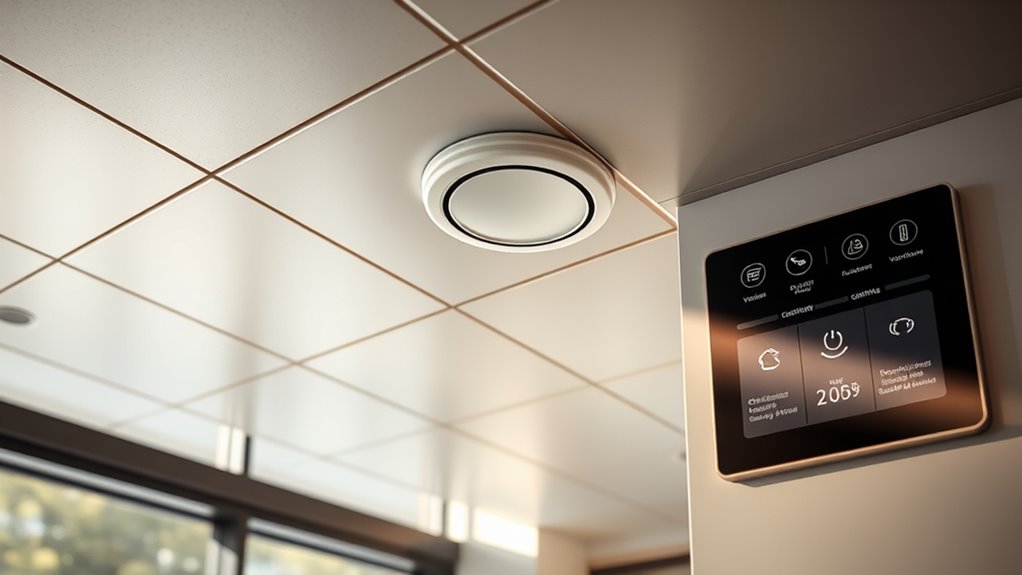
Occupancy sensors play a crucial role in optimizing ventilation systems by detecting when a space is occupied. When these sensors identify activity, they send signals to activate or adjust ventilation, ensuring that fresh air circulates only when needed. This targeted control reduces unnecessary airflow when rooms are vacant, saving energy and maintaining a comfortable environment. By integrating occupancy sensors with lighting automation systems, you can coordinate lighting and ventilation, creating a seamless and efficient indoor experience. For instance, as soon as someone enters a room, the sensor triggers both the lights and ventilation to turn on, providing immediate comfort and air quality. When the space clears, the system dims the lights and reduces ventilation, preventing wasteful energy consumption. This synchronization not only enhances user comfort but also considerably boosts energy efficiency, reducing utility costs and environmental impact.
The core advantage lies in how occupancy sensors enable smart control strategies that adapt to real-time usage patterns. Instead of running ventilation systems continuously, which wastes energy, these sensors help you implement demand-controlled ventilation. This approach adjusts airflow based on occupancy levels, ensuring that the system operates only when needed. The result is a more energy-efficient setup that aligns with modern sustainability goals. You’ll find that this approach is especially beneficial in commercial buildings, schools, and public spaces where occupancy varies throughout the day. By using occupancy sensors to inform ventilation control logic, you prevent over-ventilation during low-traffic periods, reducing unnecessary energy expenditure and extending equipment lifespan. Additionally, integrating ventilation control logic with other building systems can further optimize overall indoor climate management.
Furthermore, the integration with lighting automation enhances overall building efficiency. When sensors detect movement, they can trigger both lighting and ventilation, ensuring that spaces are adequately lit and ventilated without manual intervention. Conversely, when the space is empty, both systems shut down or dim, conserving energy and reducing operational costs. This automation simplifies building management, allowing you to focus on other priorities while maintaining ideal indoor air quality and lighting conditions. Additionally, occupancy sensors can be programmed with time delays, so ventilation stays active for a short period after a space is vacated, ensuring that lingering odors or pollutants are removed without wasting energy.
Frequently Asked Questions
How Do Occupancy Sensors Differ From Motion Sensors?
Occupancy sensors detect whether a space is occupied, while motion sensors only identify movement within an area. You should focus on sensor placement to guarantee accurate detection—occupancy sensors are usually placed in key areas like entrances, while motion sensors are positioned to monitor activity. Calibration techniques help fine-tune sensitivity, reducing false triggers. This way, occupancy sensors provide reliable data, improving ventilation control and energy efficiency.
Can Occupancy Sensors Be Integrated With Smart Home Systems?
Did you know that over 80% of smart homes now incorporate sensor compatibility? Yes, occupancy sensors can be seamlessly integrated with smart home systems, allowing you to automate lighting, climate, and ventilation. This enhances energy efficiency and convenience. With smart home integration, you can control sensors remotely, set personalized routines, and enjoy a more responsive, intelligent living environment tailored to your needs.
What Maintenance Is Required for Ventilation Control Systems?
You should regularly check your ventilation control system for sensor calibration to guarantee accurate readings. Keep the sensors clean and free of dust or debris, which can affect performance. Additionally, focus on power management by inspecting connections and replacing batteries if necessary. Routine maintenance helps your system operate efficiently, reduces energy consumption, and prolongs its lifespan. Schedule periodic professional inspections to address any issues promptly and maintain ideal ventilation.
Are Occupancy Sensors Effective in Large Open Spaces?
You might worry about privacy concerns, but occupancy sensors are effective in large open spaces because they detect movement accurately, ensuring ventilation adjusts only when needed. This boosts energy savings by preventing unnecessary airflow, reducing waste and lowering costs. While some may think sensors miss subtle activity, modern technology minimizes this issue, making them a smart choice for maintaining comfort and efficiency without compromising privacy.
How Do Occupancy Sensors Handle False Triggers?
False triggers are minimized through effective false trigger mitigation techniques, like adjusting sensor sensitivity and ensuring proper placement. You should regularly perform sensor calibration to fine-tune detection areas, reducing false alarms caused by movement outside the intended zone or environmental changes. By maintaining these practices, you guarantee your occupancy sensors accurately detect real presence, improving ventilation control and energy efficiency without unnecessary activation.
Conclusion
By blending bright, basic building blocks like badges, benchmarks, and balance, you bring better breathability and balance to your building. Occupancy sensors optimize airflow, offering effortless efficiency and energy savings. When you weave wise, well-placed sensors with smart control logic, you create a clean, comfortable, and cost-conscious climate. Remember, the right sensors and smart strategies seamlessly synchronize spaces, sparking savings, sustainability, and superb indoor air quality in a simple, scalable way.