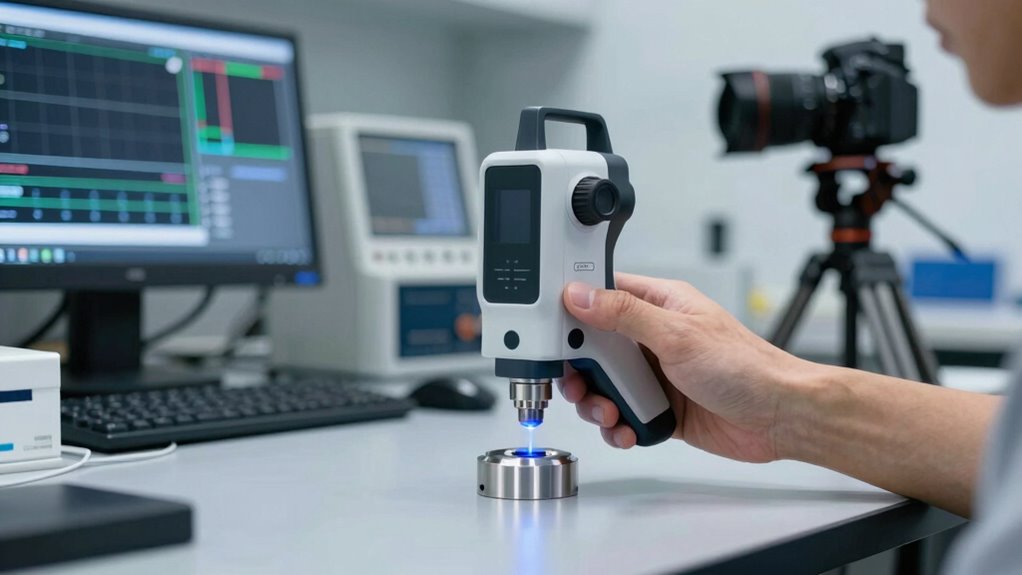

Your laser sensor measurements often differ from lab-based ‘true’ data because of calibration issues, environmental influences, and sensor sensitivities. If the sensor isn’t properly calibrated with certified standards, it can overestimate or underestimate particle levels. Environmental factors like humidity, temperature, and dust buildup also affect accuracy. To improve trust in your data, understanding these influences helps. Keep exploring to discover how calibration and environmental controls can bring your measurements closer to the lab’s precision.
Key Takeaways
- Laser sensors often have lower calibration standards and can drift over time, causing discrepancies with lab measurements.
- Environmental factors like humidity and dust impact laser sensor accuracy more than controlled lab conditions.
- Sensitivity differences mean laser sensors may overestimate or underestimate low PM concentrations compared to lab methods.
- Lab measurements use rigorous calibration with certified standards, ensuring higher precision and consistency.
- Regular calibration and environmental adjustments help align laser sensor readings more closely with true PM levels measured in labs.
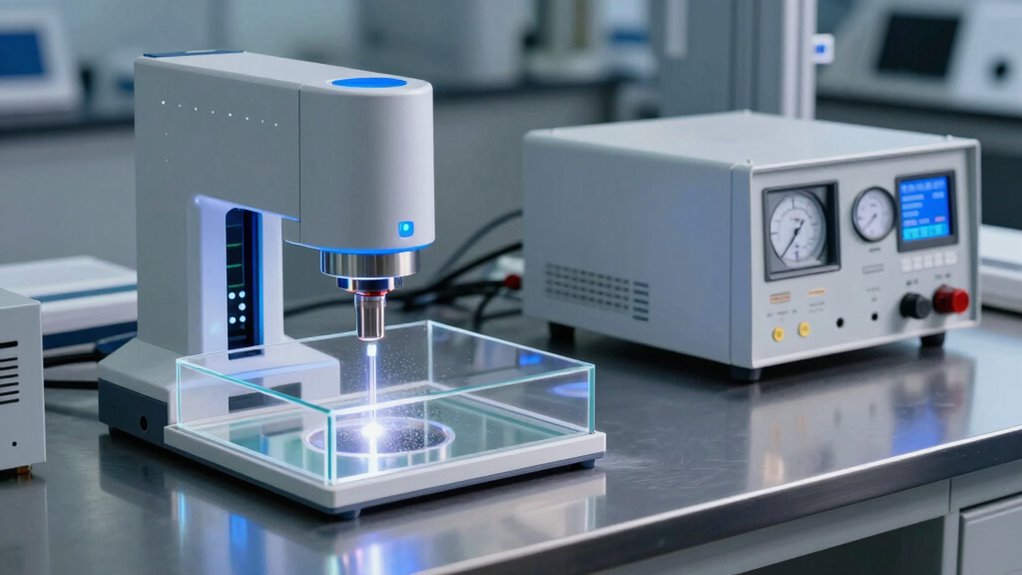
When it comes to measuring particulate matter (PM), choosing the right method can substantially impact your results. Whether you’re relying on laser-based sensors or traditional laboratory techniques, understanding how calibration accuracy and instrument sensitivity influence your readings is essential. Laser sensors are popular for their quick, real-time data collection, but they often face challenges in matching lab results due to these factors. Calibration accuracy is critical because it ensures that your sensor’s measurements truly reflect the actual PM levels. If calibration drifts over time or isn’t performed correctly, your readings can be significantly off. This discrepancy is especially apparent when comparing field measurements to lab-based results, which undergo rigorous calibration protocols. Instrument sensitivity, on the other hand, determines how well a device detects low concentrations of PM. Some laser sensors are highly sensitive, but this sensitivity can sometimes lead to false positives or overestimations if the device isn’t properly calibrated or if ambient conditions fluctuate.
In the lab, measurements tend to be more precise because the equipment is carefully calibrated against known standards and maintained regularly. This calibration accuracy ensures that the data you get from lab instruments are reliable and consistent. Conversely, portable laser sensors, while convenient, often lack the same level of calibration rigor, making their readings more susceptible to variation. Factors like temperature, humidity, and even dust buildup can affect the sensitivity of laser sensors, skewing results away from true PM concentrations. When you’re out in the field, these environmental influences can cause your sensor’s sensitivity to fluctuate, leading to discrepancies compared to lab results that are controlled and standardized. Additionally, environmental conditions can impact the sensor calibration, making regular recalibration essential to maintain accuracy.
To improve your laser measurement accuracy, you need to pay close attention to calibration procedures and regularly verify your instrument’s sensitivity. Proper calibration routines, ideally performed with certified reference materials, help ensure that your device’s readings stay aligned with true PM levels. Additionally, understanding the limitations of your sensor’s sensitivity allows you to interpret data more accurately, especially when dealing with low concentration environments. Recognizing that laser sensors might overestimate in certain conditions or underestimate in others helps you make better comparisons to lab data. Ultimately, aligning field measurements with lab standards requires a combination of rigorous calibration protocols and an awareness of your instrument’s sensitivity limitations. When you do this, your results become more trustworthy, making it easier to assess air quality accurately and confidently.
Frequently Asked Questions
How Do Environmental Factors Affect Laser PM Readings?
Environmental factors like ambient interference can considerably impact your laser PM readings. Fluctuations in temperature, humidity, or airborne particles may cause inconsistent results. To minimize these effects, make certain of proper instrument shielding and control ambient conditions as much as possible. Keep the device away from sources of interference, such as fans or open windows, and regularly calibrate to maintain accuracy. This helps you get reliable, consistent laser PM measurements.
Can Calibration Differences Cause Measurement Discrepancies?
Calibration differences can definitely cause measurement discrepancies. If your instrument lacks calibration consistency, it won’t maintain its intended precision, leading to inaccurate readings. Regular calibration ensures that your laser device stays aligned with true particle measurements, minimizing errors. Without consistent calibration, even small deviations can result in significant differences from lab results, affecting your data’s reliability. Always check calibration records and perform regular calibration to improve your measurement accuracy.
What Are the Limitations of Laser-Based PM Detection?
Laser-based PM detection offers high laser precision, but it has limitations. It struggles with accurately capturing particle behavior in complex environments, especially when particles vary in size, shape, or composition. Also, laser sensors can be affected by interference from dust or other particulates, leading to potential measurement errors. These factors can reduce reliability, making it essential to understand laser detection’s boundaries when interpreting your readings.
How Does Particle Composition Influence Measurement Accuracy?
Particle composition markedly influences measurement accuracy because particle variability affects how well your device detects particles. Different types, like organic or metallic particles, can alter light scattering or absorption, leading to less precise readings. When particle variability is high, your measurement precision decreases, causing discrepancies with lab results. Understanding how particle composition impacts your device helps you interpret data more accurately and adjust calibration for better consistency.
Are There Industry Standards for PM Measurement Validation?
Yes, industry standards for PM measurement validation exist. You should refer to industry benchmarks like ISO and EPA guidelines, which set certification processes to guarantee accuracy. These standards help you verify that your measurement methods are consistent and reliable, especially when comparing laser and lab results. By following these protocols, you can confidently assess your equipment’s performance and improve data accuracy across different measurement techniques.
Conclusion
In the end, your laser readings often differ from lab measurements because they capture real-time, on-site data, while labs use controlled environments. notably, studies show laser devices can underestimate PM levels by up to 30%, highlighting the importance of understanding each method’s limitations. So, when you’re interpreting air quality data, remember that your laser device provides quick insights but may not always match lab results. Use both for a complete picture of your environment.