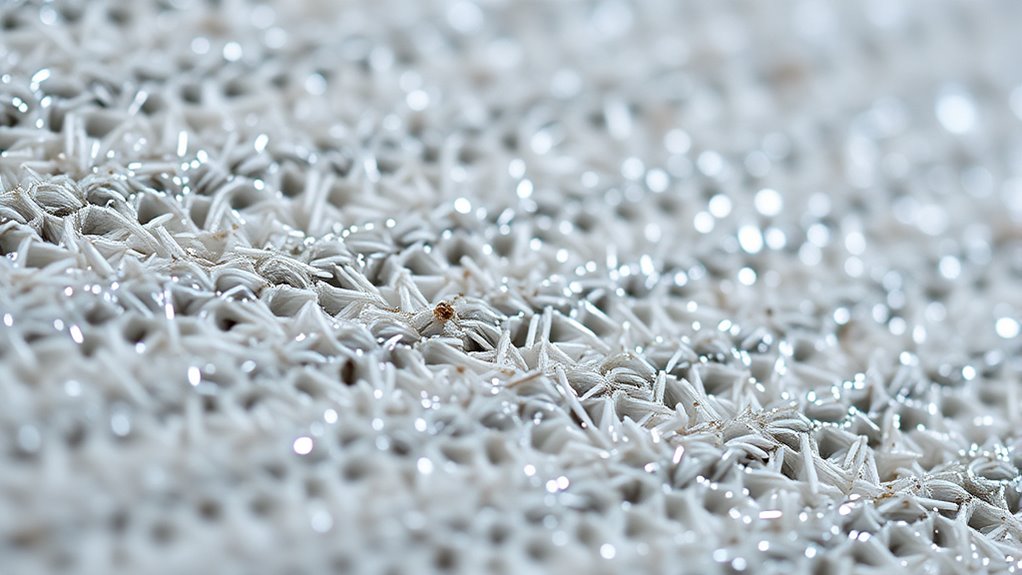

Photocatalytic coatings on HVAC filters actively neutralize airborne pollutants and pathogens as air passes through. They generate reactive oxygen species that break down bacteria, viruses, mold spores, and VOCs at a molecular level, providing continuous sterilization. This dual-action filter not only traps particles but also chemically neutralizes contaminants, improving indoor air quality. If you want to understand how this innovative technology can enhance your system’s performance and health benefits, there’s more to explore below.
Key Takeaways
- Photocatalytic coatings activate under UV or visible light to neutralize airborne pollutants and pathogens in HVAC systems.
- They offer continuous microbial sterilization, reducing bacteria, viruses, mold spores, and VOCs without frequent filter replacement.
- These coatings enhance indoor air quality by breaking down contaminants at a molecular level, preventing microbial growth and odors.
- They help maintain system efficiency, lower maintenance costs, and extend filter lifespan by minimizing biological buildup.
- Implementing photocatalytic coatings provides an active, long-lasting air purification solution for high-hygiene environments.
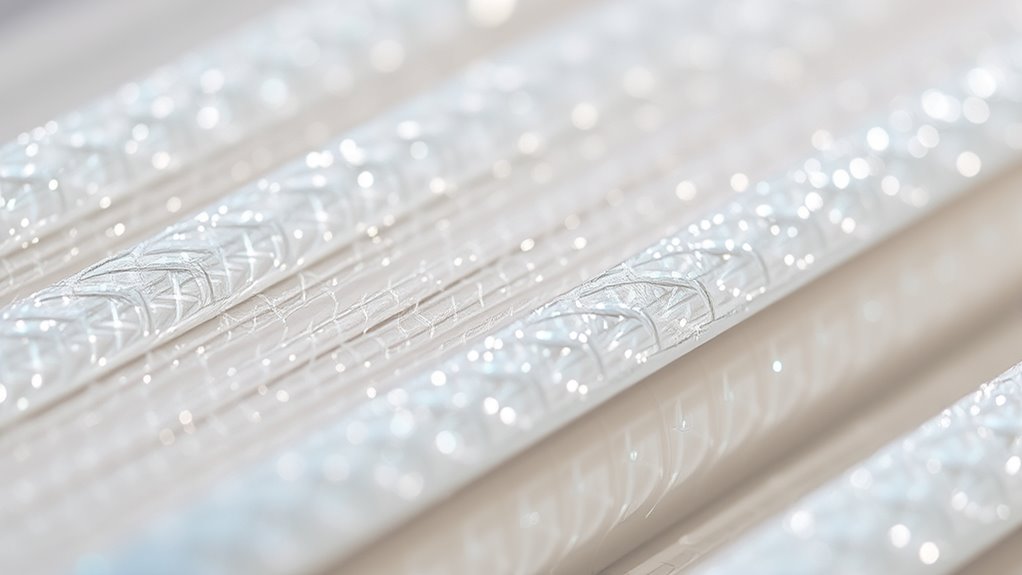
Photocatalytic coatings are transforming HVAC filters by actively neutralizing pollutants and pathogens as air passes through. These innovative coatings enhance air purification by breaking down airborne contaminants at a molecular level. Unlike traditional filters that trap particles physically, photocatalytic surfaces leverage chemical reactions to eliminate bacteria, viruses, mold spores, and volatile organic compounds (VOCs). This process results in cleaner, healthier indoor air and reduces the need for frequent filter replacements. When air flows through a filter treated with photocatalytic coatings, the active surfaces generate reactive oxygen species, such as hydroxyl radicals, that attack and decompose harmful microorganisms and organic pollutants, rendering them harmless or converting them into benign substances like water and carbon dioxide.
By integrating photocatalytic coatings into HVAC systems, you introduce an active layer of defense that continuously sterilizes the air. This advancement is particularly valuable in environments requiring high levels of hygiene, such as hospitals, laboratories, or densely populated spaces. The antimicrobial surfaces created by these coatings are highly effective against a broad spectrum of pathogens, considerably reducing the risk of airborne disease transmission. Their ongoing activity under UV light or visible light exposure ensures that the antimicrobial effects are sustained over time, providing long-term protection without relying solely on physical filtration. This dual action—filtering particulates and neutralizing microorganisms—sets photocatalytic coatings apart from conventional filters.
Additionally, these coatings can contribute to improved indoor air quality by reducing the presence of airborne toxins and allergens. As you consider upgrading your HVAC system, you’ll find that photocatalytic coatings are a smart investment. They improve indoor air quality by actively reducing airborne contaminants, leading to healthier occupants and better overall air quality. Additionally, because these coatings diminish the buildup of biological growth on filters and ductwork, they help maintain system efficiency and prolong equipment lifespan. The antimicrobial surfaces hinder mold and bacterial colonization, preventing foul odors and system degradation caused by microbial growth. Maintenance becomes easier, as the active sterilization reduces the need for chemical cleaning or frequent filter changes, saving you time and costs.
Frequently Asked Questions
How Long Do Photocatalytic Coatings Last on HVAC Filters?
You’ll find that photocatalytic coatings typically last around 12 to 24 months, depending on usage and environmental factors. Proper maintenance can extend the coating’s durability and help maximize your filter’s lifespan. Regularly checking and replacing filters when needed ensures the coating remains effective. Keep in mind that coating durability varies, so staying attentive to signs of wear will help you maintain ideal air quality and filter performance over time.
Are Photocatalytic Coatings Safe for Indoor Air Quality?
Yes, photocatalytic coatings are safe for indoor air quality when properly applied. They help improve indoor safety by breaking down pollutants and reducing odors. The coating’s durability ensures long-term effectiveness without releasing harmful substances. When maintained and replaced as needed, these coatings support a healthier indoor environment, making your HVAC system more effective and secure over time. Always choose certified products for ideal indoor safety and coating durability.
Can These Coatings Remove All Types of Airborne Pathogens?
While photocatalytic coatings show promise, they can’t eliminate the entire pathogen spectrum due to coating efficacy limitations. You might expect them to neutralize bacteria and some viruses, but their effectiveness varies with pathogen type and environmental conditions. Think of it as a partial shield; it reduces many airborne threats but doesn’t guarantee complete removal of all pathogens. You should combine these coatings with other filtration methods for all-encompassing air purification.
Do Photocatalytic Coatings Require Special Maintenance or Cleaning?
You don’t need to do much special maintenance for photocatalytic coatings, but you should regularly check your filters to maintain their effectiveness. Keeping filters clean helps extend their lifespan and ensures the coating’s durability. Avoid harsh cleaning agents that could damage the coating. Typically, gentle cleaning and timely replacements keep your filters working well, preserving their ability to improve air quality without risking damage or reducing their lifespan.
Are There Any Environmental Impacts of Using Photocatalytic Coatings?
You might wonder if these coatings pose environmental risks. While they promote material sustainability by reducing pollutants, ecotoxicity concerns linger, especially if particles are released into water or soil. These coatings generally have minimal environmental impact when properly applied and maintained, but improper disposal or degradation could cause harm. Stay informed and guarantee responsible use to balance their benefits with potential ecological effects.
Conclusion
Imagine your HVAC filter as a silent guardian, tirelessly capturing pollutants, while the photocatalytic coating transforms harmful particles into harmless substances with sunlight’s touch. You’ll breathe easier, knowing each filter actively fights airborne contaminants, creating a cleaner, healthier indoor environment. Feel the reassurance as the air around you becomes fresher and safer, like a gentle breeze after a storm. With these coatings, you’re not just filtering air—you’re reclaiming comfort and peace of mind in your space.