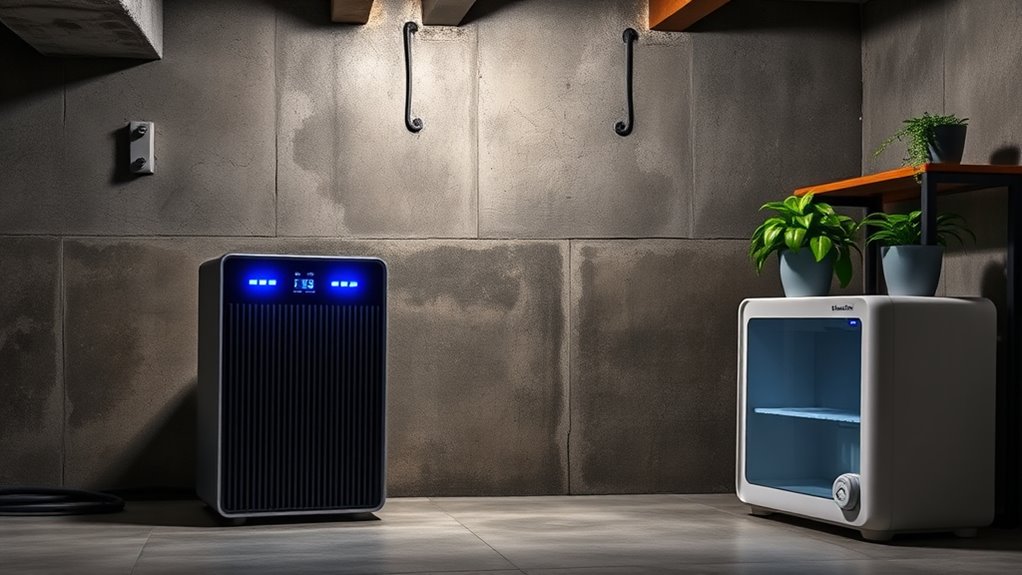
To purify a musty basement, control moisture by sealing leaks, improving drainage, and using dehumidifiers to keep humidity between 30-50%. Increase ventilation with fans and open windows when possible, while ensuring vents are unobstructed. Use air purifiers with HEPA and activated carbon filters to trap mold spores, dust, and odors. Applying mold-resistant paints and maintaining consistent moisture control can prevent future issues. For more effective solutions, explore additional tips below.
Key Takeaways
- Use air purifiers with HEPA filters to capture airborne mold spores and dust.
- Incorporate activated carbon filters in air purifiers to eliminate musty odors.
- Apply mold-resistant paints or sealants on walls and floors as moisture barriers.
- Maintain proper ventilation with exhaust fans and unobstructed vents to improve airflow.
- Regularly clean surfaces with mold-inhibiting solutions to prevent mold growth.
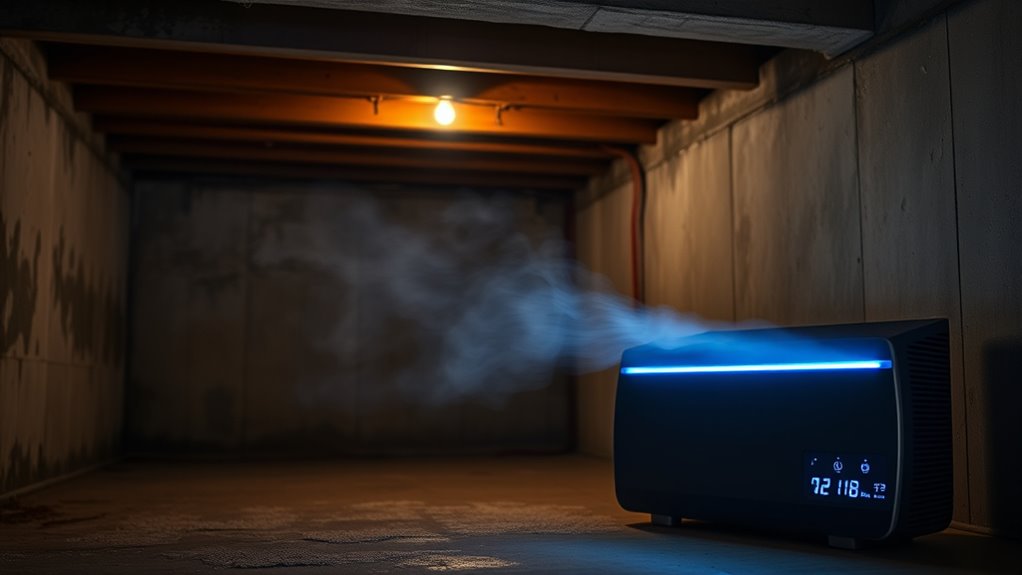
If your basement smells musty, it’s a clear sign that mold, mildew, or excess humidity are taking hold. These issues directly impact air quality, making your space uncomfortable and potentially hazardous to your health. To combat this, you need effective moisture control strategies that reduce humidity levels and prevent mold growth. Improving air quality starts with understanding the moisture problem; high humidity allows mold spores to thrive and releases musty odors that linger in the air. Without proper moisture control, these odors will persist, making your basement an unpleasant environment.
Start by identifying and sealing any leaks or cracks that let in outside moisture. Ventilation is vital—consider installing exhaust fans or an air exchange system to promote better airflow. When air circulates properly, it helps remove damp, stale air and replaces it with drier, fresher air from outside. You can also use dehumidifiers to maintain ideal humidity levels, ideally between 30% and 50%. Regularly empty and clean these devices to ensure they work efficiently. Keep in mind that humidity levels fluctuate with weather, so monitoring with a hygrometer can help you stay on top of your moisture control efforts.
In addition to mechanical solutions, consider investing in air purifiers equipped with HEPA filters and activated carbon. These devices capture airborne mold spores, dust, and odors, considerably improving overall air quality. Using a purifier with an activated carbon filter is especially effective at eliminating musty smells caused by mold and mildew. Remember, though, that purifiers alone won’t resolve the root moisture problem. They should be part of a thorough approach that includes moisture control measures.
You should also pay attention to your basement’s ventilation habits. Keep windows open when weather permits, and ensure vents are unobstructed. If your basement remains damp despite these efforts, you may need to improve drainage around your foundation or install sump pumps to manage excess groundwater. Additionally, consider applying mold-resistant paints or sealants to walls and floors to create a barrier against moisture penetration. Regular cleaning with mold-inhibiting solutions can further reduce the chances of mold spores settling and growing. Utilizing modern dehumidification technology can further enhance moisture control efforts.
Ultimately, maintaining good air quality and moisture control is essential for a healthier, odor-free basement. Addressing these issues proactively prevents mold from developing and keeps your space dry and comfortable. Consistent effort—through proper ventilation, humidity regulation, and air purification—will help you create a basement environment that’s safe, fresh, and free of that persistent musty smell.
Frequently Asked Questions
Can Air Purifiers Eliminate Mold Spores From the Basement Air?
Yes, air purifiers can help eliminate mold spores from your basement air, improving air quality and supporting mold prevention. Look for models with HEPA filters, as they effectively trap mold spores and other airborne allergens. Keep your basement well-ventilated and address moisture issues to prevent mold growth. Using an air purifier regularly can reduce spores and create a healthier, fresher environment for you and your family.
How Often Should I Replace the Filtration System in My Purifier?
You should replace your purifier’s filter based on the recommended filter replacement frequency, typically every 6 to 12 months. Skipping filter changes might seem convenient but can reduce air quality and strain your device. Stick to your purifier maintenance schedule to guarantee maximum performance. Regularly check the filter indicator light or user manual for specific guidance—doing so keeps your air clean and your purifier working effectively.
Do Natural Remedies Effectively Remove Basement Musty Odors?
Natural remedies like DIY remedies and essential oils can help reduce basement musty odors, but they might not completely eliminate the problem. You can try diffusing essential oils such as tea tree, eucalyptus, or lemon to freshen the air. However, for persistent odors, it’s best to improve ventilation, address moisture issues, and consider professional purification solutions, as natural remedies alone often aren’t enough for long-term odor control.
Are There Specific Purifiers Recommended for Large Basement Areas?
For large basement areas, you should look for large area purifiers that offer extensive basement coverage. These purifiers are designed to handle bigger spaces efficiently, removing musty odors and airborne pollutants. Choose models with high CADR ratings and multiple filters, such as HEPA and activated carbon, to guarantee thorough purification. Properly sizing and maintaining your purifier will help keep your basement fresh and odor-free.
Can Purification Solutions Prevent Future Mold Growth in Basements?
Yes, purification solutions can help prevent future mold growth in your basement. By improving moisture control with dehumidifiers and air purifiers, you reduce the damp environment that mold loves. Regularly maintaining these devices and addressing leaks or water issues also play a vital role in mold prevention. Keep your basement dry and well-ventilated to create an inhospitable environment for mold to develop, ensuring a healthier space.
Conclusion
By tackling mold and odors head-on, you’re turning your musty basement into a fresh, inviting space. Think of purification solutions as your secret weapon—like a lighthouse guiding you through the fog. With consistent cleaning, proper ventilation, and air purifiers, you can banish that damp smell forever. Remember, a clean basement isn’t just about freshness—it’s about reclaiming your home’s comfort and peace. So, take control now, and let your basement breathe easy once more.

In the dynamic world of air purifiers and clean air advocacy, Aire stands out as a beacon of knowledge and passion. As the Editor in Chief of Aero Guardians, Aire has been instrumental in shaping the platform’s voice and direction, ensuring that every piece of content resonates with clarity, authority, and authenticity.