To guarantee safe water in rural clinics and field hospitals, you should use portable filtration systems like microfilters, activated carbon, and UV sterilization to remove bacteria, viruses, and chemicals. Regular testing helps identify contamination and guides your treatment choices. Maintain your filters properly and train staff on their use. Combining testing, filtration, and disinfection creates a layered approach that offers continuous protection. Keep exploring to learn more about building an effective water safety strategy.
Listen free for 30 days with Audible
Thousands of audiobooks and originals — cancel anytime.
As an affiliate, we earn on qualifying purchases.
Key Takeaways
- Use portable filtration units like microfiltration or ultrafiltration systems to remove bacteria and protozoa in remote settings.
- Incorporate activated carbon filters to effectively eliminate chemicals and organic contaminants from water sources.
- Regularly test water quality to identify contaminants and determine appropriate treatment methods.
- Implement layered purification approaches combining filtration, disinfection, and testing for maximum safety.
- Train staff on proper operation, maintenance, and water testing protocols to ensure sustained water safety.
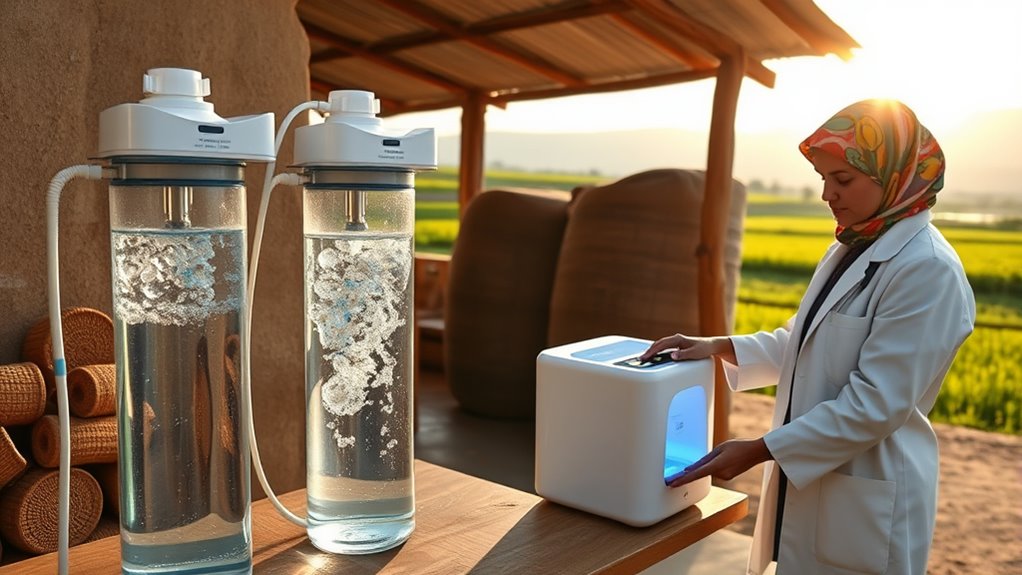
Have you ever wondered how rural clinics and field hospitals guarantee access to clean, safe water? In settings where infrastructure is limited, ensuring water safety becomes a top priority. Without reliable municipal water supplies, these facilities must rely on practical, effective methods like water testing and filtration systems. Water testing is essential because it helps you identify contaminants and determine if the water source is safe for use. By regularly testing water samples, you can detect bacteria, viruses, heavy metals, or chemical pollutants that might pose health risks. This process allows you to make informed decisions about treatment options and prevent waterborne illnesses, which are especially dangerous in vulnerable populations.
Once you know what contaminants are present, implementing appropriate filtration systems becomes critical. These systems are designed to remove impurities, making water safe for drinking, cooking, and sanitation. Portable filtration units, for example, are ideal for field hospitals and mobile clinics because they are easy to set up, require minimal maintenance, and can be tailored to specific contamination levels. Activated carbon filters are effective against chemicals and organic compounds, while microfiltration or ultrafiltration units can eliminate bacteria and protozoa. In some cases, combining different types of filters ensures comprehensive purification. You might also consider UV sterilization as an additional step, especially when microbial contamination is detected.
The key is to select filtration systems suited to your specific environment and water quality challenges. For instance, if your water source is primarily surface water like rivers or lakes, you’ll need more robust filtration options compared to groundwater sources. Regular maintenance and timely replacement of filter components are crucial to keep these systems working effectively. Training staff on proper usage and routine water testing helps maintain ongoing water safety, preventing outbreaks of waterborne diseases.
In addition to filtration, simple disinfection methods, such as chlorination, can be employed to further improve water safety. Combining water testing, filtration systems, and disinfection provides a layered approach that substantially reduces health risks. This multi-pronged strategy ensures that even in remote or resource-limited settings, your patients and staff have access to clean, safe water. Proper water testing techniques and the selection of suitable filtration systems are essential for maintaining water quality over time. Ultimately, investing in reliable testing and filtration infrastructure is an essential step toward safeguarding health and maintaining operational efficiency in rural clinics and field hospitals. By prioritizing these purification solutions, you’re not just providing water—you’re protecting lives.
portable water filtration system for field hospitals
As an affiliate, we earn on qualifying purchases.
As an affiliate, we earn on qualifying purchases.
Frequently Asked Questions
What Are the Maintenance Requirements for Purification Systems?
You need to regularly check and replace filters to keep the system running efficiently. Keep an eye on filter replacement schedules and do it promptly to prevent clogging. Additionally, calibrate the system periodically to ensure accurate purification levels. Regular maintenance also includes inspecting for leaks or blockages and cleaning components as needed. Staying on top of these tasks guarantees your purification system operates smoothly and provides safe, clean water.
How Do Purification Solutions Perform in Extremely Cold or Hot Climates?
Imagine your purification system standing strong against blazing heat or biting cold, like a sturdy fortress. In extreme climates, it’s designed with climate adaptation and temperature resilience in mind, ensuring consistent performance. High-quality units incorporate insulation, temperature controls, and robust materials to withstand harsh conditions. This way, you can rely on your system to deliver clean water, no matter if it’s sweltering or freezing outside, keeping your community safe and healthy.
Are There Training Programs Available for Local Staff to Operate These Systems?
Yes, training programs are available to help local staff operate these purification systems effectively. You can access hands-on workshops, online modules, and on-site training sessions designed to build confidence and guarantee proper system management. These programs focus on essential skills like maintenance, troubleshooting, and safe operation, empowering your staff to sustain water quality consistently. Investing in such training enhances system reliability and ensures your community benefits from clean, safe water at all times.
What Is the Typical Lifespan of Purification Equipment Used in These Settings?
You might worry about equipment durability, but typically, purification systems last 5 to 10 years with proper maintenance. The key is component longevity; high-quality parts tend to extend lifespan. Regular servicing ensures your equipment remains efficient, so you get the most out of your investment. While environmental conditions can affect longevity, routine checks and timely replacements help keep your water purification systems running smoothly for years.
How Do Purification Systems Handle High Levels of Sediment or Contaminants?
When dealing with high levels of sediment or contaminants, your purification system uses sediment filtration to remove large particles before tackling smaller contaminants. You’ll find that effective contaminant removal relies on multi-stage filters, which trap sediments and other impurities, ensuring cleaner water. Regular maintenance and filter replacement are key to keeping these systems working efficiently, especially in harsh environments with heavy sediment loads.
Conclusion
Ensuring clean water in rural clinics and field hospitals is crucial, and effective purification solutions make a real difference. Did you know that over 2 billion people worldwide still lack access to safe drinking water? By implementing reliable purification systems, you can dramatically reduce waterborne diseases and improve health outcomes. Don’t underestimate the power of simple, cost-effective solutions—your efforts can save lives and bring lasting change to underserved communities.
NFL season / tailgating Picks
team gear
As an affiliate, we earn on qualifying purchases.