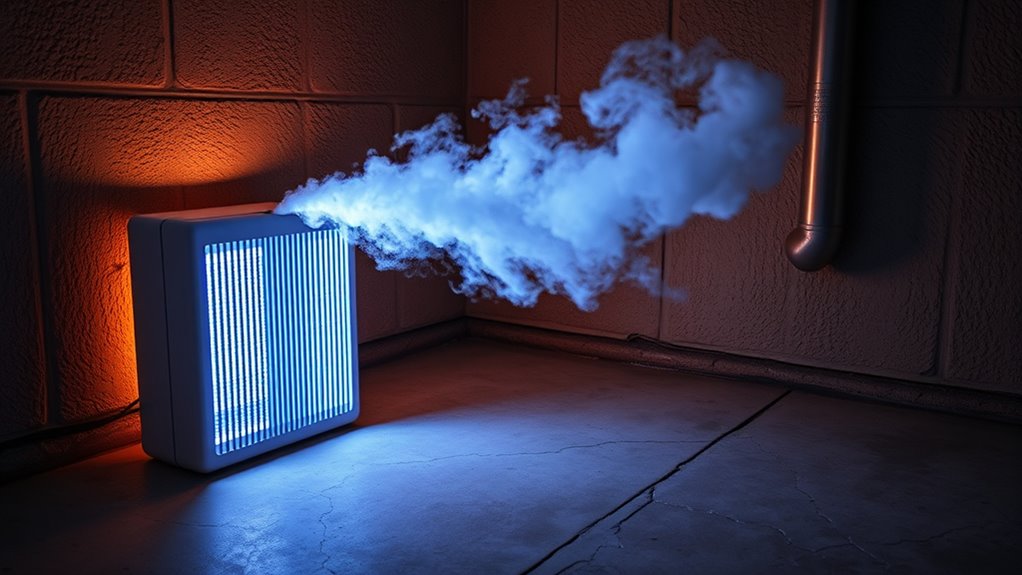
Air purifiers aren’t enough to lower radon levels because they only filter airborne particles, not the gas itself. Radon seeps through foundation cracks and openings, releasing radioactive gas that accumulation can’t be prevented by just filtering the air. Effective control requires proper mitigation techniques like active soil depressurization and sealing entry points. To truly protect your home and health, it’s important to understand these methods—there’s more to learn about safe radon reduction.
Key Takeaways
- Air purifiers only filter airborne particles and cannot remove radon gas from indoor air.
- Radon enters homes through foundation cracks and openings, bypassing filtration systems.
- Effective mitigation requires active venting and sealing, not just air purification.
- Testing is essential to identify radon levels; mitigation methods directly address radon entry points.
- Relying solely on air purifiers gives a false sense of security and fails to reduce radon health risks.
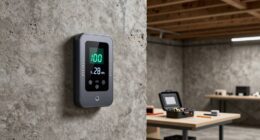
Have you ever wondered how to reduce radon levels in your home? If so, you’re not alone. Radon is a colorless, odorless radioactive gas that seeps into homes from the ground, and it’s a significant health risk. The first step in protecting yourself and your family is understanding the importance of radon testing. Without testing, you won’t know if your home has unsafe levels of radon. Once you confirm elevated levels, mitigation techniques become essential. These methods are designed to reduce radon concentrations effectively and are far more reliable than simply relying on air purifiers.
Testing is essential to detect and reduce radon levels safely in your home.
Air purifiers might seem like an easy fix, but they aren’t enough to address radon problems on their own. While they can improve indoor air quality by filtering out dust, pollen, and some airborne particles, they don’t actually remove radon gas from your home. Radon is a gas that accumulates in the lower levels of your house and can seep through cracks in the foundation, gaps around pipes, or other openings. Air purifiers do little to prevent radon from entering or to lower its concentration once inside. Instead, they just filter the air that’s already present. This means that if radon levels are high, relying solely on air purifiers provides a false sense of security and leaves you vulnerable to long-term health risks.
Mitigation techniques are specifically designed to address the root of the problem. These include active soil depressurization systems, which involve installing vent pipes and fans beneath the house to suction out radon before it enters living spaces. Sealing cracks and openings in the foundation is another step, but it’s rarely enough on its own. Proper radon mitigation combines sealing with active systems that vent radon outside, preventing it from accumulating indoors. Professionals trained in radon mitigation assess your home’s structure and develop a tailored plan to reduce radon levels effectively. They measure radon concentrations before and after installation to ensure the system works as intended. Additionally, understanding the role of ventilation in radon reduction can help improve overall effectiveness.
In essence, the key to effective radon reduction is a combination of thorough radon testing and employing proven mitigation techniques. Air purifiers may improve general air quality, but they are not a substitute for detailed mitigation strategies. If you’re concerned about radon, don’t rely solely on air filters—invest in proper mitigation methods. Your health depends on it. Radon mitigation isn’t just about lowering numbers; it’s about creating a safer living environment for you and your loved ones.
Frequently Asked Questions
How Often Should Radon Levels Be Tested After Mitigation?
You should test your radon levels every 6 to 12 months as part of your post mitigation monitoring. Regular testing helps guarantee the mitigation system continues to work effectively and keeps radon levels safe. Keep in mind, testing frequency might increase if there are changes to your home or if initial tests show elevated levels. Consistent monitoring is key to maintaining a healthy indoor environment.
Can Air Purifiers Reduce Radon Exposure Effectively?
Imagine trusting an air purifier to remove dangerous radon gas from your home; unfortunately, air purifiers have limitations in radon gas filtration. They can’t effectively reduce radon levels because radon is a gas, not airborne particles. While air purifiers improve air quality, they don’t eliminate the source of radon. To protect your family, you need proper radon mitigation systems, not just air purifiers, for effective radon exposure reduction.
What Are the Health Risks of Long-Term Radon Exposure?
Long-term radon exposure poses serious health risks, including an increased chance of lung cancer. The radon health risks accumulate over time, especially if you breathe in elevated radon levels regularly. You might not notice symptoms early, but prolonged exposure effects can be deadly. To protect yourself, it’s essential to reduce radon levels in your home through proper mitigation, not just rely on air purifiers, which aren’t enough to eliminate the risk.
Are DIY Radon Mitigation Systems Reliable?
DIY radon mitigation systems can be unreliable because they lack the expertise of professional installation. While DIY safety is important, improper setup might not effectively reduce radon levels, risking your health. Professionals have the right tools and experience to ensure your mitigation system works properly, providing lasting safety. Relying on experts guarantees you get a certified, effective solution, unlike DIY methods that may fall short of proper radon reduction standards.
How Does Radon Enter Homes Through Foundation Cracks?
Imagine tiny doors opening beneath your home—those are foundation cracks. Radon enters through these small gaps in your foundation, creating an invisible pathway from the soil into your living space. Soil entry via cracks allows radon gas to seep in easily, especially if your home’s foundation isn’t sealed properly. You need to address these cracks directly, as air purifiers only scrub the air but don’t stop radon from entering through these vulnerabilities.
Conclusion
If you think air purifiers alone can save you from radon, think again—you’re risking your life! Radon is a sneaky, invisible monster lurking in your home’s foundation, silently destroying your lungs. Only proper mitigation techniques can stand a chance against this deadly threat. Don’t fall for the illusion that air purifiers are enough; take action now or face the terrifying reality of preventable lung damage. Protect yourself before it’s too late—radon isn’t playing around!