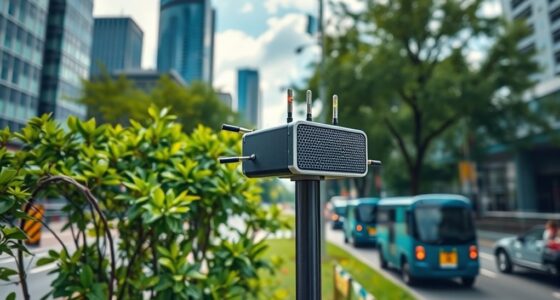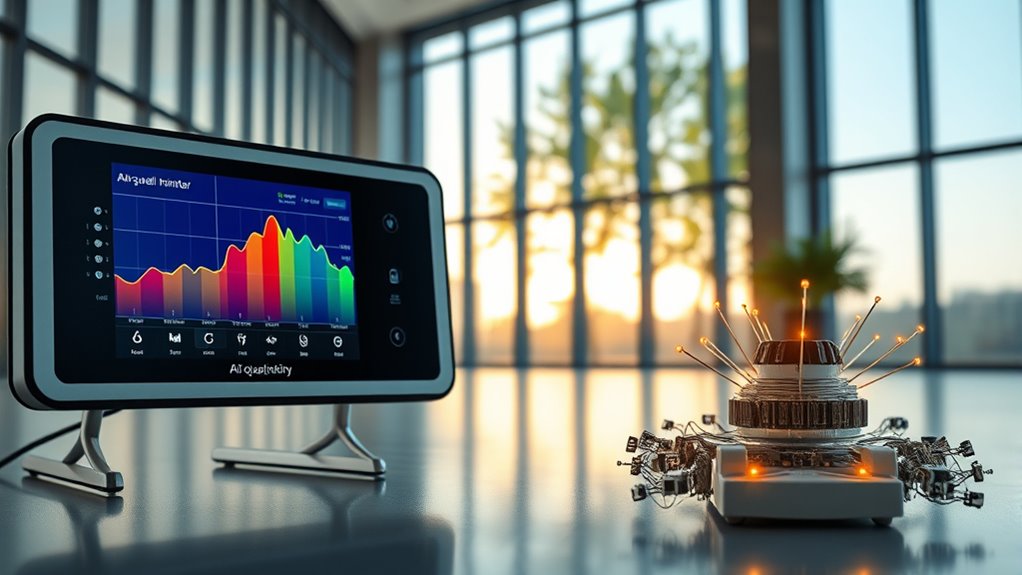

AI greatly boosts indoor air quality monitoring by providing real-time insights through accurate sensor calibration and advanced data analysis. It helps you detect pollutant changes quickly, forecast future air quality trends, and optimize ventilation strategies. Visual tools like dashboards make complex data easy to understand, enabling proactive responses. By combining calibration, visualization, and AI, you can guarantee a healthier indoor environment. Keep exploring to discover how these innovations work together for smarter air quality management.
Key Takeaways
- AI analyzes large sensor datasets to detect subtle air quality changes and identify pollution sources in real time.
- Machine learning models forecast future indoor air quality trends, enabling proactive interventions.
- AI automates sensor calibration, ensuring ongoing accuracy and reliable data over time.
- Data visualization powered by AI makes complex air quality information accessible and actionable.
- Integrating AI enhances decision-making for ventilation, filtration, and health risk management in indoor environments.
In today’s world, monitoring air quality in real time has become essential for protecting public health and the environment. As you focus on indoor spaces, understanding how air quality changes throughout the day is crucial. Modern sensors, combined with artificial intelligence, provide accurate and immediate insights into pollutants like particulate matter, VOCs, and carbon dioxide levels. To ensure these sensors deliver reliable data, sensor calibration is vital. Proper calibration aligns sensor readings with known standards, reducing errors that could mislead your assessments. When sensors are well-calibrated, the data they produce becomes trustworthy, allowing you to make informed decisions about air quality management. Additionally, selecting sensors with high accuracy and durability ensures long-term reliability in various indoor conditions.
Once your sensors are calibrated, the next step is making sense of the data they collect. That’s where data visualization comes into play. Visual tools like charts, heat maps, and dashboards transform raw numbers into intuitive representations, making complex air quality information easy to interpret at a glance. By visualizing trends over time, you can quickly identify patterns — for instance, if certain activities or times of day lead to spikes in pollutants. Effective data visualization also helps you communicate findings clearly to others, whether it’s building managers, health officials, or occupants. It turns technical data into actionable insights, enabling swift responses to deteriorating air conditions.
Data visualization simplifies complex air quality data, enabling quick insights and effective communication for better indoor environment management.
AI enhances this entire process by automating data analysis and providing predictive insights. Through machine learning algorithms, AI can detect subtle changes in air quality that might escape manual monitoring. It can also forecast future pollution levels based on historical data, weather patterns, and occupancy trends. This predictive capability allows you to proactively address air quality issues before they become harmful, rather than reacting only after problems arise. As a result, AI-driven systems can optimize ventilation, filter usage, or other interventions to maintain healthy indoor environments efficiently.
Integrating sensor calibration, data visualization, and AI creates a robust system for real-time air quality monitoring. You gain precise, reliable data that’s easy to interpret and act upon. With continuous calibration, your sensors stay accurate over time, ensuring ongoing trust in your data. Visual tools make complex information accessible, and AI adds predictive power to your monitoring efforts. Together, these elements empower you to maintain healthier indoor spaces, minimize health risks, and improve overall air quality management. As technology advances, your ability to respond swiftly and effectively to air quality fluctuations will only improve, creating safer environments for everyone.
Frequently Asked Questions
How Accurate Are Ai-Based Indoor Air Quality Sensors?
AI-based indoor air quality sensors are quite accurate when properly calibrated, ensuring reliable readings. Regular sensor calibration is essential for maintaining precision, especially as sensors age or environmental conditions change. You should also consider data privacy, as these sensors collect sensitive information about your indoor environment. When properly maintained and secured, AI sensors provide trustworthy insights, helping you make informed decisions to improve air quality.
Can AI Predict Future AIr Quality Issues?
Yes, AI can predict future air quality issues by using predictive analytics. It analyzes historical and real-time data to identify patterns and potential risks. This allows you to implement preventative measures before problems worsen, improving indoor air quality and safety. With AI’s forecasting capabilities, you stay ahead of issues, ensuring a healthier environment for everyone. This proactive approach helps maintain ideal air conditions and prevents costly remediation.
How Does AI Handle Sensor Malfunctions or Errors?
If your air quality sensor malfunctions, AI steps in to handle errors effectively. For example, it detects inconsistent readings, then applies error correction algorithms and sensor calibration data to guarantee accuracy. AI continuously monitors sensor health, alerting you when maintenance is needed. This proactive approach keeps your indoor air insights reliable, reducing false alarms and helping maintain safe, healthy environments without manual intervention.
What Types of Pollutants Can AI Detect Indoors?
You can rely on AI to detect a variety of indoor pollutants, including VOCs and mold. It analyzes sensor data to identify harmful volatile organic compounds, helping you spot poor air quality early. AI continuously monitors for mold growth, alerting you to potential health risks. This real-time detection allows you to take swift action, ensuring a healthier indoor environment and reducing exposure to dangerous pollutants.
Is Real-Time Air Quality Monitoring Cost-Effective?
Yes, real-time air quality monitoring can be cost-effective, especially when you choose budget-friendly solutions. AI-powered sensors reduce the need for expensive equipment and frequent manual checks, saving you time and money. By providing immediate insights, these systems help you address issues promptly, preventing costly health problems or structural damage. Overall, investing in real-time monitoring offers long-term savings while maintaining a healthy indoor environment.
Conclusion
By harnessing AI for real-time indoor air quality monitoring, you can effortlessly stay ahead of pollutants and guarantee a healthier environment. Imagine having a futuristic, ‘Jetsons’-style device that instantly alerts you to airborne hazards, allowing quick action. With AI’s precision and speed, you’re no longer stuck in the dark ages of guesswork. Embrace this technology today, and breathe easier knowing you’re in control—because when it comes to clean air, there’s no room for outdated methods.

In the dynamic world of air purifiers and clean air advocacy, Aire stands out as a beacon of knowledge and passion. As the Editor in Chief of Aero Guardians, Aire has been instrumental in shaping the platform’s voice and direction, ensuring that every piece of content resonates with clarity, authority, and authenticity.