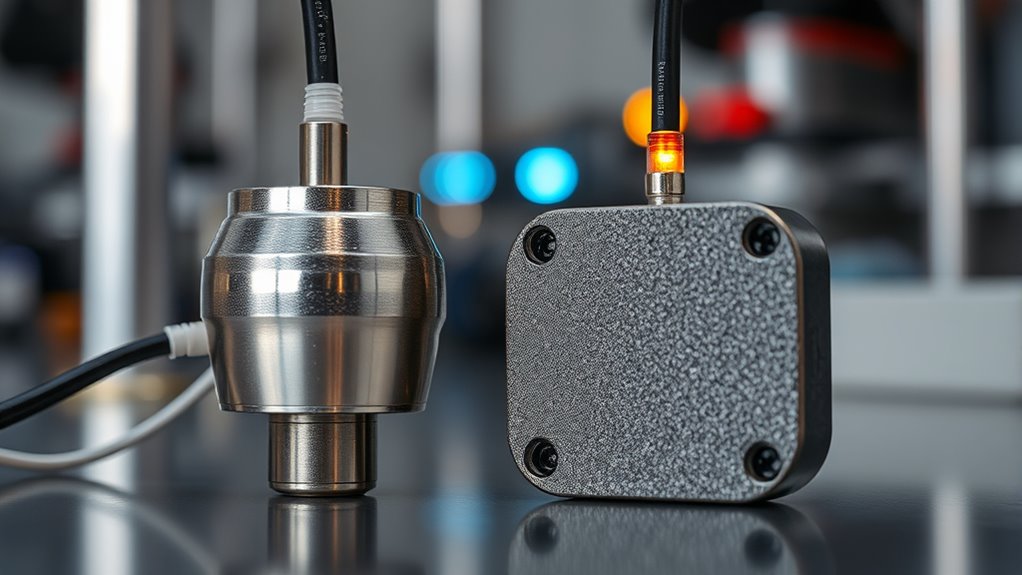
When choosing between optical and electrochemical sensors for VOC detection, consider your sensitivity needs and operating environment. Optical sensors offer higher sensitivity, precise analysis, and longer-term reliability, making them ideal for detailed applications. Electrochemical sensors are more affordable, portable, and suitable for quick, real-time monitoring, especially in rugged settings. Continuing to explore these options will help you find the best fit for your specific VOC detection requirements and guarantee ideal performance.
Key Takeaways
- Optical sensors offer higher sensitivity for detecting trace VOC levels compared to electrochemical sensors.
- Electrochemical sensors are more suitable for portable, real-time monitoring due to lower initial costs.
- Optical sensors require less maintenance and have greater durability in harsh environments.
- Electrochemical sensors may need frequent calibration and are more susceptible to environmental contamination.
- The choice depends on application needs: high sensitivity and detailed analysis favor optical, while cost-effectiveness and portability favor electrochemical.

When choosing sensors for detecting chemicals or biological agents, understanding the differences between optical and electrochemical sensors is vital. Both types have unique strengths and limitations that can influence your decision, especially when it comes to sensor sensitivity and maintenance requirements. Sensor sensitivity determines how effectively a sensor can detect low concentrations of volatile organic compounds (VOCs). Optical sensors often excel here because they utilize light absorption or emission to identify specific chemical signatures, providing high sensitivity even at trace levels. This makes them ideal for applications needing precise detection of VOCs in environments where concentrations are minimal. Conversely, electrochemical sensors rely on chemical reactions that generate an electrical signal; while they are generally sensitive, their ability to detect very low VOC levels can sometimes be limited compared to optical options. Additionally, the jack types used to connect sensors and devices can affect installation and compatibility in different settings.
Maintenance requirements also play a significant role in sensor selection. Optical sensors tend to have lower routine maintenance because they typically have fewer moving parts and are less prone to contamination or sensor drift. They often require periodic calibration to maintain accuracy, but their robust design means they can operate reliably over extended periods. Electrochemical sensors, on the other hand, need more frequent attention. They are susceptible to contamination from environmental factors, which can degrade their performance over time. Regular calibration and sensor replacement are often necessary to guarantee consistent results, especially in harsh or polluted environments. This higher maintenance demand might increase operational costs and downtime but can be justified by their cost-effectiveness and suitability for specific detection scenarios.
When evaluating which sensor type to deploy, consider your specific detection needs. If you require highly sensitive detection of low VOC concentrations with minimal maintenance, optical sensors are a strong choice. They are particularly advantageous in laboratory settings or controlled environments where detailed analysis is crucial. If your application involves continuous monitoring in rugged or contaminated environments, electrochemical sensors might be more practical despite their higher maintenance needs. They are generally more cost-effective upfront and can be integrated into portable or wearable devices for real-time monitoring.
Ultimately, balancing sensor sensitivity with maintenance requirements will guide your decision. Optical sensors offer high sensitivity and lower upkeep, but at a higher initial cost. Electrochemical sensors provide a more affordable, portable solution with manageable maintenance, but with some limitations in sensitivity at very low concentrations. Understanding these differences ensures you select the best sensor for your VOC detection needs, optimizing both performance and operational efficiency.
As an affiliate, we earn on qualifying purchases.
Frequently Asked Questions
How Do Sensor Calibration Requirements Differ Between Optical and Electrochemical VOC Sensors?
You’ll find that optical sensors generally have less complex calibration requirements because they rely on stable light interactions, leading to better sensor stability over time. In contrast, electrochemical VOC sensors often need frequent calibration due to their higher calibration complexity and sensitivity to environmental factors. This means you’ll spend more time maintaining electrochemical sensors to ensure accurate readings, while optical sensors tend to stay reliable longer with minimal calibration adjustments.
What Are the Environmental Limitations Affecting the Performance of Each Sensor Type?
Environmental factors like temperature, humidity, and exposure to dust or chemicals can impact sensor durability and performance. Optical sensors may struggle with high humidity or dust, which can scatter light and reduce accuracy. Electrochemical sensors are sensitive to extreme temperatures and corrosive environments that may degrade their components. Both types require proper protection and calibration to guarantee reliable VOC detection under varying environmental conditions.
How Do Maintenance Needs Compare for Optical Versus Electrochemical VOC Sensors?
You’ll find that optical sensors generally require less maintenance, thanks to their higher durability and fewer parts that need replacing. Electrochemical sensors, however, demand more frequent calibration and sensor replacement, which increases maintenance efforts. Proper user training is essential for both types to guarantee peak performance and safety. By understanding each sensor’s durability and maintenance needs, you can better plan for long-term operation and minimize downtime.
What Is the Typical Lifespan of Optical and Electrochemical VOC Sensors?
You can expect optical VOC sensors to have a longer sensor durability, often lasting 10 to 15 years with minimal replacement frequency. Electrochemical sensors, however, typically need replacement every 2 to 3 years due to faster sensor degradation. Your choice depends on how long you want the sensors to operate reliably and how often you’re willing to perform maintenance. Proper calibration extends both sensor types’ lifespan.
Are There Cost Differences Impacting Long-Term Deployment of These Sensors?
You’ll find that cost differences markedly impact the long-term deployment of these sensors. Optical sensors often have higher upfront costs but lower maintenance expenses, boosting cost efficiency over time. Electrochemical sensors tend to be cheaper initially but may require more frequent replacements, affecting deployment logistics. Balancing these factors helps you choose the right sensor, ensuring your VOC detection system remains both effective and budget-friendly in the long run.
Conclusion
Think of choosing between optical and electrochemical sensors like selecting a trusted compass or a reliable map. Both guide you through the landscape of VOC detection, each with its unique strengths. Your choice depends on whether you need swift, precise navigation or broad, adaptable guidance. Ultimately, understanding their differences helps you steer confidently through complex environments, ensuring you reach your destination with clarity and accuracy—just like a skilled explorer relying on the right tool for the journey.