To reduce fumes from 3D printers and hobby equipment, use a combination of air filtration and good ventilation. Install HEPA filters to trap ultrafine particles and activated carbon filters to absorb VOCs and odors. Position your equipment near windows or exhaust fans that vent outdoors, and keep windows open when possible. Combining these strategies creates a safer workspace, and if you keep exploring, you’ll discover even more ways to improve air quality and protect your health.
Key Takeaways
- Use combined HEPA and activated carbon air filters to trap ultrafine particles and VOCs emitted during printing and crafting.
- Position equipment near windows or install exhaust fans to improve airflow and vent fumes outdoors.
- Incorporate portable air purifiers with suitable filters to continuously circulate and clean indoor air.
- Create cross-ventilation by opening windows on opposite sides to dilute indoor fumes effectively.
- Regularly monitor air quality and maintain filters to ensure ongoing safety and optimal fume reduction.

If you use 3D printers or hobby equipment that emits fumes, taking steps to reduce these pollutants is essential for your health and safety. The fumes released during printing or crafting can contain volatile organic compounds (VOCs), ultrafine particles, and other potentially harmful substances. Without proper management, these fumes can accumulate in your workspace, leading to respiratory issues, headaches, or long-term health problems. To protect yourself, implementing effective air filtration and ventilation strategies is critical.
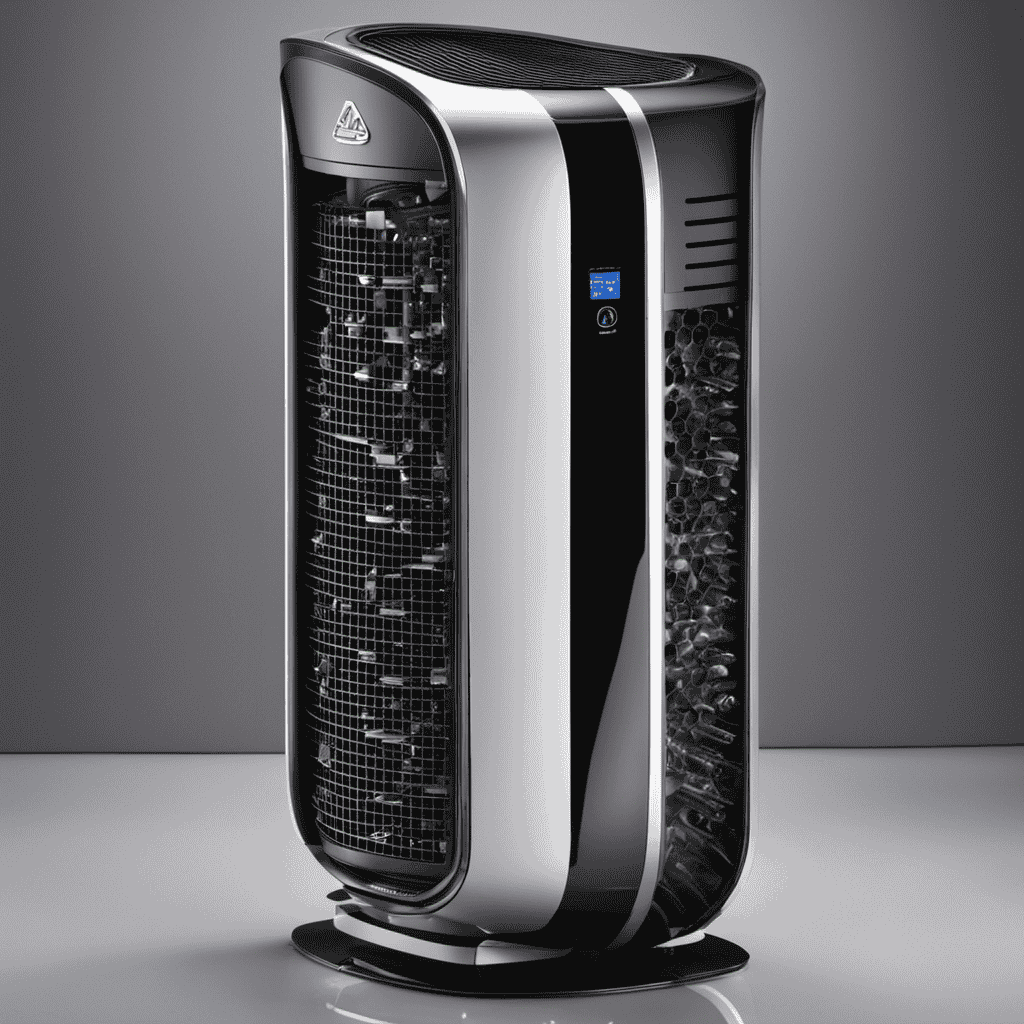
Air filtration is one of the most effective ways to capture airborne contaminants right at the source or within your workspace. HEPA filters are highly recommended because they can trap ultrafine particles, which are often the most dangerous. Activated carbon filters are also valuable as they absorb VOCs and chemical odors. Combining a HEPA filter with an activated carbon filter in a single air purifier provides thorough coverage, removing both particulate matter and gaseous pollutants. When selecting filtration devices, ensure they are appropriately rated for the size of your workspace and the intensity of fumes generated. Regularly maintaining and replacing filters guarantees continued efficiency and safe air quality.
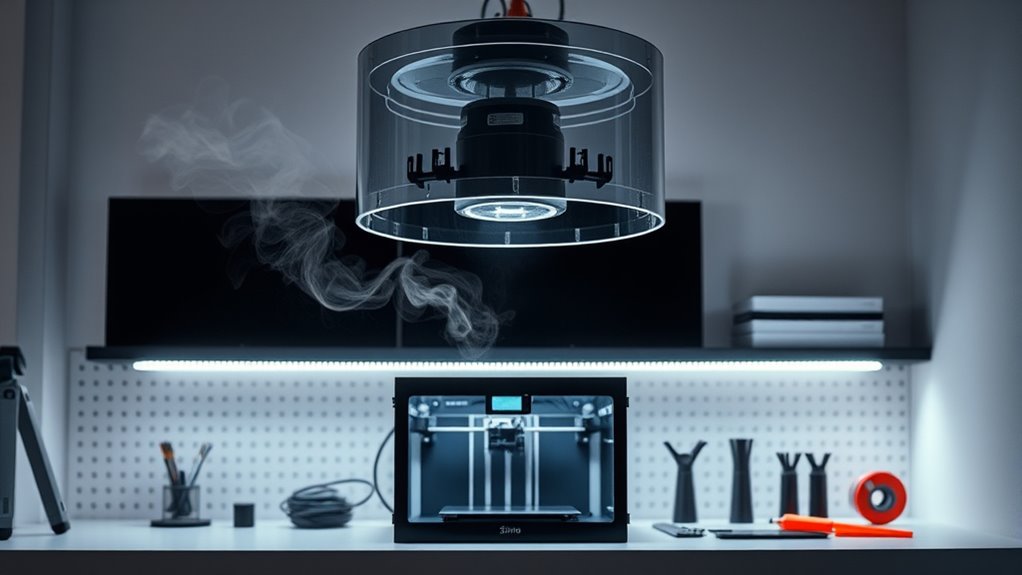
Ventilation strategies play a vital role in diluting and exhausting fumes from your environment. If possible, position your 3D printer or hobby equipment near a window or an exhaust vent. Installing a dedicated exhaust fan that vents outdoors helps continuously remove fumes, preventing buildup indoors. For spaces without direct outdoor access, consider using portable air purifiers equipped with appropriate filters to circulate fresh air. Additionally, creating cross-ventilation by opening windows on opposite sides of your workspace can greatly improve airflow. Remember, good ventilation not only reduces the concentration of fumes but also refreshes the air, making your workspace healthier and more comfortable.
Combining air filtration with proper ventilation offers the best protection against fumes. You should aim to create a continuous airflow pattern that pulls contaminated air away from your breathing zone and expels it outside. During printing or crafting sessions, keep doors and windows open if possible, and turn on exhaust systems or air purifiers to maximize air exchange. Regularly monitoring air quality with simple sensors or testing kits can help you assess whether your strategies are effective or need adjustment. Being aware of air quality in your workspace allows you to make informed decisions about adjustments and safety measures. By proactively managing your workspace’s air quality through these methods, you safeguard your health while continuing to enjoy your hobbies or 3D printing projects.
Frequently Asked Questions
Are There Any Non-Toxic Filament Options for 3D Printing?
Yes, you can choose non-toxic filaments like PLA, which are made from biodegradable materials and have a lower environmental impact. These filaments emit fewer fumes, making them safer for your health and the environment. When selecting filament options, look for those labeled non-toxic or eco-friendly. By opting for non-toxic filaments, you reduce the environmental impact of your 3D printing activities while ensuring safer indoor air quality.
How Effective Are Air Purifiers in Eliminating Fumes?
Air purifiers are quite effective at improving air quality when it comes to fume removal effectiveness, especially if you choose models with high CADR ratings. They can considerably reduce fumes from 3D printers and hobby equipment, but their efficiency depends on proper placement and filter quality. To maximize air purifier efficiency, use them continuously and make certain filters are regularly replaced. This helps keep indoor air safer and cleaner for your hobby space.
Can Hobby Equipment Fumes Cause Long-Term Health Issues?
You might think it’s no big deal, but hobby equipment fumes can indeed impact your long-term health if you ignore indoor air quality. Over time, inhaling these fumes may cause respiratory issues, allergies, or other health problems. To keep yourself safe, guarantee good ventilation and use air purifiers. Don’t wait until it’s too late; safeguarding your long-term health is worth taking proactive steps now.
What Are the Best Ventilation Setups for Small Hobby Rooms?
You should install a good ventilation system with proper air exchange to keep your small hobby room safe. Use a combination of exhaust fans and air filters to remove fumes effectively. Position the exhaust near the source of fumes, like your 3D printer, and guarantee continuous airflow. Regularly maintain your ventilation setup to maintain ideal air quality, reducing health risks from fumes and keeping your workspace safe.
Do Homemade Filters Work Better Than Commercial Ones?
Homemade filters? Sure, they’re just as effective as a paper towel in a hurricane. DIY solutions often lack rigorous testing, so filter efficacy might be questionable. Commercial filters, on the other hand, undergo quality control to guarantee they trap fumes properly. If you want real protection, it’s best to invest in proven, certified filters rather than risking your lungs with questionable homemade fixes.
Conclusion
By taking small, mindful steps to improve your workspace, you create a calmer, clearer environment—like adding a gentle breeze to a busy room. Proper ventilation and thoughtful equipment choices act as quiet guardians, gently guiding fumes away and keeping the air fresh. With each simple adjustment, you foster a safer, more inviting space where your creativity can flourish without worry. Embrace these subtle changes, and enjoy the serene, vibrant atmosphere you’ve helped craft.

In the dynamic world of air purifiers and clean air advocacy, Aire stands out as a beacon of knowledge and passion. As the Editor in Chief of Aero Guardians, Aire has been instrumental in shaping the platform’s voice and direction, ensuring that every piece of content resonates with clarity, authority, and authenticity.