
To reduce pathogen spread in shared living spaces, practice regular handwashing with soap or use hand sanitizer often, especially after bathroom breaks, before eating, and after touching shared surfaces. Clean high-touch areas like doorknobs, light switches, and remote controls frequently with disinfectant. Encourage everyone to follow good hygiene habits and create a cleaning routine. Consistently applying these measures greatly lowers infection risks—continue to explore effective strategies to keep your home safer.
Get ready for Prime Big Deal Days — try Prime free
Exclusive member deals on October 6–7, plus fast free delivery. Cancel anytime.
As an affiliate, we earn on qualifying purchases.
Key Takeaways
- Encourage regular handwashing with soap and water or use alcohol-based sanitizers, especially after bathroom use and before eating.
- Frequently disinfect high-touch surfaces like doorknobs, light switches, and remote controls with EPA-approved disinfectants.
- Promote a hygiene-focused culture by posting reminders and fostering cleanliness habits among all household members.
- Use disposable gloves during cleaning and ensure surfaces are cleaned of dirt before disinfecting for maximum effectiveness.
- Increase cleaning and disinfection frequency during illness outbreaks or flu season to reduce pathogen transmission.
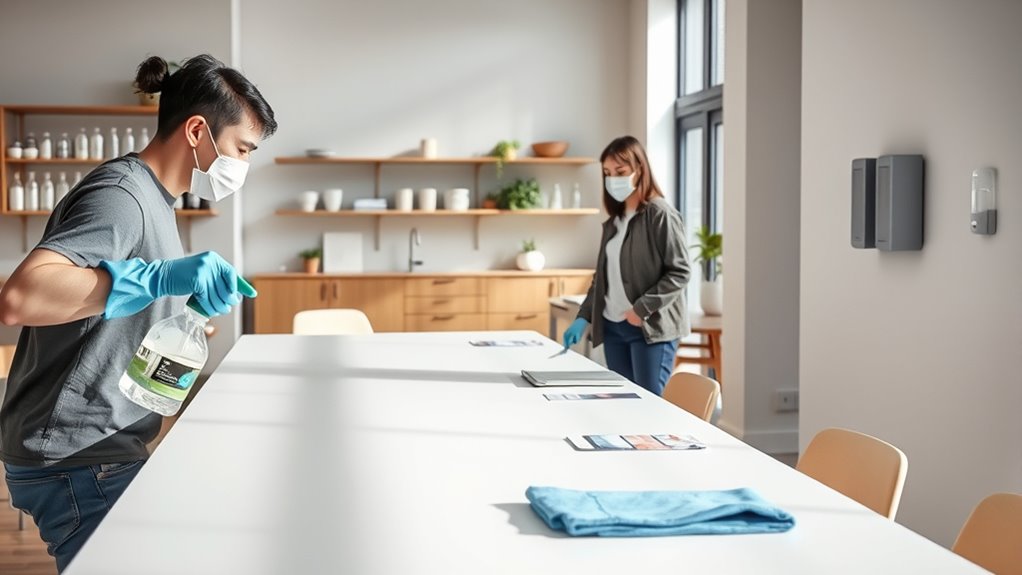
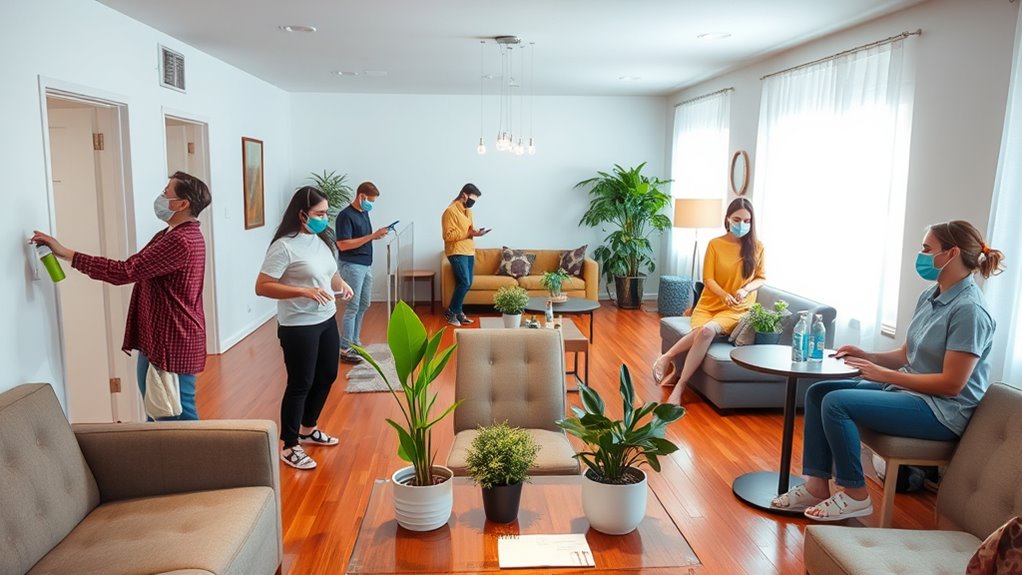
Reducing the spread of pathogens is essential for protecting public health and preventing outbreaks. In shared living spaces, where multiple people interact daily, germs can spread quickly through contact with contaminated surfaces or direct touch. To minimize this risk, practicing good hand hygiene and surface disinfection becomes crucial. Your hands are the primary vehicle for transmitting germs, so washing them regularly with soap and water or using alcohol-based hand sanitizers is one of the simplest yet most effective steps you can take. Make it a habit to wash your hands after using the bathroom, before eating, and after touching shared objects or surfaces. Hand hygiene not only protects you but also helps prevent the transfer of pathogens to others in your household.
Practicing good hand hygiene is key to preventing pathogen spread in shared living spaces.
Surface disinfection is equally important in reducing pathogen spread. High-touch surfaces like doorknobs, light switches, countertops, and electronic devices are hotspots for germs. Regularly cleaning these surfaces with disinfectant products effectively kills bacteria and viruses, breaking the chain of infection. Use EPA-approved disinfectants and follow the manufacturer’s instructions for proper application. Avoid neglecting less obvious surfaces, such as remote controls, fridge handles, and shared utensils, as these can harbor germs too. Implementing a routine cleaning schedule helps ensure these potentially contaminated spots are consistently disinfected, especially during illness outbreaks or flu season.
In addition to routine cleaning, it’s imperative to encourage everyone in your shared space to adopt these habits. Post reminders about hand hygiene near sinks and entry points, and promote a culture of cleanliness. When someone is sick, increase the frequency of surface disinfection and reinforce the importance of handwashing. Using disposable gloves during cleaning tasks can further reduce the risk of spreading pathogens, especially when dealing with visibly contaminated surfaces. Remember, disinfectants work best when surfaces are first cleaned of dirt and grime, so wipe down surfaces with soap and water before applying disinfectant. Incorporating disinfectant products that are proven effective against viruses and bacteria further enhances safety measures.
Combining diligent hand hygiene with consistent surface disinfection forms a powerful defense against pathogen transmission. It’s a proactive approach that not only protects your health but also that of everyone sharing your living space. By making these practices a routine part of your daily life, you create a safer environment and greatly reduce the chance of infections spreading. Staying vigilant and committed to these simple yet effective measures can make a substantial difference in maintaining a healthy, infection-free home.
As an affiliate, we earn on qualifying purchases.
Frequently Asked Questions
How Effective Are Air Purifiers in Shared Spaces?
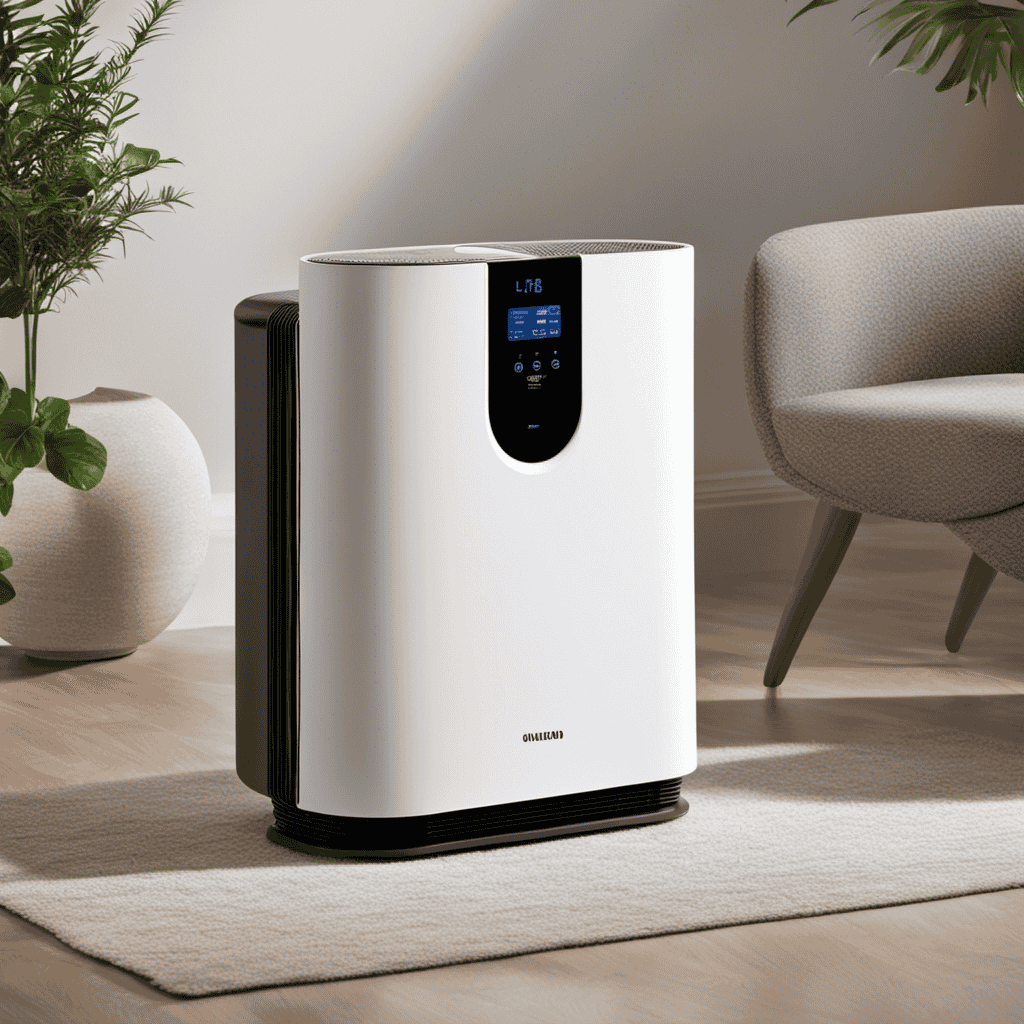
Air purifiers are quite effective in shared spaces, especially when it comes to improving air quality. Their efficacy depends on the device’s filtration system, like HEPA filters, which can trap airborne pathogens. Using an air purifier regularly enhances shared space filtration, reducing the spread of germs and allergens. To maximize benefits, choose a unit suitable for your room size and run it continuously, ensuring cleaner, healthier air for everyone.
Can UV Light Sterilization Prevent Pathogen Transmission?
Think of UV light sterilization as a vigilant guardian, silently sweeping through your space to catch invisible invaders. It can substantially reduce pathogen transmission by destroying bacteria and viruses on surfaces and in the air. While it’s not a foolproof shield, UV sterilization acts as a powerful tool in your arsenal, blocking harmful pathogens from spreading and helping you maintain a safer shared environment.
What Are the Best Disinfectants for Common Surfaces?
You should use disinfectants with proven effectiveness, like EPA-registered solutions containing alcohol, bleach, or hydrogen peroxide. For surface cleaning, guarantee you thoroughly wipe high-touch areas such as doorknobs, switches, and countertops. Disinfectant effectiveness depends on proper contact time—follow the instructions on the label. Regular cleaning with the right disinfectant minimizes pathogen transmission, helping keep shared living spaces safer for everyone.
How Often Should Shared Items Be Cleaned?
You might be surprised, but the key is consistency. For shared items, you should follow a strict cleaning schedule—ideally daily or after each use for high-touch objects. Disinfection frequency depends on use and exposure; high-traffic areas require more frequent cleaning. Regularly wiping down items with effective disinfectants helps prevent pathogen spread. Don’t wait until contamination is obvious—stay vigilant, and your shared space stays safer for everyone.
Are There Specific Ventilation Strategies to Reduce Spread?
To diminish spread, you should optimize airflow and regularly maintain your ventilation system. Use exhaust fans, open windows, and consider HEPA filters to improve airflow. Keep vents clean and ensure proper operation through consistent ventilation maintenance. This strategy helps circulate fresh air, dilute airborne pathogens, and minimize risk. Active airflow management is key to creating a healthier shared living environment and reducing the chance of infection transmission.
Conclusion
By taking these simple steps, you act as a shield against the invisible storm of pathogens in shared spaces. Think of yourself as a gardener tending to a delicate garden—each careful action keeps the environment healthy and thriving. When you clean regularly, wash your hands, and practice good hygiene, you’re watering the roots of safety. Together, these habits form a strong barrier, turning your shared space into a safe haven amidst the chaos outside.
Evergreen bestsellers Picks
bestsellers
As an affiliate, we earn on qualifying purchases.