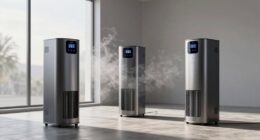
To protect your lungs during renovations without living in plastic, use air purifiers with HEPA filters in common areas and near work zones to trap dust particles. Wear fitted N95 masks when cleaning or working with dusty materials, and opt for wet cleaning methods like mopping and damp wiping to keep dust down. Regularly run air purifiers and switch out filters for ongoing protection. If you want more tips to breathe easier during renovations, keep exploring how to stay safe.
Key Takeaways
- Use air purifiers with HEPA filters in main living areas to continuously trap airborne dust particles.
- Wear N95 or N100 masks during cleaning and dust-generating activities for respiratory protection.
- Dampen surfaces before cleaning and opt for wet mops and cloths to minimize dust becoming airborne.
- Vacuum with HEPA-filtered vacuums and regularly replace filters to remove settled dust effectively.
- Combine air purifiers, masks, and proper cleaning techniques for comprehensive dust control without living in plastic.
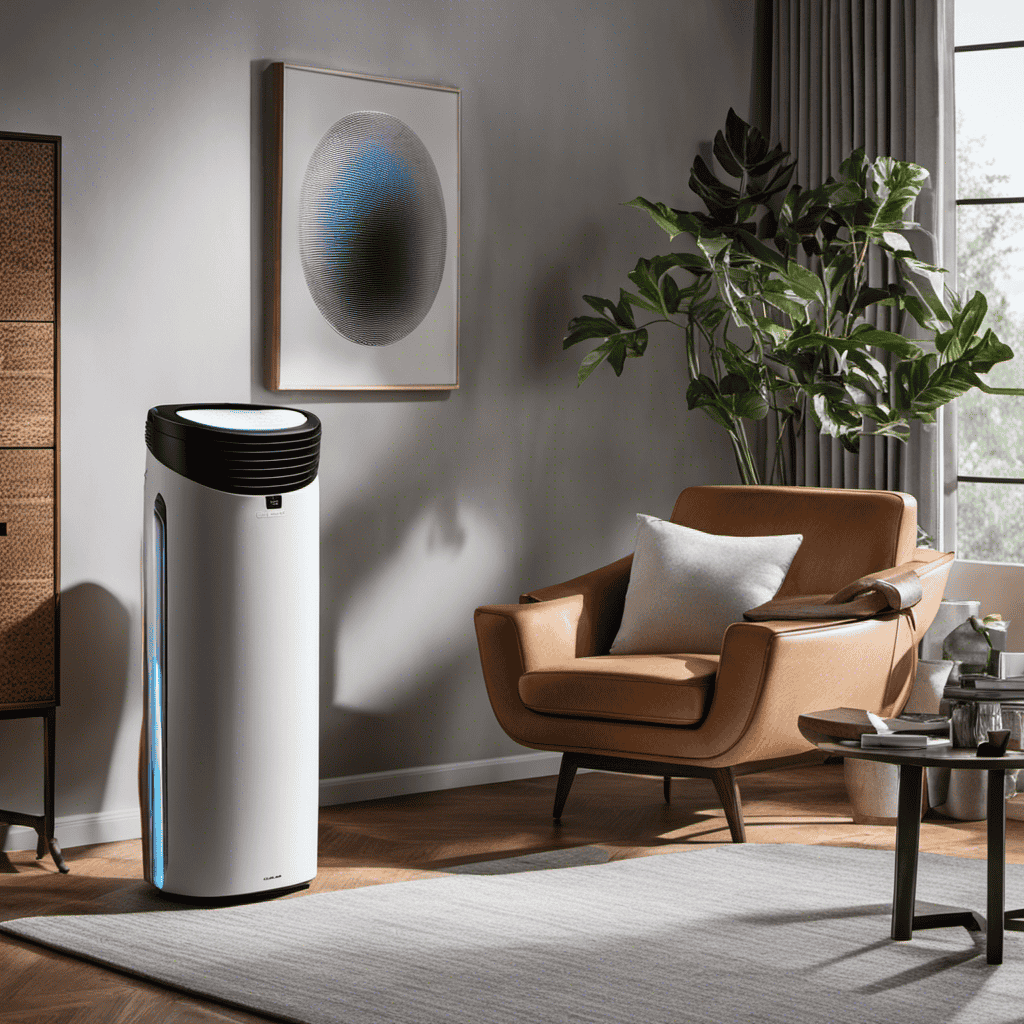
Renovation dust can quickly turn your cleanup efforts into a never-ending battle, but with the right strategies, you can protect your home and health. One of the most effective ways to minimize dust inhalation is by using air purifiers. These devices are designed to trap airborne particles, including fine dust that can easily slip past standard filters. Place air purifiers in common areas and near work zones to continuously filter the air, reducing the amount of dust you breathe in. Look for models with HEPA filters, as they are capable of capturing particles as small as 0.3 microns, providing a significant layer of protection. Running these purifiers during and after work sessions helps keep the air cleaner and your respiratory system safer.
Using HEPA air purifiers during renovation helps reduce airborne dust and safeguard your health.
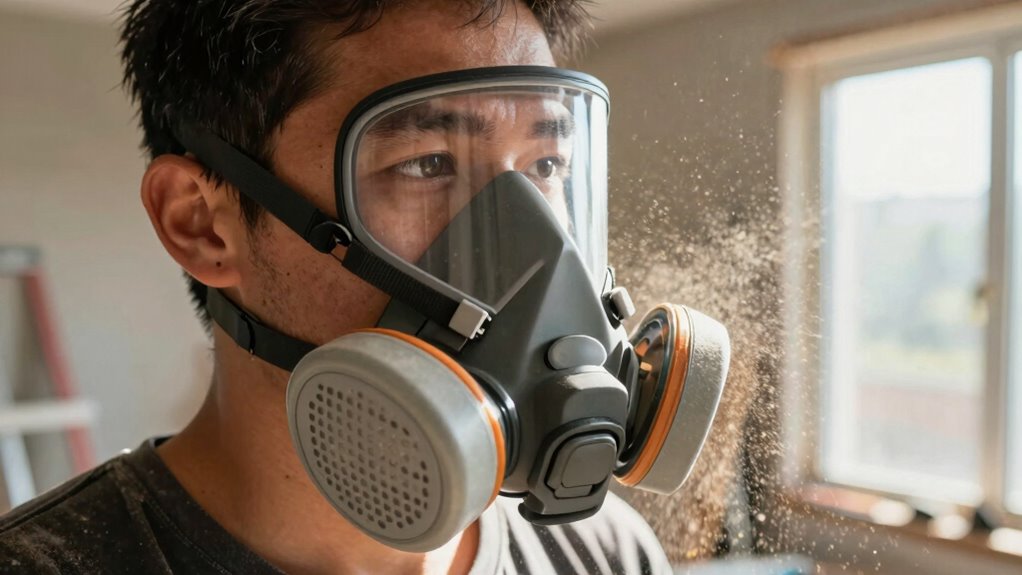
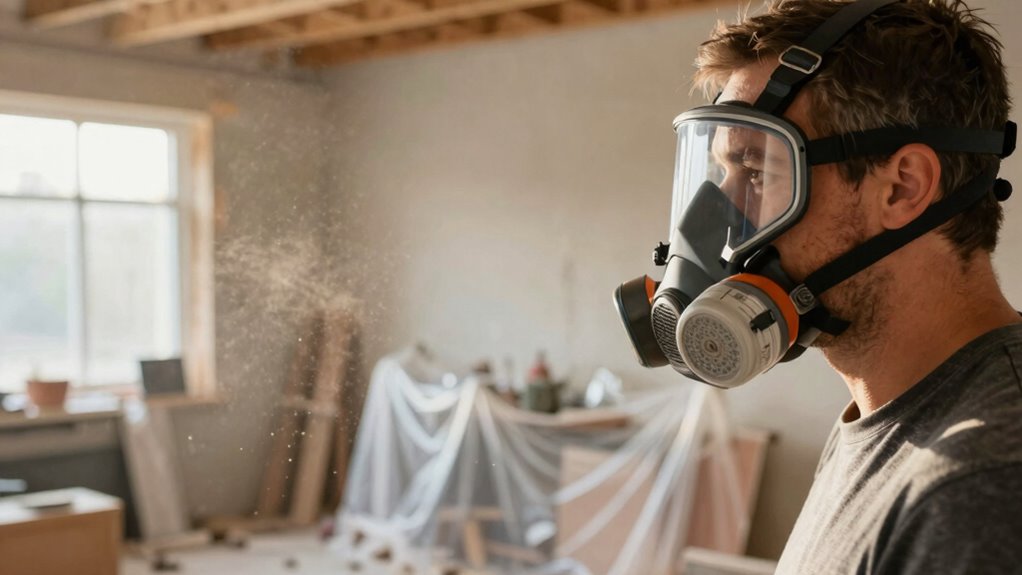
In addition to air purifiers, wearing dust masks is imperative, especially when you’re actively cleaning or handling dusty materials. Not all masks are created equal, so opt for N95 or N100 respirators, which are designed to filter out small particles, including fine construction dust. A snug fit is vital for maximum effectiveness, so make sure your mask seals well around your nose and mouth. This barrier prevents dust from entering your lungs directly, reducing the risk of irritation or long-term health issues. Keep masks handy in your cleanup kit and wear them whenever you’re sweeping, vacuuming, or working with materials that produce a lot of dust.
It’s also wise to establish a routine that limits dust spread. Before starting cleanup, dampen surfaces and materials to prevent dust from becoming airborne. Use a wet cloth or mop instead of dry sweeping, which stirs up dust particles. When vacuuming, opt for a vacuum with a HEPA filter to ensure dust is captured rather than blown back into the air. Wearing your dust mask during these activities adds an extra layer of protection. After finishing, run your air purifier for a few hours to clear residual airborne dust, and consider changing filters regularly to maintain their efficiency.
Ultimately, combining air purifiers, dust masks, and proper cleaning techniques creates a robust defense against renovation dust. These strategies not only help you breathe easier but also safeguard your indoor air quality. Staying vigilant and proactive in your approach allows you to enjoy your renovated space without sacrificing your health. Remember, a little extra effort with these tools can make all the difference in keeping dust at bay and your lungs safe during your home improvement projects. Incorporating high-efficiency filters into your cleaning routine can significantly enhance dust removal and protect your respiratory health.
Frequently Asked Questions
Can I Use Homemade Masks During Renovation?
You can try DIY mask options during renovation, but homemade respirator effectiveness varies. Make sure your homemade mask covers your nose and mouth tightly, using materials like HEPA filters or activated charcoal. While they offer some protection, they may not be as effective as certified masks like N95s. Always prioritize masks tested for dust filtration to better safeguard your lungs and reduce inhalation of harmful particles.
How Often Should I Replace Air Filters During Renovations?
Think of your air filter as the guardian of fresh air in your home. During renovations, dust and debris attack its strength. You should replace your air filter every 1 to 2 months, depending on the air filter lifespan and the dust level. Keep a close eye on it—if it looks dirty or clogged, don’t wait. Regular replacement maintains airflow and keeps your lungs safe from airborne irritants.
Are Certain Plants Effective at Filtering Renovation Dust?
Certain plants can help improve indoor air quality through plant purification, but they’re not highly effective at filtering renovation dust specifically. While plants like spider plants and peace lilies can remove some airborne toxins, they won’t considerably reduce dust particles during renovations. To protect your lungs, focus on proper ventilation, using HEPA filters, and regularly cleaning surfaces. Relying solely on plants won’t be enough to maintain good air quality during heavy dust periods.
What Are the Long-Term Health Effects of Dust Exposure?
Prolonged dust exposure can cause serious long-term health effects like lung damage and persistent respiratory issues. You might experience chronic cough, wheezing, or difficulty breathing if you don’t take precautions. Over time, dust particles can scar lung tissue, increasing your risk for conditions like COPD or asthma. To protect yourself, wear masks, use air purifiers, and minimize dust exposure during renovations. Prioritizing these steps keeps your lungs healthier long-term.
Is It Safe to Stay in the House During Renovation?
Staying in the house during renovation isn’t entirely safe, especially without proper interior ventilation and dust containment strategies. Dust can linger and cause respiratory issues, so it’s best to create a sealed, well-ventilated space or consider temporarily relocating. Use air purifiers, keep doors and windows closed, and seal off dust-prone areas. Prioritize your health by minimizing dust exposure and ensuring good airflow throughout the renovation process.
Conclusion
Now that you’re equipped with these tips, you can breathe easier during your renovation. Think of your lungs as a delicate garden—protect them from dust like tender plants shielded from harsh winds. With proper ventilation, masks, and cleaning, you’ll keep your air clean and your lungs happy, even amid chaos. Remember, staying vigilant is like having an umbrella on a rainy day — it keeps you dry and comfortable. Happy renovating!