
If your home is ‘tight,’ VOCs from cleaning products, paints, and furniture can build up faster because there’s less natural airflow to clear them out. Modern airtight homes trap these invisible pollutants, leading to potential health issues like headaches or respiratory problems over time. Without proper ventilation, VOC levels can increase unnoticed. To protect your indoor air quality, it’s important to understand how ventilation helps, so keep going to learn more about managing these risks effectively.

Get garden gear delivered free — and shop member deals
- Fast, free delivery on millions of items
- Access to Prime Big Deal Days deals on October 6–7
- Prime Video, Amazon Music and more included
Key Takeaways
- Tightly sealed homes reduce natural airflow, causing indoor VOCs to accumulate more rapidly.
- Poor ventilation in airtight homes leads to longer-lasting VOC buildup, increasing health risks.
- Without proper ventilation, VOCs from household products linger, even if odor is undetectable.
- Mechanical systems like HRVs or ERVs are essential to maintain healthy air exchange in tight homes.
- Regularly opening windows or using dedicated ventilation helps prevent silent VOC accumulation.
Have you ever wondered if your home’s tight construction is actually keeping you safer or trapping harmful substances inside? Modern homes are built to be energy-efficient, which often means sealing them tightly to prevent heat loss and reduce energy bills. While this is great for saving money and maintaining comfort, it can also lead to unintended consequences. One major issue is that poor air exchange inside these homes can cause indoor air quality to decline rapidly. When your home doesn’t allow fresh air to circulate effectively, VOCs—volatile organic compounds—can build up faster than you might realize, creating a hidden health risk.
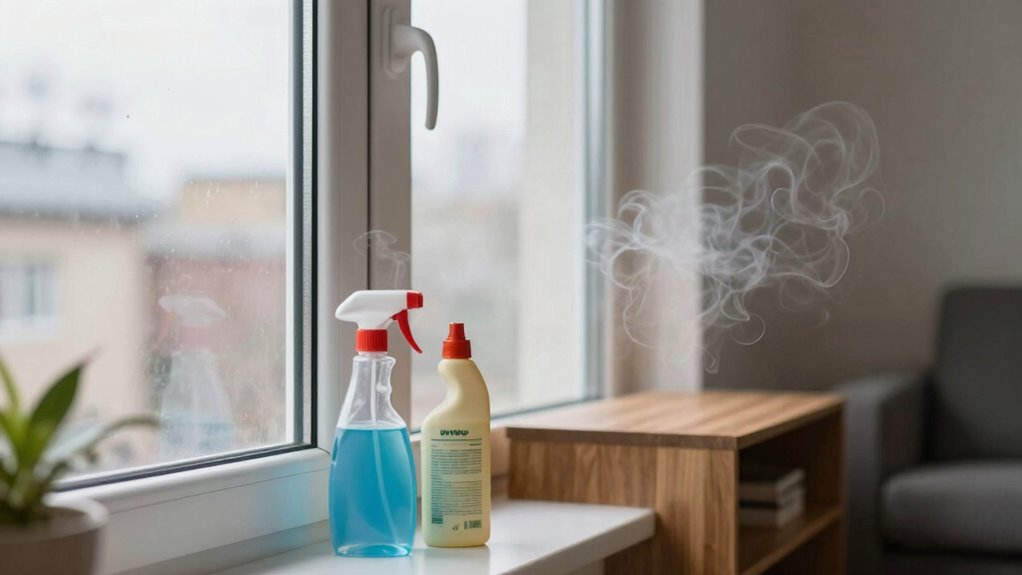
VOCs are emitted from everyday items like cleaning products, paints, furniture, and even personal care products. In a less sealed home, these compounds disperse quickly, diluting their concentration. But in a tight home, the lack of proper air exchange means they linger longer, increasing your exposure. This buildup can cause a range of health issues, from headaches and respiratory irritation to more serious concerns over prolonged periods. It’s easy to assume that if you don’t see or smell anything unusual, your indoor air quality must be fine. However, many VOCs are odorless or have low detectable smells, so the buildup can occur silently, affecting your health over time.
In airtight homes, VOCs linger silently, risking your health over time.
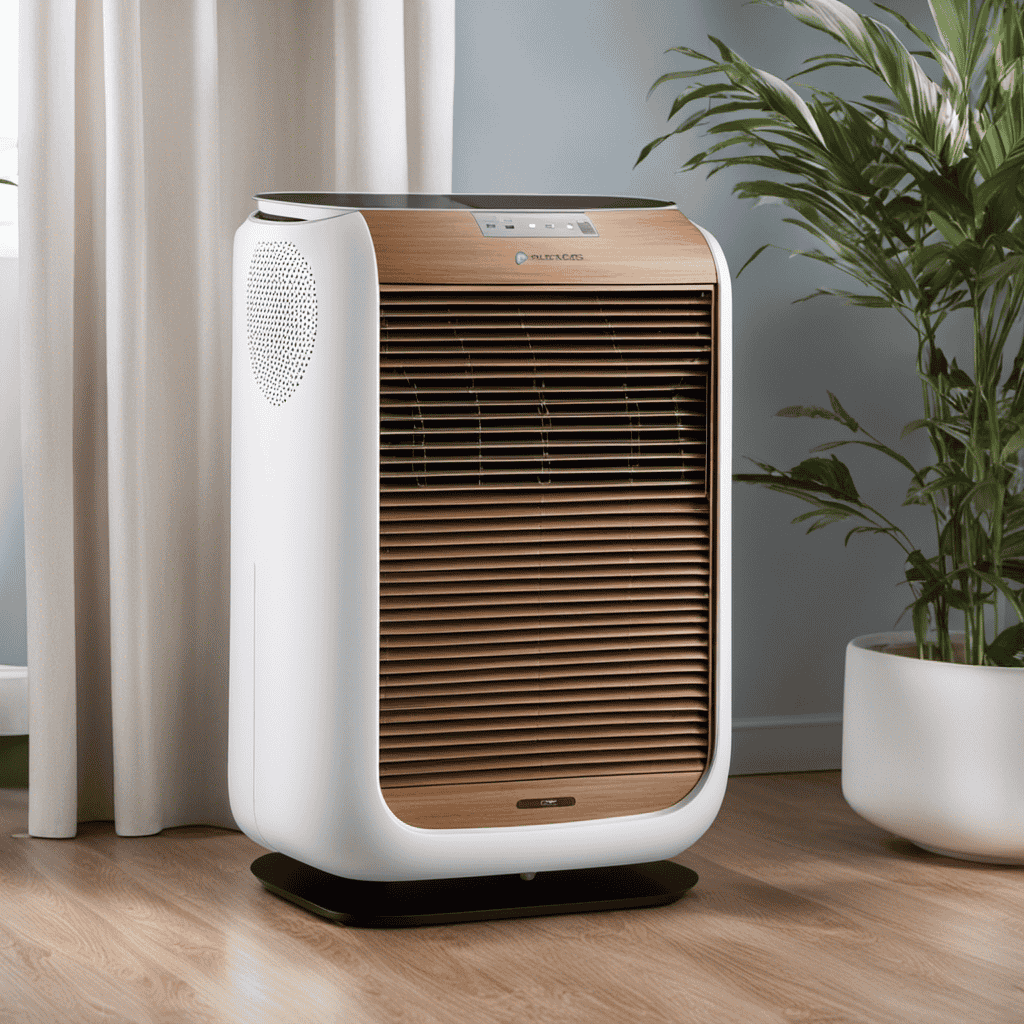
To combat this, you need to think about how your home’s ventilation impacts indoor air quality. Mechanical ventilation systems, like heat recovery ventilators (HRVs) or energy recovery ventilators (ERVs), are designed to bring in fresh air while exhausting stale indoor air. These systems help maintain a balance, ensuring that air exchange occurs regularly without sacrificing energy efficiency. Without proper ventilation, VOC levels tend to rise, especially in airtight homes where natural air flow is restricted. Even simple actions like opening windows periodically can improve air exchange temporarily, but for ongoing control, a dedicated ventilation system is often necessary.
Recognizing the importance of air exchange in maintaining healthy indoor air quality is key. It’s not enough to just seal your home; you must also ensure that fresh air can enter and stale air can exit. Incorporating smart ventilation solutions can optimize this process, providing continuous and energy-efficient air exchange. Doing so helps prevent VOCs from accumulating to harmful levels, protecting your household’s health. When you prioritize good ventilation alongside energy efficiency, you create a safer, healthier environment where you can truly enjoy the comforts of your tight home without worrying about the invisible dangers lurking inside.
As an affiliate, we earn on qualifying purchases.
Frequently Asked Questions
Can VOC Levels Be Harmful Even if No Odors Are Present?
Yes, VOC levels can be harmful even if no odors are present. You might not notice any odor absence, but chemical fumes can still impact your VOCs health. These invisible vapors can cause headaches, dizziness, or respiratory issues over time. It’s important to guarantee good ventilation and use low-VOC products to minimize your exposure, especially in tightly sealed homes where these chemicals can accumulate quickly.
How Often Should I Test My Home’s Indoor Air Quality?
You should test your home’s indoor air quality regularly to stay ahead of potential hazards. Aim for air quality monitoring every three to six months, especially if your home is tight or has new furnishings. Testing frequency helps catch VOC buildup early, protecting your health. Don’t wait until you notice odors—by testing often, you keep your environment safe and breathe easy. It’s better to be safe than sorry.
Are There Specific Household Products That Release the Most VOCS?
You should watch out for household cleaning products and scented products, as they release the most VOCs. Many air fresheners, candles, and cleaning sprays contain chemicals that quickly add to indoor air pollution. Opt for unscented or natural alternatives whenever possible, and always use these products in well-ventilated areas to reduce VOC buildup. Regularly airing out your home helps keep VOC levels lower and improves indoor air quality.
What Are Effective Ways to Reduce VOC Buildup in Tight Homes?
You can reduce VOC buildup in tight homes by improving ventilation strategies and increasing natural air exchange. Open windows regularly, use exhaust fans, and consider air purifiers with activated carbon filters. Avoid overusing VOC-emitting products, and store chemicals properly. Maintaining good airflow helps dilute indoor pollutants, keeping your home’s air fresh and safe. These simple steps make a big difference in managing VOC levels effectively.
Do Air Purifiers Remove All Types of VOCS Effectively?
Imagine a mighty shield battling airborne villains—air purifiers help, but they don’t catch all VOCs. Air purifier limitations, like filter type and placement, affect VOC removal efficiency. Some VOCs are stubborn, slipping through systems or breaking down slowly. While they substantially reduce many airborne chemicals, they can’t eliminate all VOCs completely. You’ll get the best results by combining purifiers with good ventilation and source control.
Conclusion
Remember, in your tightly sealed home, VOCs can quietly accumulate like unseen shadows lurking in every corner. Without proper ventilation, these invisible risks can build up faster than you realize, turning your sanctuary into a silent threat. Think of it as trying to breathe through a closed window—what’s trapped inside soon becomes hard to ignore. Stay vigilant, open those vents, and let fresh air flow in, ensuring your home remains a safe haven rather than a hidden hazard.
Fall Picks
fall essentials
As an affiliate, we earn on qualifying purchases.