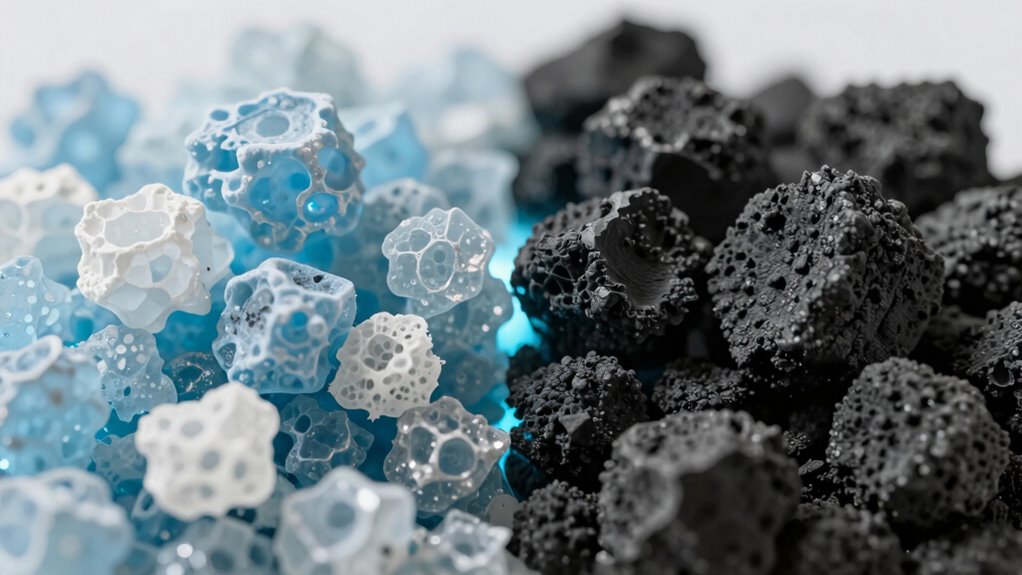
If you’re choosing between zeolite and carbon filters for odors and VOCs, consider their strengths. Zeolite traps small, polar molecules easily and is cheaper to regenerate, making it cost-effective for smaller scale use. Carbon offers versatile, high-efficiency adsorption across a broader range of odors and VOCs, but can be more costly to regenerate. To find out which option suits your needs best, explore the details that follow for a clear comparison.
Key Takeaways
- Carbon generally offers broader and more efficient adsorption for a wide range of odors and VOCs than zeolite.
- Zeolite is effective for specific small, polar molecules like ammonia, but less versatile than carbon.
- Regeneration of zeolite is simpler and less costly, making it suitable for small-scale or localized uses.
- Carbon has higher initial adsorption capacity but can be more expensive and energy-intensive to regenerate.
- Overall, carbon tends to outperform zeolite in diverse odor and VOC removal, but choice depends on specific contaminants and operational factors.
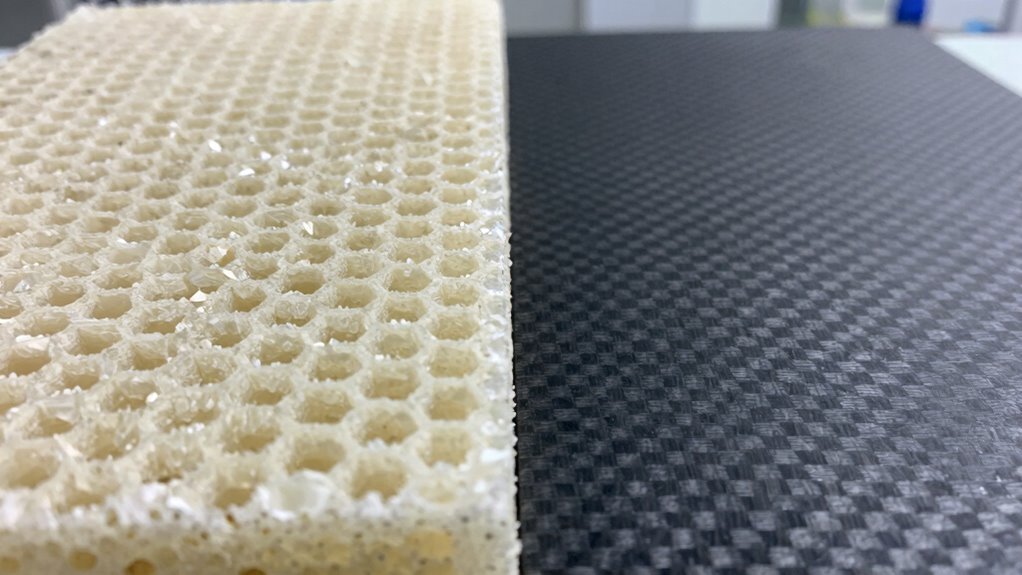
Have you ever wondered how zeolite and carbon compare in their ability to purify air and water? When it comes to tackling odors and volatile organic compounds (VOCs), understanding their adsorption efficiency is key. Zeolite is a natural mineral with a porous, crystalline structure, making it highly effective at trapping molecules through physical adsorption. Its high surface area allows it to adsorb gases and liquids efficiently, especially when dealing with small, polar molecules like ammonia and certain VOCs. Carbon, particularly activated carbon, boasts an even larger surface area due to its extensive network of pores, which results in exceptional adsorption efficiency for a broad spectrum of odor-causing compounds and VOCs. Its ability to adsorb large quantities of contaminants makes it a popular choice for air and water purification.
However, the real difference lies in their regeneration methods. Zeolite can often be regenerated by heating or by replacing it altogether, depending on the application. Heat regeneration involves heating the zeolite to release the adsorbed molecules, restoring its ability to adsorb again. This process is generally straightforward and cost-effective for small-scale or localized uses. Activated carbon, on the other hand, can be regenerated through thermal treatment, chemical washing, or a combination of both. Thermal regeneration involves heating the carbon at high temperatures in a controlled environment to desorb contaminants. Chemical regeneration uses solvents or other chemicals to wash away adsorbed compounds, but this method can be more complex and costly. The choice of regeneration method impacts not only the efficiency of reuse but also the longevity and environmental footprint of the material. Additionally, the adsorption capacity of each material determines how often regeneration is needed, affecting operational costs and sustainability.
In your decision-making process, consider that zeolite’s regeneration is often simpler and less expensive, but it may have a lower adsorption capacity for certain types of VOCs compared to activated carbon. Carbon’s high adsorption efficiency across a broad range of compounds makes it very versatile, but its regeneration process can be more energy-intensive and costly. Both materials are durable if properly regenerated, but the frequency and method of regeneration will influence long-term performance and sustainability. Ultimately, your choice depends on the specific contaminants you’re targeting, the operational costs you’re willing to manage, and whether regeneration ease or adsorption breadth is your priority. By understanding these differences, you can select the most suitable material for your air or water purification needs, ensuring optimal odor and VOC removal.
Frequently Asked Questions
Can Zeolite and Carbon Be Used Together Effectively?
Yes, you can use zeolite and carbon together effectively. Their combination offers synergistic absorption, enhancing overall odor and VOC removal. Zeolite quickly traps larger molecules, while carbon provides a broad surface area for absorbing smaller particles. This combined efficiency means you get a more extensive filtration system. By integrating both, you maximize the benefits, ensuring fresher air and better odor control in your space.
Which Material Is More Environmentally Sustainable Long-Term?
You’ll find that zeolite is more environmentally sustainable long-term because of its recyclability comparison. Zeolite can often be regenerated and reused, reducing waste and lowering environmental impact over time. Carbon, especially activated carbon, typically requires replacement once saturated, creating more waste. Consequently, if sustainability matters to you, zeolite’s ability to be reused makes it the greener choice, minimizing your ecological footprint in the long run.
Are There Specific Odors That Zeolite or Carbon Cannot Absorb?
Like trying to find a needle in a haystack, some odors can slip past zeolite or carbon. You might notice that very strong or chemically complex smells, like certain industrial fumes or specific organic compounds, aren’t effectively absorbed. To handle these, check chemical compatibility and consider regeneration methods, which can restore absorption capacity. Neither material is perfect for all odors, so selecting the right one depends on your specific needs.
How Do Maintenance and Replacement Costs Compare?
You’ll find that maintenance and replacement costs differ mainly due to cost comparison and replacement frequency. Zeolite typically costs less upfront and needs replacing less often, making it more economical over time. Carbon filters tend to be pricier and require more frequent replacement because they saturate faster with odors and VOCs. So, if you’re budgeting, zeolite generally offers a more cost-effective solution with lower maintenance demands.
Do Zeolite and Carbon Release Any Harmful Substances?
You might worry about chemical emissions and toxicity concerns, but both zeolite and carbon are generally safe when used properly. Zeolite’s natural mineral composition means it’s unlikely to release harmful substances, while activated carbon is inert and stable. Neither emits toxic chemicals under normal conditions. Still, verify good ventilation and proper maintenance to keep your environment safe and odor-free, avoiding any potential health risks.
Conclusion
So, when it comes to battling odors and VOCs, think of zeolite as that trusty sponge soaking up unwanted smells, while carbon acts like a fierce ninja slashing through them. Zeolite offers a gentle, natural approach, perfect for everyday freshness, whereas carbon packs a punch for tougher odors. Depending on your needs, you can choose your hero—whether the calm sponge or the stealthy ninja—to keep your space smelling sweet as a spring breeze.