
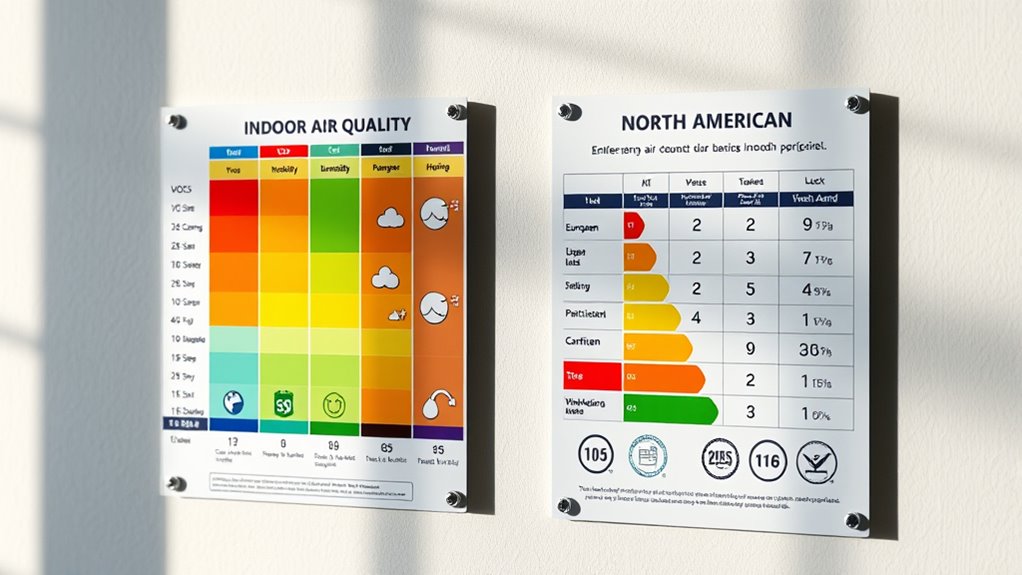
European indoor air quality labels focus on pollutant measurement, ventilation standards, and sustainable manufacturing practices, helping you identify products that promote healthier air. In contrast, North American labels primarily emphasize certification programs that verify compliance over time, ensuring products emit minimal harmful substances. Both regions aim to guide you toward safer indoor environments, but their approaches differ. If you’re interested in understanding how these labels help protect your indoor air, there’s more to explore.
Key Takeaways
- European labels prioritize pollutant measurement and adherence to ventilation standards, emphasizing emissions testing and sustainable manufacturing practices.
- North American labels focus on certification programs that verify ongoing compliance with indoor air quality standards and pollutant protocols.
- Both regions aim to guide consumers toward healthier indoor environments but differ in emphasis on testing versus certification processes.
- European standards often require rigorous pollutant emission testing, while North American labels highlight certification and monitoring for long-term safety.
- Understanding these regional differences helps consumers select products that support optimal indoor air quality across Europe and North America.
Have you ever wondered how you can quickly identify products that promote healthier indoor air? The key often lies in understanding the various indoor air quality labels available across Europe and North America. These labels are designed to help consumers like you make informed decisions by highlighting products that meet specific standards for air safety and health. One of the foundational aspects of these labels is their adherence to ventilation standards, which ensure that indoor environments maintain proper airflow. Ventilation standards set the minimum requirements for air exchange rates, helping to dilute and remove indoor pollutants. When a product or building complies with these standards, it indicates that pollutant measurement has been carefully considered to prevent the buildup of harmful substances. For example, certain labels specify that the product meets ventilation standards that regulate the amount of fresh air introduced, reducing the concentration of indoor pollutants such as volatile organic compounds (VOCs), formaldehyde, or particulate matter. Additionally, standardized testing methods are crucial for reliably assessing pollutant emissions and ensuring consistency across different labels and certifications.
Understanding ventilation standards helps ensure indoor air quality by regulating airflow and pollutant levels.
In Europe, these labels often emphasize pollutant measurement as a core component. They typically require rigorous testing to quantify the levels of specific indoor pollutants that a product emits or absorbs. This approach allows you to compare products based on their pollutant emissions, giving you confidence that what you choose will not compromise indoor air quality. Many European labels also incorporate criteria related to sustainable manufacturing and low chemical emissions, providing a comprehensive picture of a product’s impact on indoor environments.
North American labels, meanwhile, tend to focus heavily on certification programs that verify compliance with stringent indoor air quality standards. These labels often highlight adherence to protocols that include pollutant measurement, ensuring that products emit minimal VOCs or other harmful substances. Some certifications also require ongoing testing and monitoring, which signifies a commitment to long-term indoor air safety. For you, this means that selecting a product with a North American indoor air quality label assures that it’s been evaluated against rigorous pollutant measurement criteria and meets ventilation standards designed to keep indoor air safe.
While there are differences, both regions aim to guide consumers toward healthier indoor environments through labels that prioritize pollutant measurement and ventilation standards. Ultimately, understanding these labels can empower you to make smarter choices, ensuring your indoor spaces are healthier and more comfortable. By paying attention to what these labels signify—particularly their compliance with ventilation standards and pollutant measurement protocols—you can confidently select products that support better indoor air quality and safeguard your health.

16 in 1 Air Quality Monitor Indoor 7" Large Display 9 AQI+7 Alerts, CO2 Monitor Air Quality Tester for CO2, TVOC, PM2.5 PM1.0 PM10, HCHO Temperature Humidity AQI & Time Air Quality Meter for Home
- 16-in-1 Air Quality Monitoring: Detects 9 key air parameters
- Large 7-inch Display: Clear, bright air quality readings
- Multiple AQI Alerts: 7 alert buzzers for safety
As an affiliate, we earn on qualifying purchases.
As an affiliate, we earn on qualifying purchases.
Frequently Asked Questions
How Do Indoor Air Quality Labels Impact Consumer Health Choices?
Indoor air quality labels markedly influence your health choices by boosting consumer awareness of air safety standards. When you see a credible label, you trust that the product meets strict air quality criteria, encouraging healthier selections. This label credibility helps you avoid harmful emissions and indoor pollutants, empowering you to make informed decisions that protect your well-being and promote a healthier living environment.
Are There Any International Standards for Indoor Air Quality Labeling?
You’ll find no single global standard for indoor air quality labeling, but efforts like standardization initiatives aim to harmonize criteria across borders. These efforts promote cross-border recognition, making it easier for consumers worldwide to trust labels. While a universal standard remains elusive, such initiatives work towards consistency, helping you make healthier choices regardless of where you shop. This movement could be the key to truly universal indoor air quality standards someday.
How Often Are Indoor Air Quality Labels Updated or Revised?
Indoor air quality labels are typically updated every few years, but the renewal frequency varies by region. You should check the specific label’s revision criteria, which often include changes in standards, new scientific data, or technological advancements. Regular updates guarantee that the label accurately reflects current air quality conditions and safety standards, helping you make informed choices for healthier indoor environments.
Do Labels Consider Chemical, Biological, and Particulate Pollutants Equally?
Indoor air quality labels don’t treat chemical, biological, and particulate pollutants equally. They focus on chemical assessment to identify harmful substances, while biological evaluation checks for mold or bacteria. Particulate matter is also considered, but often with less emphasis. You should review each label’s criteria to understand its specific focus, as some prioritize chemical safety, while others give more weight to biological or particulate concerns.
What Is the Process for a Product or Building to Earn an Indoor Air Quality Label?
Imagine you want your office building to earn an indoor air quality label. You start by submitting documentation for the certification process, showing compliance requirements like low VOC emissions and proper ventilation. Then, inspectors assess your building or product, testing air quality levels. If standards are met, you receive the label. This process guarantees your space meets specific health and safety criteria, promoting a healthier environment.
Conclusion
In the end, understanding the differences between European and North American indoor air quality labels helps you make smarter choices. You notice how labels often reflect regional priorities, yet both aim for safer, healthier spaces. It’s a coincidence that these labels, though separate, share a common goal—protecting your health. By paying attention to these labels, you’re more aware and better equipped to create indoor environments that truly support your well-being, wherever you are.