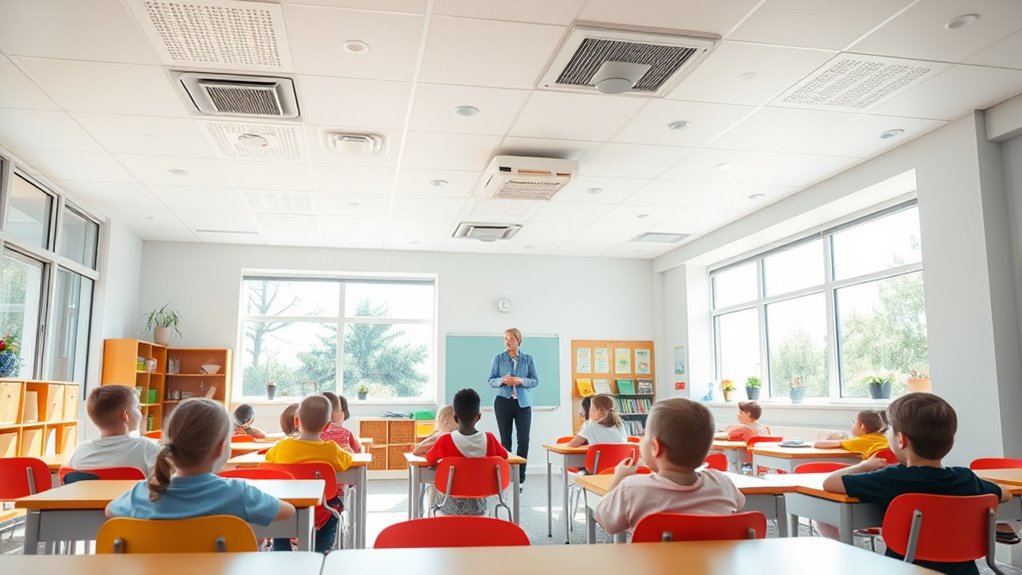

To guarantee safe ventilation in schools and daycares, you should maximize outdoor air exchange using HVAC systems with high-quality filters like HEPA. Monitor outdoor air quality and adjust ventilation accordingly, especially during pollution or wildfire seasons. Regularly maintain and inspect your systems to keep them efficient. Combining proper filtration with outdoor air management helps reduce pollutants, allergens, and viruses. If you want to learn more about creating the healthiest indoor spaces, keep exploring these best practices.
Key Takeaways
- Maximize outdoor air exchange while ensuring filtration to reduce indoor pollutant levels.
- Use HVAC systems equipped with HEPA filters to effectively capture microscopic particles and viruses.
- Monitor local outdoor air quality and adjust ventilation strategies during pollution or wildfire events.
- Maintain and inspect ventilation systems regularly for optimal performance and efficiency.
- Minimize indoor pollution sources and avoid chemical pollutants to promote a healthier indoor environment.
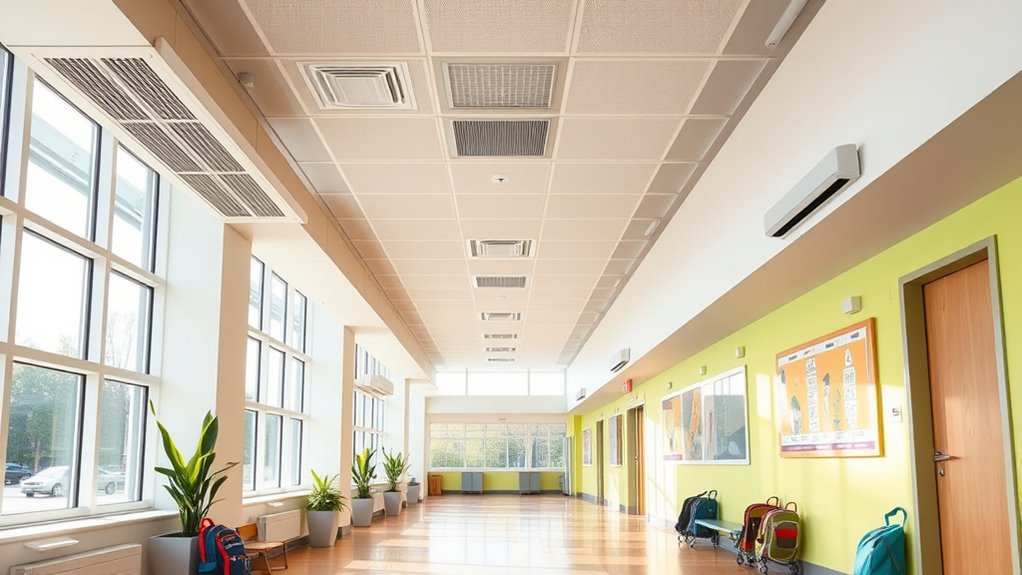
Have you ever wondered how good air quality impacts the health and safety of students and staff? It’s a vital factor that often gets overlooked but can make a considerable difference in a learning environment. Proper ventilation isn’t just about comfort; it directly affects the well-being of everyone inside the classroom or daycare. One key aspect is air filtration, which helps remove pollutants, allergens, and even viruses from the indoor air. Effective air filtration systems trap microscopic particles that can cause respiratory issues or spread illnesses, guaranteeing cleaner air for everyone. But filtration alone isn’t enough. You also need to think about outdoor air quality, as it influences the overall indoor environment. If the outdoor air is polluted or carries allergens, simply relying on ventilation without filtration can introduce harmful particles indoors. That’s why integrating high-quality filtration systems with fresh outdoor air intake is essential to maintain ideal air quality.
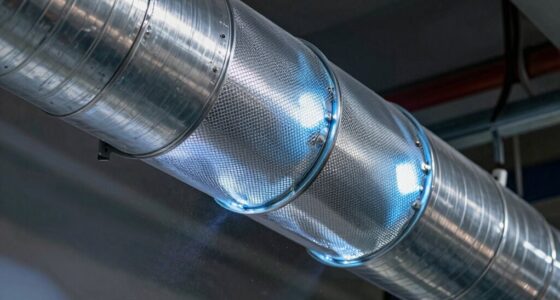
In practice, you should aim to maximize outdoor air exchange while filtering out pollutants. This involves using HVAC systems equipped with HEPA filters or other advanced filtration technologies that capture tiny particles and pathogens. When outdoor air quality is poor—such as during high pollution days or wildfire seasons—ventilation strategies need to adapt. In these instances, you might opt to limit outdoor air intake temporarily and rely more heavily on filtration to keep indoor air safe. Monitoring outdoor air quality through local air quality indices helps you make informed decisions about when to increase or decrease outdoor air ventilation. Additionally, ensuring that ventilation systems are properly maintained and regularly inspected guarantees they operate at peak efficiency. Furthermore, the use of high-performance projectors in educational settings highlights the importance of environmental factors like proper ventilation to protect sensitive electronic equipment and ensure optimal operation.
Creating a healthy indoor environment also involves controlling other factors that influence air quality. Encourage good hygiene practices, reduce sources of indoor pollution like cleaning chemicals, and ensure proper maintenance of ventilation equipment. Proper air filtration combined with the strategic use of outdoor air can substantially reduce the risk of airborne illnesses, allergies, and respiratory problems. Remember, the goal is to strike a balance—introducing enough outdoor air to dilute indoor contaminants but not so much that you bring in excessive pollutants. By paying close attention to outdoor air quality and investing in effective air filtration, you’re taking proactive steps to safeguard the health and safety of everyone in your school or daycare. Ultimately, a well-ventilated space isn’t just about comfort; it’s about creating a healthier, safer environment where children and staff can thrive.

MOOKA Air Purifiers for Home Large Room up to 1076ft², H13 True HEPA Air Filter Cleaner, Odor Eliminator, Remove Smoke Dust Pollen Pet Dander, Night Light, B-D02L White
- Large Coverage Area: Covers up to 1076 ft² with 6 air changes/hour
- High-Efficiency Filtration: Captures pet hair, dander, smoke, and dust
- True HEPA Filter: Removes airborne particles as small as 0.3 microns
As an affiliate, we earn on qualifying purchases.
As an affiliate, we earn on qualifying purchases.
Frequently Asked Questions
How Often Should Ventilation Systems Be Inspected and Maintained?
You should inspect and maintain your ventilation systems at least twice a year to guarantee ideal air quality. Regular checks help identify issues early and keep the system running efficiently. Follow a consistent maintenance schedule, including filter replacements and cleaning, to prevent indoor air pollution. Staying on top of these tasks ensures a healthy environment for children and staff, reducing the risk of airborne illnesses and improving overall air quality.
What Are the Costs Associated With Upgrading Existing Ventilation Systems?
Upgrading ventilation systems can cost between $10,000 and $50,000 per school, depending on size and complexity. A thorough cost analysis helps you plan your budget effectively, ensuring funding covers new equipment, installation, and ongoing maintenance. Investing in better ventilation enhances indoor air quality and safety. By carefully evaluating options, you can make informed decisions that balance costs with long-term health benefits for students and staff.
How Does Ventilation Impact Airborne Pathogen Transmission in Schools?
Proper ventilation reduces airborne transmission and limits pathogen spread in schools. When you improve airflow, you dilute contaminated air, decreasing the concentration of airborne pathogens. This helps protect students and staff by lowering infection risks, especially during outbreaks of illnesses like flu or COVID-19. Effective ventilation means fresh air circulates continuously, making indoor environments safer and healthier for everyone.
Are There Specific Ventilation Standards for Different Age Groups?
Yes, there are age-specific ventilation standards tailored to different age groups. Child-focused standards recognize that young children’s respiratory systems are more vulnerable, so they require higher air exchange rates and better filtration. For instance, preschools might have stricter ventilation criteria compared to older students. You should verify that your ventilation system meets these age-specific guidelines to reduce airborne pathogen transmission and promote a healthier learning environment for all children.
How Can Schools Measure the Effectiveness of Their Ventilation Systems?
You can gauge your ventilation system’s effectiveness like a health detective by monitoring air quality metrics and airflow. Use sensors to track CO2 levels, particulate counts, and humidity—these tell you how well fresh air circulates. Regular airflow monitoring helps identify dead zones or weak spots. If readings stay within recommended ranges, your system is doing its job; if not, tweak it until breathable air flows freely through every corner.
Conclusion
As you implement these ventilation best practices, imagine fresh air gently weaving through each classroom, carrying away lingering germs and filling the space with clarity and comfort. Picture children’s laughter echoing in a room that feels as open and breathable as a spring breeze. By prioritizing proper ventilation, you create a safe haven where young minds can thrive, shielded by the invisible but essential flow of clean, circulating air that nurtures health and growth every day.