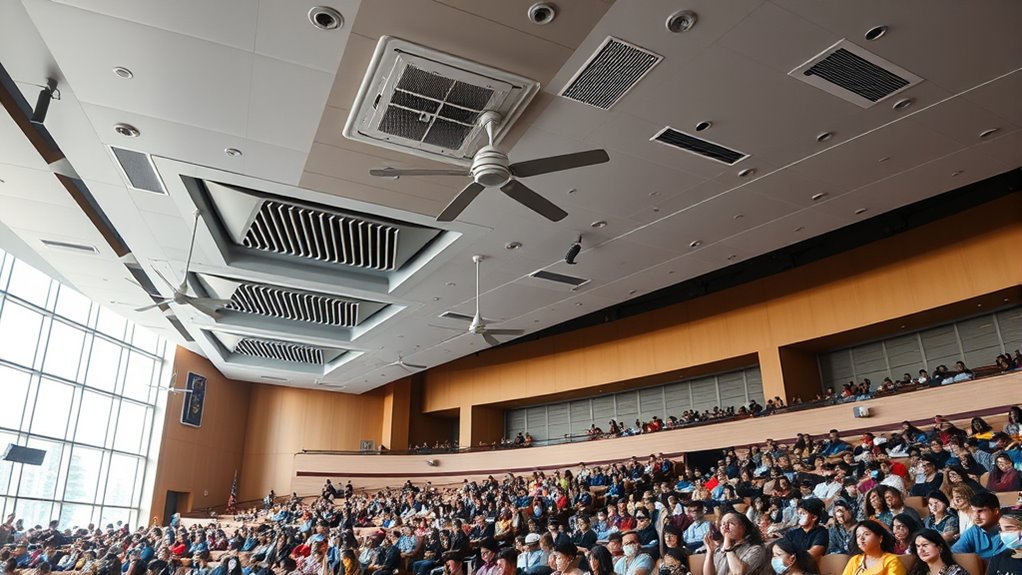

To guarantee good air quality in high-occupancy spaces, you should implement effective ventilation strategies like increasing outdoor air intake, using energy-efficient HVAC systems with heat recovery, and maintaining high-quality air filters or purifiers. Balancing air exchange and filtration helps remove airborne contaminants while controlling energy costs. Regularly monitoring and adjusting these systems ensures they work at their best for your space. Keep exploring to discover more ways to enhance your ventilation approach.
Key Takeaways
- Implement high-capacity ventilation systems with proper air exchange rates to quickly dilute indoor contaminants.
- Incorporate energy recovery ventilators (ERVs) or heat recovery ventilators (HRVs) for efficient fresh air supply.
- Use high-efficiency filters (HEPA or MERV-rated) to capture airborne particles and improve air quality.
- Adjust ventilation based on occupancy levels with sensors and automation for optimal air exchange.
- Regularly maintain and monitor ventilation systems to ensure consistent performance and indoor air safety.

Have you ever wondered how effective ventilation can improve indoor air quality and overall comfort? In high-occupancy spaces, proper ventilation isn’t just a luxury; it’s a necessity. When many people gather in a single area, the buildup of carbon dioxide, odors, and airborne contaminants can quickly compromise air quality. That’s where strategic ventilation comes into play, ensuring fresh air continually replaces stale indoor air through efficient air exchange. This process involves removing contaminated air and bringing in fresh outdoor air, which considerably reduces the risk of airborne illnesses and improves overall comfort. To maximize this, you need to pay attention to air filtration as well. High-quality filters capture dust, pollen, bacteria, and other particles, preventing them from recirculating and infecting occupants. Combining effective air exchange with robust air filtration creates a cleaner, healthier environment, especially in settings like offices, gyms, or large halls. Incorporating energy-efficient ventilation systems can further optimize performance and reduce operational costs.
Implementing a balanced ventilation system means you’re actively controlling how much air enters and leaves the space. Mechanical systems such as HVAC units equipped with energy recovery ventilators (ERVs) or heat recovery ventilators (HRVs) can manage air exchange efficiently, even in large or complex layouts. These systems not only bring in fresh air but also recover energy from exhausted air, reducing energy costs while maintaining indoor comfort. To amplify their effectiveness, make sure your system is properly sized for your space and that it operates continuously or according to occupancy levels. During peak times, increasing the rate of air exchange ensures contaminants are quickly diluted, maintaining a safe environment for everyone inside.
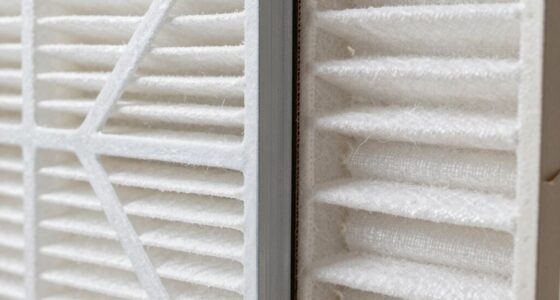
Air filtration plays a pivotal role in enhancing ventilation strategies. Upgrading to higher MERV-rated filters or HEPA filters can dramatically improve indoor air quality by trapping smaller particles that standard filters might miss. Regular maintenance and timely replacement of filters are essential to keep the system working at its best. Additionally, incorporating portable air purifiers with advanced filtration can serve as supplementary measures, especially in areas where airflow might be limited or where high-risk individuals are present. Combining these filtration techniques with a well-designed air exchange system ensures that the air circulating within your space remains clean and safe to breathe.
Ultimately, a well-planned ventilation strategy that emphasizes both air exchange and air filtration helps you create a healthier environment for everyone. It reduces airborne transmission of illnesses, enhances comfort, and boosts overall well-being. By continuously monitoring air quality and adjusting your systems accordingly, you can guarantee that your high-occupancy space remains a safe, welcoming place for all occupants.

LEVOIT Smart Air Purifier for Home Pets Room up to 1875 ft Vital 200S-P
- AHAM Certified for Performance: Independently tested for air quality and safety
- Trusted by Experts: Meets strict standards with high CADR ratings
- Designed for Allergies: Effectively captures pollen, pet hair, and dust
As an affiliate, we earn on qualifying purchases.
As an affiliate, we earn on qualifying purchases.
Frequently Asked Questions
How Do Ventilation Needs Vary With Different Building Types?
You need to take into account building type because ventilation needs vary with building pressure and airflow distribution. In a school or office, you should guarantee balanced airflow to prevent pressure imbalances that could compromise air quality. For factories or gyms, higher airflow rates are necessary to remove contaminants and maintain comfort. Adjust ventilation systems accordingly, optimizing pressure and airflow to suit each space’s occupancy and activity level.
What Are the Latest Innovations in High-Occupancy Space Ventilation?
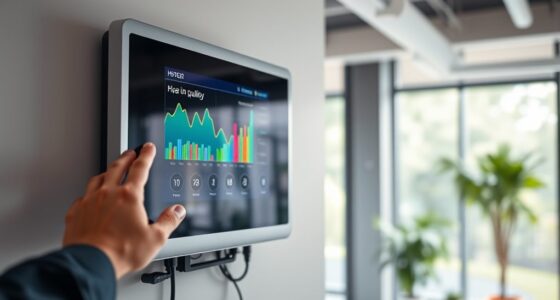
You should explore the latest innovations like smart ventilation systems that adapt airflow based on real-time air quality data. Advanced air filtration technologies, such as HEPA and UV-C filters, effectively remove airborne contaminants, improving air quality. These systems often integrate sensors and automation, ensuring ideal ventilation while conserving energy. Staying updated on these innovations helps you create safer, healthier high-occupancy spaces by maintaining superior air quality through effective air filtration.
How Can Ventilation Systems Be Optimized for Energy Efficiency?
Did you know that optimizing air exchange can reduce energy use by up to 30%? To maximize energy efficiency, you should implement demand-controlled ventilation that adjusts airflow based on occupancy. Use sensors to monitor real-time air quality, ensuring adequate ventilation without waste. Incorporate energy recovery systems, like heat exchangers, to conserve heat during air exchange. These strategies help you maintain healthy indoor air while saving energy effectively.
What Maintenance Practices Ensure Ventilation System Effectiveness?
You should regularly perform filter maintenance to guarantee your ventilation system functions effectively, replacing or cleaning filters as recommended. Additionally, conduct airflow calibration periodically to maintain proper air distribution and prevent energy waste. By keeping filters clean and calibrating airflow, you ensure ideal system performance, improve indoor air quality, and extend equipment lifespan. These practices help your ventilation system operate efficiently and reliably in high-occupancy spaces.
How Do Local Regulations Influence Ventilation Design Choices?
You need to follow local regulations because they set minimum standards for ventilation design, ensuring safety and regulatory compliance. Regional standards influence your choices by specifying air quality, airflow rates, and filtration requirements. By aligning your ventilation system with these regulations, you prevent legal issues and create a healthier environment. Always stay updated on regional standards, as they can evolve, impacting system specifications and operational practices.
Conclusion
Think of ventilation as the heartbeat of a high-occupancy space—pumping fresh air and essential energy into every corner. When you choose the right strategies, you’re planting seeds of safety and comfort that grow stronger with each breath. Just as a lighthouse guides ships safely home, effective ventilation illuminates the path to healthier environments. Embrace these methods, and you’ll create a sanctuary where everyone feels protected, energized, and ready to thrive amidst the bustling rhythm of daily life.