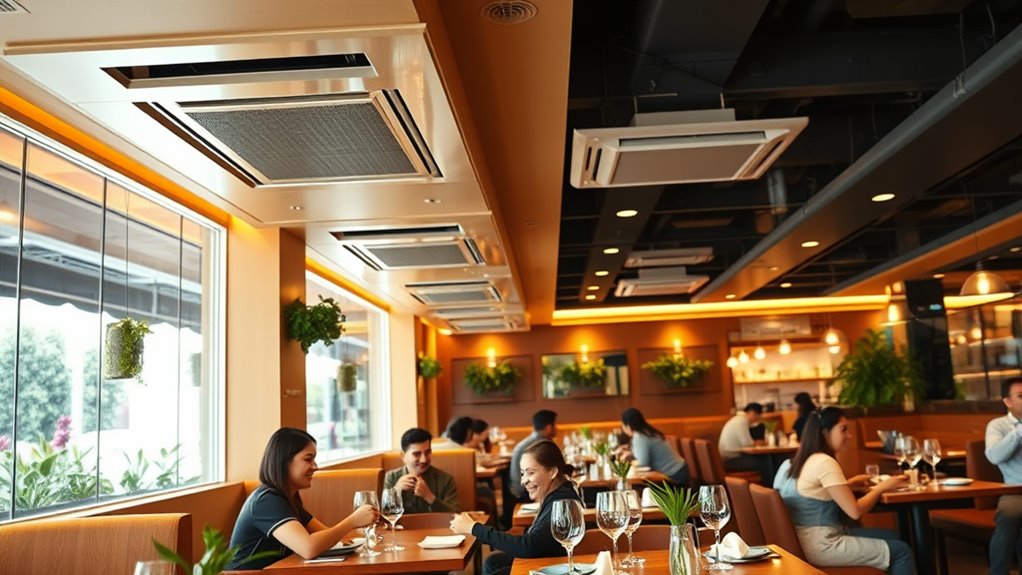

Implementing effective air purification in your restaurant helps you create a safer, more comfortable space for your diners and staff. By investing in advanced ventilation, high-efficiency filters, and air purification units, you reduce airborne particles, bacteria, and viruses, ensuring cleaner indoor air. Proper maintenance and strategic airflow management keep the environment fresh and compliant with health guidelines. To discover how to optimize your air quality and boost customer confidence, explore further strategies you can apply today.
Listen free for 30 days with Audible
Thousands of audiobooks and originals — cancel anytime.
As an affiliate, we earn on qualifying purchases.
Key Takeaways
- Installing air purification units and high-efficiency filters reduces airborne pathogens, bacteria, and viruses, improving overall air safety.
- Regular maintenance of ventilation systems ensures optimal air exchange and removal of stale, contaminated air in dining spaces.
- Strategically placing exhaust fans and air intakes enhances airflow, reducing dead zones and maintaining fresh indoor air.
- Incorporating demand-controlled ventilation adjusts airflow based on occupancy, optimizing air quality and energy efficiency.
- Ensuring compliance with health regulations and staff training on system operation supports a safer, healthier dining environment.

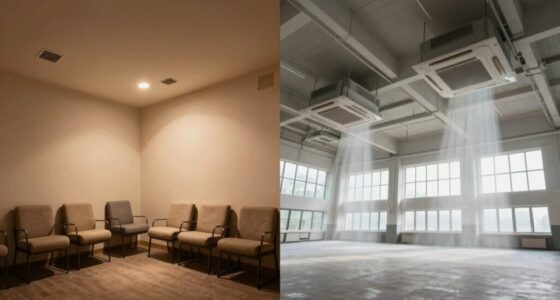
Maintaining clean and fresh air in restaurants has become more important than ever, especially as customers seek safer dining environments. Good indoor air quality isn’t just about comfort; it’s about health, safety, and confidence. When you focus on optimizing ventilation systems, you actively improve the air your guests breathe, reducing the risk of airborne illnesses and eliminating lingering odors. Proper ventilation moves stale, contaminated air out and brings in fresh air, creating a healthier atmosphere for everyone. If your ventilation system isn’t up to par, airborne particles, including bacteria and viruses, can circulate freely, compromising your diners’ safety. That’s why investing in advanced ventilation is a smart move—it guarantees a constant exchange of air and helps maintain a clean, safe environment.
You should pay close attention to your ventilation systems because they directly influence indoor air quality. Regular maintenance, like changing filters and inspecting ducts, keeps these systems working efficiently and prevents the buildup of dust and pollutants. Consider upgrading to high-efficiency filters or adding air purification units that target airborne pathogens and pollutants. These enhancements can substantially improve air quality without disrupting your service. Additionally, strategic placement of exhaust fans and air intakes helps circulate air more effectively, reducing dead zones where stale air might linger. When you prioritize ventilation, you create a space where both staff and guests feel comfortable and safe, which ultimately builds trust and loyalty. Proper air circulation is essential for maintaining optimal indoor environments.
Another important aspect is making sure your ventilation system complies with local health and safety guidelines. This may involve adjusting airflow rates or installing air purifiers that capture microscopic particles. You can also introduce demand-controlled ventilation that automatically adjusts based on occupancy levels, ensuring maximum efficiency and air turnover. Educating your staff about maintaining these systems is equally crucial—simple actions like keeping vents unobstructed or reporting issues promptly can make a considerable difference. When your ventilation systems work seamlessly, you minimize potential airborne hazards, making your restaurant a safer place for everyone.
In essence, focusing on indoor air quality through effective ventilation isn’t just a maintenance task; it’s a key component of your restaurant’s health strategy. Clean, well-ventilated air reassures your customers that their safety is a top priority. It also helps you stay ahead of health regulations and reduces the likelihood of outbreaks caused by poor air circulation. By taking these steps, you foster a dining environment that promotes well-being, comfort, and confidence. Investing in your ventilation systems and maintaining high indoor air quality isn’t just good practice—it’s crucial in today’s health-conscious world.
restaurant air purification units
As an affiliate, we earn on qualifying purchases.
As an affiliate, we earn on qualifying purchases.
Frequently Asked Questions
How Often Should Restaurant Air Purifiers Be Serviced?
You should service your restaurant air purifiers every 3 to 6 months, following a regular maintenance schedule. Make sure to check and replace filters as needed, usually every 3 months or sooner if they’re visibly dirty or clogged. Consistent maintenance guarantees peak air quality, keeps the system running efficiently, and maintains a safe, comfortable environment for your diners. Staying on top of filter replacement is key to effective air purification.
Do Air Purifiers Eliminate All Airborne Viruses?
Air purifiers can’t eliminate all airborne viruses because viral particles are tiny and can sometimes bypass filters. However, their effectiveness substantially reduces the number of viral particles in the air, lowering the risk of transmission. You should choose purifiers with HEPA filters and ensure proper maintenance. While they improve safety, combining air purification with good ventilation and hygiene practices offers the best protection for your diners.
What Is the Average Cost of Installing Air Purification Systems?
The average installation cost of air purification systems ranges from $2,000 to $7,000, depending on system size and complexity. You’ll find system affordability varies, with basic units costing less and advanced setups requiring higher investment. To guarantee you get the best value, compare different options and consider long-term benefits like improved indoor air quality. Remember, investing in a quality system enhances safety and comfort for your diners.
Are Air Purifiers Effective Against Odors From Cooking?
Imagine a busy restaurant struggling with persistent cooking odors. Air filtration systems are highly effective against these odors, reducing them considerably. For example, a commercial air purifier with activated carbon filters can trap cooking odors and airborne grease particles, improving air quality. So, yes, air purifiers effectively combat cooking odors, making your space more comfortable. Regular maintenance and proper filtration ensure they continue to work efficiently against stubborn cooking smells.
Can Air Purifiers Reduce Allergens for Sensitive Diners?
Yes, air purifiers can decrease allergens, improving sensitive diner’s safety. They trap airborne particles like pollen, pet dander, and dust, which often trigger allergies. By continuously filtering the air, you create a safer, more comfortable environment for sensitive diners. This not only helps prevent allergic reactions but also demonstrates your commitment to inclusive, health-conscious service. Keep in mind, choosing the right purifier guarantees maximum allergen reduction and enhances overall air quality.
Conclusion
Just like a lighthouse guides ships safely through treacherous waters, effective air purification lights your way to a safer, more comfortable dining experience. By prioritizing clean air, you create a welcoming atmosphere that shows you truly care about your guests’ well-being. Remember, the health of your diners is your beacon, guiding your restaurant toward success. Embrace air purification now, and let your establishment shine as a beacon of safety and comfort in every bite.
Fall Picks
fall essentials
As an affiliate, we earn on qualifying purchases.