To improve indoor air quality if you have chemical sensitivities, focus on reducing airborne pollutants, VOCs, and mold. Use high-efficiency particulate air (HEPA) filters and activated carbon filters to trap particles and neutralize chemical vapors and odors. Keep humidity levels below 50% and fix leaks promptly to prevent mold growth. Regular cleaning and proper ventilation also help. Continuing to explore these strategies will give you more ways to create a safer, healthier indoor environment tailored to your needs.
Listen free for 30 days with Audible
Thousands of audiobooks and originals — cancel anytime.
As an affiliate, we earn on qualifying purchases.
Key Takeaways
- Use HEPA filters combined with activated carbon to remove airborne particles and chemical vapors effectively.
- Control indoor humidity below 50% to prevent mold growth and reduce mold-related pollutants.
- Minimize household chemical emissions by choosing fragrance-free, low-VOC, and non-toxic products.
- Ensure proper ventilation in high-moisture areas like bathrooms and kitchens to decrease indoor pollutant buildup.
- Regularly maintain and upgrade air purification systems to sustain optimal removal of chemicals, allergens, and toxins.
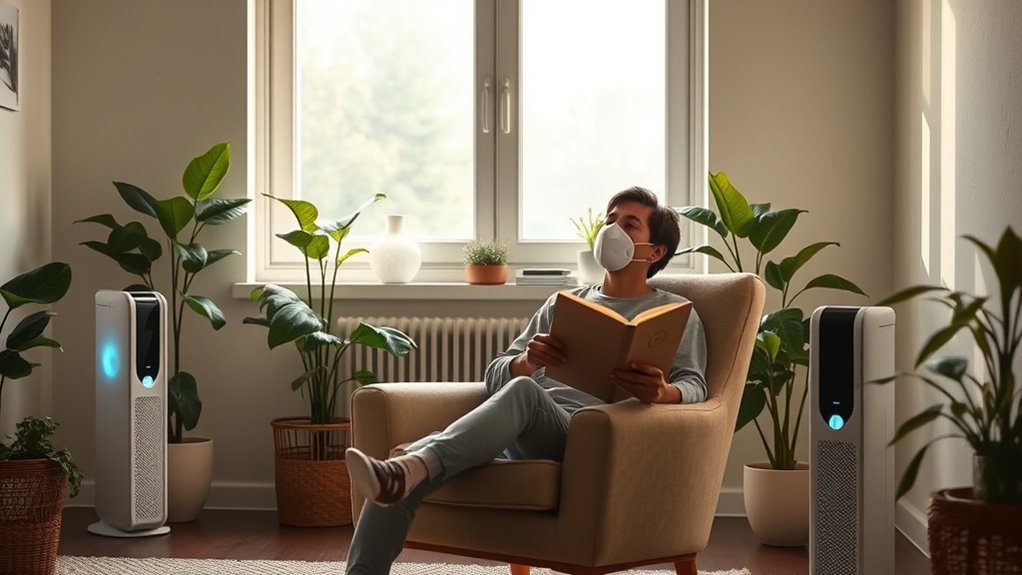
Have you ever wondered how the air inside your home affects your health? If you’re sensitive to chemicals, you already know that indoor air quality can considerably influence your well-being. Many household products release volatile organic compounds (VOCs) and other pollutants that can trigger reactions or worsen symptoms. That’s why focusing on air purification is essential. Effective air purification systems help remove airborne chemicals, allergens, and toxins, creating a safer environment. HEPA filters and activated carbon filters are particularly useful because they trap particles and neutralize odors and chemical vapors. Regularly maintaining and upgrading your air purification units ensures you’re continuously reducing the presence of harmful substances in your living space.
Indoor air quality significantly impacts health; use HEPA and activated carbon filters for effective purification.
Mold prevention plays a critical role in managing indoor air quality for those with chemical sensitivities. Mold spores are common indoor pollutants that can exacerbate respiratory issues and cause allergic reactions. Preventing mold growth begins with controlling moisture levels—aim to keep humidity below 50%. Fix leaks promptly, ensure proper ventilation in bathrooms and kitchens, and use dehumidifiers if necessary. Good airflow helps prevent stagnant, damp areas where mold can thrive. When mold is present, it releases spores and mycotoxins into the air, which can worsen sensitivities and cause health problems. Regular cleaning with mold-inhibiting solutions and removing visible mold colonies is essential to keep your environment safe. Additionally, understanding the impact of indoor pollutants can help you take targeted steps to improve air quality and reduce health risks.
HEPA air purifier for chemical sensitivities
As an affiliate, we earn on qualifying purchases.
As an affiliate, we earn on qualifying purchases.
Frequently Asked Questions
How Can I Identify Hidden Chemical Sources in My Home?
To identify hidden chemical sources in your home, start by inspecting common contamination spots like behind appliances, under sinks, and inside cabinets. Check for new or unusual odors, which may signal hidden chemical sources. Read labels on cleaners, paints, and products, and opt for low or zero VOC options. Ventilate regularly and consider using air purifiers to reduce unseen home contamination, helping improve indoor air quality for sensitive individuals.
Are There Specific Air Purifiers Effective for Chemical Sensitivities?
Think of your purifier as a vigilant guard dog. HEPA filters trap tiny particles, while activated charcoal acts like a sponge soaking up odors and chemicals. For chemical sensitivities, choose a purifier combining both, ensuring cleaner air. Look for units specifically designed for chemical removal, and regularly replace filters. Trust this duo to guard your home, making the air safer and more breathable for you.
What Natural Remedies Can Improve Indoor Air Quality?
You can improve indoor air quality with natural remedies like houseplants, which naturally purify air through their leaves and roots. Ventilating regularly helps reduce toxins and stale air. Using natural air purification methods such as activated charcoal or beeswax candles can also absorb pollutants and odors. Avoid synthetic fragrances and choose non-toxic cleaning products. These steps create a healthier environment, especially for those sensitive to chemicals.
How Often Should I Test My Home’s Air for Toxins?
Your home’s air quality is essential, so don’t wait for disaster to strike. You should conduct air quality monitoring and toxin testing at least every three to six months, especially if you notice new odors, symptoms, or recent renovations. Regular testing helps catch hidden toxins early, protecting your health. Keep track of your indoor environment, and if needed, increase testing frequency during high-risk periods for maximum safety.
Can Indoor Plants Significantly Reduce Chemical Pollutants?
Indoor plants can markedly reduce chemical pollutants, thanks to their plant efficacy in filtering the air. They absorb and break down common indoor toxins like formaldehyde, benzene, and trichloroethylene. While plants alone won’t eliminate all pollutants, they contribute to better air quality and create a healthier environment. To maximize pollutant reduction, choose plants known for their air-purifying abilities and maintain proper care for ideal plant efficacy.
Conclusion
You can improve your indoor air quality by reducing pollutants, increasing ventilation, and choosing low-emission products. You can create a healthier environment by staying aware of potential triggers, taking steps to minimize exposure, and advocating for cleaner air. You can protect your well-being, enhance your comfort, and regain control over your space. With every small change, you can breathe easier, feel safer, and live better. You hold the power to transform your indoor air into a sanctuary.
Flea & tick season Picks
flea and tick prevention
As an affiliate, we earn on qualifying purchases.