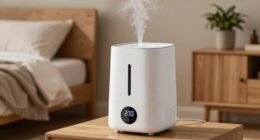

Nitrogen oxides (NOx) and sulfur dioxide (SO2) mainly come from burning fossil fuels in factories, power plants, and vehicles. These gases are released outdoors and can drift into your home through open windows, ventilation systems, or cracks in the building. Once inside, they may react with indoor pollutants, worsening air quality and health risks. To learn how to prevent indoor infiltration and protect your space, keep exploring these important sources and strategies.

Get garden gear delivered free — and shop member deals
- Fast, free delivery on millions of items
- Access to Prime Big Deal Days deals on October 6–7
- Prime Video, Amazon Music and more included
Key Takeaways
- NOx and SO2 mainly originate from burning fossil fuels in factories, power plants, and vehicles.
- These gases can infiltrate indoors through ventilation, open windows, cracks, and building gaps.
- Indoor reactions of NOx and SO2 produce secondary pollutants like particulates and acids harmful to health.
- High outdoor pollution levels increase the likelihood of indoor infiltration of NOx and SO2.
- Mitigation measures include sealing gaps, using air purifiers, maintaining ventilation, and monitoring air quality.

Nitrogen oxides (NOx) and sulfur dioxide (SO2) are among the most common pollutants released into the atmosphere from industrial processes and burning fossil fuels. These emissions come from factories, power plants, and transportation sources, and they substantially impact both outdoor and indoor air quality. When these pollutants enter your home or workplace, they can infiltrate indoor spaces through ventilation systems, open windows, or cracks in the building envelope. Once inside, they can react with other indoor pollutants, creating secondary pollutants that may harm your health.
Understanding how industrial emissions contribute to indoor air quality is essential. Many industries release NOx and SO2 in large quantities, and these gases can drift into nearby residential areas. Even if you’re not working directly in an industrial setting, living near a power plant or a busy highway can expose you to these pollutants. Indoor infiltration occurs when outdoor air contaminated with NOx and SO2 enters your home through ventilation systems, open windows, or gaps around doors and windows. Once inside, these gases can linger, especially if your indoor air isn’t properly ventilated or filtered. Additionally, high indoor humidity levels can promote chemical reactions that form harmful acids from these gases, further degrading indoor air quality.
Living near industrial sites exposes your home to harmful NOx and SO2 infiltration.
The presence of NOx and SO2 indoors isn’t always immediately obvious because these gases are colorless and odorless. However, their impact on indoor air quality can be paramount. NOx, in particular, can react with other indoor pollutants to form nitrogen-based particulate matter, which can irritate your respiratory system, inflame your airways, and exacerbate conditions like asthma. SO2, in contrast, can cause irritation of your eyes, nose, and throat, especially at higher concentrations. When these gases combine with indoor humidity, they can form acids that settle on surfaces, contributing to corrosion and the deterioration of building materials.
To protect yourself, it’s important to be aware of the sources of outdoor pollution and take steps to minimize indoor infiltration. Using air purifiers equipped with activated carbon filters can help reduce the levels of NOx and SO2 indoors. Ensuring good ventilation, especially during high pollution days, can also help dilute indoor pollutant concentrations. Regular maintenance of your HVAC system, sealing gaps around windows and doors, and monitoring outdoor air quality reports are practical steps to improve indoor air quality.
In essence, understanding how industrial emissions influence indoor air quality equips you with the knowledge to take proactive measures. By controlling indoor infiltration and staying informed about outdoor pollution, you can create a healthier living environment free from the harmful effects of NOx and SO2. Recognizing the importance of indoor air quality and implementing effective mitigation strategies can significantly reduce your exposure to these pollutants.
air purifier with activated carbon filter
As an affiliate, we earn on qualifying purchases.
As an affiliate, we earn on qualifying purchases.
Frequently Asked Questions
How Do NOX and SO2 Affect Indoor Air Quality?
You might notice that NOx and SO2 lower your indoor air quality by causing irritation and health issues. To reduce their impact, you should improve ventilation strategies, ensuring fresh air flows in and pollutants escape. Additionally, using air filtration systems helps remove these gases from indoor spaces. Combined, these methods can considerably cut your exposure to NOx and SO2, creating a healthier indoor environment.
Are There Specific Health Risks Linked to NOX and SO2?
You should know that long-term exposure to NOx and SO2 can pose serious health risks, especially for vulnerable populations like children, the elderly, or those with respiratory issues. These gases can cause chronic respiratory problems, worsen asthma, and increase cardiovascular risks. If you’re exposed regularly, the dangers multiply. Staying aware and minimizing indoor infiltration becomes essential to protect your health and the health of those most at risk.
Can Household Appliances Significantly Contribute to Indoor NOX and SO2 Levels?
Yes, household appliances can substantially contribute to indoor NOx and SO2 levels through appliance emissions. Gas stoves, heaters, and other combustion appliances release these pollutants into your indoor air. To reduce their impact, you should improve indoor air filtration, use exhaust fans, and consider switching to electric appliances when possible. Proper ventilation helps lower pollutant buildup, making your indoor environment safer and healthier.
What Are Effective Methods to Reduce Indoor Infiltration of These Gases?
Think of your home as a fortress, shielding you from outside pollutants. To reduce indoor infiltration of NOx and SO2, implement effective ventilation strategies that promote fresh air exchange without letting in pollutants. Sealant applications around windows and doors act like a guardian’s shield, locking out unwanted gases. Together, these methods create a barrier, ensuring your indoor air remains clean and safe from harmful gases.
How Frequently Should Indoor Air Quality Be Monitored for NOX and SO2?
You should perform air quality testing for NOx and SO2 at least quarterly, especially if you live near pollution sources or have ventilation concerns. Monitoring frequency depends on your indoor environment and exposure risk; more frequent testing is advisable if you notice symptoms or detect higher levels. Regularly checking helps you stay informed and take timely actions to improve indoor air quality and reduce health risks.
Conclusion
By understanding NOx and SO2, you can identify their sources, reduce indoor infiltration, and protect your health. Recognize the importance of monitoring, controlling, and ventilating to minimize exposure. Stay aware, stay proactive, and stay safe. By taking these steps, you empower yourself to create a healthier environment, reduce risks, and breathe easier every day. Remember, awareness and action go hand in hand in safeguarding your indoor air quality.
Fall Picks
fall essentials
As an affiliate, we earn on qualifying purchases.