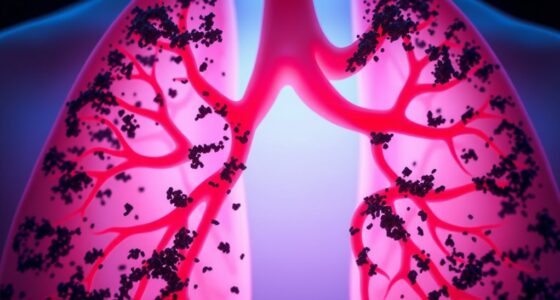

Indoor air pressure differences impact how contaminants move within your space. When pressure isn’t balanced, outdoor pollutants like pollen, dust, or vehicle exhaust can be drawn in through leaks or cracks, especially during negative pressure. Conversely, positive pressure can push indoor air out, causing drafts. Properly controlling these pressure imbalances by sealing leaks and balancing ventilation helps limit contaminant transport and improves indoor air quality — discover how to optimize your environment further.
Key Takeaways
- Pressure imbalances drive airflow that can carry indoor contaminants through leaks and cracks.
- Negative pressure indoors pulls outdoor pollutants like pollen and pollutants inside.
- Positive pressure can push indoor air and contaminants out, causing drafts and discomfort.
- Proper sealing and balanced ventilation reduce unwanted airflow and limit contaminant transport.
- HVAC system adjustments influence pressure levels, affecting how contaminants move within indoor spaces.
Have you ever wondered why indoor air feels different from room to room or why leaks sometimes occur around doors and windows? The answer often lies in the subtle but powerful influence of indoor air pressure differences. These disparities happen when the pressure inside your building doesn’t match the pressure outside or between different areas within the structure. Understanding pressure imbalance and airflow dynamics is essential for grasping how contaminants can move throughout your indoor environment.
Indoor air pressure differences influence comfort, leaks, and contaminant movement throughout your home.
When a pressure imbalance occurs, air naturally flows from areas of higher pressure to lower pressure. This movement of air, driven by airflow dynamics, can carry dust, allergens, or even airborne pathogens from one part of your home to another. For example, if your kitchen has slightly lower pressure than the living room, air from the living room might be pulled into the kitchen through gaps around doors or vents. This process isn’t just about comfort; it can considerably impact indoor air quality by introducing pollutants into spaces where you spend the most time.
Leaking around doors and windows often results from pressure imbalances. When your HVAC system runs, it can either create positive pressure inside your home or negative pressure, depending on how vents and exhaust fans are used. If negative pressure develops—say, when exhaust fans are on without sufficient makeup air—the outside air is drawn into your home through leaks. This influx can bring in outdoor pollutants like pollen, vehicle exhaust, or mold spores, especially if the leaks are near the foundation or poorly sealed windows. Conversely, positive pressure can push indoor air out, making it easier for contaminants to escape, but it can also cause drafts and discomfort.
Airflow dynamics play a central role in how these pressure differences influence contaminant transport. Small gaps and cracks act as pathways for air movement, and their effects can be amplified by differences in pressure levels. HVAC systems, door openings, and even the movement of people contribute to these dynamics, creating complex patterns of airflow that can either dilute or concentrate pollutants in specific areas. Managing these airflow patterns by sealing leaks and balancing your ventilation helps control contaminant movement, improving your indoor air quality and comfort.

GoveeLife Smart Air Quality Monitor with PM2.5, WiFi, Temperature & Humidity Sensors, LED Display, 2s Refresh, 2-Year Data Storage, for Home & Office Wired
- High Accuracy & Fast Refresh: ±15 µg/m³ PM2.5 accuracy, 2s update
- Multi-Index Air Quality Monitoring: Measures PM2.5, temperature, humidity
- Switchable Display Modes: Clock, PM2.5, bright and night modes
As an affiliate, we earn on qualifying purchases.
As an affiliate, we earn on qualifying purchases.
Frequently Asked Questions
How Can Indoor Pressure Differences Be Measured Accurately?
You can measure indoor pressure differences accurately using pressure sensors designed for precise readings. Employ measurement techniques like manometers or digital pressure gauges, guaranteeing proper calibration before use. Place sensors strategically throughout the space to capture variations caused by ventilation, doors, or windows. Regularly check and maintain your equipment to ensure reliable data, and consider using data loggers for continuous monitoring of pressure changes over time.
What Building Designs Influence Indoor Air Pressure?
They say “you are only as strong as your weakest link,” and in building design, that’s often your building envelope. To influence indoor air pressure, designs like balanced ventilation systems and airtight envelopes help maintain pressure stability. Features such as windows, doors, and exhaust fans impact pressure balancing, either creating or reducing pressure differences. Proper design guarantees contaminant transport is minimized, promoting healthier indoor environments.
How Do HVAC Systems Affect Indoor Pressure?
Your HVAC system influences indoor pressure through pressure balancing and airflow dynamics. When it heats or cools air, it creates pressure differences that can cause air to flow in or out of the building. Properly designed systems maintain a neutral pressure, preventing contaminants from entering or escaping. By controlling airflow, your HVAC helps keep indoor air quality stable, reducing the risk of pollutant transport and ensuring a comfortable, healthy environment.
Can Outdoor Weather Conditions Change Indoor Pressure?
You might notice that outdoor weather fluctuations can change indoor pressure. When outdoor pressure drops or rises, it influences the air inside your space, especially if windows or doors are open or poorly sealed. These shifts cause indoor air pressure to fluctuate, affecting how contaminants move and how your HVAC system works. So, yes, outdoor pressure and weather conditions directly impact your indoor environment, often in subtle but significant ways.
What Are the Health Effects of Pressure-Driven Contaminant Transport?
You might experience health risks if pressure-driven contaminant transport affects your indoor air quality. When contaminants like mold spores, bacteria, or chemicals are pulled into your home through pressure differences, they can cause respiratory issues, allergies, or other health problems. Poor air quality from these transported pollutants can worsen asthma and lead to long-term health concerns. Ensuring proper ventilation helps reduce these risks and maintains healthier indoor environments.
Conclusion
Understanding indoor air pressure differences helps you control contaminant movement and improve air quality. By paying attention to how pressure variations occur, you can prevent unwanted pollutants from entering your space. Don’t you want a healthier, safer environment inside? Remember, small pressure imbalances can have big impacts—so stay vigilant and manage these differences effectively for cleaner, safer indoor air.