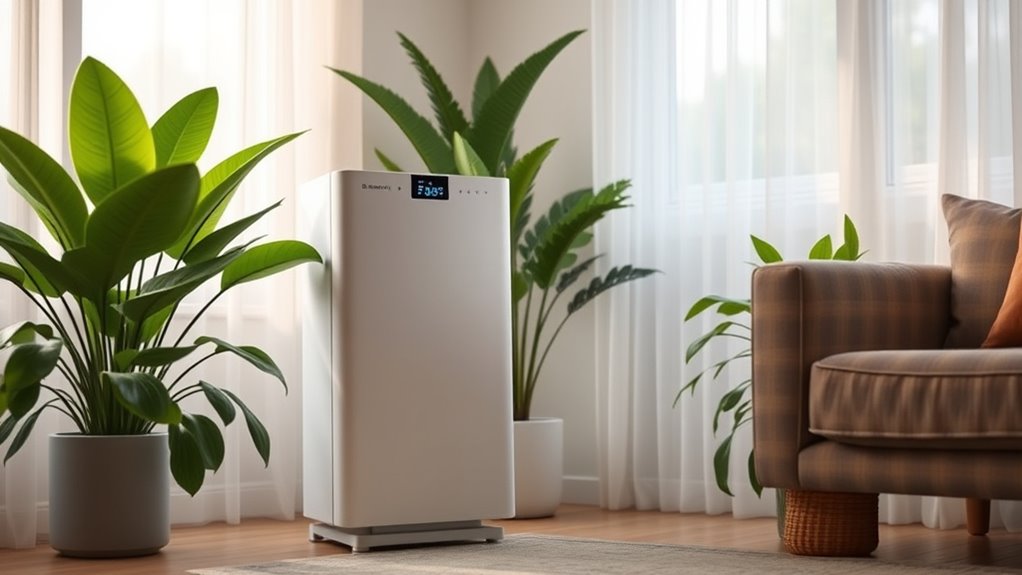

Air purifiers can help reduce airborne allergens like dust mites, pet dander, mold spores, and pollen, which may ease asthma symptoms. HEPA filters trap tiny particles, lowering triggers and improving air quality. However, they don’t eliminate all irritants, especially VOCs or mold spores that settle on surfaces. Proper placement and maintenance are key to their effectiveness. To understand the true benefits and limitations, explore how they fit into your overall asthma management plan.
Open a free Amazon Business account
Business pricing, bulk buying and tax-exempt orders.
As an affiliate, we earn on qualifying purchases.
Key Takeaways
- Air purifiers with HEPA filters can reduce airborne allergens like dust, pet dander, mold spores, and pollen, helping asthma symptoms.
- They are not a complete solution; they don’t effectively remove VOCs or settle mold spores on surfaces.
- Proper placement, regular filter maintenance, and choosing ozone-free models are essential for optimal effectiveness.
- Technological advancements aim to improve irritant detection and expand filtering capabilities for better asthma management.
- Combining air purifiers with other strategies like humidity control and cleaning enhances overall asthma symptom relief.

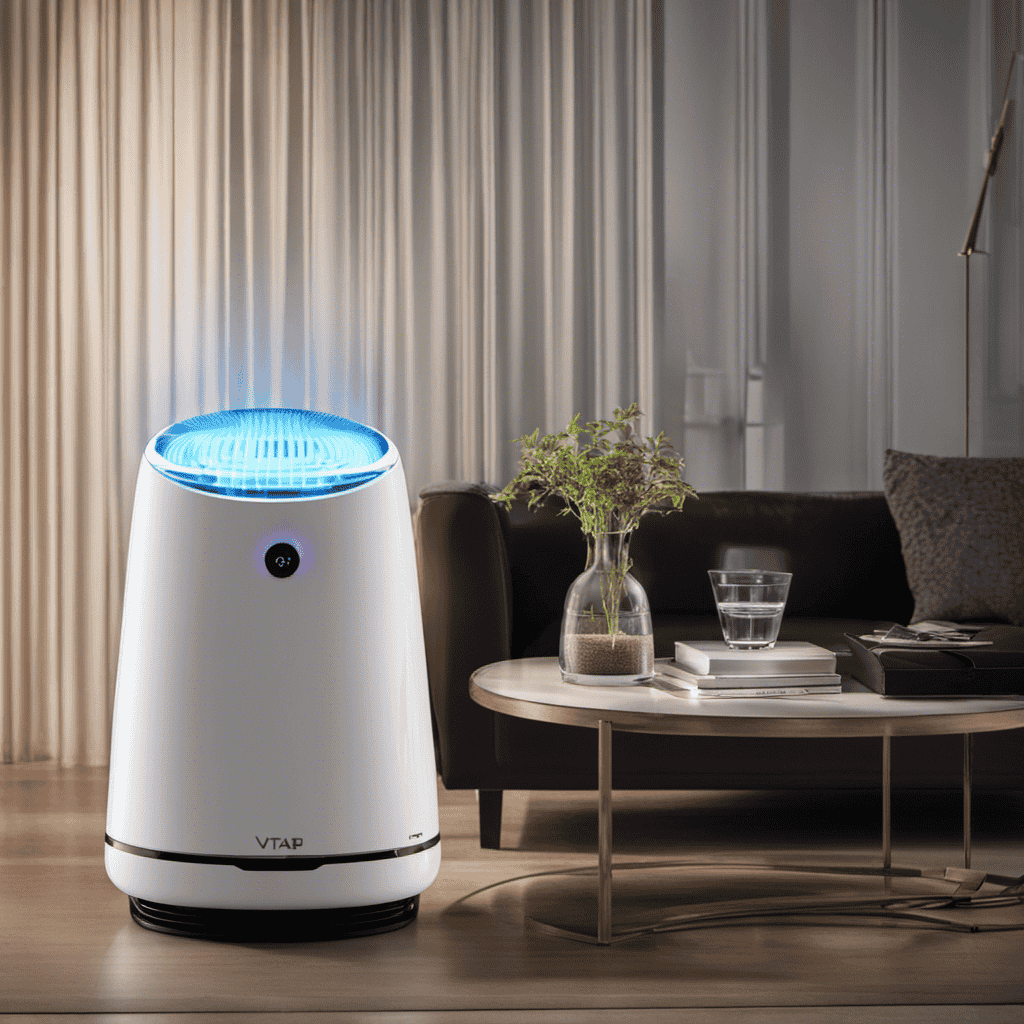
If you suffer from asthma, air purifiers can be a pivotal tool for improving your indoor air quality. One of their main benefits is their ability to reduce indoor allergens that can trigger asthma symptoms. Many high-quality air purifiers use HEPA filters, which are designed to trap tiny particles, including dust mites, pet dander, mold spores, and pollen. These filters are particularly effective because they can capture particles as small as 0.3 microns, considerably reducing the presence of allergens that could otherwise circulate freely in your home. When you run an air purifier equipped with a HEPA filter, you’re actively removing these irritants from the air you breathe, which can help lessen the frequency and severity of asthma attacks.
However, it’s important to understand the limitations of air purifiers for asthma relief. While they do a good job at filtering out many indoor allergens, they aren’t a cure-all. For example, some airborne irritants like certain volatile organic compounds (VOCs) from cleaning products, perfumes, or building materials may not be effectively removed by HEPA filters alone. Additionally, mold spores can sometimes be too small or may settle on surfaces rather than floating in the air, meaning an air purifier isn’t always sufficient to eliminate mold-related asthma triggers. Proper mold remediation and moisture control are still necessary in such cases.
Another point to consider is that air purifiers require proper placement and maintenance to be effective. If you place the device in a corner or behind furniture, it might not circulate the air efficiently. Regularly changing or cleaning the HEPA filter is also essential; a clogged filter loses its ability to trap particles and can even become a source of airborne pollutants if neglected. Moreover, some models produce ozone as a byproduct, which can irritate your lungs and worsen asthma symptoms, so it’s wise to choose ozone-free options.
Furthermore, advancements in AI security research are leading to innovative solutions that could enhance air purifier technology by improving their ability to detect and remove a wider range of irritants more effectively. While air purifiers with HEPA filters are valuable tools in managing indoor allergens, they should complement other asthma management strategies. Keeping your home clean, controlling humidity levels, and minimizing exposure to known triggers remain fundamental. In sum, air purifiers can help improve indoor air quality and potentially reduce asthma symptoms, but they aren’t a standalone solution. Their effectiveness depends on proper selection, placement, maintenance, and integration with broader asthma management practices.
HEPA air purifier for asthma relief
As an affiliate, we earn on qualifying purchases.
As an affiliate, we earn on qualifying purchases.
Frequently Asked Questions
Do Air Purifiers Help With Allergy Symptoms Beyond Asthma?
Yes, air purifiers can help with allergy symptoms beyond asthma by reducing allergy triggers like pollen, pet dander, and dust mites. They improve air quality by filtering out airborne particles, making your environment healthier and more comfortable. While they won’t eliminate all allergens, using an air purifier regularly can lessen allergy symptoms, especially during high pollen seasons or in homes with pets.
Are Certain Brands More Effective for Asthma Relief?
Picking a perfect purifier can be perplexing, but some brands stand out. You’ll find that brands with high effectiveness ratings often deliver better results for asthma relief. Do your due diligence by comparing brand comparison reviews and focusing on features like HEPA filters and airflow. Popular brands like Honeywell and Blueair consistently earn higher effectiveness ratings, making them more reliable choices. Trust these top-tier brands to tackle allergens and improve your breathing.
How Long Does It Take to See Improvements After Using an Air Purifier?
You can expect to see some symptom improvement within a few days to a couple of weeks after starting to use an air purifier. The timeframe expectations vary depending on factors like room size, purifier quality, and air quality. Consistent use is key, and while some people notice quick relief, others may need more time. Keep monitoring your symptoms to gauge how effectively the purifier is helping.
Can Air Purifiers Eliminate All Indoor Air Pollutants?
Imagine a gentle breeze sweeping through your home, but even the best air purifier has limitations. It can’t eliminate all indoor air pollutants, especially gases and very fine particles. While it markedly improves air quality by removing common pollutants, some airborne irritants like volatile organic compounds may persist. So, an air purifier enhances your environment, but it doesn’t completely eliminate every pollutant, making it essential to combine it with other cleaning strategies.
Are Air Purifiers Safe for Children With Asthma?
Yes, air purifiers are generally safe for children with asthma when you choose child-safe models. Focus on filter types like HEPA filters, which effectively trap allergens without releasing harmful chemicals. Always follow manufacturer instructions, keep the purifier well-maintained, and place it out of children’s reach. Ensuring proper ventilation and avoiding devices with ozone or strong chemicals helps maximize safety and benefits for your child’s respiratory health.
Conclusion
While air purifiers can help reduce indoor allergens and irritants, they aren’t a guaranteed solution for asthma relief. Studies show that about 60% of asthma sufferers notice improvements with air purifier use, but results vary. Keep in mind, their effectiveness depends on factors like filter quality and proper placement. Ultimately, combining air purifiers with other management strategies offers the best chance to breathe easier and control asthma symptoms more effectively.
Flea & tick season Picks
flea and tick prevention
As an affiliate, we earn on qualifying purchases.