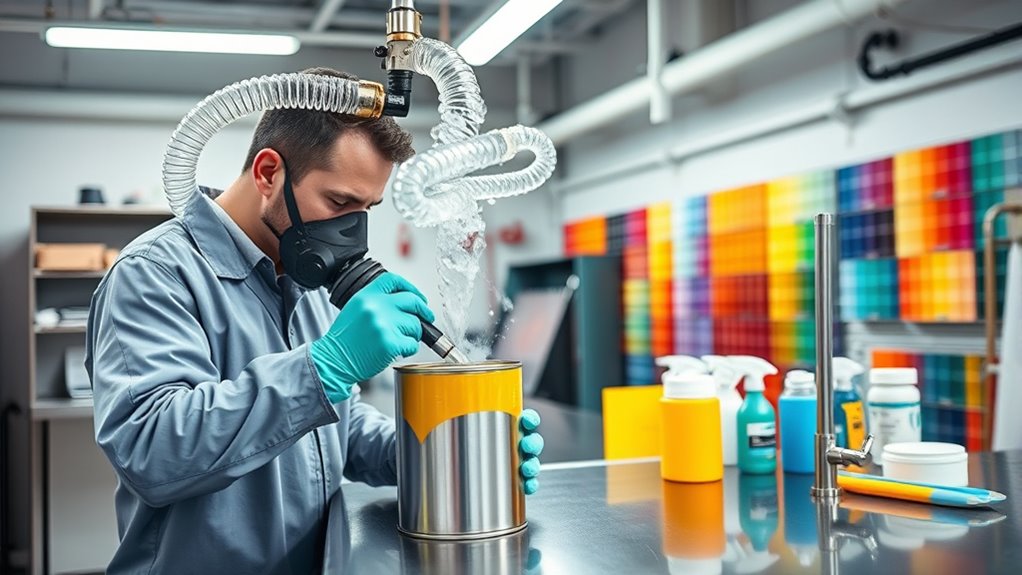

To remove VOCs from paints and cleaning products, choose eco-friendly, low or zero-VOC options with clear labels and certifications. Ventilate your space during and after application by opening windows and running fans, and use air purifiers with activated carbon filters to trap lingering chemicals. Regularly opting for safer products and improving air circulation helps reduce VOC exposure and creates a healthier indoor environment. Keep exploring these strategies to learn more about maintaining safer spaces.
Key Takeaways
- Choose low or zero VOC paints and cleaning products with eco friendly formulations.
- Read product labels carefully to verify VOC content before purchase.
- Ensure proper ventilation during and after application to disperse VOCs effectively.
- Use activated carbon air purifiers to trap and reduce airborne VOCs indoors.
- Opt for natural, plant-based ingredients in products to minimize VOC emissions and indoor air pollution.
Volatile Organic Compounds (VOCs) are common in many paints and cleaning products, but they can pose health risks to you and your family. When VOCs are released into the air, they can cause headaches, respiratory issues, and even long-term health problems. That’s why focusing on VOC emission reduction is vital for creating safer indoor environments. One effective way to achieve this is by choosing paints and cleaning products formulated with eco friendly formulations. These products are designed to emit fewer harmful chemicals, making your home healthier and more sustainable.
Switching to eco friendly formulations isn’t just good for the environment—it directly benefits your health. Many manufacturers now prioritize low-VOC or zero-VOC options, which greatly cut down on the harmful emissions that typically come from traditional products. These formulations often use natural or plant-based ingredients, reducing the reliance on petrochemicals and other toxic substances. By choosing products made with eco friendly formulations, you lower your exposure to VOCs during application and over time, especially when you’re painting walls or cleaning regularly. Additionally, supporting brands that prioritize sustainable ingredients encourages ongoing innovation in safer product development.
To further support VOC emission reduction, look for certifications or labels that indicate low or zero VOC content. These labels are a quick and reliable way to identify products that align with eco-friendly standards. Additionally, reading product labels carefully helps you avoid those with high VOC levels, especially in paints, varnishes, and cleaning agents. When shopping, opt for brands committed to transparency about their ingredients, and consider brands that prioritize eco friendly formulations. This not only reduces VOC emissions but also encourages manufacturers to develop safer, more sustainable products.
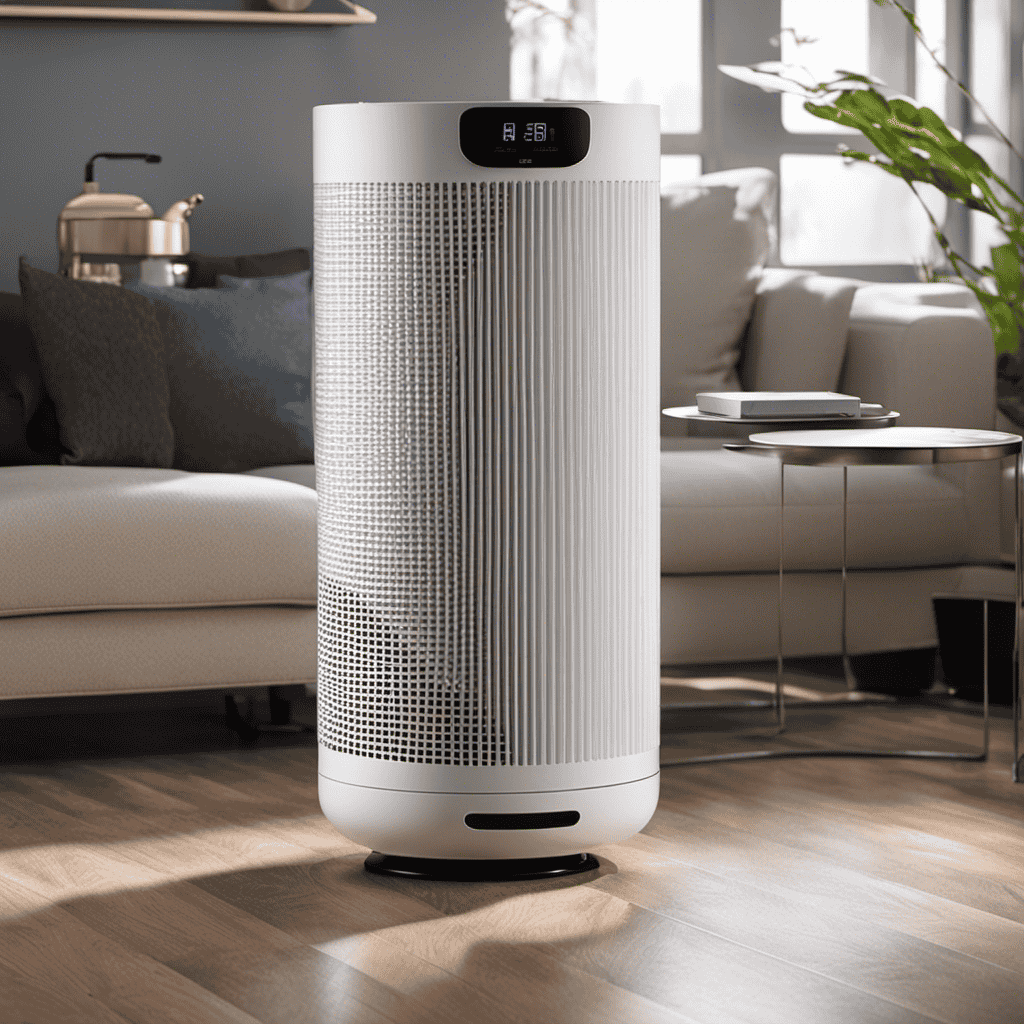
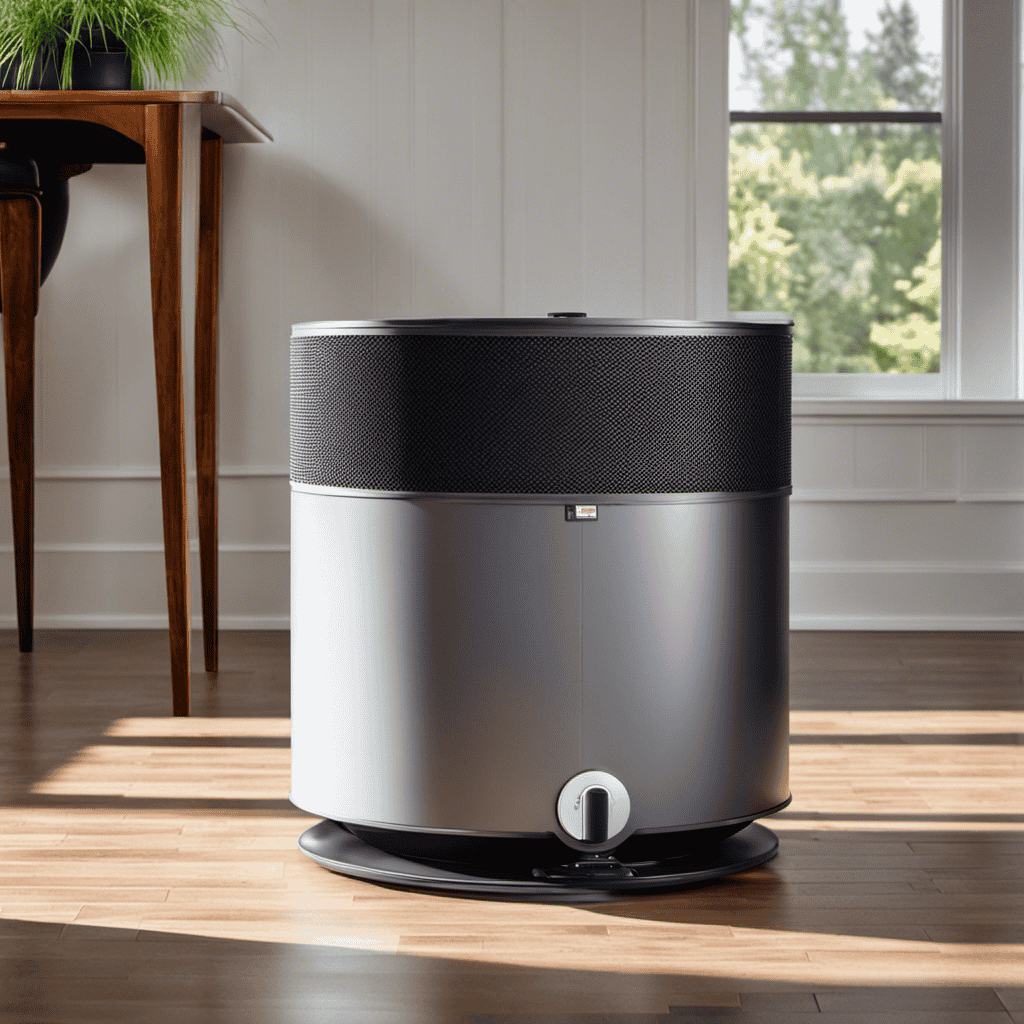
Ventilation is another essential step in reducing VOC exposure. When applying paints or cleaning agents, ensure your space is well-ventilated. Open windows, use exhaust fans, and keep doors open to allow VOCs to dissipate quickly. This simple practice minimizes indoor air pollution and protects your respiratory health. You can also accelerate VOC removal by using air purifiers equipped with activated carbon filters, which trap airborne chemicals and improve overall air quality.
Ensure proper ventilation and use activated carbon air purifiers to reduce VOCs and improve indoor air quality.
Ultimately, reducing VOC emissions from paints and cleaning products involves a combination of selecting eco friendly formulations, reading labels carefully, and maintaining good ventilation. By making these choices, you’re actively contributing to a healthier indoor environment for yourself and your loved ones. Transitioning to products designed with VOC emission reduction in mind is a practical, impactful step toward safer living spaces, and it supports broader efforts to promote sustainability and environmental responsibility.
As an affiliate, we earn on qualifying purchases.
Frequently Asked Questions
Are There Natural Alternatives to Voc-Containing Paints and Cleaners?
Yes, you can choose eco-friendly pigments and DIY natural cleaners as alternatives. These options avoid VOCs and are safer for your health and the environment. You might make your own natural cleaners using ingredients like vinegar, baking soda, and essential oils. For paints, look for brands that use natural pigments and low or zero VOC formulas. These choices help you maintain a healthy home while staying environmentally conscious.
How Long Do VOCS Typically Off-Gas After Application?
VOCs typically off-gas for a few days to several weeks after application, depending on the product and environmental conditions. During this period, VOCs emission gradually declines as the chemicals evaporate. You should guarantee good ventilation to speed up off gassing duration and reduce indoor air pollution. Keep windows open and use fans to help remove VOCs from the air more quickly, especially in the first week after painting or cleaning.
Can VOCS in Paints Cause Long-Term Health Issues?
VOCs in paints can pose long-term health risks if you’re exposed over time, especially affecting your indoor air quality. Continuous inhalation may lead to respiratory issues, headaches, or even more serious conditions like asthma or neurological problems. To protect yourself, guarantee proper ventilation during and after painting, and choose low-VOC or VOC-free products when possible. Reducing exposure helps safeguard your health and improves indoor air quality over the long term.
What Are the Best Ventilation Practices During Painting and Cleaning?
To improve indoor air quality and guarantee ventilation efficiency, you should open windows and doors during painting and cleaning. Use exhaust fans or portable air purifiers to increase airflow and remove VOCs effectively. Keep the space well-ventilated for as long as possible, ideally during and after activities, and avoid sealed environments. Proper ventilation helps reduce VOC buildup, protecting your health and maintaining a safer indoor environment.
Do VOC Levels Vary by Brand or Product Type?
You might be surprised, but VOC levels can vary widely between brands and product formulations. Some brands prioritize low-VOC or VOC-free options, while others use traditional formulas with higher emissions. Always check labels carefully, as even small differences in ingredients can impact VOC emissions. So, your choice of brand and product type directly influences the air quality in your space, making it worth researching before purchasing.
Conclusion
By choosing low-VOC or VOC-free paints and cleaning products, you’re like a painter adding fresh, clean strokes to your environment. Imagine turning a smudged, smoky canvas into a bright, vibrant masterpiece—you’re transforming your space and protecting your health. Even small changes make a difference; studies show indoor VOC levels can drop markedly with greener options. So, take control, breathe easier, and create a safer, more colorful home for yourself and loved ones.