
To manage airborne contaminants in your salon, guarantee proper ventilation by installing adjustable exhaust fans and strategically placing vent hoods near workstations. Use high-quality filters like HEPA and activated carbon to trap dust, fumes, and chemical vapors. Regularly inspect and maintain your ventilation systems to keep everything functioning effectively. Combine these measures with good work practices and personal protective equipment to create a safer environment for yourself and your clients. Keep going to learn more.
Open a free Amazon Business account
Business pricing, bulk buying and tax-exempt orders.
As an affiliate, we earn on qualifying purchases.
Key Takeaways
- Install localized exhaust hoods near workstations to capture fumes and dust at their source.
- Use adjustable exhaust fans and ensure proper placement of vents for efficient air circulation.
- Incorporate HEPA and activated carbon filters to remove microscopic particles and chemical vapors.
- Conduct routine inspections and maintenance of ventilation systems to ensure optimal performance.
- Promote safe work practices, including working in well-ventilated areas and using personal protective equipment.
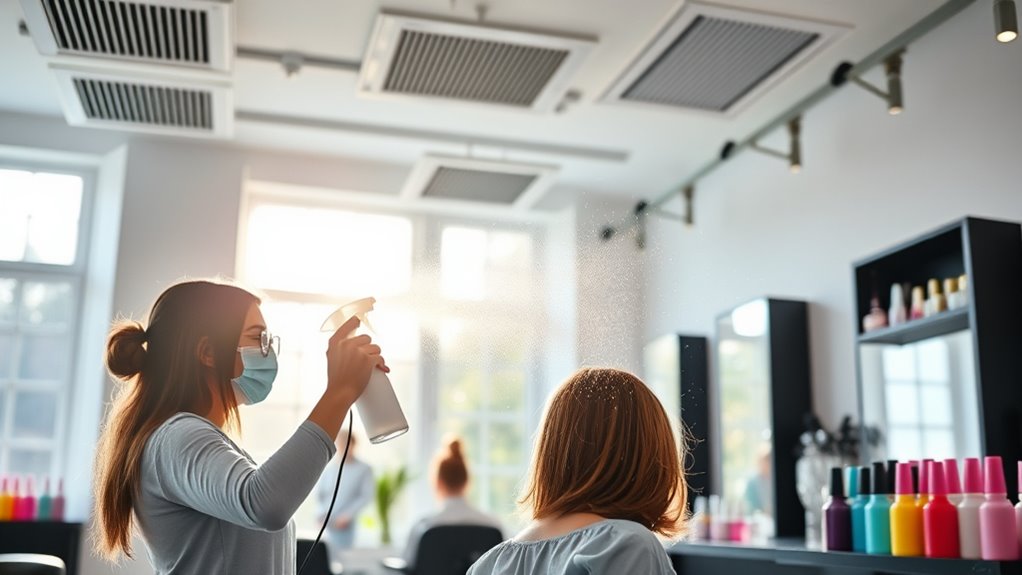
Airborne contaminants in nail and hair salons can pose considerable health risks if not properly managed. These airborne particles, including dust, fumes, and chemical vapors, can be inhaled by both clients and staff, potentially leading to respiratory issues, allergic reactions, or long-term health problems. To effectively minimize these risks, you need to implement proper ventilation techniques and contaminant filtration strategies. These measures are essential in creating a safer, healthier environment for everyone in your salon.
Proper ventilation and filtration are vital to reduce airborne health risks in salons.
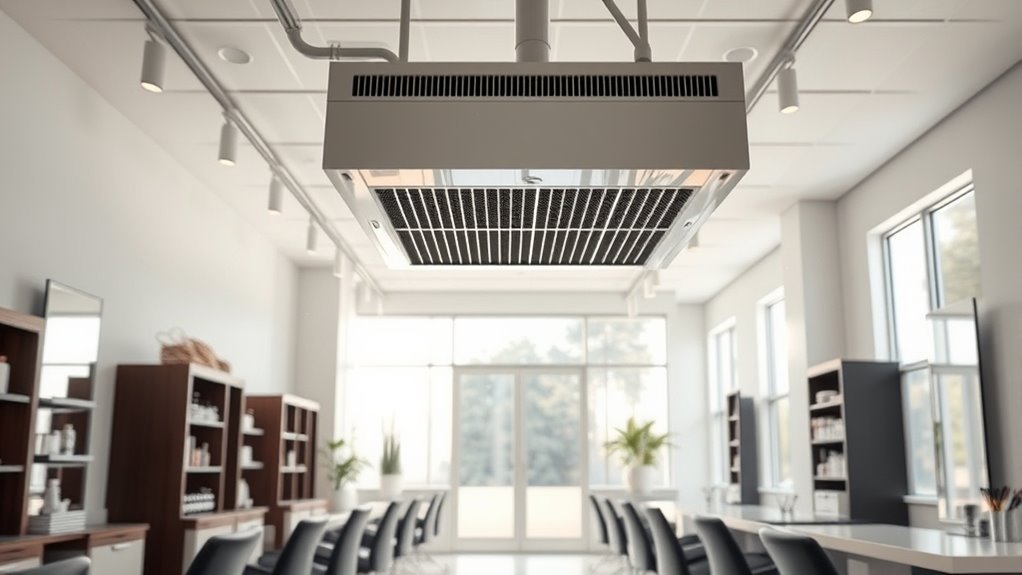
Ventilation techniques are your first line of defense. Proper airflow helps dilute and remove harmful airborne substances before they accumulate. Installing local exhaust systems near workstations allows you to directly capture fumes and dust at their source. For example, nail technicians should use high-quality vent hoodss to extract fumes from nail polish, acrylic powders, and solvents. Hair salons can benefit from adjustable exhaust fans positioned to draw out hair dust, chemical odors from coloring products, and other airborne debris. Additionally, making sure your salon has a well-designed overall ventilation system, including supply and exhaust vents, promotes continuous air exchange. This not only reduces the concentration of airborne contaminants but also prevents stale air from lingering inside the space.
Contaminant filtration is another essential component. High-efficiency particulate air (HEPA) filters can trap microscopic particles, including airborne dust, mold spores, and chemical aerosols. Regularly replacing or upgrading these filters ensures they continue to function effectively. You might also consider activated carbon filters, which are especially effective at adsorbing chemical vapors from nail polish fumes and hair coloring agents. Combining these filtration methods with your ventilation techniques creates a layered approach that considerably reduces airborne hazards. When selecting filtration systems, make sure they are appropriately rated for your salon’s size and the types of contaminants typically present.
Beyond installing ventilation and filtration systems, routine maintenance is indispensable. Regular inspections of vents, filters, and exhaust fans ensure they operate efficiently. Educate your staff about the importance of keeping these systems clean and reporting issues promptly. Encouraging good work practices, such as working in well-ventilated areas, using personal protective equipment like masks when necessary, and understanding airborne contaminants can further enhance safety. Implementing comprehensive strategies for managing airborne particles helps safeguard the health of everyone in your salon environment.
As an affiliate, we earn on qualifying purchases.
Frequently Asked Questions
What Are the Long-Term Health Effects of Airborne Contaminants in Salons?
Exposure to airborne contaminants in salons can lead to long-term health effects like chronic respiratory issues, including asthma and bronchitis. You might also experience systemic health effects, such as headaches, fatigue, or even damage to your immune system over time. Constant inhalation of fumes and particles increases these risks, so it’s vital to improve ventilation and use protective gear to safeguard your health now and in the future.
How Often Should Air Quality Assessments Be Conducted in Salons?
Think of air quality monitoring like a health check-up—you should do it regularly to catch issues early. You should conduct assessments at least every six months, or more often if you notice symptoms like headaches or dizziness. Following salon ventilation standards guarantees safe air, but routine checks verify you’re maintaining a healthy environment. Staying vigilant helps protect your staff and clients from airborne risks and keeps your salon thriving.
Are There Specific Certifications for Salons That Meet Air Quality Standards?
Yes, there are specific certifications for salons that meet air quality standards. You should look for certifications like the Green Business Certification or local health department endorsements, which verify compliance with air quality standards. These certifications guarantee your salon adheres to certification standards, promoting a healthier environment. By achieving such certification, you demonstrate your commitment to air quality compliance, reassuring clients and staff that your salon prioritizes safe, clean air.
Can Personal Protective Equipment Fully Eliminate Exposure Risks?
Can PPE fully eliminate exposure risks? Not quite. While PPE substantially reduces your risk, its limitations mean residues can still linger. You might think you’re completely protected, but residual risks remain if PPE isn’t used correctly or consistently. Stay vigilant—combine PPE with proper ventilation and sanitation. Don’t rely solely on protective gear; understanding its limits keeps you safer in the long run.
What Are the Latest Innovations in Air Filtration Technology for Salons?
You’ll find that air purifier advancements now include smart filtration systems with higher efficiency and real-time air quality monitoring. New filtration system innovations use HEPA filters combined with activated carbon layers, effectively capturing airborne particles and chemical fumes. These cutting-edge technologies improve ventilation, reduce airborne contaminants, and create safer salon environments. Incorporating these innovations helps you minimize health risks for clients and staff, ensuring a cleaner, healthier space for everyone.
Conclusion
By taking control of airborne contaminants, you’re like a captain steering your salon ship through a fog of fumes and dust. With every proper ventilation, protective gear, and good habits, you’re clearing the skies for healthier, happier clients and staff. Remember, you hold the power to turn your salon into a sanctuary amid chaos—transforming a potential storm into a gust of fresh air. Keep fighting the haze, and let your salon shine bright with safety.
Flea & tick season Picks
flea and tick prevention
As an affiliate, we earn on qualifying purchases.