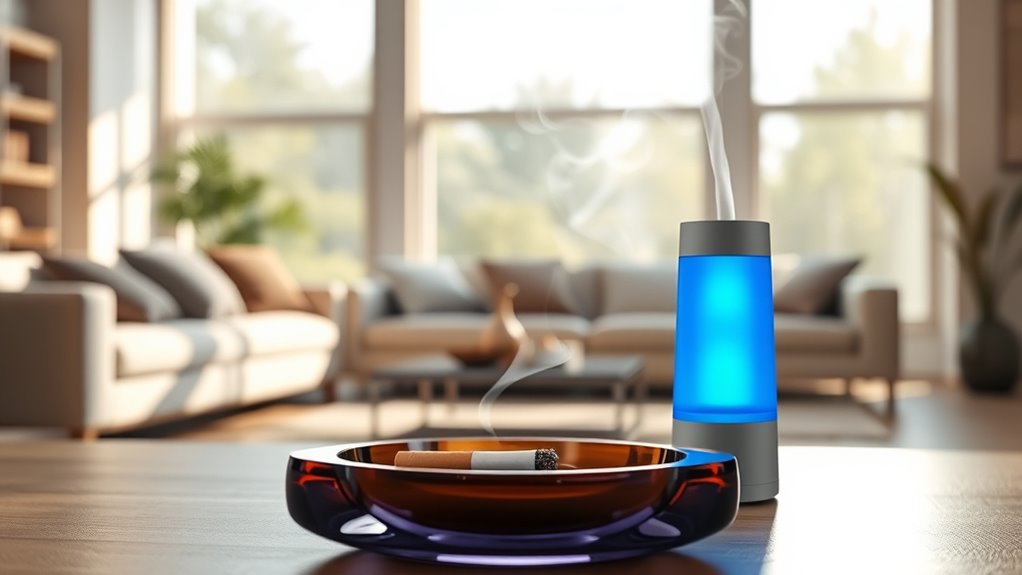
To reduce indoor pollution from smoking and vaping, you should use high-quality air filtration systems with HEPA and activated carbon filters to trap particles and odors. Combine this with effective ventilation, like exhaust fans or HVAC systems, to introduce fresh air and remove contaminants. Regularly maintain and replace filters, and increase airflow during or after smoking or vaping. Implementing these strategies creates a healthier indoor environment—keep exploring to learn more about safeguarding your space.
Key Takeaways
- Install HEPA and activated carbon filters to trap airborne particles and absorb gaseous pollutants from smoking and vaping.
- Use properly maintained ventilation systems to introduce fresh air and exhaust indoor pollutants effectively.
- Designate specific areas for smoking or vaping to contain pollutants and limit exposure in other indoor spaces.
- Increase airflow during and after smoking or vaping sessions to dilute and remove airborne toxins more rapidly.
- Regularly replace filters and ensure ventilation systems are properly maintained for optimal indoor air quality.
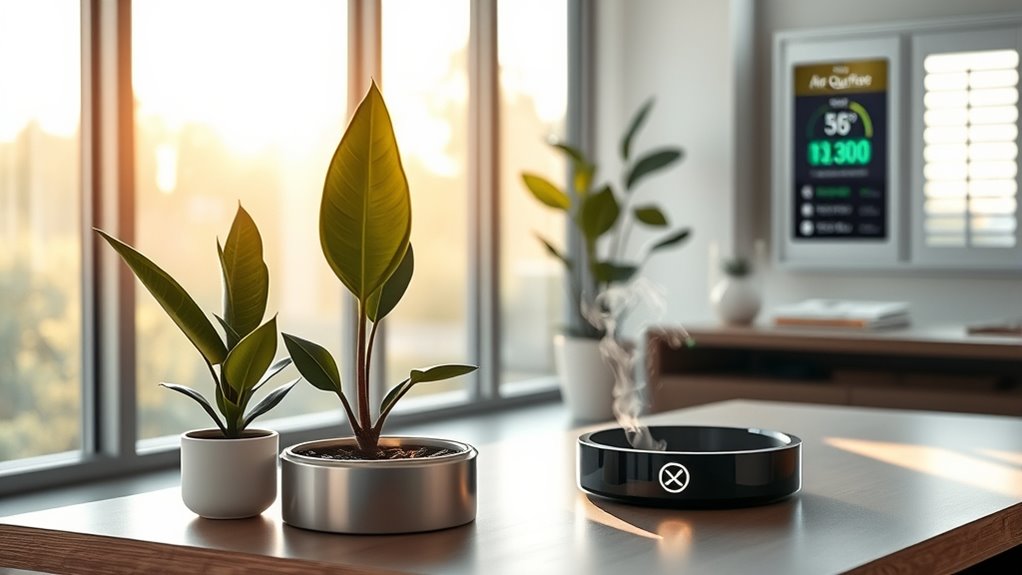
Indoor smoking and vaping considerably contribute to air pollution, posing health risks for everyone inside. When you light up a cigarette or vape, you release a range of harmful chemicals and particulates into the air. These substances can linger, creating an environment that’s unsafe for occupants, especially those with respiratory conditions or sensitivities. To combat this, it’s essential to understand how effective air filtration and proper ventilation systems can help reduce airborne pollutants and improve indoor air quality.
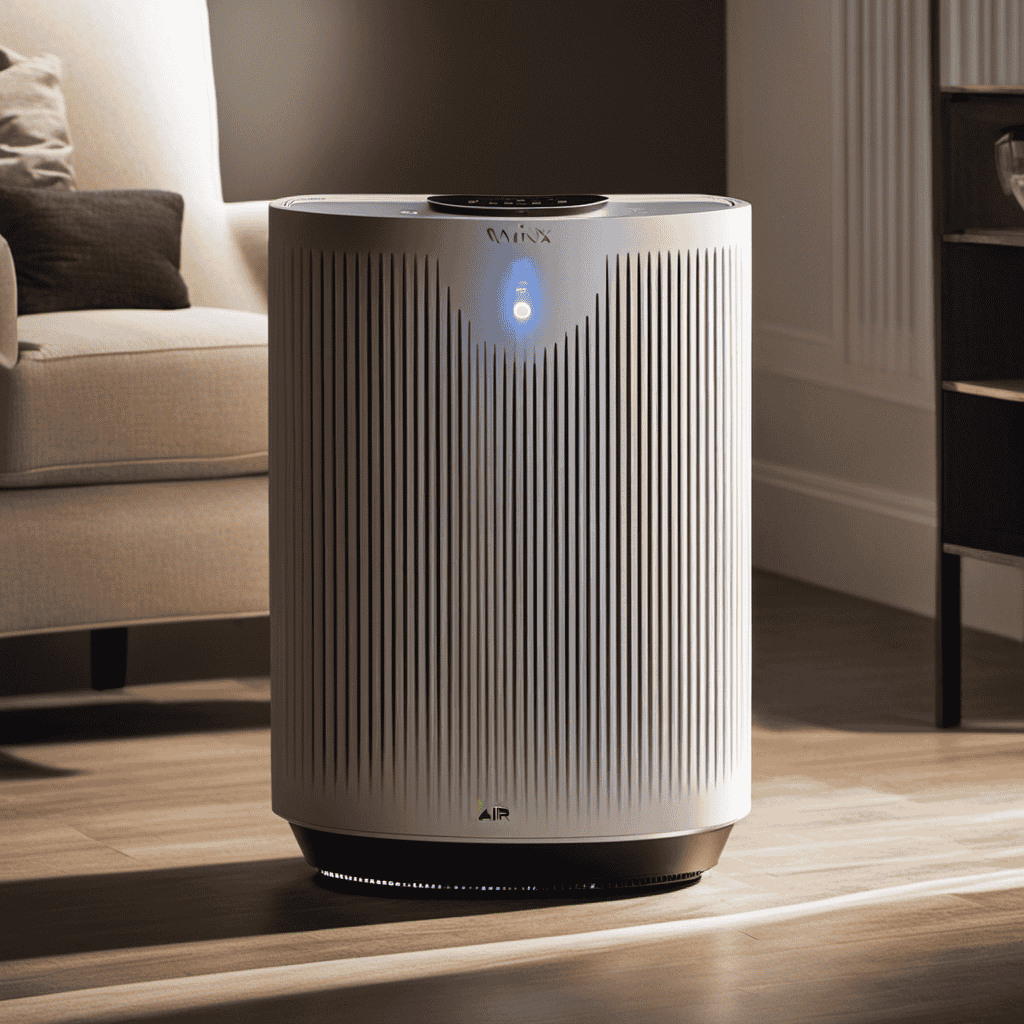
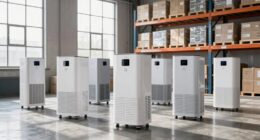
Air filtration plays a crucial role in capturing airborne particles from smoking and vaping. High-efficiency particulate air (HEPA) filters are particularly effective at trapping fine particles, including nicotine, tar, and other toxins released during indoor smoking or vaping. When you incorporate advanced air filtration units into your space, you actively remove these pollutants from the air, significantly lowering exposure levels. Regularly replacing or maintaining these filters ensures they operate at peak efficiency, providing a cleaner and healthier indoor environment. In addition to HEPA filters, activated carbon filters can absorb gaseous pollutants and odors, further reducing airborne toxins associated with smoking and vaping.
Air filtration with HEPA and activated carbon filters effectively reduces indoor smoking and vaping pollutants.
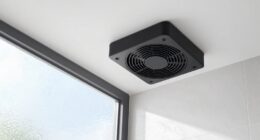
Ventilation systems are equally important in managing indoor air quality. Properly designed ventilation introduces fresh outdoor air into the space while exhausting contaminated indoor air. This continuous exchange helps dilute pollutants, preventing their accumulation and reducing health risks. When you utilize effective ventilation systems, such as exhaust fans or HVAC units with dedicated air exchange capabilities, you create a dynamic airflow that clears out smoke and vapor more efficiently. It’s vital to ensure these systems are properly sized for your space and regularly maintained, so they function at their best. For example, increasing ventilation rates during or immediately after smoking or vaping sessions can dramatically decrease the concentration of airborne toxins.
Combining air filtration with robust ventilation creates a comprehensive approach to indoor air quality management. If you’re indoors where smoking or vaping occurs frequently, investing in high-quality air filtration units and ensuring your ventilation systems are working properly can make a substantial difference. These measures not only protect your health but also improve comfort for everyone present. Additionally, encouraging the use of designated smoking or vaping areas equipped with localized air filtration can contain pollutants and prevent them from spreading throughout the entire space.
Ultimately, reducing pollution from indoor smoking or vaping requires proactive measures. By prioritizing effective air filtration and maintaining proper ventilation systems, you actively combat airborne toxins, creating a safer, healthier environment for yourself and others. It’s a practical step toward minimizing health risks and promoting well-being inside your indoor spaces. Incorporating knowledge about air quality and ventilation strategies can further enhance your efforts to maintain a clean indoor environment.
Frequently Asked Questions
How Effective Are Air Purifiers in Removing Indoor Vaping Pollutants?
Air purifiers can be quite effective at removing vaping pollutants indoors if they have high filter efficiency, such as HEPA or activated carbon filters. These devices target fine particles and airborne chemicals produced by vaping, improving air quality. To maximize vaping pollutant removal, choose an air purifier designed for VOCs and fine particulates, and run it consistently. Proper placement and regular filter changes also enhance its effectiveness in reducing indoor vaping pollution.
Can Certain Plants Help Reduce Indoor Smoke and Vapor?
Certain plant species can help improve indoor air filtration and reduce smoke and vapor, but their efficacy varies. Plants like spider plants, snake plants, and pothos are known for their air-purifying qualities and can absorb some pollutants. However, they shouldn’t be solely relied upon for indoor air quality improvement. Combining plants with good ventilation and air purifiers offers a more effective approach to tackling indoor smoke and vapor.
Are There Legal Restrictions on Vaping Indoors in Various Regions?
You should check local Vaping regulations and Indoor vaping laws, as they vary widely across regions. Many areas ban vaping indoors in public spaces, workplaces, and certain private settings to protect air quality. It’s your responsibility to stay informed about these laws to avoid fines or penalties. Always look up specific regulations in your area before vaping indoors, as enforcement and restrictions can differ markedly depending on your location.
What Are the Health Risks of Secondhand Vaping Compared to Smoking?
The health impact of secondhand vaping is generally lower than smoking, but exposure risks still exist. When you’re around someone vaping indoors, you may inhale aerosol particles containing nicotine, flavorings, and chemicals that could irritate your lungs or worsen respiratory issues. While it’s less harmful than secondhand smoke, it’s still wise to limit exposure, especially for vulnerable populations, to protect your health and avoid unnecessary risks.
How Long Do Pollutants From Vaping and Smoking Linger Indoors?
Imagine lingering smoke clouds that stubbornly refuse to vanish—vaping residue and smoke dispersion can stay in the air for hours or even days. The pollutants from smoking tend to linger longer than vaping, which disperses faster but still leaves behind harmful particles. So, if you’re indoors, expect these pollutants to hang around, contaminating the air and affecting everyone until proper ventilation or cleaning clears the space.
Conclusion
So, next time you light up indoors, remember you’re turning your living room into a smoky cloud factory. Who needs fresh air when you’ve got a personal fog machine, right? Think of all the indoor pollution you’re creating—your own smoky circus, complete with airborne toxins. Maybe it’s time to break the habit; otherwise, you’ll soon be living in a permanently foggy wonderland, where clean air is just a distant memory.