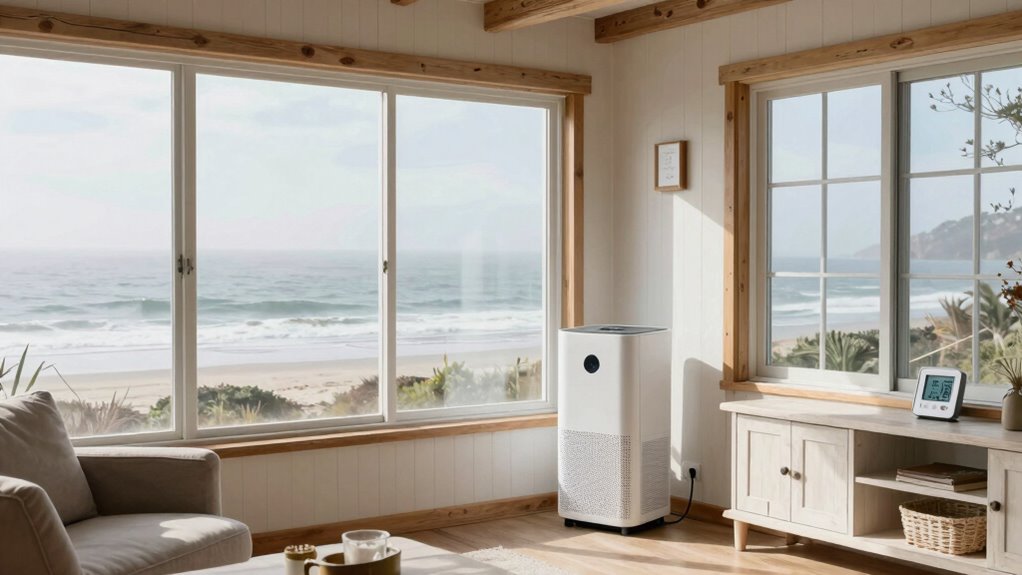
If you live in a coastal home, you need to adopt different dehumidification habits because the salty sea air constantly adds moisture, raising indoor humidity levels. This excess moisture can cause mold, damage, and health problems if not controlled. You should regularly use high-quality dehumidifiers, keep your home well-ventilated, and seal leaks. Staying on top of these practices is essential, and you’ll discover more effective tips as you continue exploring this guide.
Key Takeaways
- Coastal air has higher moisture content, requiring more frequent and robust dehumidification practices.
- Elevated humidity levels in coastal homes increase mold risk, demanding proactive moisture control.
- Sealing windows and doors helps prevent outdoor humidity infiltration, essential in coastal environments.
- Coastal homes benefit from specialized dehumidifiers designed to handle persistent high humidity.
- Continuous monitoring and maintenance are critical to manage moisture effectively in coastal settings.
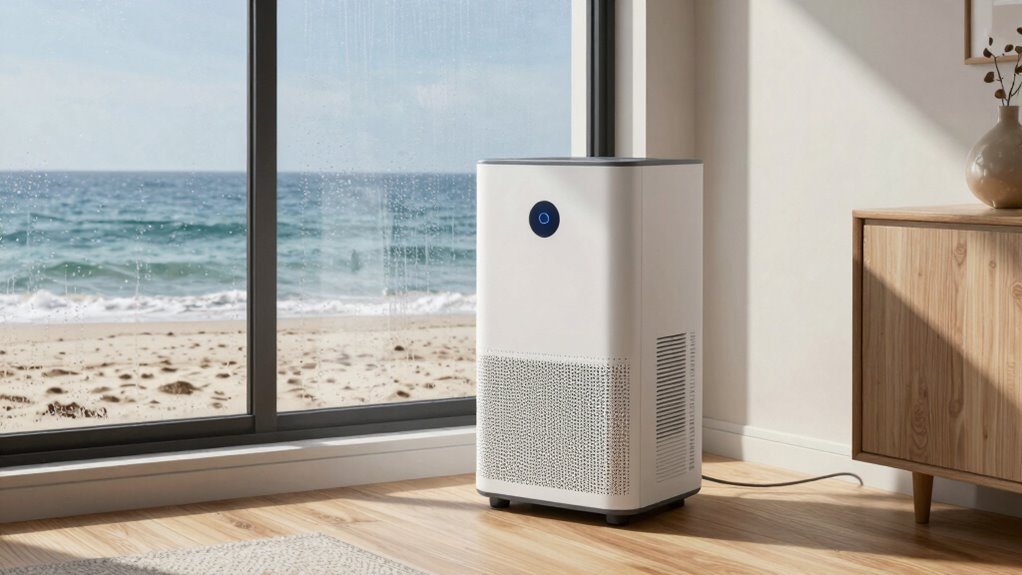
Living near the coast means dealing with high humidity levels that can cause discomfort and damage to your home. Coastal air is often saturated with moisture, making humidity control essential for maintaining a comfortable and healthy environment. When humidity stays high inside your house, it doesn’t just feel sticky; it also creates the perfect conditions for mold growth. That’s why adopting specific dehumidification habits tailored to coastal living is crucial. You need to regularly monitor indoor humidity levels, aiming to keep them between 30% and 50%. Using a hygrometer helps you stay on top of changes and adjust your dehumidification methods accordingly. If the air feels damp or you notice condensation on windows, it’s a clear sign that you need to increase moisture removal efforts. This proactive approach helps prevent mold from settling in hidden corners or on surfaces, which can lead to health issues and structural damage over time. Maintaining proper humidity levels is essential for overall home health and comfort.
Proper humidity control is about more than just comfort; it’s about protecting your home. Mold thrives in moist environments, and once it establishes itself, it can be stubborn and costly to remove. To prevent this, you should consider investing in a high-quality dehumidifier designed for coastal conditions. These devices are built to operate efficiently in humid climates and can substantially reduce excess moisture. Running the dehumidifier regularly, especially during the humid months, ensures that moisture levels stay in check. It’s also important to keep your home well-ventilated, using exhaust fans in kitchens and bathrooms to vent out excess moisture generated by daily activities. Additionally, fixing leaks and sealing windows and doors help block outside humidity from seeping in, making your humidity control efforts more effective. Recognizing the importance of moisture control in coastal homes highlights the need for tailored strategies to combat high humidity levels effectively. Regularly inspecting and maintaining your dehumidification system helps ensure it continues to operate efficiently in challenging coastal conditions.
In coastal homes, humidity control isn’t a one-time task but an ongoing routine. Regular maintenance of your dehumidification system keeps it functioning at its best. Cleaning filters and ensuring proper drainage prevents mold and bacteria growth within the device itself. Incorporating indoor air quality awareness into your routine can further reduce mold risks and improve overall health. Using moisture-absorbing materials like silica gel packs or moisture barriers adds an extra layer of protection against excess humidity. These simple steps help create an environment less hospitable to mold and humidity buildup. Ultimately, adopting these dehumidification habits isn’t just about comfort—it’s a necessary step toward safeguarding your home’s integrity and your family’s health. Coastal living presents unique challenges, but with consistent humidity control and mold prevention strategies, you can enjoy your home without the adverse effects of excess moisture.
coastal dehumidifier for high humidity
As an affiliate, we earn on qualifying purchases.
As an affiliate, we earn on qualifying purchases.
Frequently Asked Questions
How Often Should I Check My Coastal Home’s Humidity Levels?
You should check your coastal home’s humidity levels at least once a month to maintain ideal indoor air quality. Coastal environments tend to have higher humidity, so consistent humidity control is essential. Use a reliable hygrometer to monitor levels, aiming for 40-50%. Regular checks help prevent mold, mildew, and moisture damage, ensuring your home stays comfortable and healthy despite the coastal climate.
Are Portable Dehumidifiers Effective for Coastal Environments?
Did you know that portable dehumidifiers can reduce indoor humidity by up to 20%? They’re quite effective for coastal environments, especially because they’re easy to move and target specific areas. Look for energy-efficient portable units, which save you money on electricity while keeping moisture levels in check. These units help prevent mold and mildew, making your home healthier and more comfortable without the hassle of permanent installations.
What Are Signs of Excess Moisture in Coastal Homes?
You’ll notice signs of excess moisture in your coastal home through indoor mold growth and musty odors. These issues often appear on walls, ceilings, or around windows, indicating high humidity levels. You might also see paint peeling or wood warping. If you detect persistent dampness or a musty smell, it’s a clear sign that you need to improve dehumidification to protect your home’s structure and air quality.
Do Coastal Homes Require Special Dehumidification Equipment?
Yes, coastal homes need special dehumidification equipment, or you’ll end up with salt corrosion faster than you can say “rust bucket.” You might think regular dehumidifiers are enough, but the salty air demands more. Proper equipment improves air quality and prevents salt buildup on electronics and furniture. So, invest in the right tools—your coastal castle will thank you with longer-lasting beauty and fewer repair bills.
How Does Salt Air Impact Dehumidifier Maintenance?
Salt air accelerates salt corrosion on your dehumidifier’s components, so you need to check and clean it more frequently. Regularly inspect and replace filters, and wipe down the unit to prevent salt buildup. Proper humidity control becomes even more essential to avoid mold and structural damage. By maintaining your dehumidifier diligently, you guarantee it functions effectively despite the harsh coastal environment, prolonging its lifespan and safeguarding your home.
Conclusion
Living near the coast means you face unique humidity challenges that demand tailored dehumidification habits. By staying vigilant and adjusting your approach, you protect your home and health from moisture-related issues. Isn’t it worth taking those extra steps to guarantee a comfortable, mold-free environment? Remember, coastal conditions aren’t just a backdrop—they’re a call to action. Embrace these habits, and your home will thank you for it.