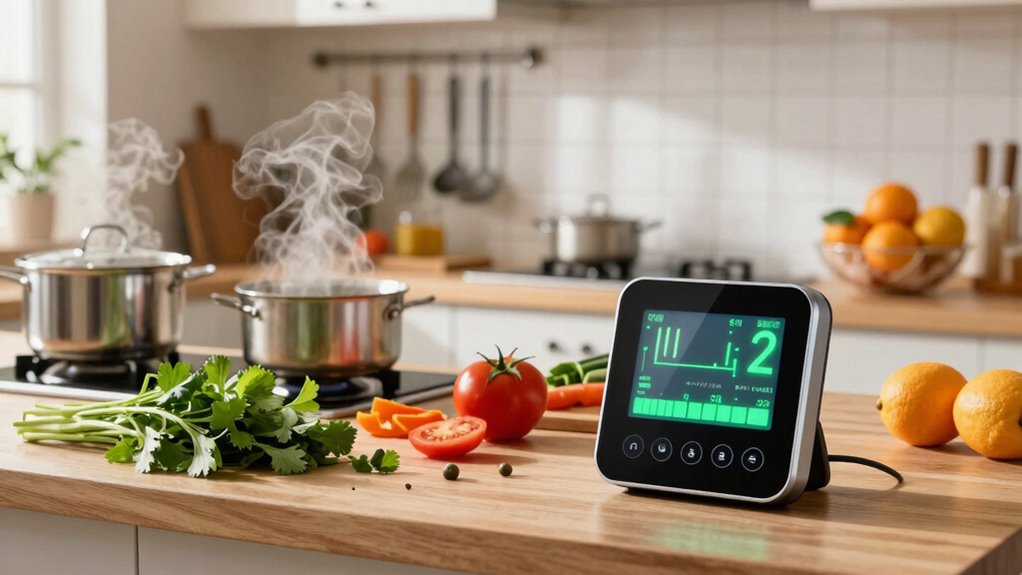

Kitchen air monitors reveal how your daily cooking habits impact indoor air quality, energy use, and health. They detect pollutants like PM, VOCs, and NO₂, showing when activities like frying or grilling create pollution spikes. Poor ventilation can increase risks, while using exhaust fans and choosing energy-efficient appliances helps improve air quality and reduce energy consumption. If you want to understand how your habits affect your kitchen environment and discover ways to make it healthier, stay with us.
Key Takeaways
- Kitchen air monitors detect pollutant levels during cooking, revealing patterns and identifying activities that elevate indoor air pollution.
- They show how high-temperature cooking methods like frying or grilling significantly increase particulate and gas emissions.
- Monitors help assess the effectiveness of ventilation strategies, such as exhaust fans or window opening, in reducing pollutant buildup.
- Data from monitors highlight the impact of appliance choices and usage durations on indoor air quality and energy consumption.
- Continuous monitoring encourages healthier cooking habits and promotes the adoption of cleaner, more sustainable kitchen practices.
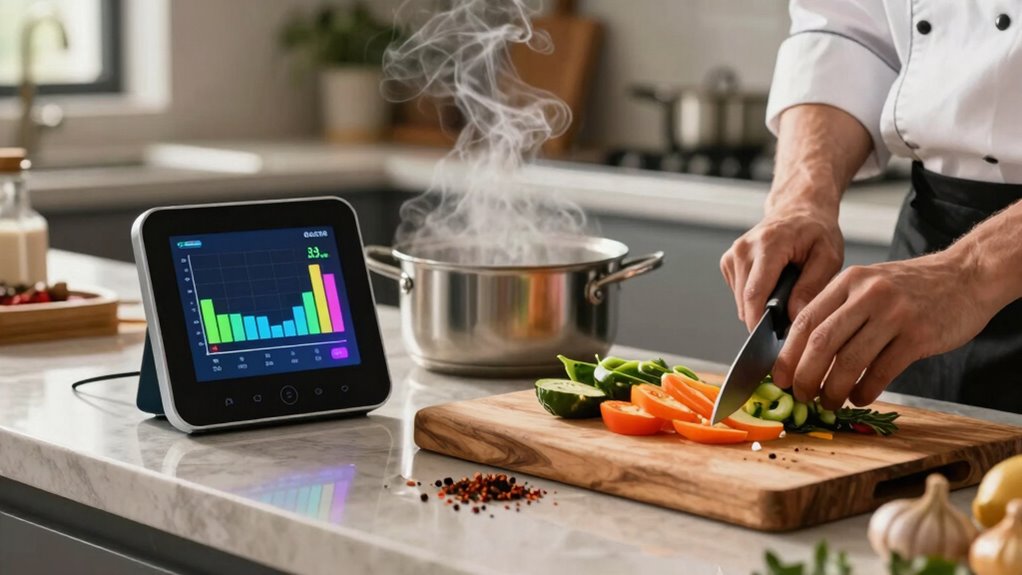
Cooking habits considerably impact the air quality in your kitchen, making it essential to monitor airborne pollutants regularly. When you cook, you introduce particles, gases, and fumes into the air that can affect both your health and the environment. Kitchen air monitors reveal a lot about your daily cooking routines, offering insights that can help you make safer and more eco-friendly choices. For instance, these devices detect pollutants like particulate matter (PM), nitrogen dioxide (NO₂), and volatile organic compounds (VOCs), all of which can pose health risks if they accumulate over time. By paying attention to what your monitor shows, you become more aware of how your cooking methods influence indoor air quality and, consequently, food safety.
Monitoring airborne pollutants helps improve cooking habits and ensures a healthier, safer kitchen environment.
If your kitchen air monitor indicates high levels of pollutants during certain activities, it’s a clear sign to adjust your habits. For example, frying or grilling at high temperatures often releases more particles and fumes, which can compromise food safety by contaminating the air around your food. This contamination can lead to increased inhalation of harmful substances, especially if your kitchen isn’t well-ventilated. Knowing this, you might decide to use exhaust fans, open windows, or switch to cooking methods that produce fewer emissions, thereby reducing health risks for yourself and your family. Ventilation strategies are essential for maintaining better indoor air quality during cooking.
Beyond personal health, your cooking habits also have an environmental impact. The energy used in cooking—whether through gas stoves, electric ovens, or other appliances—contributes to carbon emissions. Kitchen air monitors can highlight how different cooking techniques and appliance use affect indoor air quality and energy consumption. For example, prolonged use of gas stoves without proper ventilation can elevate indoor pollution levels, increasing your carbon footprint indirectly. Recognizing these patterns encourages you to adopt more sustainable cooking practices, like using energy-efficient appliances or limiting high-emission cooking sessions, which benefits the environment. energy consumption is a key aspect to consider when aiming for a more sustainable kitchen.
In essence, kitchen air monitors act as a mirror reflecting your daily cooking habits. They provide valuable data that can guide you toward safer food handling and preparation methods while helping you minimize your environmental impact. Regularly checking these devices empowers you to make informed choices—whether it’s improving ventilation, choosing cleaner cooking techniques, or reducing energy consumption—ultimately creating a healthier, more sustainable kitchen environment. The insights you gain can inspire lasting changes that protect your health and contribute positively to the planet. Additionally, understanding air quality monitoring can help you better interpret the data and implement effective strategies for a cleaner indoor environment.
As an affiliate, we earn on qualifying purchases.
Frequently Asked Questions
How Accurate Are Kitchen Air Monitors Compared to Professional Assessments?
Kitchen air monitors are quite accurate compared to professional assessments, thanks to advanced sensor technology. You can trust their data accuracy for daily monitoring, as they provide real-time insights into pollutants and odors. While they might not match the precision of lab tests, modern sensors effectively detect common kitchen air contaminants, helping you make informed decisions about ventilation and air quality improvements.
Can Air Monitors Detect Specific Cooking Ingredients or Just General Pollutants?
Air monitors mainly detect general pollutants like smoke, VOCs, and odours, but they usually can’t identify specific cooking ingredients. While some advanced models offer pollutant specificity, most focus on overall air quality. If you’re interested in ingredient detection, look for monitors with specialized sensors. Otherwise, standard devices will give you a good overview of indoor air quality but won’t pinpoint individual ingredients used during cooking.
Do Air Monitors Require Regular Maintenance or Calibration?
Yes, air monitors need regular device maintenance and sensor calibration to stay accurate. You should routinely clean the sensors and check calibration settings, especially if you notice inconsistent readings. Proper maintenance guarantees the device functions correctly and provides reliable data. By staying on top of sensor calibration and maintenance, you keep your air monitor in ideal condition, helping you better understand your kitchen’s air quality and cooking habits.
How Do Kitchen Air Levels Vary With Different Cuisines or Cooking Styles?
When you cook different cuisines, kitchen air levels shift like night and day. Spicy fumes from Indian or Thai dishes spike VOCs and culinary aromas, making the air lively. Grilling or frying adds smoky particles, while baking produces more neutral scents. Your cooking style influences air quality—stir-frying creates a different profile than slow simmering. Monitoring these levels helps you keep the air fresh, no matter what culinary adventure you’re on.
Are There Health Risks Associated With Long-Term Exposure to Kitchen Air Pollutants?
Long-term exposure to poor indoor air quality can pose health risks, especially from pollutants like particulate matter and volatile organic compounds released during cooking. You might experience respiratory issues, allergies, or even more serious conditions over time. To protect yourself, make sure proper ventilation and monitor indoor air quality regularly. Staying aware of air pollutant levels helps you reduce risks and maintain a healthier kitchen environment for you and your family.
Conclusion
By paying attention to kitchen air monitors, you reveal more than just odors—you uncover your cooking rhythm, habits, and hidden tendencies. Like a silent storyteller, these devices whisper secrets about your daily routines, turning your kitchen into a living portrait of your life. Embrace this insight, and you’ll not only improve your air quality but also connect more deeply with your culinary habits. After all, your kitchen’s air tells the story you’re too busy to notice.