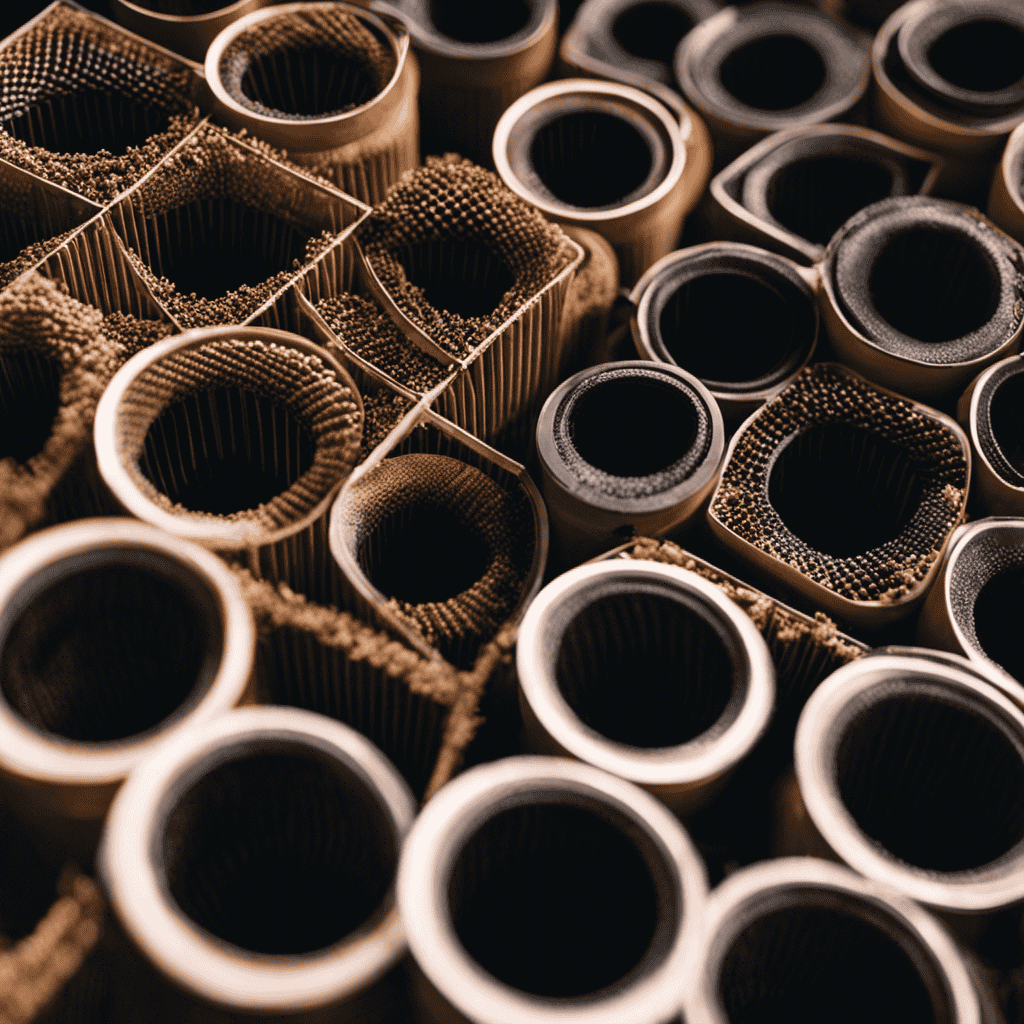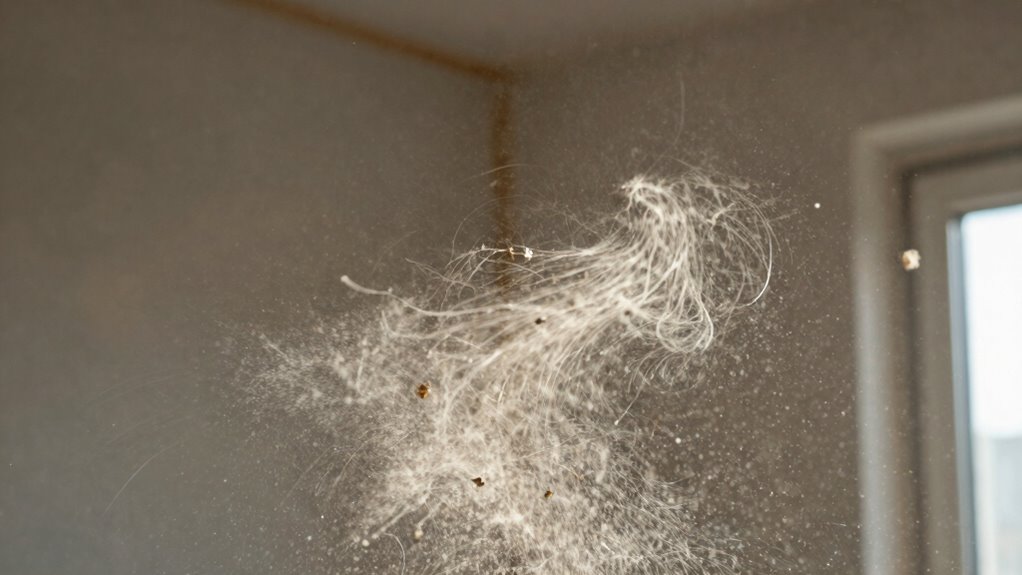

Drywall dust is much finer, more pervasive, and harder to remove than regular household dust. It becomes airborne during sanding and cutting, spreading easily and settling slowly. Standard cleaning tools like brooms or cloths often don’t do the job well. Handling drywall dust safely requires special techniques and protective gear to avoid health risks. If you want to know how to clean it effectively and protect yourself, keep going for more tips.

Get garden gear delivered free — and shop member deals
- Fast, free delivery on millions of items
- Access to Prime Big Deal Days deals on October 6–7
- Prime Video, Amazon Music and more included
Key Takeaways
- Drywall dust is finer, more pervasive, and becomes airborne during sanding and cutting, making it harder to clean than regular household dust.
- Standard cleaning tools like brooms are ineffective; HEPA vacuuming and damp wiping are essential for drywall dust.
- Drywall dust poses greater health risks, including respiratory issues and irritation, due to its small particle size and airborne nature.
- Managing drywall dust requires protective gear and proper ventilation to minimize inhalation and indoor air contamination.
- Its composition and particle size make drywall dust more hazardous and challenging to remove compared to typical household dust.
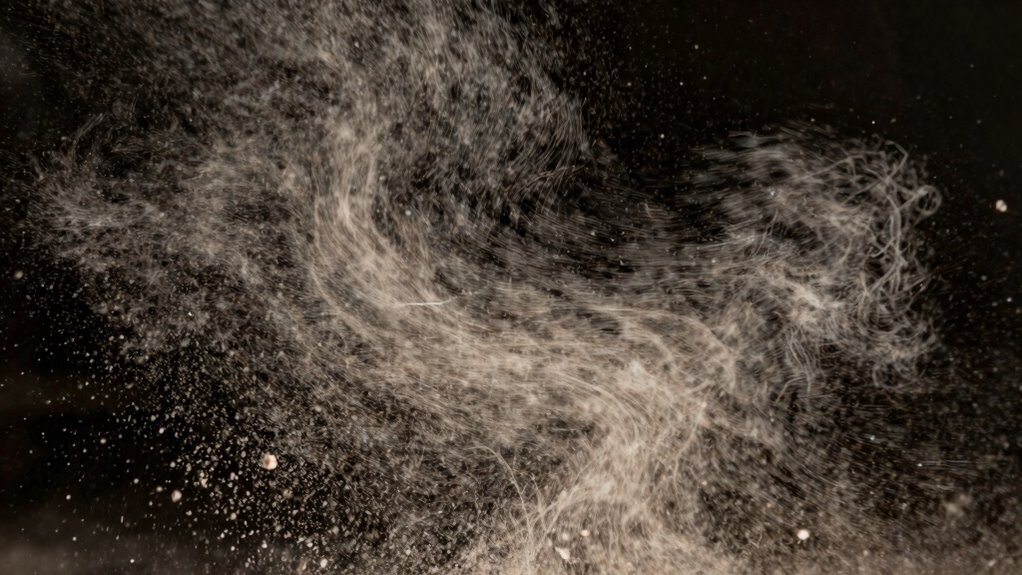
Have you ever noticed how drywall dust seems to linger and spread more stubbornly than regular household dust? It’s not just your imagination. Unlike typical dust that settles quickly and can be wiped away easily, drywall dust is finer, more pervasive, and harder to eliminate. When you’re working on a renovation or drywall installation, this dust becomes airborne during sanding and cutting, making it tricky to manage. It’s vital to understand that drywall dust isn’t just an inconvenience; it can pose real health risks if not handled properly. Breathing in fine drywall particles over time can lead to respiratory issues, irritation in your eyes, nose, and throat, or even more serious conditions like silicosis in extreme cases. That’s why you need effective cleaning methods tailored specifically for drywall dust.
Standard dusting tools, like a regular broom or dust cloth, won’t cut it when it comes to drywall debris. Instead, you should start with a damp cloth or microfiber mop to trap the particles rather than just spreading them around. For floors, a vacuum equipped with a HEPA filter is your best bet—it captures the tiny particles that would otherwise settle back into the air or on surfaces. After vacuuming, it’s wise to follow up with a damp mop or microfiber cloth to pick up any remaining residues. It’s also essential to wear personal protective equipment—such as a mask or respirator—to avoid inhaling the dust during cleanup. When cleaning walls or ceilings, use a slightly damp sponge or cloth, being careful not to create more dust clouds. Opening windows and using fans can help disperse airborne particles, which is especially important when dealing with indoor air quality concerns, as drywall dust can significantly impact the health of those inside. Additionally, understanding the composition of drywall dust helps in choosing the most effective cleaning techniques. Recognizing the hazardous nature of drywall dust is crucial for maintaining a safe environment during renovation projects. Being aware of dust particle size can also guide you in selecting proper protective measures and cleaning tools to minimize exposure.
As an affiliate, we earn on qualifying purchases.
Frequently Asked Questions
How Long Does Drywall Dust Stay Airborne?
Drywall dust can stay airborne for several hours, especially if not properly contained. Airborne particles from drywall are lightweight and tend to linger unless you use effective dust containment methods. To minimize exposure, ventilate the area well and use HEPA filters or air purifiers. Keep dust contained during sanding and finishing to prevent it from spreading, and clean up promptly to reduce lingering airborne particles for a safer environment.
Is Drywall Dust More Harmful Than Regular House Dust?
Sure, drywall dust is more harmful than regular house dust. Its composition includes fine silica particles and other toxins that pose serious health risks, especially if inhaled regularly. Ordinary house dust might be just a minor nuisance, but drywall dust’s tiny particles can infiltrate your lungs and cause long-term damage. So, next time you think about dust, remember: drywall dust is the villain hiding in plain sight, waiting to cause trouble.
Can Drywall Dust Cause Long-Term Health Issues?
Drywall dust can pose long-term health risks if you’re exposed regularly, especially without proper protection. Dust exposure may cause respiratory issues, allergies, or irritation over time. While occasional exposure might not be harmful, persistent inhalation can lead to more serious problems. To reduce health risks, wear masks, guarantee good ventilation, and clean up dust thoroughly. Taking these precautions helps protect your long-term health from drywall dust’s potential dangers.
What Precautions Should I Take During Drywall Sanding?
When sanding drywall, you should wear protective gear like a mask and goggles to prevent dust inhalation and eye irritation. Use good ventilation strategies, such as opening windows and running fans, to disperse dust particles. Consider sealing off the work area with plastic sheeting to contain dust. These precautions help protect your health and keep your home cleaner during and after the sanding process.
How Effective Are Household Air Purifiers Against Drywall Dust?
Think of a household air purifier as a net catching drywall dust in a storm. They can help reduce airborne particles, but their effectiveness depends on proper air purifier maintenance and dust containment strategies. To maximize results, seal off work areas and use high-efficiency filters. Regularly change filters, keep vents clean, and make certain your purifier runs continuously during sanding and cleanup. This way, you’ll minimize drywall dust spread and keep your air cleaner.
Conclusion
Think of drywall dust like a stubborn stain on your favorite shirt—it lingers longer and is tougher to clean than regular house dust. I once watched a friend struggle for hours removing drywall residue, realizing it’s not just dirt; it’s tiny particles that can settle deep. Knowing this, you’ll handle drywall dust with more care, like a delicate treasure. Protect your home and health, because this dust isn’t just mess—it’s a beast that demands respect.
Fall Picks
fall essentials
As an affiliate, we earn on qualifying purchases.