
TL;DR

Get garden gear delivered free with Prime
- Fast, free delivery on millions of items
- Prime Video, Amazon Music and more included
- Member-only deals all year
Gardening Know How recommends plain basket coffee filters as a surface for drying cleaned seeds because their smoother, denser paper may make seeds easier to remove than from paper towels. The report describes seed preparation and drying methods, but provides no controlled comparison or evidence that the trick increases next year’s harvest.
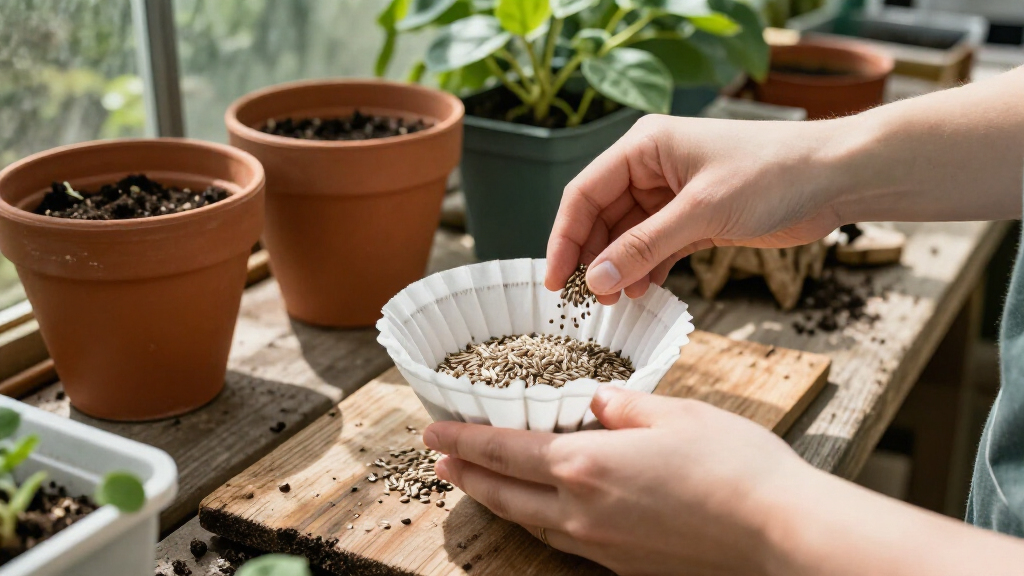
Gardening Know How recommends plain basket coffee filters as a drying surface for cleaned seeds saved from crops such as tomatoes, peppers and squash, saying the smooth, dense paper can make seeds easier to lift off than paper towels. The household tip may help home gardeners store seeds with less risk of pulling away bits of paper or damaging seed coats, though the report does not present test results showing that it improves germination or increases future yields.
The report says seeds with wet coatings or pulp can dry onto paper towels and become difficult to separate. Tomato seeds, for example, are surrounded by a gelatinous coating; cucumber seeds can also be slippery, while squash seeds may remain tangled in pulp. According to the article, the fibers and texture of a paper towel can catch damp material as it dries, leaving seeds stuck or with paper fragments attached.
Basket coffee filters are suggested for the drying stage, not as a substitute for cleaning seeds. The article describes their paper as relatively smooth and tightly woven, allowing moisture to pass through while leaving the seed on the surface. Once the seeds dry, gardeners can flex the filter or tap it lightly to loosen them. The report says a few seeds with pulp still attached may remain harder to remove.
Before drying, seeds should be cleaned according to the crop. For tomatoes and cucumbers, the article recommends fermenting seeds and gel in a jar with a little water for two to three days at about 72–80°F (22–27°C), stirring daily, then rinsing the viable seeds. Pepper seeds can be removed from ripe fruit, while squash and melon seeds should have stringy pulp removed and be rinsed. The article advises draining rinsed seeds before putting them on a filter so excess water does not soak the paper.
A Low-Cost Option for Seed Saving
For gardeners who save seeds, the practical issue is whether they can dry and store them without losing seeds or damaging them during removal. A filter is an inexpensive household material that may help with that handling problem, especially for small batches of wet seeds harvested at the end of the growing season. Easier removal can reduce mess and make it less likely that seeds are torn from a drying surface.
The advice is about convenience and seed handling, not a demonstrated yield boost. Future crop size depends on multiple factors, including seed viability, variety, growing conditions and care. The source does not report a germination trial, compare filter-dried seeds with seeds dried on other surfaces, or quantify any change in next season’s harvest.
basket coffee filters for seed drying
As an affiliate, we earn on qualifying purchases.
As an affiliate, we earn on qualifying purchases.
Cleaning Seeds Before Drying
The coffee-filter suggestion addresses a familiar seed-saving problem: some freshly harvested seeds carry gel, juice or pulp that becomes sticky as it dries. The article contrasts that material with the loose fibers of paper towels, which it says can hold damp coatings and make seeds harder to separate. It recommends plain white or unbleached basket filters; cone filters may be stiffer, while textured paper towels are not its preferred option. Paper plates, glass dishes and window screens are also mentioned as possible drying surfaces.
Preparation varies by crop. The report recommends fermentation for tomato and cucumber seeds to remove their gel coatings, while seeds from peppers and some squash can be cleaned more directly. It says a white film may form during fermentation and advises pouring off the liquid and floating seeds before rinsing the seeds that remain at the bottom. The article supplies this as gardening guidance; it does not provide independent testing of the method or address every crop and storage condition.
Germination Results Are Untested
The report does not provide data from a controlled comparison of coffee filters, paper towels or other drying surfaces. It is therefore unclear how often filter drying prevents damage, whether it changes germination rates, or whether any difference depends on the seed type and how thoroughly it was cleaned. The headline’s suggestion of bigger yields is not established by the information provided.
Storage conditions also matter, but the supplied report excerpt does not set out a complete storage protocol, such as a target moisture level, container or storage duration. Gardeners should not treat the filter itself as proof that seeds are dry enough or viable for planting.
Dry, Label and Store Seeds
The next step for gardeners following the tip is to clean seeds, drain away excess water, spread them on a plain basket filter and let them dry before removing and storing them. Seeds should be labeled by crop and variety so they can be identified at planting time. The report does not specify a drying duration or give a formal test for readiness, so gardeners will need to judge whether seeds are fully dry before storage and follow reliable crop-specific guidance.
Germination is the practical test of whether saved seed remains usable. Gardeners can check a small sample before sowing a full batch, while keeping in mind that results may vary by crop, seed maturity and storage conditions. No follow-up study or measured yield comparison is included in the source material.
Key Questions
Why use a coffee filter to dry saved seeds?
The report says a plain basket filter has a smoother, denser surface than a paper towel, so seeds may be less likely to catch in fibers as they dry. The article presents this as practical advice, not as a result established by a controlled test.
Should seeds be cleaned before they go on the filter?
Yes. The filter is intended for drying, not removing gel or pulp. The report recommends cleaning seeds first, with fermentation for tomato and cucumber seeds and rinsing or pulp removal for several other crops.
How should tomato seeds be prepared?
The article advises placing tomato seeds, gel and a little water in a jar for two to three days at about 72–80°F (22–27°C), stirring daily. It then recommends pouring off the liquid and floating seeds, rinsing the seeds left at the bottom, draining them and transferring them to a filter.
Does the trick guarantee better germination or bigger crops?
No. The source provides no germination data or measured comparison of harvest size. It claims the filter can make seeds easier to remove from the drying surface, but future germination and yields are not established by the report.
Source: rss
Halloween Picks
halloween
As an affiliate, we earn on qualifying purchases.