To meet ASHRAE and LEED standards with AHU filters, you should select high-efficiency filters with appropriate MERV ratings, such as 13 to 16, that balance filtration performance and energy use. Focus on filters made from sustainable materials, and guarantee regular maintenance and replacement to maintain indoor air quality. Incorporating advanced filtration technologies can boost sustainability. If you want to learn about ideal filter options and best practices, keep exploring these key concepts.
Key Takeaways
- Select filters with appropriate MERV ratings (13-16) to meet ASHRAE indoor air quality standards effectively.
- Choose environmentally friendly, low-energy filters to align with LEED sustainability and energy efficiency criteria.
- Ensure AHU systems are capable of handling higher pressure drops from high-MERV filters without compromising performance.
- Regularly maintain and replace filters to sustain indoor air quality and comply with industry and LEED requirements.
- Incorporate advanced filtration technologies and innovative designs to enhance air quality and support sustainable building practices.
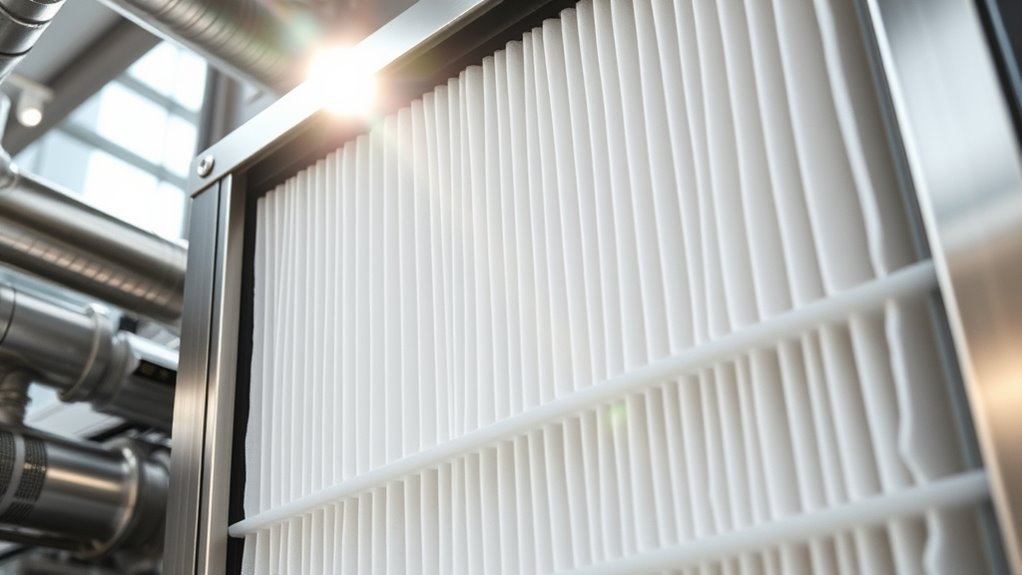
Air handling unit (AHU) filters play a critical role in maintaining indoor air quality and ensuring building standards are met. When you’re selecting filters for your HVAC system, the choices you make directly impact the quality of air occupants breathe and whether your building complies with industry regulations like ASHRAE and LEED. Your goal should be to choose filters that effectively capture airborne contaminants while balancing energy efficiency and system performance. To do this, you need to understand the importance of filter selection, which involves evaluating factors like efficiency ratings, filter types, and maintenance requirements. High-quality filters with appropriate MERV ratings, for example, can substantially improve air quality by removing dust, pollen, bacteria, and other pollutants. Selecting the right filter isn’t just about trapping particles; it’s about aligning your choices with specific standards that promote healthier indoor environments.
ASHRAE standards, especially ASHRAE 62.1, emphasize indoor air quality and set minimum ventilation and filtration requirements. To meet these standards, your filters must achieve certain efficiency levels, often indicated by the Minimum Efficiency Reporting Value (MERV). A higher MERV rating means better filtration, but it can also increase pressure drop, which might strain your system if not properly balanced. Consequently, you need to carefully assess your system’s capacity and the specific contaminants common in your building’s environment. For spaces requiring superior air quality, like hospitals or laboratories, HEPA filters or those with higher MERV ratings may be necessary. Conversely, for office buildings or retail spaces, a balanced approach with filters rated around MERV 13 to 16 often suffices, providing good filtration without excessive energy costs.
Additionally, understanding how creative practices can foster innovative solutions in filter design and selection can lead to more sustainable and effective air filtration strategies. LEED certification adds another layer to filter selection, emphasizing sustainable and energy-efficient building practices. To earn LEED points, you should prioritize filters that are both effective and environmentally friendly, such as those made from sustainable materials or designed for low energy consumption. Proper filter selection also involves ensuring your filters are regularly replaced and maintained, which sustains indoor air quality over time and prevents system inefficiencies. Additionally, incorporating advanced filtration technologies can improve indoor air quality and help your building meet or exceed standards, earning recognition for sustainability efforts.
Frequently Asked Questions
How Do AHU Filters Impact Indoor Air Quality Beyond Standards?
You improve indoor air quality beyond standards by using advanced AHU filters that target airborne contaminants more effectively. High-efficiency filtration technology captures smaller particles, allergens, and viruses, reducing health risks. This proactive approach guarantees cleaner, healthier air for occupants, minimizes allergic reactions, and supports overall well-being. By upgrading filters, you create a safer environment, promoting better health and comfort beyond just meeting industry standards.
Are There Cost-Effective Options for High-Efficiency AHU Filters?
Did you know that high-efficiency filters can cost up to 30% more upfront? Fortunately, affordable filtration options exist, making it easier for you to upgrade without breaking the bank. When considering cost comparison, look for filters with a good balance of efficiency and affordability. These options help you meet standards while keeping expenses manageable, ensuring your indoor air quality improves without sacrificing your budget.
How Often Should AHU Filters Be Replaced for Optimal Performance?
You should replace your AHU filters every 1 to 3 months for ideal performance, depending on factors like filter type, air quality, and usage. Regular filter lifespan monitoring helps you develop a consistent replacement scheduling, ensuring your system runs efficiently and maintains indoor air quality. Check filters regularly and follow manufacturer recommendations to avoid reduced airflow, increased energy costs, and potential system damage.
Can Upgraded Filters Improve Energy Efficiency in HVAC Systems?
Upgraded filters with advanced filter materials can boost your HVAC system’s energy efficiency by reducing airflow resistance and improving air quality. By selecting high-efficiency filters, you’ll experience less strain on your system, leading to energy savings and lower operational costs. These filters also help maintain ideal indoor environments, meeting standards like ASHRAE and LEED. Regularly upgrading your filters ensures your system runs effectively and sustainably over time.
What Are the Best Practices for Maintaining Compliance Over Time?
To stay compliant over time, you should establish a routine for filter replacement based on manufacturer recommendations and your system’s usage. Regular compliance monitoring helps catch issues early, guaranteeing filters remain effective and meet standards. Keep detailed records of replacements and inspections, and adjust schedules as needed. Consistent maintenance and monitoring ensure your HVAC system stays efficient, compliant, and aligned with ASHRAE and LEED standards.
Conclusion
By choosing the right AHU filters, you can navigate the maze of ASHRAE and LEED standards with confidence. Think of filters as the gatekeepers that keep your building’s air clean and compliant—like a lighthouse guiding you safely through a storm. When you prioritize high-quality filtration, you’re not just meeting codes; you’re creating a healthier, more sustainable environment. So, make informed choices, and let your building shine as a beacon of excellence in air quality.