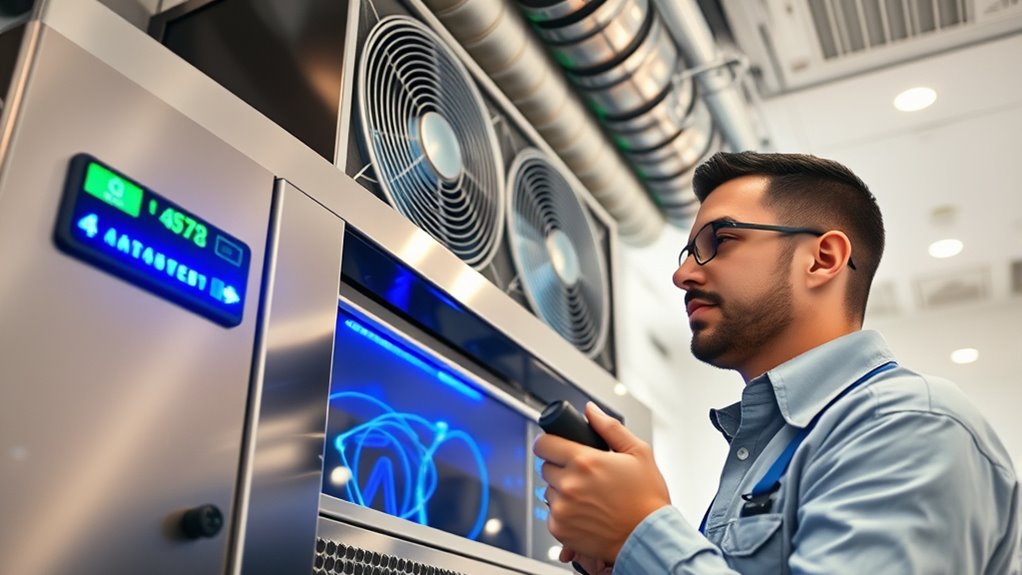

To guarantee your HVAC system meets indoor air quality standards, you need proper commissioning. This process verifies that airflow rates, ventilation rates, and filtration systems operate correctly, delivering clean, fresh air while preventing energy waste. By checking controls and sensors, you guarantee the system responds properly to indoor conditions. Proper commissioning helps maintain healthy environments and ideal performance. Keep exploring to discover how thorough testing and calibration can maximize your HVAC system’s effectiveness.
Key Takeaways
- Proper commissioning verifies airflow, ventilation rates, and sensor accuracy to ensure indoor air quality standards are met.
- It confirms effective operation of filtration systems and air-cleaning devices to maintain healthy indoor environments.
- Commissioning ensures controls and sensors respond correctly, allowing dynamic adjustments for optimal air quality.
- It validates that ventilation systems are balanced and deliver even air distribution throughout occupied spaces.
- Proper calibration prevents energy waste and supports system performance, sustaining indoor air quality efficiently.
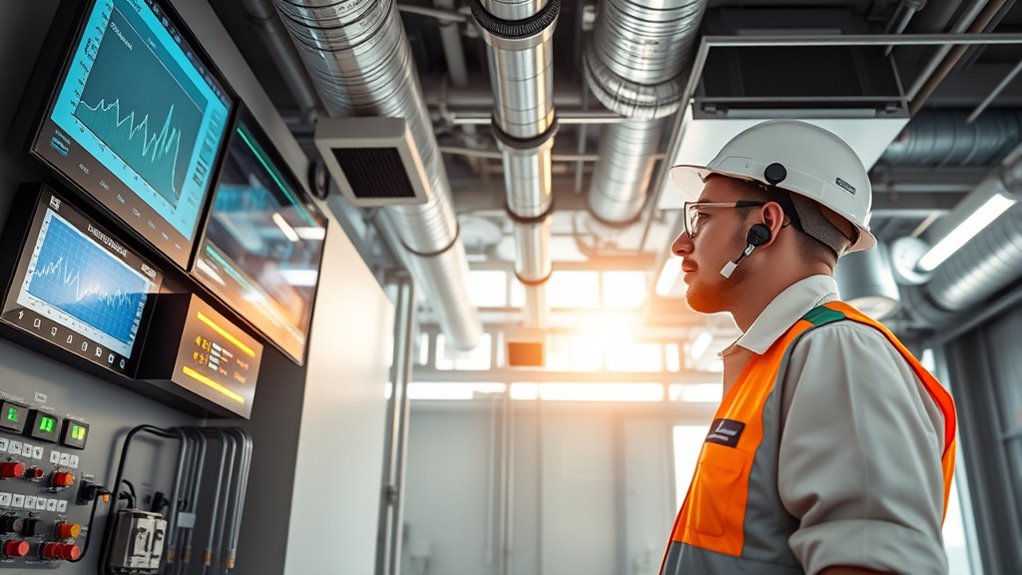
Have you ever wondered how the HVAC systems in a building perform at their best? Achieving optimal indoor air quality isn’t just about installing the right equipment; it’s about ensuring that the entire system is properly commissioned. Proper commissioning guarantees that your HVAC system meets ventilation standards, delivering clean, fresh air while maintaining energy efficiency. When these standards are met, you get a healthier indoor environment and lower energy costs, making the investment worthwhile.
Proper commissioning ensures your HVAC system delivers clean air and energy efficiency.
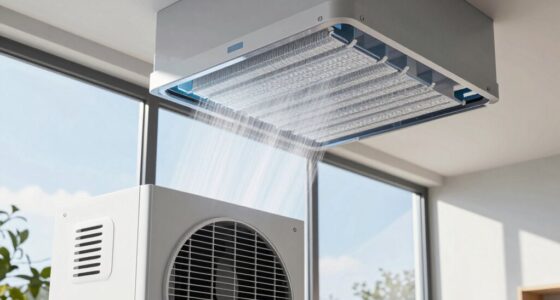
You should understand that ventilation standards set the baseline for acceptable indoor air quality. They specify how much outdoor air needs to be introduced to dilute indoor pollutants and ensure occupant comfort. During commissioning, you verify that the ventilation rates align with these standards. This involves checking airflow measurements, ensuring the ventilation systems are balanced correctly, and confirming that air distribution is even throughout the space. If these parameters aren’t met, indoor air could become stale or contaminated, negatively impacting health and productivity.
Energy efficiency plays a vital role in this process as well. An HVAC system that isn’t properly commissioned may waste energy through over-ventilation or improper airflow control. When systems are calibrated correctly, you minimize unnecessary energy consumption, reducing operational costs and environmental impact. For example, optimizing airflow rates ensures that your system doesn’t work harder than needed, which saves on energy bills and extends equipment lifespan.
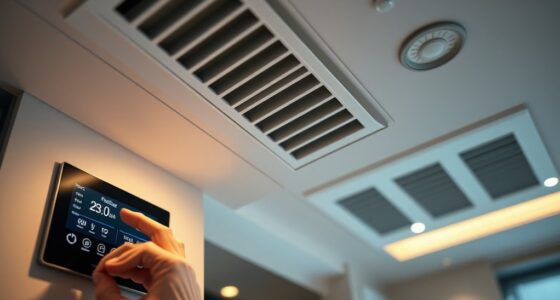
During commissioning, you also focus on verifying the operation of controls and sensors that regulate airflow, temperature, and humidity. These components need to respond accurately to changing conditions to maintain indoor air quality without overusing energy. If controls aren’t functioning properly, you risk either compromising air quality or wasting energy, both of which are costly and inefficient.
Additionally, commissioning involves testing filtration and air-cleaning devices to ensure they perform as intended. Proper maintenance and operation of these components are crucial for meeting ventilation standards and improving indoor air quality. If filters are clogged or sensors are misaligned, indoor air quality can deteriorate, and energy use may spike unnecessarily.

Indoor Air Quality Monitor 16-in-1 with CO2 Detector, PM2.5P, PM10, M1.0, HCHO & TVOC – Portable Air Quality Tester with AQI Alerts, Temperature & Humidity Meter Kit for Home Office Nursery RV
16-in-1 Indoor Air Quality Monitor for Complete Air Detection: This 16-in-1 indoor air quality monitor tracks CO2, PM1.0,...
As an affiliate, we earn on qualifying purchases.
Frequently Asked Questions
How Does Commissioning Impact Energy Efficiency Long-Term?
Commissioning boosts your building’s energy efficiency long-term by ensuring your HVAC system operates ideal. It identifies and corrects inefficiencies, leading to significant energy savings. Through system optimization, your equipment runs smoothly, reducing waste and lowering utility bills. Regular commissioning checks maintain peak performance, preventing energy loss over time. Ultimately, this proactive approach helps you save money while supporting sustainable building operations.
What Are Common Challenges During HVAC Commissioning?
You face common challenges during HVAC commissioning, such as guaranteeing proper system integration, achieving precise equipment calibration, and coordinating among different teams. These hurdles can delay progress, cause miscommunications, and hinder ideal performance. To overcome them, you need clear communication, thorough documentation, and diligent testing. Addressing these issues early helps streamline commissioning, improves system reliability, and ensures indoor air quality standards are met effectively.
Who Are the Key Stakeholders Involved in Commissioning?
You involve key stakeholders like building owners, facilities managers, HVAC contractors, and commissioning agents in the commissioning process. Their collaboration guarantees all aspects are covered, from design to operations. You coordinate effectively by engaging these stakeholders early and maintaining open communication throughout the commissioning process. This teamwork helps identify issues quickly, optimize indoor air quality, and ensure the HVAC system performs as intended.
How Often Should Indoor Air Quality Be Monitored Post-Commissioning?
You should monitor air quality regularly, ideally monthly, to guarantee ideal indoor air quality. Monitoring frequency depends on factors like building use, occupancy, and local regulations, but consistent checks help catch issues early. By staying proactive, you maintain a healthy environment, identify potential problems quickly, and ensure your HVAC system continues to perform effectively. Regular monitoring protects occupants and keeps indoor air quality at its best.
What Are the Costs Associated With Comprehensive HVAC Commissioning?
You should expect the costs of thorough HVAC commissioning to vary based on factors like building size, complexity, and scope. Conducting a detailed cost analysis helps you understand expenses for equipment testing, system adjustments, and documentation. Budget considerations are vital to guarantee you allocate enough funds for quality assurance without overspending. Typically, commissioning costs range from 5% to 10% of total project costs, making early planning essential for effective financial management.

16 in 1 Air Quality Monitor Indoor 7" Large Display 9 AQI+7 Alerts, CO2 Monitor Air Quality Tester for CO2, TVOC, PM2.5 PM1.0 PM10, HCHO Temperature Humidity AQI & Time Air Quality Meter for Home
【16-in-1 Air Quality Monitor Indoor】Experience the ultimate indoor air quality monitoring with our 16-in-1 Air Quality Monitor, offering...
As an affiliate, we earn on qualifying purchases.
Conclusion
By properly commissioning your HVAC system, you’re not just improving indoor air quality—you’re transforming your entire environment into a sanctuary of pure, breathable air. Skimping on this process is like leaving the door wide open to allergens, pollutants, and airborne villains. With thorough commissioning, you’ll experience air so clean and invigorating, it’s as if you’ve bottled up the very essence of fresh mountain breezes. Don’t settle for less—make your indoor air legendary!

Amazon Smart Air Quality Monitor – Know your air, Works with Alexa
Know your air – An Alexa air quality monitor that makes it easy to understand what’s in your...
As an affiliate, we earn on qualifying purchases.

BREATHE Airmonitor Plus Indoor Air Quality Monitor – Smart CO2, PM1 PM2.5 PM10, VOC & Formaldehyde Sensor | Professional-Grade Air Monitor with App
PROFESSIONAL INDOOR AIR QUALITY MONITORING: Accurately track CO₂, PM1, PM2.5, PM10, TVOC, Formaldehyde (HCHO), Temperature and Humidity in...
As an affiliate, we earn on qualifying purchases.