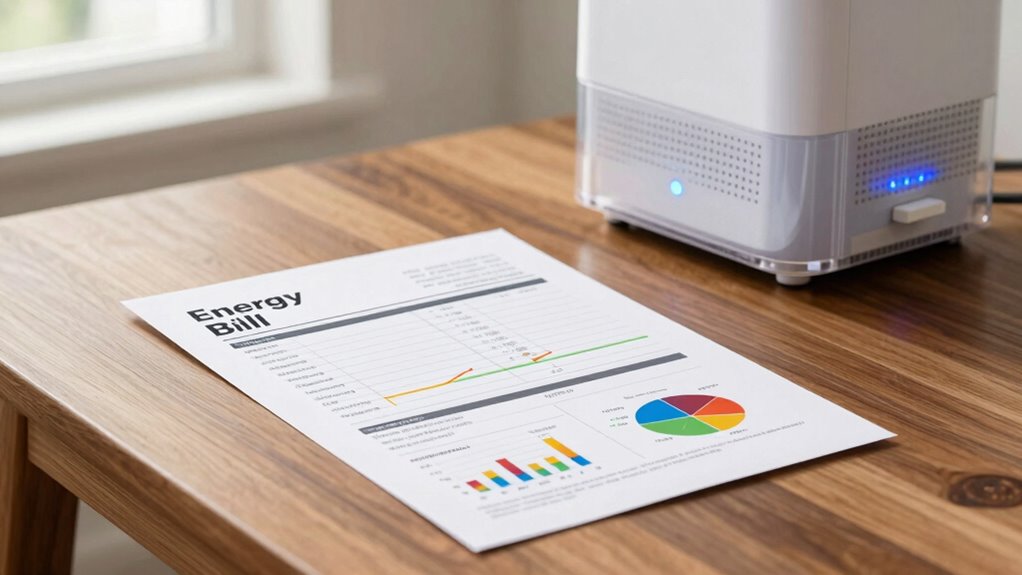

To avoid a surprise energy bill, estimate your purifier’s electricity cost before buying. Check its wattage (usually listed on the label) and calculate daily use by multiplying wattage by hours of operation. Then, multiply your household’s electricity rate by this daily consumption to find the cost. Considering energy-efficient models can lower expenses further. Keep this in mind when choosing your purifier—more tips await to help you stay on budget.
Key Takeaways
- Check the purifier’s wattage and estimate daily usage hours to calculate its energy consumption.
- Multiply daily kWh usage by your local electricity rate to find the daily cost.
- Consider energy-efficient models with high Energy Star ratings to reduce long-term expenses.
- Use household energy management strategies like timers to minimize unnecessary power use.
- Incorporate renewable energy solutions, such as solar panels, to offset purifier electricity costs.
Many households are feeling the shock of unexpectedly high energy bills this month, catching consumers off guard despite previous expectations of stable costs. If you’re considering purchasing a new air purifier or similar appliance, it’s vital to estimate its electricity cost beforehand. Many people overlook how much extra energy certain devices can consume, leading to surprise charges on their bills. By doing some quick calculations and considering factors like solar savings and appliance efficiency, you can avoid overspending and make smarter choices.
Avoid surprise energy charges by estimating appliance costs and considering solar savings before making new purchases.
First, look at the energy consumption details provided by the manufacturer. Most appliances list their power usage in watts, which you can use to estimate daily and monthly costs. For example, if your purifier uses 50 watts and runs for 8 hours a day, it consumes 400 watt-hours daily, or 0.4 kilowatt-hours (kWh). Multiplying this by your local electricity rate gives you a clear idea of the cost. If your electricity rate is 12 cents per kWh, running that purifier costs roughly 1.44 dollars a month. This might seem small, but when you add multiple devices, the total can add up quickly, especially if you’re not mindful of their energy efficiency.
This is where appliance efficiency comes into play. Choosing models with high Energy Star ratings can greatly reduce your energy consumption. An efficient purifier might use less power while delivering the same air quality, lowering your electricity costs. Investing in energy-efficient appliances may have a higher upfront price, but they pay off in the long run through lower bills. It’s worth comparing different models and reading reviews to find a purifier that balances performance with energy savings.
Additionally, consider solar savings if you have solar panels installed at home. Solar energy can offset some or all of your appliance electricity use. If you’re generating enough solar power, the marginal cost of running devices like purifiers becomes minimal. This not only reduces your bills but also contributes to a greener lifestyle. Many households find that integrating solar power makes even energy-intensive appliances more affordable to operate.
Finally, don’t forget to evaluate your overall energy habits. Running appliances only when necessary, using timers, and maintaining your HVAC system can complement your efforts to cut costs. Estimating the electricity costs of devices before buying helps you avoid surprises and manage your household budget more effectively. By combining appliance efficiency and solar savings, you create a smarter, more sustainable approach to managing your energy consumption. This proactive planning ensures your energy bills stay manageable, even as appliances and devices become more energy-efficient and solar technology continues to improve. Understanding your household’s energy consumption patterns is a key cost-saving strategy that can lead to significant long-term benefits.
Frequently Asked Questions
How Do I Compare Purifier Energy Efficiency Ratings?
To compare purifier energy efficiency ratings, look at the Energy Efficiency Ratio (EER) or Clean Air Delivery Rate (CADR). Check the power consumption listed in watts—lower wattage means less energy used. You should also consider the device’s overall energy star rating. By evaluating these factors, you can find a purifier that offers best energy efficiency and minimizes power consumption, saving you money on electricity bills.
Do Energy-Efficient Purifiers Cost More Upfront?
Yes, energy-efficient purifiers often cost more upfront due to advanced technology and better components. However, a cost comparison shows they save you money in the long run through lower electricity bills. By investing a little more initially, you benefit from long-term savings, making these purifiers more economical over their lifespan. So, consider both the initial price and future energy savings when choosing the right purifier for you.
Are There Government Incentives for Energy-Efficient Purifiers?
Yes, there are government incentives for energy-efficient purifiers. You can often benefit from government rebates and energy-saving programs designed to encourage eco-friendly choices. These incentives can reduce your upfront costs, making it more affordable to buy an energy-efficient purifier. By taking advantage of these programs, you not only save money but also contribute to a greener environment. Always check local or federal websites for the latest rebate options available in your area.
How Does Purifier Usage Vary With Air Quality?
You’ll notice purifier usage patterns increase when air quality impact worsens, like during pollution spikes or allergy seasons. As air quality declines, you’ll run the purifier more often to maintain clean indoor air. Conversely, when air quality improves, usage typically decreases. Monitoring air quality levels helps you optimize purifier operation, saving energy and reducing costs while ensuring your indoor environment stays healthy.
What Features Increase Purifier Electricity Consumption?
Worried about higher electricity bills? Features like increased airflow optimization can boost power use, especially if the purifier runs at higher speeds constantly. Additionally, frequent filter replacement or using filters with higher efficiency may cause the purifier to work harder, consuming more energy. To keep costs down, choose models with adjustable settings and plan regular filter changes, helping you balance air quality with energy efficiency.
Conclusion
Before you buy an air purifier, estimate its electricity cost to avoid surprises on your bill. For example, if a purifier runs 24 hours a day and consumes 50 watts, it could add about $15 to your monthly energy bill. Knowing this upfront helps you choose the most efficient model and keep your costs in check. Always do the math first—you’ll thank yourself when your energy bill stays manageable.