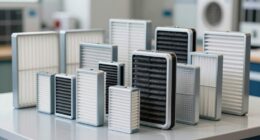
Pre-filters are an inexpensive layer that protects your costly HEPA filters by trapping large dust particles, pet dander, and debris. This prevents clogging and extends the life of your primary filter, saving you money and improving air quality. They’re easy to install and maintain, making your overall air system more efficient. Keep an eye on how pre-filters work—they’re a simple way to boost your filtration system’s performance and longevity.
Key Takeaways
- Pre-filters trap large particles, preventing clogging and extending the lifespan of expensive HEPA filters.
- They are cost-effective, easy to replace, and serve as a first defense in air filtration systems.
- Regular maintenance of pre-filters ensures optimal airflow and maintains overall system efficiency.
- By capturing dust, pet dander, and pollen, pre-filters improve indoor air quality and protect primary filters.
- Using pre-filters reduces overall costs by decreasing the frequency of HEPA filter replacements and system repairs.

Have you ever wondered how to extend the life of your filtration system and improve the quality of your water? One simple solution is adding a pre-filter. This inexpensive, yet effective, layer acts as the first line of defense against airborne particles and other debris that can clog or damage your main filter, like a HEPA. By catching larger particles early, a pre-filter helps maintain your system’s efficiency and keeps it running smoothly longer. This means fewer replacements and lower maintenance costs over time.
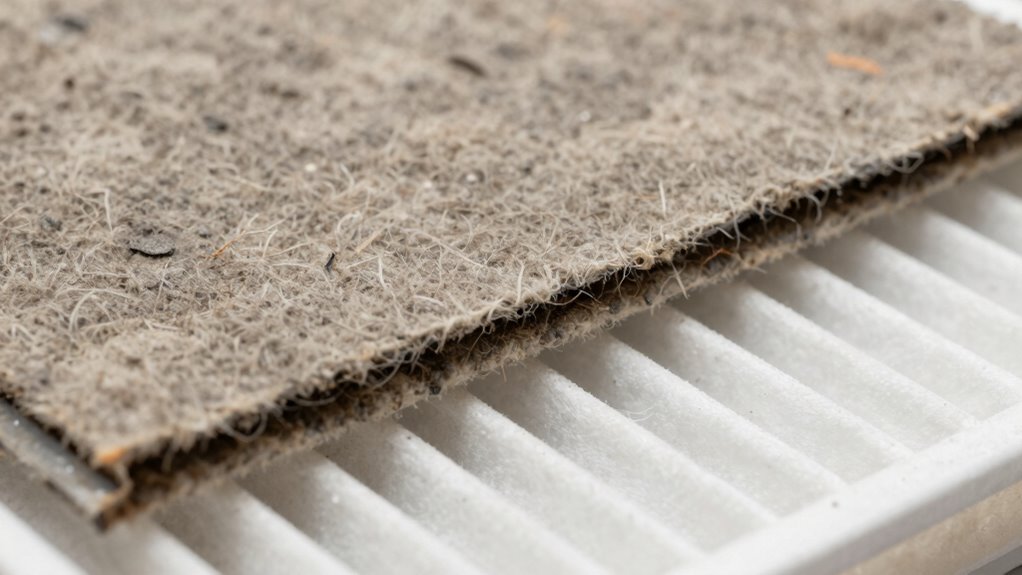
Airborne particles such as dust, pet dander, pollen, and even some bacteria can quickly accumulate on your filter, reducing its effectiveness. When these particles reach your HEPA filter, they can cause it to clog faster, forcing your system to work harder and consume more energy. This shortens the filter’s lifespan and can compromise air quality. A pre-filter, positioned at the front of your filtration system, traps these larger particles before they get a chance to reach your main filter. As a result, your primary filter stays cleaner, lasts longer, and performs better.
Pre-filters trap large particles, extending your main filter’s lifespan and improving overall air quality.
Installing a pre-filter is straightforward and cost-effective. You simply place it at the entry point of your filtration unit. These filters are typically made of foam, polyester, or other porous materials that effectively trap airborne particles without restricting airflow. Because they are designed to catch large debris, they don’t need to be replaced as frequently as your main filter. Instead, you’ll want to check and clean or replace the pre-filter regularly—usually every few months—depending on your environment and usage. This regular maintenance prevents buildup, ensuring ideal airflow and filtration.
Using a pre-filter also contributes to better indoor air quality, especially if you live in a dusty or polluted area. By removing airborne particles before they reach your main filter, you prevent the buildup of dirt and allergens on your HEPA filter, maintaining its ability to trap microscopic contaminants. This keeps the air in your home cleaner and healthier to breathe. Additionally, because your primary filter stays cleaner longer, you avoid the inconvenience and expense of frequent replacements.
Furthermore, understanding modern filtration technology can help you select the most effective pre-filter for your needs, maximizing both cost savings and air quality.
Frequently Asked Questions
How Often Should Pre-Filters Be Replaced?
You should replace your pre-filter every 1 to 3 months, depending on usage and air quality. The pre-filter lifespan varies with environmental factors, so check it regularly for dirt and dust buildup. To maintain ideal air quality, follow the manufacturer’s recommended replacement frequency, especially if you notice decreased airflow or increased dirt accumulation. Regular replacement ensures your air purifier stays efficient and prolongs the life of your HEPA filter.
Can Pre-Filters Be Cleaned or Reused?
You can often clean pre-filters, but it depends on the type. For reusable ones, gently vacuum or wash them with water using mild soap, then let them dry completely before reinstalling. Regular filter maintenance helps prolong their life and protects your main filter. Follow the cleaning tips provided by your manufacturer to avoid damage. Keep an eye on filter condition, and replace when cleaning no longer restores performance.
Do Pre-Filters Improve Overall Air Quality?
Yes, pre-filters improve overall air quality enhancement by capturing larger dust and debris before they reach your main filter. This helps reduce the load on your HEPA filter, ultimately prolonging its lifespan. As a result, your air purifier runs more efficiently and maintains cleaner air longer. Regularly checking and replacing pre-filters guarantees you get the best air quality and maximum filter lifespan, saving you money and effort over time.
Are Pre-Filters Necessary for All Air Purifiers?
You might wonder if pre-filters are necessary for your air purifier. About 80% of units benefit from them, as pre-filter materials extend filter lifespan and trap larger particles. While some compact models have built-in pre-filters, others rely solely on the main filter. If you’re concerned about maintenance and efficiency, having a pre-filter can save you money by reducing the load on your HEPA filter, making it a smart choice for most units.
How Do Pre-Filters Affect Energy Consumption?
Pre-filters can help save energy by reducing the workload on your main HEPA filter, leading to energy savings. When pre-filters trap larger particles first, your air purifier doesn’t have to work as hard, which extends filter lifespan and cuts down on power consumption. Regularly maintaining or replacing pre-filters guarantees your device runs efficiently, ultimately saving you money on energy bills while keeping your air clean.
Conclusion
Just like the wise old owl guards the forest’s secrets, your pre-filter shields your expensive HEPA from dust and debris. It’s the unsung hero that prolongs your air purifier’s life, ensuring cleaner air with less effort. Remember, even the strongest armor needs a first line of defense. By investing in a good pre-filter, you’re not just saving money—you’re safeguarding your sanctuary, echoing the timeless wisdom that sometimes, the simplest defenses hold the greatest power.