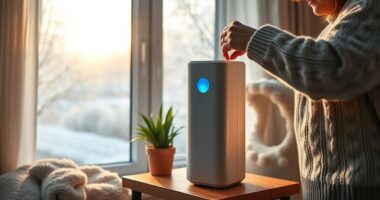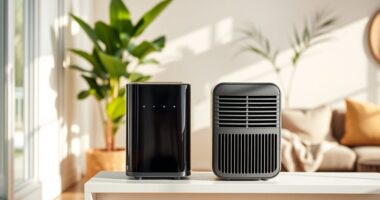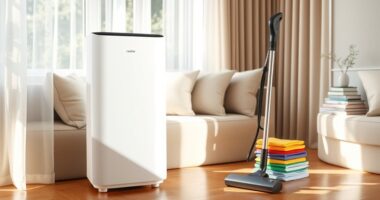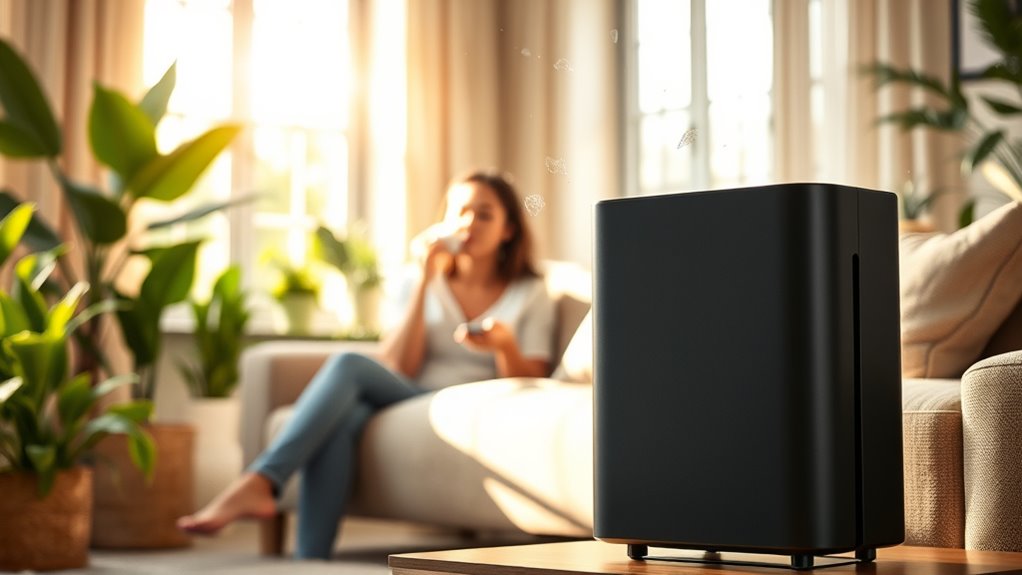
Air purifiers can worsen allergies if they have ineffective filters, release harmful ozone, or don’t properly remove pollutants. Clogged filters may release trapped allergens back into the air, and some devices produce ozone, which irritates your lungs. Poorly maintained or low-quality purifiers can do more harm than good. To keep your air clean and allergy-friendly, it’s important to choose the right model and maintain it properly—if you want to learn more, just continue exploring this topic.
Key Takeaways
- Poorly maintained filters can release trapped allergens back into the air, worsening allergy symptoms.
- Using filters that are not true HEPA may reduce effectiveness and allow allergens to circulate.
- Some air purifiers produce ozone, which can irritate airways and intensify allergies.
- Filters emitting VOCs or using low-quality components can increase indoor pollutants, aggravating allergies.
- Inadequate maintenance or selecting inappropriate devices can hinder allergen removal and worsen symptoms.
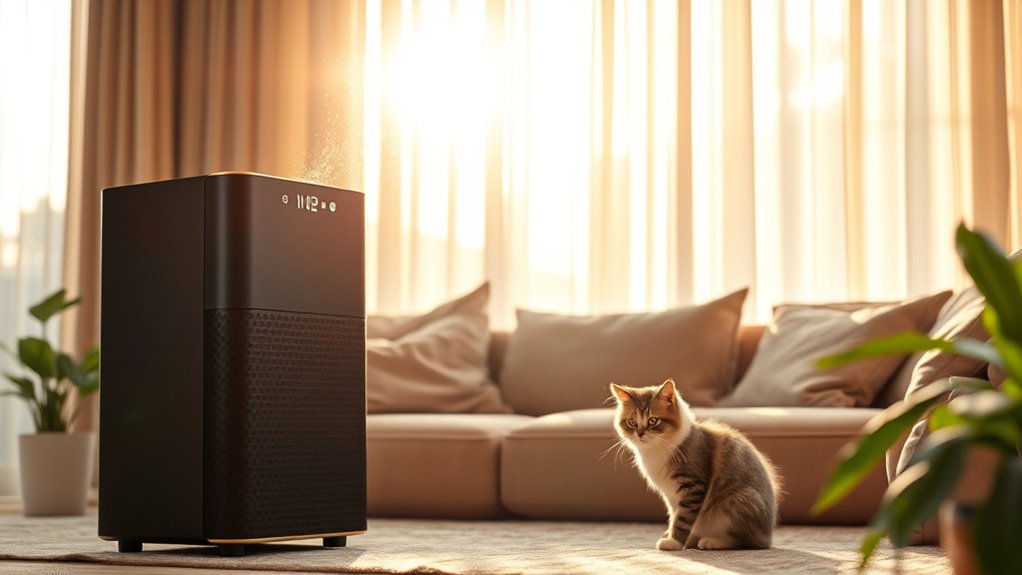
If you suffer from allergies, air purifiers can be a game-changer for improving your indoor air quality. They can help reduce common allergens like pollen, pet dander, and dust mites, making your living environment more comfortable. However, not all purifiers are created equal, and some might inadvertently worsen your allergy symptoms. To understand this, you need to consider how these devices work, especially regarding HEPA filters and VOC emissions.
HEPA filters are vital components in many quality air purifiers because they trap particles as small as 0.3 microns with 99.97% efficiency. This includes many allergens that trigger your reactions. When you choose an air purifier with a true HEPA filter, you’re more likely to see a noticeable decrease in airborne allergens. However, if the filter isn’t maintained properly—like if it’s clogged or replaced infrequently—the purifier can become less effective or even release trapped particles back into the air. This can cause your allergy symptoms to persist or worsen.
Another factor to watch out for is VOC emissions. Volatile organic compounds are gases emitted from many household products, including cleaning supplies, paints, and air fresheners. Some lower-quality air purifiers or those without proper filtration can inadvertently increase VOC levels, especially if they rely on certain types of filters or technologies that produce ozone as a byproduct. Ozone can irritate your respiratory system, aggravating allergy symptoms and potentially causing new issues like coughing or throat irritation. Consequently, it’s vital to select an air purifier that minimizes VOC emissions, preferably one that uses activated carbon filters alongside HEPA filters to effectively absorb these gases.
It’s also worth noting that some air purifiers produce ozone as a byproduct during operation, which can be harmful, especially for allergy sufferers. If you notice increased coughing, throat irritation, or breathing difficulty after using a particular device, it might be generating ozone unintentionally. Always check the specifications and reviews to confirm the purifier is ozone-free or produces only safe levels. Additionally, choosing models with advanced air purification technology can further reduce the risk of unwanted emissions and enhance allergen removal.
True HEPA air purifier for allergies
As an affiliate, we earn on qualifying purchases.
As an affiliate, we earn on qualifying purchases.
Frequently Asked Questions
Can Air Purifiers Worsen Allergy Symptoms in Children?
Yes, air purifiers can worsen allergy symptoms in children if not used properly. Poor placement, like near vents or windows, can circulate allergens instead of removing them. Make sure to position your air purifier correctly and keep filters clean. If your child’s allergy symptoms persist, consider consulting a doctor and using allergy medication alongside the purifier for better relief. Proper usage is key to avoiding potential issues.
Do Certain Air Purifier Filters Release Allergens Back Into the Air?
Like a double-edged sword, some filters can inadvertently cause allergen release. Certain air purifier filters, especially those with poorly maintained or synthetic materials, may trap allergens but also risk releasing tiny particles back into the air. If filter materials aren’t high quality or aren’t replaced regularly, allergen release can worsen your symptoms. To avoid this, choose filters made from HEPA or activated carbon, and change them as recommended.
How Often Should Filters Be Replaced to Prevent Allergy Issues?
You should replace your air purifier filters every 3 to 6 months to prevent allergen buildup. Regular filter maintenance is essential because dirty filters can harbor allergens and mold, which might worsen allergy symptoms. Keep an eye on indicator lights or check your manufacturer’s recommendations. Properly maintained filters ensure your purifier effectively captures allergens, improving air quality and reducing allergy issues rather than exacerbating them.
Can Air Purifiers Help With Non-Allergic Respiratory Conditions?
Imagine breathing in crisp, clean air as your air purifier works silently, improving your indoor air quality. Yes, air purifiers can help with non-allergic respiratory conditions by removing pollutants and irritants. Pairing them with indoor plants enhances this effect, creating a healthier environment. You’ll notice easier breathing and less congestion, making your space more comfortable and supportive for your respiratory health.
Are There Specific Air Purifier Features That Reduce Allergy Risks?
Yes, certain features can help diminish allergy risks. Look for air purifiers with HEPA filters, as they trap common allergens like pollen, dust mites, and pet dander effectively. Activated carbon filters also help by removing odors and airborne chemicals that can worsen allergy symptoms. Combining these features ensures cleaner air and minimizes allergy triggers, making your environment healthier and more comfortable.
Conclusion
Think of your air purifier as a loyal lighthouse guiding you through a stormy sea of allergens. When functioning correctly, it keeps the waves of dust, pollen, and pet dander at bay, leading you safely to calmer waters. But if it’s clogged or malfunctioning, it’s like a flickering light, misguiding you into turbulent seas. Keep your lighthouse shining bright, and your journey through allergy season will be much smoother.