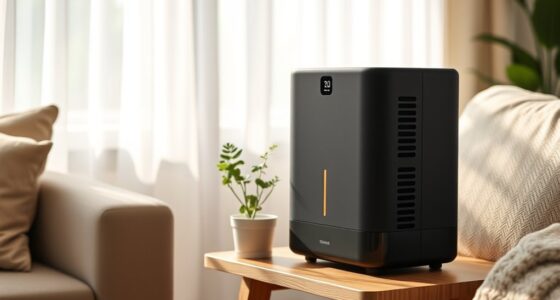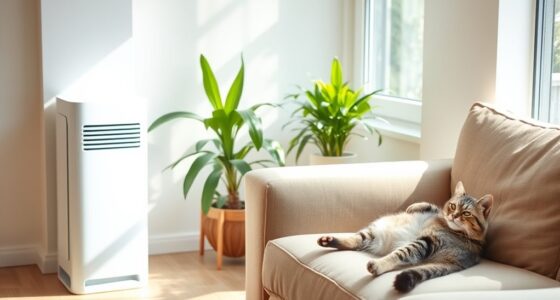
Air purifiers are usually quiet, but their noise levels depend on the model and settings you choose. Most modern units operate around 20-30 dB, which is comparable to whispers, making them suitable for bedrooms or quiet spaces. Higher fan speeds can increase noise to around 50-60 dB, similar to conversation levels. Placement and features like sound insulation influence how loud they seem. If you want to know exactly how noisy your air purifier might be, there’s more to discover below.
Key Takeaways
- Modern air purifiers typically operate quietly, with noise levels around 20-30 dB, comparable to whispering or rustling leaves.
- Higher fan speeds increase noise, reaching 50-60 dB, similar to normal conversation or background noise.
- Many models feature sleep or quiet modes designed to minimize noise during rest.
- Placement and technology, like sound insulation, can reduce perceived noise without affecting purification effectiveness.
- Comparing sound level specifications helps determine which air purifier is suitable for quiet environments.
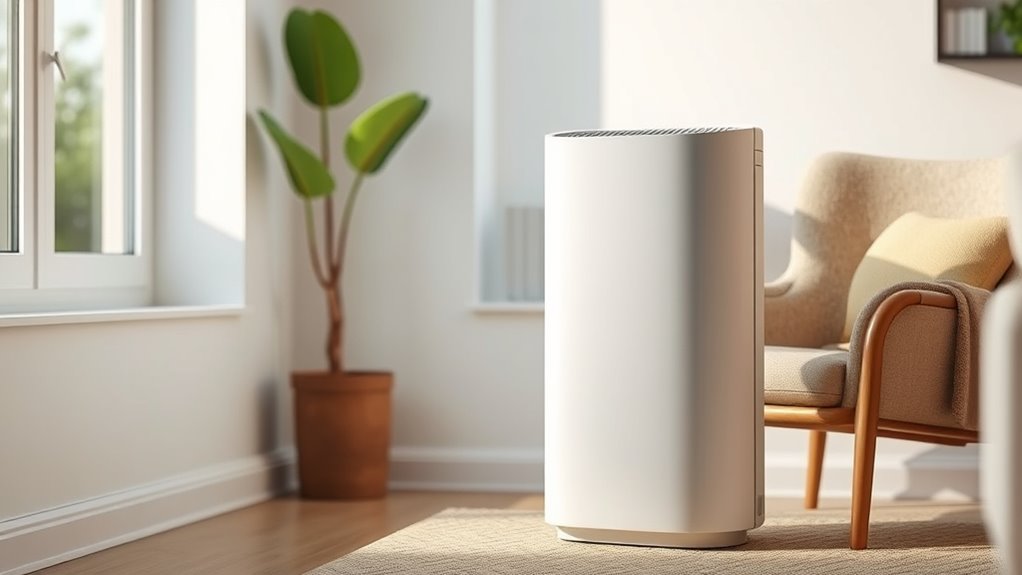
Many people wonder if air purifiers are noisy, especially when they want a quiet environment for work or sleep. The truth is, air purifier noise can vary markedly depending on the model and settings. When you’re choosing an air purifier, understanding its sound level comparison helps you decide if it’ll fit seamlessly into your daily routine. Most modern air purifiers are designed to operate quietly, but they still produce some noise, especially when running at higher fan speeds. This noise usually results from the motor and fan working to circulate air through the filters, which can be noticeable if you’re sensitive to sound or trying to rest.
Air purifier noise varies by model and setting; most operate quietly but can be noticeable at higher speeds.
If you’re concerned about noise, you’ll want to pay close attention to the sound level specifications provided by manufacturers. These are typically measured in decibels (dB). For example, a quiet air purifier might operate at around 20-30 dB, which is comparable to a whisper or rustling leaves. On the other hand, models with higher fan speeds can produce noise levels closer to 50-60 dB, similar to a conversation at home or background office noise. Comparing these sound levels helps you understand what to expect and choose a device suitable for your environment.
When you compare different air purifier models, it’s helpful to look at their sound level comparison charts. Many brands now include this information, allowing you to see how each setting impacts noise. For instance, the lowest setting might operate at just 20 dB, ideal for sleep, while the highest setting could be louder but more effective at filtering out pollutants quickly. If you’re sensitive to noise, opt for models that prioritize quieter operation or have a “sleep mode” that minimizes sound while still providing clean air.
Keep in mind that the placement of your air purifier can also influence perceived noise levels. Placing it on a soft surface or away from your direct line of sight can reduce perceived sound. Additionally, some models feature noise-reduction technology or sound insulation, making them even quieter. If minimizing noise is a priority, read customer reviews or product descriptions to find models known for their quiet operation.
Furthermore, understanding the horsepower of electric dirt bikes can help you gauge how powerful some models are, which in turn affects the noise they produce during operation. If you’re seeking a quiet environment, choosing models with lower noise emissions can be beneficial. Ultimately, while all air purifiers generate some noise, many are designed to operate quietly enough not to disturb your daily activities or sleep. By comparing sound levels and considering your specific needs, you can find a device that effectively purifies the air without adding unwanted noise to your environment.
Frequently Asked Questions
Do Air Purifiers Produce Noise During Sleep Hours?
Yes, your air purifier can produce some noise during sleep hours, but many models emit a gentle hum that acts like white noise, helping you relax. If noise bothers you, consider one with sound insulation features or adjustable settings. This way, the purifier won’t disturb your sleep, and the sound may even improve your sleep quality by masking other household noises.
How Does Room Size Affect Purifier Noise Levels?
Think of your room as a concert hall—larger spaces demand louder sounds to fill the space, and the same goes for air purifiers. In bigger rooms, the noise impact is generally higher because they work harder to circulate and filter air effectively. Smaller rooms need less power, so the purifier runs more quietly. Keep this in mind when choosing a unit to match your room size for ideal quiet comfort.
Are Quieter Models Less Effective at Cleaning Air?
Quieter air purifiers can be just as effective at cleaning air, especially if you focus on noise reduction and proper device placement. These models often run at lower speeds, reducing noise without sacrificing air quality. To optimize performance, place the purifier in a central location and avoid obstructing airflow. This way, you get quiet operation and effective air cleaning, making your space healthier without the noise disturbance.
Can Noise Levels Vary Between Different Brands?
Think of air purifier brands as different musical instruments—each has its unique tone. Noise levels can indeed vary between brands, making a brand comparison essential. Some follow strict noise standards, ensuring quieter operation, while others may be louder. When choosing, consider the manufacturer’s noise standards and how they align with your comfort. This way, you find a device that harmonizes with your environment without disrupting your peace.
Is There a Way to Reduce Purifier Noise Without Losing Performance?
Yes, you can decrease your air purifier’s noise without sacrificing performance. Use soundproofing techniques like placing the purifier on a soft surface or inside a cabinet with vents. Adding noise reduction accessories, such as anti-vibration pads or mufflers, also helps. Keep filters clean and maintain the device regularly, as this minimizes noise. These steps ensure quieter operation while maintaining ideal air purification.
Conclusion
So, don’t let noise keep you from enjoying cleaner air. Modern air purifiers are like whispering friends—quiet enough to blend into your daily life. With adjustable settings and smart designs, you can find the perfect balance between clean air and peaceful surroundings. Think of it as having a gentle breeze that takes care of your space without raising a fuss. Ultimately, choosing the right purifier means you get fresh air without the noise—like a calming lullaby for your home.

In the dynamic world of air purifiers and clean air advocacy, Aire stands out as a beacon of knowledge and passion. As the Editor in Chief of Aero Guardians, Aire has been instrumental in shaping the platform’s voice and direction, ensuring that every piece of content resonates with clarity, authority, and authenticity.