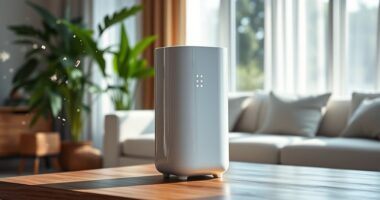
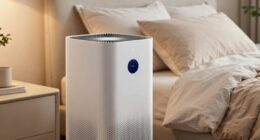
Air purifiers with real-time IAQ feedback constantly monitor your indoor air quality using advanced sensors. They display easy-to-understand data with color indicators and respond automatically by adjusting fan speeds or activating additional filters. This helps keep your air healthier and reduces your effort to control the environment. These smart devices offer seamless integration and instant updates, ensuring your space stays comfortable. Keep exploring to discover how these systems can improve your air quality effortlessly.

Get garden gear delivered free — and shop member deals
- Fast, free delivery on millions of items
- Access to Prime Big Deal Days deals on October 6–7
- Prime Video, Amazon Music and more included
Key Takeaways
- Equipped with advanced sensors that continuously monitor particles, fumes, humidity, and pollutants for instant IAQ updates.
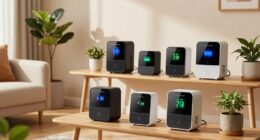
- Features user-friendly interfaces with color-coded visuals (green/yellow/red) for easy understanding of air quality status.
- Automates purifier responses, increasing fan speed or activating filters when pollutants are detected.
- Provides real-time alerts and transparent data to help users proactively maintain optimal indoor air quality.
- Seamlessly integrates sensor data with intuitive controls, creating smart, responsive air purification systems.

Air purifiers with real-time IAQ (Indoor Air Quality) feedback put you in control of your indoor environment. With these devices, you don’t have to guess about the air quality in your home or office anymore. Instead, you get immediate updates that help you make informed decisions about when to turn on, adjust, or turn off your purifier. At the heart of this technology are advanced air quality sensors, which continuously monitor particles, fumes, humidity, and other pollutants. These sensors detect fluctuations in air quality and relay that data instantly to the purifier’s user interface. As a result, you can see clear, real-time information displayed on an easy-to-read screen or app, giving you a detailed picture of your indoor air health at a glance.
The user interface design plays a critical role in how effectively you interpret and respond to the air quality data. A well-designed interface simplifies complex information, presenting it through intuitive graphics, color codes, and straightforward readouts. For example, it might use green to indicate good air quality, yellow for moderate, and red to signal that action is needed. With such visual cues, you don’t need to decipher technical jargon — you immediately understand whether your environment is safe or requires intervention. Touchscreens, mobile apps, or even voice-activated controls enhance the user experience, making it effortless to adjust settings or activate specific modes based on real-time feedback. This seamless interface design ensures you’re always aware of your air quality status without unnecessary hassle.
Because these systems are responsive, they can automatically enhance purifier settings based on the air quality data received. If the sensors detect increased levels of pollutants, the purifier might boost its fan speed or activate additional filters to quickly improve air quality. Conversely, when the air is clean, the device can reduce energy consumption by lowering its operation. This automation not only maintains healthier indoor air but also saves you time and effort. Plus, many models allow you to set personalized preferences and alerts, so you’re notified if air quality drops below a certain threshold. This proactive approach empowers you to take action before discomfort or health issues arise.
Ultimately, air purifiers with real-time IAQ feedback and thoughtful user interface design make managing your indoor air simpler and more effective. You gain transparency and control, knowing exactly what’s happening in your environment at any moment. With reliable sensors and intuitive displays, you’re better equipped to create a healthier, more comfortable space for yourself and your family. This integration of technology and design transforms a basic device into a smart, responsive partner in maintaining ideal indoor air quality. Good color accuracy in sensors and displays further enhances the reliability of this technology, ensuring precise readings and effective responses to changing conditions.
air purifier with real-time IAQ feedback
As an affiliate, we earn on qualifying purchases.
As an affiliate, we earn on qualifying purchases.
Frequently Asked Questions
How Accurate Are IAQ Sensors in Different Air Purifier Models?
You’ll find that IAQ sensors vary in accuracy across different air purifier models. Regular sensor calibration is essential to maintain data accuracy, as sensors can drift over time. High-quality models tend to offer more reliable readings, helping you better understand your indoor air quality. Keep in mind that cheaper units might give less precise data, so investing in a well-calibrated, advanced model guarantees you get the most accurate IAQ feedback for healthier air.
Can IAQ Feedback Help Reduce Long-Term Indoor Air Pollution?
You can definitely curb long-term indoor air pollution with IAQ feedback, especially if you pair it with indoor plant integration and seek air quality certifications. By actively monitoring your air, you become more aware of pollutants and make smarter choices. This ongoing awareness helps create a healthier environment, reducing pollutants over time. Keep an eye on IAQ levels, and you’ll find it easier to maintain cleaner, fresher indoor air effortlessly.
Are Real-Time IAQ Features Energy-Efficient?
Real-time IAQ features are generally energy-efficient because they optimize purifier operation based on current air quality, saving energy. You benefit from energy savings as the device adjusts its fan speed only when needed. To maintain efficiency, guarantee proper sensor calibration, which keeps readings accurate and prevents unnecessary power use. Overall, these features help you reduce energy consumption while maintaining healthy indoor air quality.
How Frequently Should IAQ Data Be Monitored for Optimal Results?
You should monitor IAQ data at least once every hour to keep up with air quality trends. Studies show that indoor air can change rapidly, sometimes within minutes. Regular checks help identify when sensors need calibration, ensuring accurate readings. By staying attentive to real-time data, you can make quick adjustments, maintain healthy air, and prevent pollutants from reaching harmful levels. Consistent monitoring maximizes your air purifier’s effectiveness.
Do All Smart Air Purifiers Support App-Based IAQ Monitoring?
Not all smart air purifiers support app-based IAQ monitoring. Many do, offering features like smart home integration and filter replacement alerts, but it’s crucial to check specific models. These devices let you track air quality in real-time via apps, ensuring peak performance. If app connectivity is a priority, verify the purifier’s compatibility and features before purchasing, so you get the convenience and control you desire.
Conclusion
You might think that real-time IAQ feedback is just a fancy feature, but it actually empowers you to take control of your indoor air quality instantly. Studies show that immediate feedback leads to better air management and healthier environments. So, don’t dismiss these smart purifiers—trust that they’re more than just gadgets. They’re your personal air quality allies, making sure you breathe cleaner, fresher air every day.
Fall yard work Picks
leaf blowers
As an affiliate, we earn on qualifying purchases.