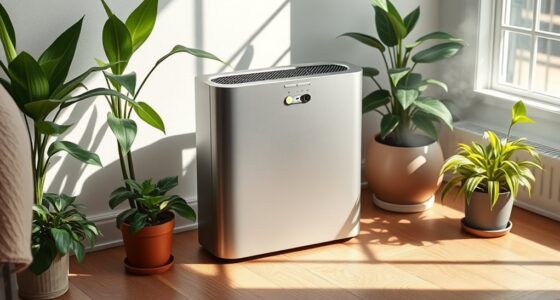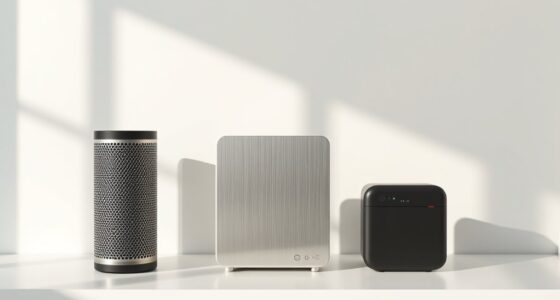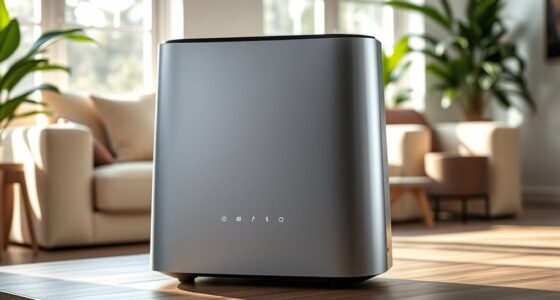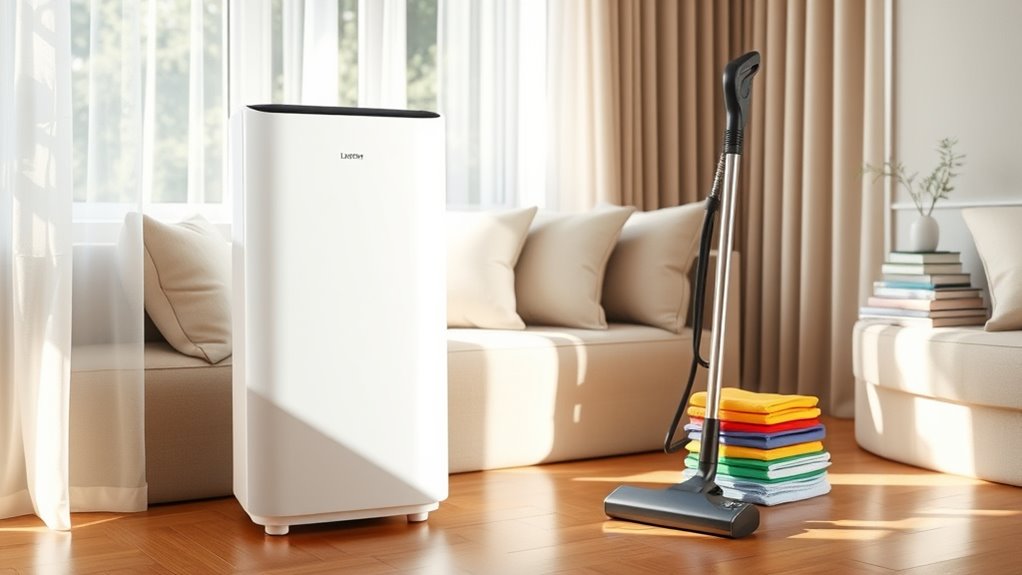

Air purifiers help improve your indoor air quality by filtering out airborne allergens, dust, and pollutants. However, they can’t replace regular house cleaning because they don’t remove dirt, bacteria, or grime settled on surfaces like floors, furniture, or bathrooms. To create a truly healthy environment, you need to combine both methods—using an air purifier along with routine cleaning. Keep exploring to learn how these strategies work together for your home’s well-being.
Key Takeaways
- Air purifiers remove airborne particles but do not clean surfaces, dust, or dirt physically present in the home.
- They cannot eliminate bacteria, stains, or grime on furniture, floors, or bathroom surfaces.
- Regular cleaning routines like vacuuming, dusting, and mopping are essential for comprehensive hygiene.
- Purifiers and cleaning work together; one cannot fully replace the other for optimal indoor air quality.
- Relying solely on air purifiers can lead to overlooked dirt buildup and compromised cleanliness.

Keeping your home clean isn’t just about tidying up surfaces; it’s also about improving the air you breathe. Air purifier technology has advanced considerably, offering a way to reduce airborne pollutants like dust, pollen, pet dander, and even bacteria. While these devices can be highly effective at cleaning the air, they aren’t a complete substitute for regular house cleaning. Instead, they serve as a complementary tool that enhances your overall indoor environment. Relying solely on an air purifier might give you a false sense of security, especially because dust and dirt often settle on surfaces and require physical cleaning to keep your home truly fresh. To maximize benefits, it’s essential to develop consistent cleaning schedules that include vacuuming, dusting, and mopping, alongside using an air purifier.
Air purifiers enhance air quality but need regular cleaning for a truly fresh, healthy home environment.
Air purifier technology works by filtering the air through HEPA filters, activated carbon, or other specialized media, capturing particles that can cause allergies or respiratory issues. These devices are especially useful for people with sensitivities or asthma, as they improve indoor air quality without the need for chemical sprays or harsh cleaning products. However, an air purifier can only do so much. It doesn’t remove dirt, grime, or bacteria that accumulate on furniture, floors, or bathroom surfaces. Without routine physical cleaning, these contaminants can still linger, and dust can be redistributed into the air when disturbed.
Incorporating a cleaning schedule is vital. Regularly vacuuming carpets and upholstery removes embedded dirt that an air purifier can’t reach. Wiping down surfaces prevents dust buildup, reducing the workload for your purifier. Mopping hard floors eliminates bacteria and stains that air filtration alone can’t handle. By maintaining a consistent cleaning routine, you prevent dirt from becoming a breeding ground for allergens and pathogens, making the air purifier’s job easier and more effective. Think of the purifier as a frontline defense that keeps airborne particles in check, while physical cleaning addresses the dirt and grime that settle on surfaces.
Ultimately, air purifiers are excellent for filtering the air and reducing airborne irritants, but they shouldn’t replace your regular cleaning routines. Combining advanced air purifier technology with diligent cleaning schedules provides the most thorough approach to maintaining a healthy, fresh home environment. You get cleaner surfaces and better indoor air quality—both essential for comfort and well-being. Relying on one without the other leaves gaps, but together, they create a cleaner, healthier living space you can truly enjoy. Proper indoor air quality management involves both filtration and physical cleaning, ensuring comprehensive removal of pollutants and contaminants.
Frequently Asked Questions
Do Air Purifiers Remove All Types of Household Allergens?
Air purifiers with HEPA filters considerably reduce many household allergens, but they don’t remove all types. HEPA filters excel at allergen removal, capturing dust, pet dander, and pollen, but some allergens like mold spores and certain VOCs may require additional methods. To maximize allergen removal, use your air purifier regularly alongside house cleaning, ensuring a healthier environment. Remember, air purifiers are a helpful tool, not a complete solution.
How Often Should I Replace the Filters in My Air Purifier?
You should replace your air purifier filters based on the filter lifespan specified by the manufacturer, usually every 3 to 6 months. Check your unit’s manual for recommended replacement frequency, as factors like usage and air quality can affect it. Regularly replacing filters guarantees peak performance, maintains air quality, and prevents buildup of dust and allergens. Don’t wait too long; timely replacements keep your purifier working efficiently.
Can Air Purifiers Eliminate Pet Odors Completely?
Air purifiers can substantially reduce pet odor, but they usually can’t eliminate it completely. They excel at odor elimination by capturing airborne particles and eliminating some smells, yet pet odors often linger on carpets, furniture, and fabrics. To truly remove pet odor, you should regularly clean these surfaces and vacuum thoroughly. Combining good cleaning habits with an air purifier offers the best chance of minimizing pet smells in your home.
Are Air Purifiers Effective Against Viruses and Bacteria?
You bet they can help, but don’t rely solely on air purifier technology. They are effective against viruses and bacteria, especially with high viral filtration efficiency. Air purifiers trap airborne pathogens, reducing their spread indoors. However, to truly keep your home safe, combine their use with good hygiene and cleaning habits. Think of it as a shield that works best when paired with other defenses.
Do Air Purifiers Reduce Dust Buildup on Surfaces?
Air purifiers help reduce dust buildup on surfaces by improving air circulation, which keeps airborne dust particles from settling. However, they don’t directly clean surfaces, so regular house cleaning remains essential for surface cleanliness. Using an air purifier in tandem with routine dusting and vacuuming creates a healthier environment, minimizing dust accumulation and maintaining cleaner surfaces more effectively.
Conclusion
While air purifiers can clear the air like a gentle breeze sweeping through your home, they can’t replace the fresh shine of a thorough cleaning. Picture dust and dirt vanishing like morning mist, but stubborn grime still hiding in corners. To truly breathe easy and enjoy a spotless space, combine regular cleaning with your purifier’s quiet work. Only then will your home feel as fresh as a spring morning, inviting and pure.