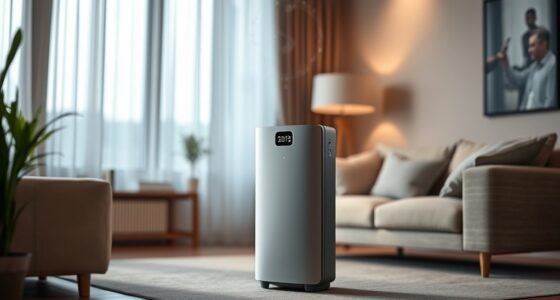
Air purifiers improve indoor air quality by trapping dust, pollen, pet dander, and some gases, but they don’t replace ventilation. They mainly filter the air inside a room, while proper ventilation brings in fresh outdoor air to dilute indoor pollutants and control humidity. Relying solely on air purifiers isn’t enough for a healthy indoor environment. To understand how these strategies work together, keep exploring these essential indoor air quality tips.
Key Takeaways
- Air purifiers filter airborne particles but do not introduce fresh outdoor air into a space.
- They cannot remove indoor pollutants generated at the source, like cooking fumes or VOCs.
- Proper ventilation is necessary to dilute indoor pollutants and maintain air freshness.
- Combining air purifiers with ventilation provides a more comprehensive indoor air quality solution.
- Relying solely on air purifiers cannot replace the benefits of fresh outdoor air exchange.

Good indoor air quality depends on effective ventilation and the right air purification methods. When you’re trying to create a healthy living space, understanding how air purifiers fit into the picture is essential. While they can markedly improve air quality, they don’t replace the need for proper ventilation. Indoor pollution often comes from sources like cooking fumes, tobacco smoke, pet dander, dust, and volatile organic compounds (VOCs). These pollutants can linger and build up, especially in tightly sealed homes. That’s where ventilation plays a key role, ensuring a steady flow of fresh air and reducing the concentration of indoor pollutants. Air purifiers can help remove airborne particles and certain gases, but they can’t bring in the fresh outdoor air necessary to dilute indoor pollution effectively. Additionally, incorporating a high-quality air filtration system can enhance the overall effectiveness of your indoor air management. You might think that an air purifier alone can keep your indoor environment safe, but that’s not entirely true. Air purifiers are excellent at trapping dust, pollen, pet dander, and some bacteria and viruses. They use filters like HEPA or activated carbon to clean the air within a room. However, they operate in a confined space and don’t have the ability to replace stale, contaminated indoor air with fresh outdoor air. Without proper ventilation, pollutants can still accumulate indoors, and you might notice lingering odors or allergy symptoms despite using an air purifier. This is why ventilation remains a critical component of indoor air quality management. Good ventilation involves exchanging indoor air with outdoor air, either naturally through open windows and vents or mechanically via HVAC systems. This process helps remove indoor pollution at its source and prevents the buildup of harmful substances. It also helps control humidity levels, which can affect air quality by encouraging mold growth or dust mite proliferation. While air purifiers are great for filtering particulate matter and certain pollutants, they don’t address issues like excess moisture or gases that require ventilation to disperse. Combining both strategies ensures your indoor environment stays healthier and more comfortable.
Frequently Asked Questions
Can Air Purifiers Eliminate All Indoor Pollutants?
Air purifiers can’t eradicate all indoor pollutants due to their limitations and varying pollutant removal efficiency. While they effectively reduce dust, pollen, and some VOCs, they struggle with gases, odors, and airborne viruses. You should combine air purifiers with proper ventilation to ensure better air quality. Relying solely on them leaves gaps, so understanding their limitations helps you make smarter choices for a healthier indoor environment.
How Often Should I Replace or Clean Air Purifier Filters?
You should replace or clean your air purifier filters every 3 to 6 months, depending on usage and filter type. Did you know that poorly maintained filters can lose up to 50% of their efficiency? Regular filter maintenance extends filter lifespan and keeps your air clean. Check your manufacturer’s recommendations, monitor filter condition, and replace filters promptly to guarantee peak performance and indoor air quality.
Do Air Purifiers Work Effectively in Large or Open Spaces?
Air purifiers can work effectively in large or open spaces if you focus on proper air purifier placement and room size compatibility. You should select a model designed for the size of your space and place it where air circulates best. Keep doors and windows closed during use, and consider multiple units for extensive areas. This ensures ideal air cleaning, but ventilation remains essential for fresh air exchange.
Are There Specific Air Purifiers Better for Allergy Sufferers?
Yes, some air purifiers are better for allergy sufferers. Look for models with HEPA filters, as they excel at allergen removal, capturing pollen, pet dander, and dust mites. These purifiers improve indoor air quality and reduce allergy symptoms. Choose a unit designed for your room size, and guarantee it has a high CADR rating for effective allergen removal. Regularly maintain the filters for ideal performance.
Can Air Purifiers Reduce Airborne Viruses and Bacteria?
Air purifiers can considerably reduce airborne viruses and bacteria; studies show HEPA filters can remove up to 99.97% of particles. To guarantee maximum virus filtration efficiency, regular air purifier maintenance is essential—clean or replace filters as recommended. While they help improve indoor air quality, they shouldn’t replace proper ventilation, as fresh air dilutes indoor contaminants. Use air purifiers alongside ventilation for ideal protection against airborne pathogens.
Conclusion
While air purifiers act like diligent guardians, filtering out harmful particles, they can’t breathe new life into your space like proper ventilation does. Think of purifiers as the fine-tuned filters in a symphony, but ventilation is the open window inviting fresh air in. To truly breathe easy, you need both: the purifier’s watchful eye and the breeze’s invigorating embrace. Together, they compose a harmony that keeps your air clean, clear, and alive.