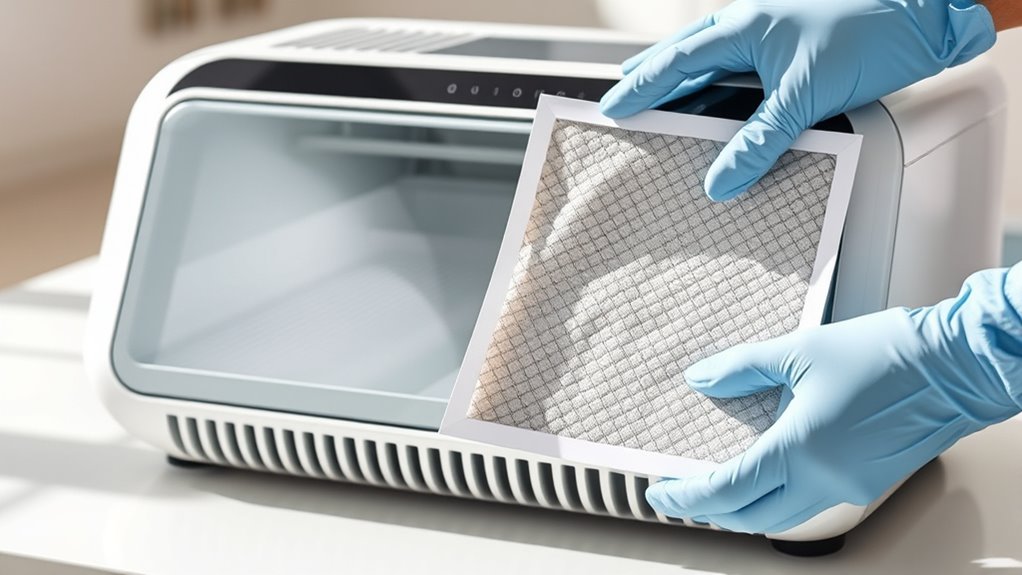

To keep your air purifier with a washable prefilter running smoothly, clean the prefilter every few weeks using mild soap and water, then let it dry completely before reinstalling. This helps prevent clogs, reduces noise, and extends the device’s lifespan, saving you money on replacements. Regular maintenance also keeps airflow ideal and performance high. If you want to learn more about maintaining your unit effectively, keep exploring for helpful tips.
Key Takeaways
- Clean washable prefilters every few weeks using mild soap and water to maintain optimal debris capture.
- Ensure the prefilter is completely dry before reinstalling to prevent mold and airflow issues.
- Regularly inspect prefilters for dirt buildup, and clean promptly to prevent strain on the air purifier.
- Replace main filters like HEPA or activated carbon as recommended, but wash prefilters frequently for cost savings.
- Proper maintenance of washable prefilters extends device lifespan, maintains efficiency, and reduces noise levels.
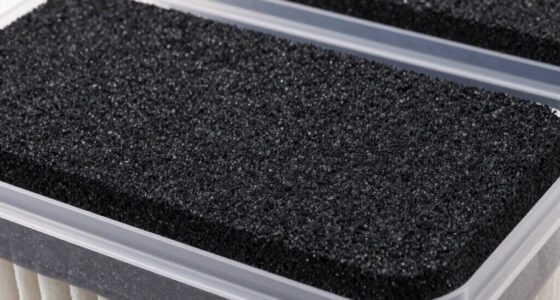
If you’re looking for an efficient way to improve indoor air quality, air purifiers with washable prefilters are an excellent choice. These units are designed to trap larger particles like dust, pet hair, and lint before they reach the main filter, reducing the need for frequent filter replacements. Keeping your washable prefilter clean is essential for maintaining ideal performance and prolonging the lifespan of your air purifier. Regularly inspecting the prefilter and washing it as recommended ensures it continues to effectively capture debris, preventing buildup that could hinder airflow or cause the unit to work harder than necessary.
One of the key advantages of washable prefilters is that they help keep noise levels in check. When the prefilter is clean, the air purifier operates more smoothly and quietly because it doesn’t have to strain to pull air through a clogged or dirty filter. Conversely, a dirty or neglected prefilter can cause the unit to become noisy, as the motor works harder to compensate for reduced airflow. That’s why routine maintenance, including timely cleaning of the prefilter, not only preserves air quality but also contributes to quieter operation. You’ll notice that when the prefilter is in good shape, your purifier runs more quietly and efficiently, providing a peaceful environment.
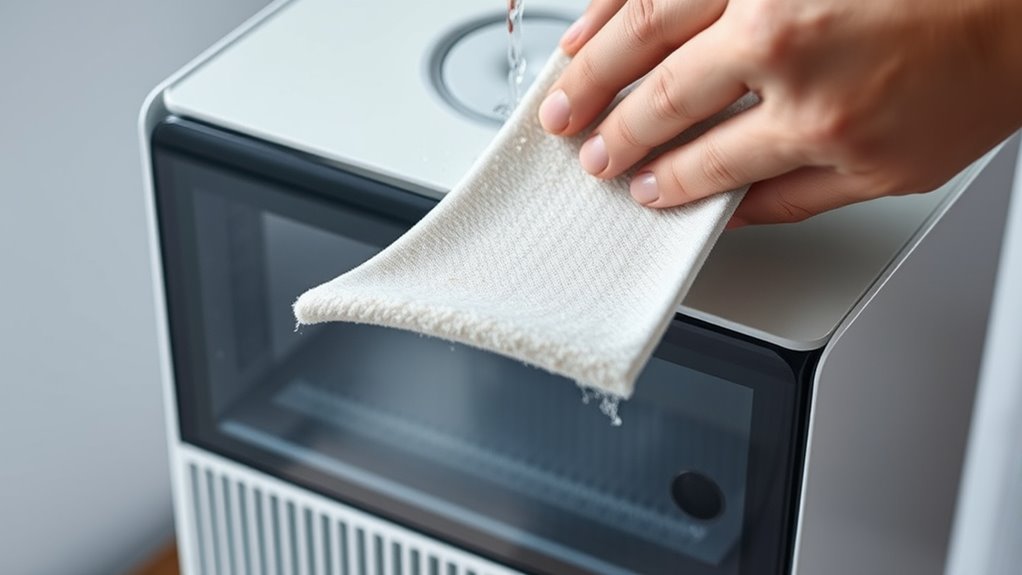
Replacing filters in air purifiers with washable prefilters is straightforward. Since the prefilter is washable, you won’t need to buy replacements for it often, saving you money and reducing waste. However, the main HEPA or activated carbon filter still needs attention, as these can become clogged over time and affect overall performance. Always follow the manufacturer’s instructions regarding the frequency of filter replacement and prefilter cleaning. Typically, washing the prefilter every few weeks is sufficient, but this depends on your indoor environment and usage patterns. Using mild soap and water for cleaning is usually recommended, and allowing the prefilter to dry completely before reinstalling ensures it remains effective.
Frequently Asked Questions
Can Washable Prefilters Filter Out Viruses Effectively?
Washable prefilters can help with virus filtration, but their effectiveness depends on the pre filter quality and maintenance. They primarily trap larger particles, reducing the load on the main filter, which improves overall air quality. However, pre filter effectiveness in capturing viruses is limited since viruses are tiny. Regular cleaning ensures ideal pre filter performance, but for better virus removal, use filters with HEPA or specialized virus filtration capabilities.
How Often Should I Replace the Main Filter?
You should replace the main filter according to the manufacturer’s recommended replacement schedule, typically every 6 to 12 months. The filter lifespan varies depending on usage, air quality, and filter type. Regularly check your filter for dirt and clogging; if it looks dirty sooner, replace it earlier. Keeping to the recommended replacement schedule guarantees your air purifier maintains peak performance and air quality.
Are Washable Prefilters Suitable for Allergy Sufferers?
Yes, washable prefilters are suitable for allergy sufferers because they effectively trap allergenic materials like dust, pollen, and pet dander, improving air quality. By regularly rinsing and maintaining these prefilters, you guarantee they continue to filter out particles efficiently, reducing allergen buildup. This ongoing maintenance helps keep your indoor air cleaner, making it a helpful option for those sensitive to airborne allergens and seeking consistent air quality improvement.
Do Washable Prefilters Reduce Energy Consumption?
Yes, washable prefilters can help reduce energy consumption by improving airflow and reducing the workload on the main filter. When you clean and maintain these prefilters regularly, you extend their filter longevity, ensuring your air purifier operates efficiently. This proactive approach leads to energy savings over time because the device doesn’t have to work as hard to circulate clean air, ultimately lowering your electricity bills and prolonging the unit’s lifespan.
Can I Use Cleaning Agents Other Than Water?
Don’t throw the baby out with the bathwater—using cleaning agents other than water for filter maintenance isn’t recommended. Most washable prefilters are designed to be cleaned with just water, which effectively removes dirt without risking damage. Using harsh cleaning agents can harm the filter material and reduce its lifespan. Stick to water for cleaning to keep your air purifier running smoothly and efficiently, ensuring clean, fresh air in your space.
Conclusion
Keeping your air purifier with a washable prefilter is like tending to a garden—you’ll enjoy fresh, clean air blooming in your space. Regular maintenance guarantees it runs smoothly and lasts longer, saving you money and effort. Think of it as giving your purifier a revitalizing gust of life whenever needed. With simple upkeep, you’ll create a healthier home environment that’s as inviting as a breath of fresh air on a spring morning.