Thicker layers of high-quality activated carbon are more effective than multiple thin stages because the pore structure and surface area determine how well it traps pollutants. A well-developed pore network offers more adsorption sites, which means better removal of contaminants, odors, and chemicals. Adding layers without good pore quality won’t improve performance much. Keep exploring, and you’ll discover why prioritizing material quality and thickness leads to better, long-lasting filtration results.
Key Takeaways
- Thicker activated carbon layers provide more surface area for pollutant adsorption than multiple thin stages.
- Pore structure quality and surface area are more critical than the number of layers for effective purification.
- Increasing thickness with high-quality pore networks enhances pollutant trapping capacity more than adding stages.
- Multiple stages of inferior material do not compensate for the superior performance of a single, thick, well-activated layer.
- Prioritizing material thickness and pore quality results in better, more durable filtration performance than merely increasing stages.
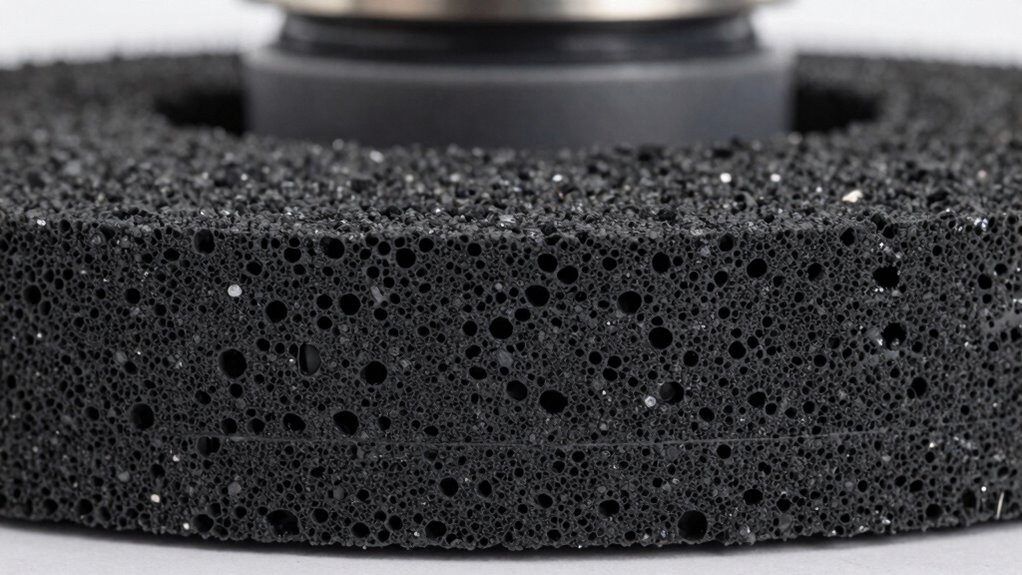
Activated carbon is a highly porous material used to filter and purify air, water, and other substances. Its effectiveness lies in its surface properties, which enable it to trap contaminants through various processes. One of the key principles behind its purification power is adsorption mechanisms. When pollutants come into contact with activated carbon, they don’t pass through but are instead attracted and held onto the surface. This process is driven by van der Waals forces and electrostatic attractions, making activated carbon exceptionally good at removing organic compounds, odors, and certain chemicals. The efficiency of adsorption depends heavily on the pore structure of the activated carbon, which essentially determines how much surface area is available for trapping impurities.
Your understanding of pore structure is vital here. Activated carbon is composed of a network of tiny pores—micropores, mesopores, and macropores—that create a vast surface area. These pores act like tiny traps, capturing molecules based on their size and chemical properties. Micropores, which are less than 2 nanometers wide, are particularly important because they provide a large surface area, increasing the material’s capacity to adsorb pollutants. Larger pores, like mesopores and macropores, help in the diffusion process, allowing molecules to reach the micropores more efficiently. This interconnected pore network ensures that contaminants of various sizes can be adsorbed effectively.
The pore structure isn’t just about size; it also influences how quickly and thoroughly pollutants are captured. For example, a well-developed pore network with high surface area offers more adsorption sites, making the activated carbon more effective at lower doses. Conversely, if the pore structure is limited or poorly developed, the material won’t perform as well, regardless of how many stages or layers you add to the filtration system. This is why thickness often trumps the number of stages—adding more material with a high-quality pore structure provides a greater overall surface area, leading to better adsorption capacity than simply increasing the number of filter layers.
When selecting activated carbon, focus on its pore structure and surface area rather than just the quantity. A thicker layer of high-quality, well-activated carbon with an ideal pore network will outperform multiple thinner layers of inferior material. The pore structure directly impacts how much pollutant the activated carbon can trap and how efficiently it does so. So, rather than overcomplicating your filtration with additional stages, prioritize choosing a material with a proven, robust pore network. This approach guarantees a more effective and long-lasting purification process, making thickness and quality the true keys to activated carbon’s performance.
As an affiliate, we earn on qualifying purchases.
Frequently Asked Questions
How Does Activated Carbon Remove Odors Effectively?
You can remove odors effectively by optimizing airflow through the activated carbon filter, guaranteeing maximum contact time. The key is surface adsorption, where odor molecules bind to the carbon’s porous surface. By increasing the thickness of the activated carbon, you provide more surface area for adsorption, enhancing odor removal. Proper airflow management ensures the contaminated air interacts thoroughly with the carbon, making your filtration system more efficient and long-lasting.
Can Activated Carbon Be Regenerated and Reused?
Think of activated carbon as a sponge for pollutants—you can squeeze out its dirt and reuse it. Yes, it can be regenerated using techniques like thermal or chemical methods, extending its carbon lifespan. These processes clear out accumulated contaminants, restoring the carbon’s adsorption capacity. With proper regeneration, you get multiple uses from each batch, making activated carbon a cost-effective, sustainable choice for continuous odor and contaminant control.
What Are the Environmental Impacts of Activated Carbon Disposal?
When you dispose of activated carbon, it can pose environmental waste issues if not managed properly. Improper disposal methods, like landfilling, may release pollutants into soil and water, harming ecosystems. To minimize impact, you should consider recycling or specialized disposal options that prevent contamination. Responsible disposal helps protect the environment, reduces pollution, and guarantees that activated carbon doesn’t contribute to long-term environmental waste problems.
How Does Particle Size Affect Activated Carbon Performance?
You’ll notice that smaller particle sizes increase the adsorption capacity because they provide more surface area and particle porosity. This enhances the activated carbon’s ability to trap contaminants more effectively. However, very fine particles can cause flow resistance and pressure drop issues. So, selecting the right particle size balances maximizing adsorption capacity with maintaining efficient flow, ensuring the activated carbon performs ideally for your specific application.
Are There Differences Between Natural and Synthetic Activated Carbon?
You get what you pay for; natural and synthetic activated carbons differ substantially. Natural variants have natural variations, which can lead to inconsistent performance. Conversely, synthetic activated carbons offer synthetic consistency, ensuring uniform pore structure and adsorption qualities. This means you’ll find synthetic types more reliable for precise applications, while natural options might suit more general uses. It’s all about choosing the right type to match your specific needs.
Conclusion
In essence, choosing the right activated carbon involves more than just the number of stages; thickness truly makes a difference. Studies show that thicker activated carbon layers can increase adsorption capacity by up to 30%, making your filtration more effective. So, next time you’re selecting a system, remember that a thicker carbon layer often offers better performance than simply adding more stages. Prioritize thickness for a smarter, more efficient filtration solution that lasts longer and works harder.