
To guarantee safe breathing spaces in your childcare center, focus on maintaining proper ventilation with clean filters and natural airflow. Control pollutant sources by choosing low-emission products and regularly cleaning toys and surfaces. Monitor indoor air quality with sensors and keep systems well-maintained. Educate staff on best practices for hygiene and ventilation. Combining these steps helps create a healthy environment for children and staff alike—discover more ways to improve your center’s air quality as you continue.
Key Takeaways
- Regularly inspect and maintain ventilation systems, including filter replacements, to ensure efficient removal of indoor pollutants.
- Minimize pollutant sources by choosing low-emission materials and storing cleaning supplies properly.
- Use air quality sensors to monitor indoor air and respond promptly to pollution level changes.
- Promote good hygiene and cleaning practices to reduce dust, germs, and mold growth.
- Balance natural ventilation with mechanical systems, considering outdoor air quality for optimal indoor air safety.
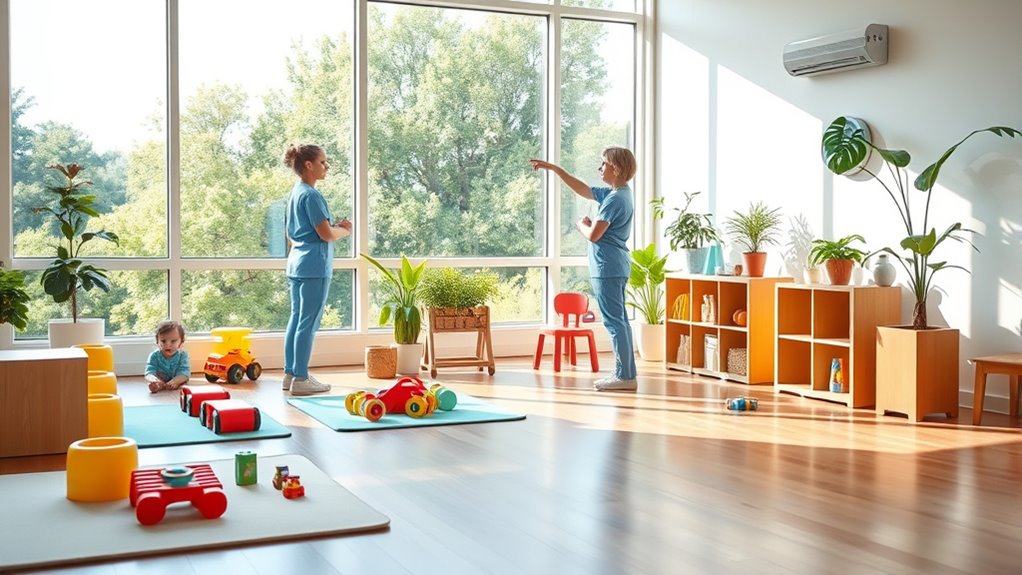
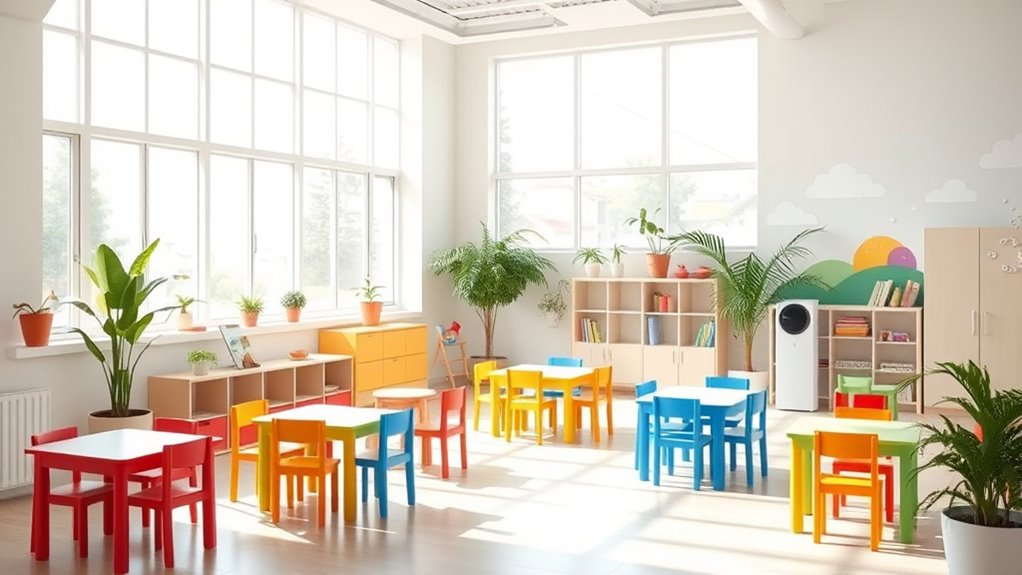
Ensuring good air quality in childcare centers is essential because young children are especially vulnerable to indoor pollutants. As a caregiver or administrator, you play a vital role in creating a safe environment where kids can breathe freely and stay healthy. One of the most effective ways to achieve this is by maintaining proper ventilation systems. These systems continuously supply fresh air and remove stale, potentially contaminated indoor air. Modern ventilation setups, such as HVAC units with high-quality filters, help reduce the concentration of indoor pollutants like dust, pet dander, and volatile organic compounds (VOCs). Properly functioning ventilation also dilutes airborne germs and reduces humidity levels, which can prevent mold growth — another source of indoor air pollution.
Maintaining proper ventilation is key to reducing indoor pollutants and ensuring a healthy environment for children.
Identifying and controlling pollutant sources is key to improving air quality. Common pollutant sources in childcare centers include cleaning supplies, art materials, and building materials that emit VOCs. Even everyday items like carpets, furniture, and toys can release chemicals that compromise indoor air quality. To minimize these risks, choose low-emission products and regularly inspect and replace items that may harbor mold or dust. Cooking areas and heaters can also be sources of pollutants like carbon monoxide or particulate matter if not properly ventilated. Installing exhaust fans or range hoods helps vent these emissions outside, preventing them from accumulating indoors.
You should also consider the layout and maintenance of your ventilation system. Regular inspections and filter replacements ensure that the system runs efficiently and filters out harmful particles effectively. Filters with high MERV ratings can trap smaller pollutants, providing cleaner air for children and staff alike. Additionally, natural ventilation—such as opening windows when weather permits—can supplement mechanical systems, especially during times of low outdoor pollution. However, you need to balance this with outdoor air quality; if pollution levels are high outside, keep windows closed and rely on your ventilation system.
Furthermore, educating staff about pollutant sources and proper maintenance routines can make a big difference. Encourage good hygiene practices, such as cleaning toys and surfaces frequently to reduce dust and germs. Keep cleaning products in well-ventilated areas and use environmentally friendly options whenever possible. Monitoring indoor air quality with sensors can also alert you to rising pollutant levels, prompting immediate action. This proactive approach helps maintain a consistently healthy environment. Implementing air quality monitoring tools and protocols can significantly enhance your ability to respond swiftly to potential issues.
Frequently Asked Questions
How Often Should Air Quality Tests Be Conducted in Childcare Centers?
You should conduct air quality testing at least every three to six months to maintain a healthy environment in childcare centers. Incorporate air quality testing frequency into your regular maintenance schedules to catch issues early. Regular testing helps identify pollutants or allergens, ensuring safe breathing spaces for children. Stay proactive by scheduling tests consistently, especially during seasons when air quality may fluctuate, to protect everyone’s health effectively.
What Are the Most Common Indoor Air Pollutants in Childcare Environments?
Imagine the air in your childcare center as a quiet river, with unseen pollutants flowing beneath the surface. You’re likely to encounter VOC emissions from cleaning products and furniture, and mold spores lurking in damp corners. These common indoor air pollutants can affect little lungs, so it’s essential to regularly ventilate, clean, and monitor your environment to keep the air clear and safe for every child.
How Can Parents Monitor Air Quality at Home and During Visits?
You can monitor air quality at home and during visits by using air quality sensors that detect pollutants like VOCs, dust, and humidity levels. Check outdoor air quality reports regularly, especially during high pollution days, to decide if it’s safe to stay indoors or outdoors. Keep windows open when outdoor air is clean and guarantee good ventilation. These simple steps help protect your child’s breathing space effectively.
Are There Specific Air Purifiers Recommended for Childcare Centers?
You should look for air purifiers with HEPA filters, known for capturing tiny particles and allergens. When choosing, compare different models through an air purifier comparison to find one suited for childcare centers. Prioritize units that cover the entire room size, operate quietly, and are easy to maintain. This guarantees the air remains clean and safe for children, reducing exposure to pollutants and allergens effectively.
What Ventilation Strategies Effectively Improve Air Quality in Small Spaces?
You should combine natural ventilation and mechanical systems to improve air quality in small spaces. Open windows regularly to bring in fresh air and reduce indoor pollutants, especially during good weather. Use exhaust fans and air exchange systems to circulate air efficiently when outdoor conditions aren’t suitable. This dual approach helps lower indoor pollutant levels, ensuring a healthier environment for children and staff alike.
Conclusion
Ensuring good air quality in childcare centers isn’t just a task—it’s a commitment to every child’s health and well-being. By regularly monitoring and improving indoor air, you’re creating a safe haven where children can breathe freely and thrive. Isn’t it worth asking yourself if the air they breathe today will support their bright futures tomorrow? Think of each breath as a gift—are you doing all you can to protect it?