
Before installing air fixes in your basement, using a moisture map is essential to pinpoint the true sources of humidity issues. It helps you see where moisture is coming from, like leaks or condensation, so you can target repairs effectively. Without it, superficial fixes may only provide temporary relief and let the problem persist. Knowing how moisture moves through your space guarantees you make lasting improvements. Keep exploring to discover how a detailed map can save you time and money long-term.
Key Takeaways
- Moisture maps identify the true sources of dampness, preventing ineffective, superficial air fixes.
- They reveal areas with trapped or ongoing moisture that air fixes alone cannot address.
- Mapping guides targeted interventions, ensuring long-term solutions over temporary fixes.
- They help prioritize repairs like leaks or insulation issues, optimizing maintenance efforts.
- Moisture maps support proactive planning to prevent future moisture problems and mold growth.
Basements are often vulnerable to moisture problems, which can cause costly damage and health issues if left unchecked. Understanding the moisture sources affecting your basement is essential before you attempt any air fixes. Moisture can seep in from various places—groundwater, plumbing leaks, or even humidity that naturally accumulates in enclosed spaces. Identifying these sources helps you determine the most effective solutions and prevents recurring problems. Without a clear map of where the moisture originates, you might focus on superficial fixes that don’t address the root cause, leading to wasted time and money.
One of the key factors influencing basement moisture levels is insulation. Proper basement insulation acts as a barrier against temperature fluctuations and helps control humidity, but if it’s poorly installed or damaged, it can trap moisture and promote mold growth. Before implementing any air sealing or ventilation strategies, you need to evaluate your basement insulation’s condition and placement. Moisture can accumulate behind insulation, especially if it isn’t vapor-permeable or if there are leaks. A moisture map helps you see where insulation may be contributing to or preventing moisture buildup, guiding you to make smarter upgrades or repairs.
Creating a moisture map involves inspecting your basement thoroughly, paying close attention to areas where condensation occurs or dampness persists. It’s essential to understand how different moisture sources interact with your insulation and how they influence air quality. For example, if you notice water stains on walls or a persistent musty smell, these clues point to specific moisture pathways. Mapping these areas helps you visualize the problem zones and prioritize repairs, whether that’s fixing a leaking pipe, improving drainage outside, or replacing damaged insulation. Additionally, considering the moisture dynamics within your basement can help you anticipate future issues and implement proactive measures. Developing a comprehensive understanding of moisture sources and their movement is critical for long-term success.
A moisture map also facilitates preventative maintenance, helping you catch issues early before they develop into major problems. Before you consider air fixes like dehumidifiers, ventilation, or air sealing, a moisture map ensures your approach is targeted and effective. You’ll avoid unnecessary interventions that don’t address underlying issues, saving you money and effort. Plus, understanding the moisture dynamics within your basement allows you to implement long-term solutions, such as proper drainage or vapor barriers, rather than temporary fixes that might not hold up. Recognizing the importance of a comprehensive approach is essential, as it helps you develop a holistic strategy for maintaining a dry and healthy basement environment. In reality, a detailed moisture map is your blueprint for a healthier, more stable basement environment, helping you prevent future damage and maintain good indoor air quality.

Vacplus Moisture Absorber, 2 LB, Strong Absorption, Fragrance Free, 4 Pack
- Large Capacity: Holds up to 2200 ml of water
- Quick Moisture Absorption: Immediate action with calcium chloride crystals
- Clear Water Tank: Easy to monitor fill level
As an affiliate, we earn on qualifying purchases.
As an affiliate, we earn on qualifying purchases.
Frequently Asked Questions
How Often Should Moisture Maps Be Updated in Basements?
You should update moisture maps in your basement at least once a year to guarantee ongoing mold prevention and effective basement insulation. Regular updates help you identify new moisture issues early, preventing mold growth and damage. If you notice increased humidity, leaks, or musty odors, consider updating moisture maps sooner. Staying proactive keeps your basement dry, safe, and well-insulated, avoiding costly repairs and health risks associated with excess moisture.
Can Moisture Maps Detect Hidden Water Damage?
Yes, moisture maps can detect hidden water damage effectively. They identify areas with excess moisture caused by hidden leaks or recurring water intrusion, which might not be visible to the naked eye. This helps you spot potential mold growth early, preventing health issues and structural damage. By mapping moisture levels, you gain a clearer understanding of problem spots, enabling targeted repairs and better mold detection, ultimately protecting your basement’s integrity.
Are Moisture Maps Effective in All Climate Zones?
Did you know that 60% of basement moisture issues go unnoticed without proper detection? Moisture maps are quite effective across most climate zones, but climate considerations can influence their accuracy. In humid areas, they provide reliable insights, while in colder regions, mapping accuracy might vary due to seasonal moisture changes. So, for the best results, consider your local climate to make sure your moisture assessments are precise and effective.
What Tools Are Used to Create Moisture Maps?
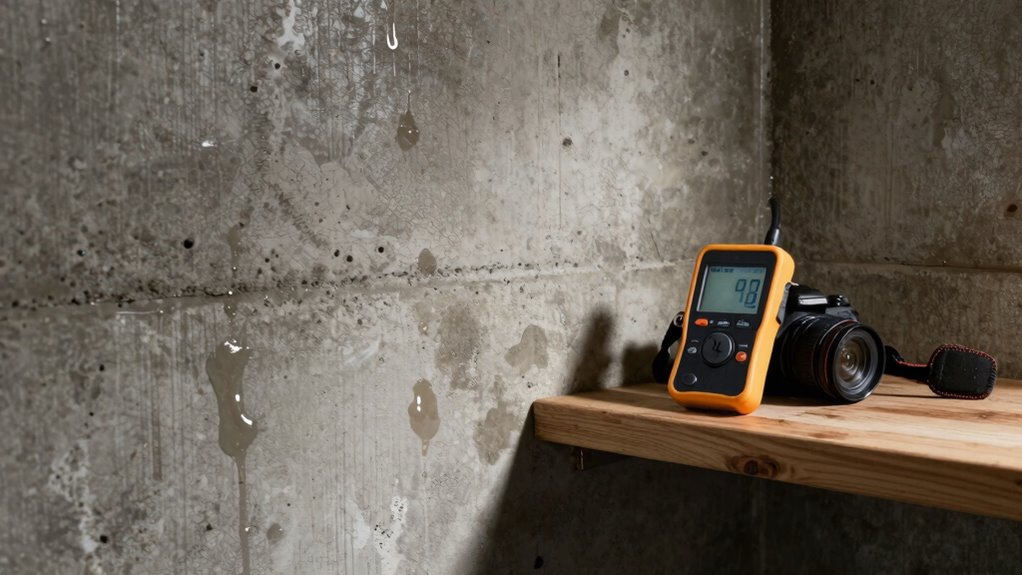
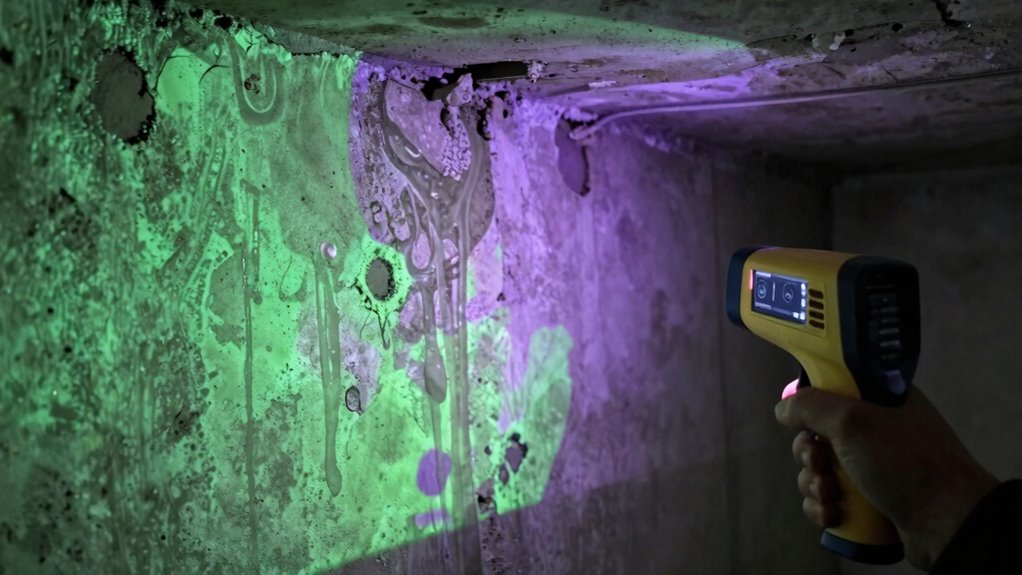
You use moisture sensors and thermal imaging to create moisture maps. Moisture sensors detect high humidity or dampness within walls and floors, providing precise data on problem areas. Thermal imaging reveals temperature differences that indicate moisture presence, helping you visualize hidden leaks or damp spots. Combining these tools gives you a detailed moisture map, enabling targeted fixes before air remediation, ensuring your basement stays dry and healthy.
Do Moisture Maps Require Professional Installation?
Moisture maps generally don’t require professional installation, especially if you’re doing a DIY assessment. You can easily use moisture meters or infrared cameras to get accurate readings. However, consider cost considerations—professional services can be more precise but cost more. If you’re comfortable with basic tools and measurements, a DIY approach works well, saving you money while helping you identify problem areas before making air fixes.
Conclusion
Think of your basement as a hidden garden, where unseen moisture lurks like underground roots. Without a moisture map, you’re steering blindly through this underground maze, risking unseen damage and future woes. Just as a gardener surveys the soil before planting, you need that map to guide your air fixes. It’s your blueprint for clarity, ensuring every corner breathes freely. Embrace the guide, and let your basement flourish in dry, healthy harmony.