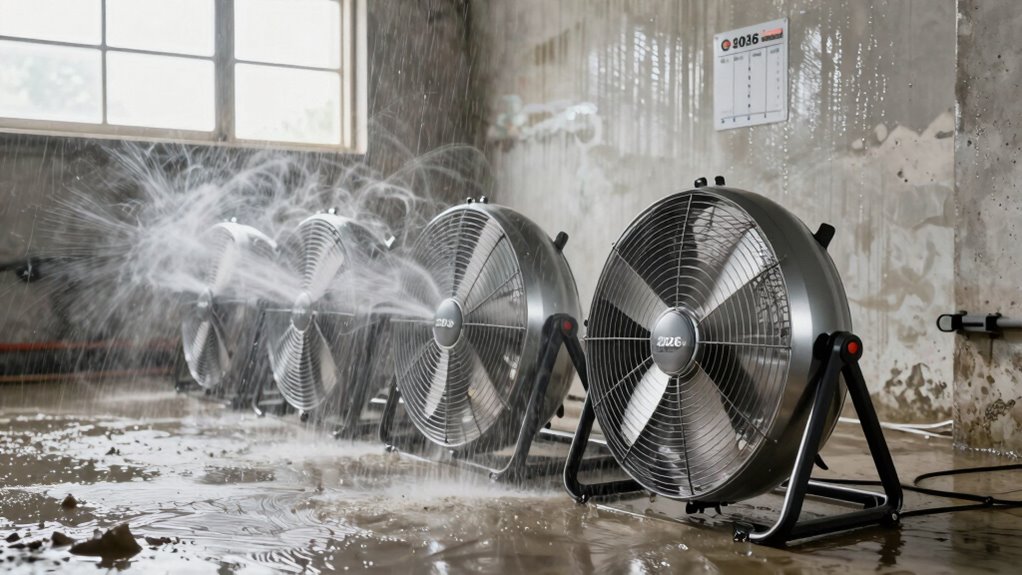

After a flood, the single biggest factor in avoiding mold and permanent damage is how fast you can move air across wet surfaces, and the right air mover fan is the tool that does that job. My top pick overall is the MOUNTO 1/3 HP 2000 CFM Air Mover, which hits the sweet spot of serious airflow, three speeds, daisy-chainable GFCI outlets, and a 25-foot cord — exactly what a multi-room flood cleanup demands. If your flood affected a large area, the MOUNTO True 1 HP 4000 CFM moves nearly double the air, while the XPOWER P-130A Mini Mighty is the budget-friendly choice for a single soaked room or hard-to-reach corners. The main tradeoffs in this category come down to raw airflow versus portability, motor quality versus price, and whether you need built-in outlets to link multiple fans together on one circuit. Read on for the full breakdown of all 15 models.

Get garden gear delivered free with Prime
- Fast, free delivery on millions of items
- Prime Video, Amazon Music and more included
- Member-only deals all year
Complete the kit


Key Takeaways
- CFM ratings only tell part of the story: the MOUNTO 1/3 HP with dual GFCI outlets and a 25-foot cord outperforms higher-CFM rivals in real flood recovery because you can daisy-chain units and position them without extension cords everywhere.
- Half-HP and 1-HP models (MOUNTO 1/2 HP, MOUNTO True 1 HP, the generic 1 HP 4000 CFM unit) are overkill for a single wet room but justify their size when drying entire basements or saturated carpet and pad.
- Compact units like the XPOWER P-130A, Vacmaster AM201, and Dri-Eaz Dri-Pod Pro trade raw airflow for maneuverability and spot-drying precision — best as supplements to a bigger blower, not your only fan.
- The Lasko U12104 pivoting utility fan is the only true budget angle here, but its open-blade design and lower CFM make it a poor primary flood-drying tool compared to purpose-built carpet dryers.
- Built-in timers (the 1100 CFM unit with timer, XPOWER P-230AT) matter more than buyers expect because overnight drying runs are common after floods and unattended operation is the norm.


| air mover fan for drying after flood | Airflow | Speeds | Power cord |
|---|---|---|---|
| MOUNTO 1/4 HP 1000 CFM Two-Spe | 1000 CFM | — | 10 ft, 14 AWG |
| XPOWER P-130A Mini Mighty Air | Up to 800 CFM | 3 | 10 feet |
| VEVOR Air Mover Floor Dryer | — | — | 20 ft |
| MOUNTO True 1 HP 4000 CFM 3-Sp | — | — | — |
| Shop-Vac 1800 CFM 3-Speed Air | — | 3 | — |
| Dri-Eaz Dri-Pod Pro Omnidirect | 750 CFM | — | — |
| ALORAIR 3-Speed Air Mover Blow | 350-600 CFM | 3 | — |
| MOUNTO 1/3 HP Air Mover | 2000-2200 CFM | 3 | 25 ft |
| 1100 CFM 3-Speed Industrial Ai | 600 / 800 / 1100 CFM | 3 | 10 ft with auxiliary outlet |
| XPOWER P-230AT Mini Mighty 1/4 | — | 3 | 10 ft |
| Air Mover 1 HP 4000 CFM Portab | 4000 CFM | 3 | 25 ft |
| MOUNTO 2200 CFM 1/2 HP Commerc | 2200 CFM | 2 | 15 ft |
| XPOWER P-26AR Industrial Axial | 1100 CFM | 4 | — |
| Lasko 12-Inch Pivoting High-Ve | Up to 289 CFM | 3 | 10 ft |
| Vacmaster AM201 Air Mover and | 550 CFM | 3 | 12 ft |
More Details on Our Top Picks
MOUNTO 1/4 HP 1000 CFM Two-Speed Air Mover
This MOUNTO covers the fundamentals of flood drying without padding the price with extras you may not need. The 1000 CFM of airflow is enough to dry a soaked carpet pad or circulate air across a wet basement floor, and the copper motor should hold up better than cheaper aluminum-wound alternatives when running for hours at a stretch. Compared with the VEVOR 2600 CFM model, it moves far less air, but for a single flooded room rather than a whole-house restoration, that gap rarely matters. The dual daisy-chain outlets let you link a second unit without hunting for another wall socket — a feature usually reserved for pricier commercial blowers. The tradeoff is blunt: only two speed settings, so you can’t dial down output for overnight drying in a bedroom.
Pros:- Copper motor for durability during long drying runs
- Daisy-chain outlets let you run multiple units from one outlet
- Roto-molded housing survives jobsite-style abuse
- Built-in 12-amp circuit breaker protects against overloads
Cons:- Only two speed settings limits flexibility for quieter or gentler drying
- No published weight or noise figures makes planning harder
Best for: Homeowners dealing with a one-room flood who want commercial-style drying features on a modest budget
Not ideal for: Anyone drying large or multi-room water damage — 1000 CFM will feel underpowered compared to the 1800+ CFM options here
- Motor power:1/4 HP
- Airflow:1000 CFM
- Speed settings:2
- Motor:Copper
- Housing:Roto-mold
- Power cord:10 ft, 14 AWG
- Daisy chain:Dual power outlets
Our verdict“A sensible budget entry point for localized flood cleanup where linking two units beats buying one big blower.”
XPOWER P-130A Mini Mighty Air Mover, 1/5 HP, 800 CFM
At 9.3 pounds and roughly the footprint of a small toolbox, the P-130A is the unit you grab when the water is under a sink cabinet, behind a toilet, or inside a closet — spots the MOUNTO 1 HP blower physically can’t fit into. Its four operating positions (0° to 90°) let you angle air directly into wall cavities or under furniture, which matters more than raw CFM in tight restoration work. The 2-amp draw is the standout spec: you can safely daisy-chain several of these on a household circuit, something impossible with the Shop-Vac’s 600-watt pull. The honest tradeoff is capacity — at 800 CFM, drying an open flooded basement with this alone would take ages compared to the VEVOR’s 2600 CFM output.
Pros:- Featherweight 9.3 lb build with stackable housing for storage
- Four operating angles target air precisely at wet surfaces
- Very low 2-amp draw allows safe daisy chaining
- Three speeds for adjustable drying intensity
Cons:- Corded power limits use where outlets are scarce
- Airflow figures vary between listing and description, suggesting output under 800 CFM
Best for: Apartment dwellers and detail-oriented restorers targeting cabinets, crawlspaces, car interiors, and other cramped wet spots
Not ideal for: Whole-basement flood drying — the low CFM means you’d need several units to match one commercial blower
- Motor:1/5 HP
- Airflow:Up to 800 CFM
- Power draw:2 Amps at highest setting
- Speeds:3
- Operating positions:0°, 20°, 45°, 90°
- Weight:9.3 pounds
- Power cord:10 feet
- Certification:ETL/CETL
Our verdict“The go-to choice for precision drying in tight spaces where bigger blowers simply won’t fit.”
VEVOR Air Mover Floor Dryer, 1/2 HP, 2600 CFM
This VEVOR earns the top spot because it balances the three things flood drying actually demands: serious airflow, run-time control, and placement flexibility. The 2600 CFM peak output sits comfortably above the Shop-Vac’s 1800 CFM while costing far less to run than the MOUNTO 1 HP monster, and the stepped speeds (1500/2050/2600 CFM) let you start aggressive and throttle back once surfaces are merely damp. The 3-hour timer is the feature competitors here skip — set it and leave the house instead of babysitting a wet floor. With four adjustable angles and a 20-foot cord, positioning under a soaked carpet edge or across a wide basement is straightforward. The catch is its near-20-inch footprint: it’s no XPOWER P-130A, and closet-drying is out of the question.
Pros:- Strong 2600 CFM maximum airflow with three usable speed steps
- Built-in 3-hour timer enables unattended operation
- Four angle positions direct air across carpets or up walls
- 20-foot cord reaches across most rooms without extensions
Cons:- Large footprint takes up floor space in smaller rooms
- Heavier and less portable than compact rivals like the XPOWER P-130A
Best for: Homeowners facing substantial single-floor water damage who want set-and-forget drying control
Not ideal for: Anyone needing to dry tight cabinets or vehicle interiors — the bulky footprint limits placement in cramped areas
- Power:1/2 HP
- Airflow speeds:1500, 2050, and 2600 CFM
- Adjustable angles:0°, 20°, 45°, and 90°
- Timer:3 hours
- Power cord:20 ft
- Dimensions:19.3 × 15.7 × 18.9 in
- Assembly:Fully assembled
Our verdict“The most complete package for serious residential flood recovery — power, control, and convenience in one unit.”
MOUNTO True 1 HP 4000 CFM 3-Speed Air Mover Blower Fan
When a basement has inches of standing water pumped out and everything — subfloor, drywall, insulation — is saturated, 4000 CFM is the class of airflow that shortens drying from days to hours. This MOUNTO doubles the VEVOR’s output and more than doubles the Shop-Vac’s, and its true 1 HP all-copper motor is built to run around the clock, which is exactly what major water damage demands. The roto-molded housing is the same construction professionals rent from restoration supply houses. But be realistic about the cost of that power: at 79 dB, it’s as loud as a vacuum cleaner running beside you, and 1000 watts means you can’t casually daisy-chain it the way you can the XPOWER units. Three positions (not four) also give less angling finesse than the VEVOR or P-130A.
Pros:- Class-leading 4000 CFM airflow for fastest drying times
- All-copper 1 HP motor rated for continuous professional use
- Rugged roto-molded jobsite-grade housing
- U.S.-based customer service and replacement parts support
Cons:- 79 dB noise level is disruptive in living spaces
- 1000-watt draw limits daisy chaining on household circuits
- Only three operating positions versus four on rivals
Best for: Property owners and contractors tackling severe flooding or whole-floor saturation where drying speed is the priority
Not ideal for: Occupied homes needing quiet overnight drying — 79 dB makes sleep and conversation difficult
- Motor:True 1 HP all-copper
- Airflow capacity:4000 CFM
- Speed settings:3
- Operating positions:0°, 45°, 90°
- Wattage:1000 watts
- Noise level:79 dB
- Housing:Heavy-duty roto-molded
Our verdict“Overkill for a spilled water heater tray, but the right tool when extensive saturation demands maximum airflow fast.”
Shop-Vac 1800 CFM 3-Speed Air Mover Floor Fan
The Shop-Vac’s defining feature isn’t its solid 1800 CFM output — it’s everything around it. The built-in 30-foot cord is three times the reach of the MOUNTO 1/4 HP model, meaning you can dry a flooded basement corner without extension cords strung across wet floors, a genuine safety win. Add the collapsible handle and rear wheels, and moving it across a jobsite or up stairs is a one-person job, unlike the VEVOR which you carry by hand. Restorers will appreciate stacking up to four units in a van between jobs. Compared with the MOUNTO 1 HP, you give up roughly half the airflow, and the 600-watt draw running for days on household circuits will show on the electric bill. Its two positions also limit angled drying under cabinetry.
Pros:- 30-foot integrated cord eliminates extension cords on wet floors
- Collapsible handle and rear wheels for easy transport
- Stackable up to four units for storage and transport
- 1800 CFM output handles serious water damage
Cons:- 600-watt draw adds up during multi-day drying runs
- Only two positions limit directional drying compared to four-angle rivals
Best for: Contractors and frequent-flood victims who move equipment between sites and need maximum cord reach and wheeled portability
Not ideal for: Casual household use — the power draw, size, and jobsite-oriented design are wasted on occasional small spills
- Airflow capacity:1800 CFM
- Speeds:3
- Power:AC 120V, 600 watts
- Cord length:30 ft
- Positions:2 (0° and 90°)
- Stackable:Up to 4 units
- Portability:Collapsible handle with rear wheels
Our verdict“Built for people who dry floors for a living — the portability and cord reach justify it over cheaper stationary rivals.”
Dri-Eaz Dri-Pod Pro Omnidirectional Floor and Carpet Dryer
Most air movers blast air in one direction, which means you either reposition them constantly or accept patchy drying. The Dri-Pod Pro solves that differently: its 360-degree louvered outlet pushes air outward across the entire floor in every direction at once, drying a full radius of carpet from a single spot. Compared with the MOUNTO 1/3 HP, which concentrates 2000 CFM into a focused cone, this 750 CFM unit trades raw power for uniform coverage — a smart tradeoff when you’re drying a whole waterlogged room rather than one wet hallway. It’s also lighter and far easier to stash than the boxy restoration blowers in this roundup, and it stacks if you run several at once.
Pros:- True 360-degree airflow dries a full radius without repositioning
- Lightweight and easy to carry between rooms
- Stackable for storage and multi-unit jobs
- Versatile enough for floors, carpets, cabinets, boats, and RVs
Cons:- 750 CFM is the lowest output in this lineup of restoration-grade movers
- No adjustable tilt or directional focus for targeting a single soaked wall
Best for: Homeowners and restoration techs drying open rooms, wall-to-wall carpet, cabinets, or tight boat and RV interiors where omnidirectional airflow beats a single directed blast
Not ideal for: Anyone pumping out a serious standing-water situation — 750 CFM is modest next to the MOUNTO 2000 CFM or the 1 HP units in this guide
- Airflow:750 CFM
- Outlet:360-degree louvered grill
- Use:Floor, carpet, and cabinet drying
- Suitable for:Commercial, residential, boats, and RVs
- Portability:Lightweight, stackable, easy to transport
Our verdict“Pick this when you need to dry a whole room evenly from one spot rather than fire-hose a single area with concentrated air.”
ALORAIR 3-Speed Air Mover Blower Fan 115W 600 CFM Utility Floor Fan – Blue
What makes this ALORAIR stand out is its 4:1 airflow-to-power ratio — it moves up to 600 CFM on just 115 watts, which matters a lot when you’re running multiple fans for days after a flood and watching the electricity meter climb. Compare that to the MOUNTO 1/3 HP at 350 watts for roughly three times the air: if your goal is slow, steady, economical drying across several rooms, three of these draw about the same power as one MOUNTO. The five adjustable angles give it more aiming flexibility than the Dri-Pod’s fixed omnidirectional pattern, and the quiet 63 dB operation means you can actually sleep in the house while it runs. The daisy-chainable GFCI cord simplifies multi-unit setups.
Pros:- Excellent airflow-per-watt efficiency for long multi-day drying runs
- Quietest motor class in this batch at 63 dB
- Five airflow angles for corner and under-cabinet targeting
- Daisy-chainable 10 ft cord with GFCI and thermal safeguards
Cons:- Top-end 600 CFM is low for serious water damage restoration
- 63 dB is still audible in bedrooms or quiet home offices
Best for: Budget-conscious homeowners drying several rooms over multiple days who want to keep energy costs and noise down
Not ideal for: Heavy saturation jobs — 600 CFM peak is modest, and it will take noticeably longer than the 2000+ CFM movers here
- Power:115W
- Airflow:350-600 CFM
- Speeds:3
- Adjustable angles:5 (0°-90° + tilt)
- Noise level:63 dB
- Weight:7.94 lbs
- Cord length:10 ft, daisy-chainable
- Warranty:3-year
Our verdict“This is the pick when running cost and noise matter more than raw drying speed — think days-long basement dryouts, not emergency extraction.”
MOUNTO 1/3 HP Air Mover – 2000 CFM Carpet Dryer & Floor Blower Fan, 3 Speeds, Dual GFCI Outlets, 25ft Cord
When a basement has actually flooded, gentle airflow doesn’t cut it, and this MOUNTO 1/3 HP is the first tier of genuinely commercial-grade muscle in this batch — 2000 to 2200 CFM from a 350-watt motor. That’s more than triple the output of the ALORAIR 600 CFM and enough concentrated blast to drive air under lifted carpet and padding. The dual GFCI outlets let you chain up to three units from a single wall socket, and the 25-foot cord is the longest in this lineup — no hunting for extension cords in a wet utility room. The rotomolded housing survives job-site abuse that lighter polypropylene shells like the XPOWER P-230AT’s won’t shrug off as easily.
Pros:- 2000+ CFM moves serious air for fast carpet and pad drying
- Daisy-chains up to 3 units off dual GFCI outlets
- Long 25 ft cord reaches across large rooms and basements
- Durable rotomolded housing with strong parts warranty (3 years free parts)
Cons:- 70 dB noise is intrusive in occupied homes
- Boxy form factor and fixed discharge limit precise directional aiming compared to multi-angle rivals
Best for: Property owners and contractors facing real water damage — soaked carpets, saturated pad, whole-room dryouts where speed prevents mold
Not ideal for: Occupied living spaces during the evening — 70 dB is loud enough to force you out of the room
- Motor:1/3 HP, 350W
- Airflow:2000-2200 CFM
- Speeds:3
- Noise level:70 dB
- Power cord:25 ft
- Outlets:Dual GFCI
- Dimensions:17″L x 19″W x 19″H
- Warranty:1 year full, 3 years free parts
Our verdict“If standing water has soaked carpet and pad and you’re racing mold, this is the minimum power level worth buying.”
1100 CFM 3-Speed Industrial Air Mover Floor Blower Fan with Timer
Drying after a flood often means running equipment overnight or while you’re at work, and this unbranded-but-capable mover is the only one in this batch pairing a 0–180 minute timer with a mid-range 1100 CFM output. The XPOWER P-230AT also has a timer, but this unit edges it on raw airflow (1100 vs 925 CFM) while keeping the same three tilt positions for aiming airflow across floors or up walls. Compared with the MOUNTO 1/3 HP, it’s the middle path: roughly half the blast, but quieter operation in an occupied house and enough power for rooms rather than whole basements. The auxiliary outlet for daisy-chaining keeps multi-room setups simple without crowding power strips.
Pros:- Built-in 0-180 minute timer for safe unattended operation
- Solid 1100 CFM top speed splits the difference between compact and commercial units
- Three tilt positions for floors, walls, and ceilings
- Auxiliary outlet supports daisy-chaining multiple units
Cons:- Timer caps at 3 hours, requiring restarts on long dryouts
- Loud operation makes it disruptive in quiet living spaces
Best for: Homeowners who want to set a drying cycle and leave — overnight carpet dryouts, unattended runs during work hours
Not ideal for: Extended multi-day restoration jobs — the 180-minute timer max means you’ll be restarting it, and there’s no battery backup option
- Airflow:600 / 800 / 1100 CFM
- Motor:1/4 HP
- Speeds:3
- Tilt angles:0°, 45°, 90°
- Timer:0-180 minutes
- Power cord:10 ft with auxiliary outlet
- Weight:10.5 lbs
- Certification:ETL listed
Our verdict“The best choice when you want scheduled, hands-off drying cycles rather than blasting a room around the clock.”
XPOWER P-230AT Mini Mighty 1/4 HP Centrifugal Air Mover
The P-230AT earns its “Mini Mighty” nickname by packing 925 CFM into one of the smallest footprints in this roundup — about the size of a small cooler, at 10.2 pounds. Its standout feature against nearly everything else here is four operating positions (0°, 20°, 45°, and 90°), including a low 20-degree angle the 1100 CFM timer model can’t match — that shallow setting is genuinely useful for skimming air across wet carpet or under furniture. Like that timer unit, it includes a built-in timer and daisy-chain outlet, plus dual thermal protection for safer long runs. Compared with the ALORAIR, it trades a little efficiency for more positioning flexibility, making it the more versatile household tool.
Pros:- Four operating angles including a low 20° position for carpet-level airflow
- 925 CFM from a compact 10.2 lb, stackable body
- Built-in timer plus daisy-chain outlet
- Dual thermal protection and ETL/CETL certification
Cons:- Draws a hefty 2.3 A on high, limiting how many units you can chain on one circuit
- Only a 1-year limited warranty despite the higher price tier
Best for: Homeowners who want one versatile dryer for carpets, furniture, cabinets, and general ventilation in a compact, storable package
Not ideal for: Full-scale flood restoration — 925 CFM won’t push air through saturated carpet and pad the way the MOUNTO 2000 CFM will
- Motor:1/4 HP centrifugal
- Maximum airflow:925 CFM
- Speeds:3
- Operating positions:0°, 20°, 45°, 90°
- Weight:10.2 lbs
- Power cord:10 ft
- Protection:Dual thermal protection, ETL/CETL listed
- Warranty:1-year limited
Our verdict“The most flexible all-purpose dryer here — buy it if you’ll keep using it for ventilation and spot drying long after the flood is gone.”
Air Mover 1 HP 4000 CFM Portable Blower Fan Carpet Dryer
When standing water has been extracted and the clock is ticking against mold, raw airflow matters more than anything else, and this unit’s 4000 CFM output puts it near the top of this lineup alongside the MOUNTO True 1 HP. What separates it is the 0-180 minute timer, which the MOUNTO lacks — set it, leave the house, and let it shut itself off rather than running unattended all day. The three blowing angles (0°, 20°, 90°) cover walls, carpets, and crawlspaces effectively.
The tradeoff is footprint and noise. Compared with the compact Vacmaster AM201, this is a big machine that dominates a small room, and at full speed it will drown out conversation. That’s the price of drying a soaked living room in hours instead of a day.
Pros:- Class-leading 4000 CFM airflow cuts drying time dramatically on saturated carpets and drywall
- Built-in 0-180 minute timer allows safe unattended operation
- Three blowing angles handle floors, walls, and ceilings from one unit
- ETL certified with overload and dual thermal protection for long restoration runs
Cons:- Large footprint is awkward in tight rooms or hallways
- Loud at higher speeds — not something you want running in a bedroom overnight
- Indoor use only, so it can’t double as a garage or patio fan
Best for: Homeowners dealing with a finished basement or multi-room flooding who need maximum drying speed and want to run the fan unattended on a timer
Not ideal for: Apartment dwellers or anyone drying a single small room — the size, noise, and 1 HP motor are overkill when the Vacmaster AM201 would finish the job
- Power:1 HP (750 watts)
- Airflow:4000 CFM
- Speeds:3
- Blowing Angles:0°, 20°, 90°
- Timer:0-180 minutes
- Power Cord:25 ft
- Certification:ETL Listed
- Warranty:2 years
Our verdict“If you have one shot at drying out a flooded space fast, this is the fan to buy — just plan around the noise.”
MOUNTO 2200 CFM 1/2 HP Commercial Air Mover Floor Drying Fan
This is the pickup truck of the group: no timer, no daisy-chain outlets, no gimmicks — just a true 1/2 HP all-copper motor pushing 2200 CFM with the kind of durability that restoration crews expect. Compared with the VEVOR 1/2 HP 2600 CFM, output is slightly lower, but the copper motor winding is the sort of component that survives long jobsite days where cheaper motors overheat.
The compromises are honest ones. Two speeds instead of three or four means less fine control than the 1 HP 4000 CFM blower, and at 25.5 pounds it’s noticeably heavier to carry up stairs than the Vacmaster AM201. There’s also no built-in outlet, so running multiple units means occupying several wall sockets.
For a wet basement or a carpet-cleaning side business, this pick makes the most sense for buyers who want commercial muscle without paying for restoration-tier features they won’t use.
Pros:- True 1/2 HP all-copper motor built for continuous, long-duration operation
- 2200 CFM is enough airflow for full rooms and soaked carpets
- Adjustable drying positions let you angle air at walls or flooring
- Carrying handle and 15-ft cord make jobsite repositioning manageable
Cons:- Only two speed settings — no low-and-quiet option for occupied rooms
- At 25.5 lbs it’s one of the heavier portable options here
- No daisy-chain outlets, so multi-unit setups eat up wall receptacles
Best for: Budget-conscious homeowners and small carpet-cleaning or contracting businesses that need commercial-grade drying power at a mid-tier price
Not ideal for: Anyone who needs precise airflow control or plans to move the fan frequently between rooms — two speeds and 25.5 lbs get old fast
- Airflow:2200 CFM
- Motor:True 1/2 HP all-copper
- Speeds:2
- Amperage:5 A at 120V
- Power Cord:15 ft
- Weight:25.5 lbs
- Dimensions:18″D x 17″W x 18″H
Our verdict“The smart middle ground between cheap consumer fans and expensive restoration rigs — buy it if you value motor durability over features.”
XPOWER P-26AR Industrial Axial Air Mover with Built-In Power Outlets
Flooding rarely affects one surface, and that’s where the P-26AR plays a different game than everything else here. Its 360° rack stand throws air in multiple directions at once, unlike the MOUNTO 1/2 HP, which focuses a single focused blast at one angle. Pair that with built-in daisy-chain outlets and a 0.6-amp draw, and you can link several units from one wall socket to build a whole-room drying circuit.
The catch is raw power: at 1100 CFM, one unit alone won’t dry a saturated carpet anywhere near as fast as the 4000 CFM blower. This model is better suited to buyers thinking in systems — circulating air across broad damp areas, ventilating, or supplementing a bigger machine. Four speeds do give finer control than most competitors offer.
Pros:- Daisy-chain outlets let you power multiple units from a single receptacle
- 0.6-amp draw keeps household circuits safe even with several fans linked
- 360° multidirectional airflow from the rack stand covers wide areas
- Four speed settings offer more control than typical two- or three-speed rivals
Cons:- Only 1100 CFM — slow going on heavily saturated materials on its own
- Axial design moves volume but with less directed force than centrifugal blowers like the MOUNTO
- Rack stand adds footprint compared with flat-stackable units
Best for: Restoration-minded homeowners or contractors building a multi-fan drying network from limited outlets, plus anyone needing ventilation alongside drying
Not ideal for: Buyers who want a single fan to rescue one badly soaked carpet — 1100 CFM is circulation strength, not extraction strength
- Model:P-26AR
- Airflow:1100 CFM
- Airflow Reach:Up to 120 ft
- Speeds:4
- Power Draw:0.6 amps
- Features:360° airflow; daisy-chain outlets
Our verdict“Buy this if your strategy is several low-draw fans working together rather than one brute-force blower.”
Lasko 12-Inch Pivoting High-Velocity Utility Fan, U12104
Not every flood is a disaster — sometimes it’s a burst supply line under a sink or a washer overflow. For those jobs, the Lasko U12104 covers the basics without asking much. Its 270° pivot range is genuinely useful for aiming air into cabinet cavities or along a baseboard, something boxy blowers like the MOUNTO 1/2 HP can’t match. Two grounded outlets and a circuit breaker with reset add a level of safety awareness rare at this size.
Be clear about the limits: 289 CFM is a fraction of what the Vacmaster AM201 (550 CFM) moves, and nowhere near a true restoration machine. This fan speeds up drying of a damp patch; it will not save a soaked carpet pad. It’s also a utility fan rather than a purpose-built dryer, so expect plastic construction and a shorter 10-foot cord.
Pros:- 270° pivoting head directs air into awkward spots like under sinks and behind appliances
- Two grounded built-in outlets let you plug in another small fan or tool
- Circuit breaker with reset button protects against overload
- Lightweight and inexpensive enough to justify as a just-in-case tool
Cons:- 289 CFM is the lowest output in this lineup by a wide margin
- 10-ft cord is short for reaching across rooms without an extension cord
- Utility-fan build won’t survive rough jobsite handling
Best for: Renters and homeowners handling small leaks, damp bathrooms, or slow-drying spots who want cheap, aimed airflow
Not ideal for: Anyone with actual standing-water aftermath or saturated carpeting — the airflow is simply too low for real flood recovery
- Model:U12104
- Fan Diameter:12 inches
- Airflow:Up to 289 CFM
- Speeds:3
- Pivot Range:270 degrees
- Power Cord:10 ft
- Safety:ETL listed; circuit breaker with reset
Our verdict“A sensible cheap insurance policy for small leaks — skip it the moment you’re dealing with genuine flood damage.”
Vacmaster AM201 Air Mover and Fan, 550 CFM
The AM201 slots neatly between the underpowered Lasko U12104 and the heavy commercial machines. At 550 CFM with a 42 MPH air speed, it produces genuinely directed drying force in a body light enough to carry room to room during cleanup, and the three airflow positions let you attack a floor, a wall, or under-furniture dampness from one footprint. Like the XPOWER P-26AR, it includes two built-in receptacles for linking up to three units, which is smart if one outlet is all you can reach in a wet basement.
Realistically, though, 550 CFM means patience. A carpet that the 1 HP 4000 CFM blower dries overnight could take this fan a day or more, and its plastic blades and bedroom-oriented design confirm this is a household tool, not a restoration unit. It’s quiet enough to run while you sleep, which the big blowers absolutely are not.
Pros:- 550 CFM with 42 MPH air speed punches above its compact size
- Three speeds and three positions allow precise targeting of damp surfaces
- Daisy-chain up to three units from a single outlet
- Stackable, lightweight body with handle and quiet 45 dB operation
Cons:- Drying speed is slow compared with 2000+ CFM commercial blowers
- Plastic blade and light build won’t tolerate jobsite abuse
- Requires proximity to a standard outlet with only a 12-ft cord
Best for: Homeowners drying moderate dampness — bathroom floods, wet entryways, patched plumbing leaks — who want a quiet, carryable fan they can run overnight
Not ideal for: Full water-damage restoration jobs — the airflow is too modest for saturated carpets, drywall, or subflooring
- Airflow:550 CFM
- Max Air Speed:42 MPH
- Speeds:3
- Airflow Positions:3
- Power Cord:12 ft
- Wattage:223.6 watts at 120V
- Noise Level:45 dB
- Connectivity:2 built-in receptacles; up to 3 units
Our verdict“The right size for household dampness and overnight drying — a stepping stone, not a substitute for a restoration blower.”

How We Picked
Because post-flood drying is a race against mold — which can begin within 24 to 48 hours — I weighted raw airflow (CFM) and motor durability most heavily in this ranking. A fan that moves 2,000+ CFM across a wet carpet pulls moisture out dramatically faster than a small utility blower, and all-copper motors tolerate the long, continuous multi-day runs that flood recovery demands. I also prioritized practical flood-cleanup features: daisy-chain outlets that let you run several units off one wall socket, long power cords so you’re not taping extension connections in a wet room, GFCI protection for safety, multiple operating angles for directing air under carpets and along walls, and timers for unattended overnight drying.
Ranking then came down to value and fit. The top picks balance CFM, build quality, and price for typical residential flood scenarios; heavy 1-HP models rank high for whole-basement jobs despite their cost and weight, while compact units earn their places as spot-dryers and supplements rather than primary tools. Cheap open-blade fans rank lower because, although they move some air, they lack the directed, high-static-pressure output that actually lifts moisture out of carpet and drywall.
Factors to Consider When Choosing Air Mover Fan For Drying After Flood
Before you buy, it helps to understand what actually drives drying performance after a flood — because the shiniest spec on the box isn’t always the one that saves your floors.Match CFM to the Size of the Flooded Area
The most common mistake buyers make is underbuying airflow. A general working rule in restoration work is roughly one air mover per 8 to 12 square yards of wet carpet and pad, which means a single 800 CFM mini blower will barely make a dent in a flooded living room. For anything beyond one small room, look at 2,000 CFM and up — the MOUNTO 1/3 HP and VEVOR 1/2 HP class of machine. Whole-basement floods with saturated subflooring call for 4,000 CFM units or multiple linked mid-size movers. Remember that CFM ratings are measured at the outlet with no resistance; directing air under a raised carpet or into wall cavities reduces effective output, which is why pros always oversize slightly. Also be skeptical of identical-looking generic units claiming the same CFM as name-brand models — housing seal and impeller quality determine whether that number holds up in real use.
Daisy-Chaining and Cord Length Change Everything
In a real flood cleanup, wall outlets are often wet, blocked by furniture, or few and far between, so power distribution becomes a deciding factor. Models like the MOUNTO 1/3 HP with dual GFCI outlets and the XPOWER P-26AR let you chain multiple fans off a single dry outlet, cutting setup time and reducing cord clutter across wet floors. A 25-foot cord means you can often reach the center of a room without any extension cord at all — and extension connections in damp environments are a genuine safety hazard worth avoiding. If you plan to run three or more movers, add up the amperage: most residential circuits handle two to three half-HP units, and exceeding that trips breakers mid-drying cycle. Buyers who skip this consideration end up with fans they can’t power simultaneously, which defeats the purpose of buying multiple units.
Motor Quality and Duty Cycle
Flood drying isn’t a one-hour job — expect 48 to 72 hours of continuous operation, and that’s where cheap motors fail. All-copper windings, like on the MOUNTO True 1 HP, dissipate heat better and survive long duty cycles, while aluminum-wound budget units can overheat, slow down, or cut out mid-run. Check whether the fan has thermal overload protection, which shuts the motor down before damage occurs rather than letting it cook itself overnight. Housing material matters too: rotationally molded polyethylene shells (standard on MOUNTO, XPOWER, and Dri-Eaz) survive being stacked, dropped, and dragged across debris, while brittle plastic cracks the first time it’s knocked over on a wet floor. If you’re in a humid coastal region where floods recur, spending more on motor quality pays for itself the second time you deploy the fan.
Operating Positions and Airflow Direction
Air movers only dry what their airflow touches, so angle adjustability directly affects drying results. Most quality units operate in three to four positions — flat for across-the-floor airflow, tilted 45 and 90 degrees for walls and cabinets, and sometimes pointed upward for ceiling leaks. Drying carpet effectively requires lifting a corner and forcing air into the wet pad underneath, a technique that needs static pressure, not just CFM, which is why centrifugal blower designs outperform open-blade utility fans like the Lasko for this job. Omnidirectional models such as the Dri-Eaz Dri-Pod Pro dry a 360-degree circle, which suits open floor areas but wastes air in corners. Think about where your water actually went: walls and cabinetry call for tilted operation, hard floors call for flat high-velocity sweep, and subfloor calls for focused pressure.
Timers, Speeds, and Unattended Operation
Flood drying runs overnight and while you’re at work, so controls that support unattended operation are more valuable than they first appear. Built-in timers — like those on the 1100 CFM timed model and XPOWER P-230AT — let you set multi-hour drying cycles without leaving the motor running indefinitely, protecting both the machine and your power bill. Three-speed control matters because high isn’t always right: maximum speed moves the most air but can be counterproductive in the first hours if it’s pushing moisture into adjacent dry rooms. Slower speeds also reduce noise, a real consideration if you’re living in the house while it dries. If you’re pairing an air mover with a dehumidifier, note that a timer lets the fan shut off while the dehumidifier continues the final pull of moisture from materials — a staged approach professionals use.
Buy, Rent, or Call a Pro?
Be honest about the scale of your flood before spending. A burst supply line in one room is a reasonable DIY job for a $150 to $300 air mover; a sewage backup or a riverine flood covering a basement involves contaminants, trapped moisture behind walls, and mold risk that warrants professional restoration equipment and assessment. Renting is a legitimate middle path — restoration-grade units rent for a fraction of purchase price, and if this is likely a one-time event, that math favors renting. But if you live somewhere floods recur, or you want equipment on hand before the next storm rather than racing to a rental counter, buying a mid-size daisy-chainable model like the MOUNTO 1/3 HP is the practical choice. Whatever you decide, start moving air within hours — the equipment decision matters far less than the clock.
Frequently Asked Questions
How many air movers do I need after a flood?
For residential carpet drying, plan on one air mover per 8 to 12 square yards of wet flooring, positioned so airflow sweeps across the surface and gets forced under lifted carpet edges. A single small room usually needs one 2,000 CFM-class unit, while a full basement typically calls for three to five movers working together — this is exactly why daisy-chainable models like the MOUNTO 1/3 HP and XPOWER P-26AR rank so highly in this roundup. Also factor in wall and cabinet wetness: those areas each need their own directed airflow. If you can only afford one unit, put the largest CFM machine you can buy in the middle of the wet zone and supplement with any household fans you own. And remember that air movers work best paired with a dehumidifier, since moving humid air alone won’t finish the drying job.
Is a higher CFM rating always better for flood drying?
Mostly yes, but with two caveats. First, CFM measures open-air output; what dries carpet and subfloor is actually a combination of airflow and static pressure, which is why centrifugal air movers outperform open-blade fans with similar stated numbers. A 1 HP 4,000 CFM unit will always outdry an 800 CFM mini, but a well-built 2,000 CFM blower aimed correctly can outperform a poorly aimed bigger one. Second, verify that the CFM claim comes from a brand with consistent manufacturing — generic listings copying professional specs sometimes deliver materially less airflow. For most home floods, 2,000 to 2,600 CFM is the practical sweet spot; going to 4,000 CFM makes sense for large basements, crawlspaces, or commercial floors.
How long should I run an air mover after a flood?
Expect 48 to 72 hours of continuous operation for soaked carpet and pad, and longer — up to five days — for saturated drywall, subfloor, or crawlspace materials. The surface may feel dry to the touch within a day while the pad and subfloor underneath remain wet, which is precisely how hidden mold problems start. Run fans around the clock, repositioning them every 12 hours or so to target different zones, and pair them with a dehumidifier once initial surface water is gone. Units with built-in timers, like the XPOWER P-230AT or the 1100 CFM timed model, make overnight cycling easier and reduce strain on the motor. If you smell mustiness after several days of drying, that’s a sign moisture remains trapped and it’s time to pull carpet or call a professional.
Can I use a regular box fan or utility fan instead of an air mover?
For a small hard-surface spill, yes — but for actual flood drying, no. A household box fan or the Lasko-style pivoting utility fan moves air gently across a room, while a purpose-built air mover produces focused, high-velocity, high-pressure output that penetrates carpet pile, lifts moisture from padding, and pushes air into wall cavities. The difference in drying time is typically measured in days, and days are exactly what mold needs to colonize. Utility fans also aren’t rated for continuous multi-day operation and their open blades are a hazard around standing water and debris. If budget forces a choice, one mid-size air mover is worth more than three box fans for flood recovery.
What safety features matter most when running fans around water?
Three things: GFCI outlets or GFCI-protected circuits, grounded plugs, and housings that keep electrical components elevated off wet floors. Units like the MOUNTO 1/3 HP include onboard GFCI outlets, which protect both that fan and anything daisy-chained to it — a meaningful safety margin when power distribution happens in a damp house. Always plug into a GFCI-protected wall circuit even if the fan has its own protection, and never operate any fan with standing water around its base; air movers are built for wet environments in the sense of humidity and damp surfaces, not submersion. Inspect cords before each use, since debris from floods easily cuts insulation, and avoid running units unattended on non-GFCI circuits.
Conclusion
The right pick here depends entirely on how much water you’re fighting and how your rooms are laid out. For best overall, the MOUNTO 1/3 HP 2000 CFM Air Mover stands out for combining strong airflow with dual GFCI outlets and a 25-foot cord — the features that matter most when you’re drying multiple rooms on limited outlets. For best value, the VEVOR 1/2 HP 2600 CFM delivers big-machine airflow at a mid-range price, while the XPOWER P-130A Mini Mighty is my pick for beginners and small single-room floods thanks to its simplicity and maneuverability. At the premium end, the MOUNTO True 1 HP 4000 CFM with its all-copper motor is the choice for whole-basement disasters and multi-day continuous runs. For specific needs: the Dri-Eaz Dri-Pod Pro handles open floor areas and under-furniture drying, the XPOWER P-230AT suits unattended overnight drying with its timer, and the XPOWER P-26AR axial unit makes sense when you need to link a small fleet of fans together. Whatever you choose, get air moving within hours of the water receding — the fan you buy matters far less than the clock you’re racing.
Fall Picks
fall essentials
As an affiliate, we earn on qualifying purchases.