For most basements, I’d start with the Winix 5510: its app support and large-room focus make it a flexible pick for changing basement conditions. The Levoit Vital 200S-P is another strong choice for buyers who want smart controls, while the Blueair Blue Pure Mini Max Auto suits a small finished room where a full-size unit would take up too much space. The main tradeoffs are room coverage, filter upkeep, noise, and whether features such as an app or washable filter are worth prioritizing. A purifier can help reduce airborne particles, but it cannot fix water intrusion or persistent mold growth. Read on for how the 15 options compare and which type of basement each one suits.

Get garden gear delivered free with Prime
- Fast, free delivery on millions of items
- Prime Video, Amazon Music and more included
- Member-only deals all year
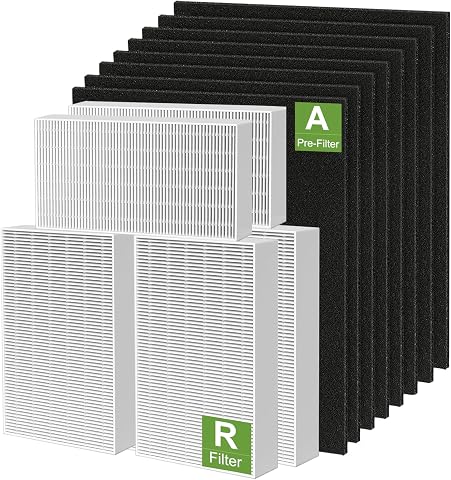
Complete the kit


Key Takeaways
- Winix 5510 leads for flexibility: App support gives it an edge for buyers who want to monitor and adjust a purifier without walking to it.
- Levoit Vital 200S-P is the smart-control alternative: It is a compelling large-room option, though buyers should compare its control features with the Winix picks before choosing.
- Large coverage claims need context: A basement’s layout, ceiling height, and airflow can limit how well one unit serves separated rooms.
- Small rooms call for smaller units: The Blueair Blue Pure Mini Max Auto and Levoit Core 300-P are better fits for compact areas than open, multi-room basements.
- Air purifiers are not moisture remedies: Filtration can address airborne particles, but dampness and mold sources require separate attention.
| Dhyala Large-Room Air Purifier with H13 True HEPA Filter, Wi-Fi, and Pet-Friendly Design |  | Best for Smart, Pet-Friendly Coverage | Filter: H13 True HEPA; five-stage filtration with activated carbon | Coverage: Up to 3,620 sq. ft. per hour | CADR: 271 CFM | VIEW ON AMAZON | See Our Full Breakdown |
| ECOSELF Air Purifier for Large Rooms up to 2,400 sq. ft. |  | Best for Automatic Air-Quality Feedback | Coverage area: Up to 2,400 sq. ft. | Filtration: True HEPA; captures 99.97% of airborne particles | Air purification rate: Twice per hour | VIEW ON AMAZON | See Our Full Breakdown |
| KNKA APH4000 Air Purifier for Home, Black |  | Best for Frequent Cleaning in a Defined Zone | Maximum coverage: 1,695 ft² with 1 air refresh per hour | Coverage at 4.8 refreshes per hour: 350 ft² | Smoke/Dust/PM2.5 CADR: 226 CFM (384 m³/h) | VIEW ON AMAZON | See Our Full Breakdown |
| AMEIFU Dual-Sided HEPA Air Purifier for Large Rooms |  | Best for Large, Open Basements | Air intake: Dual-sided | Particle capture: 99.99% of particles sized 0.1–0.3 μm | CADR: 500 m³/h | VIEW ON AMAZON | See Our Full Breakdown |
| Blueair Blue Pure Mini Max Auto Air Purifier |  | Best Compact Pick for a Basement Room | Room coverage: 105 sq ft at 4.8 air changes per hour; up to 510 sq ft in one hour | Particle capture: At least 99.97% of airborne particles down to 0.1 microns | Filtration: HEPASilent technology with activated carbon | VIEW ON AMAZON | See Our Full Breakdown |
| AIUZLK P260 Air Purifier for Large Rooms, with H13 HEPA Filter |  | Best for Quiet, Large Basements | Model: P260 | Coverage area: Up to 2,000 sq ft | Motor: 24W brushless | VIEW ON AMAZON | See Our Full Breakdown |
| Winix 5510 Air Purifier with App Support |  | Best for App-Controlled Allergen Cleaning | Model: 5510 | Room coverage: Up to 1,882 sq ft in 1 hour | True HEPA capture claim: 99.99% of airborne allergens as small as 0.01 microns | VIEW ON AMAZON | See Our Full Breakdown |
| Air Purifier for Large Rooms up to 1,650 sq. ft. with Washable H13 HEPA Filter |  | Best for Air-Quality Feedback | Coverage area: Up to 1,650 sq ft | Air changes: 6 per hour in 275 sq ft | Filter: Washable H13 HEPA | VIEW ON AMAZON | See Our Full Breakdown |
| MOOKA PR1 Air Purifier for Large Rooms, White |  | Best for Pet-Focused Basements | Model: PR1 | Color: White | Coverage area: Up to 2,200 sq ft | VIEW ON AMAZON | See Our Full Breakdown |
| Levoit Vital 200S-P Smart Air Purifier for Large Rooms |  | Best for Verified Cleaning Performance | Model: Vital 200S-P | Coverage area: Up to 1,875 sq ft | Smoke CADR: 250 CFM | VIEW ON AMAZON | See Our Full Breakdown |
| Winix 5520 Air Purifier for Large Rooms |  | Best for Large Basements with Odors | Model: 5520 | Room coverage: Up to 1,882 sq ft in 1 hour | Filtration: Four-stage system with True HEPA, carbon filter, and washable mesh pre-filter | VIEW ON AMAZON | See Our Full Breakdown |
| VOOPNU Air Purifier for Home, 1,076 sq ft, White |  | Best Compact Pick | Coverage area: Up to 1,076 sq ft | Dimensions: 6.69 x 6.69 x 9.84 inches | Filtration: Triple-layer filtration; captures 99.97% of airborne pollutants | VIEW ON AMAZON | See Our Full Breakdown |
| KNKA APH4000 Air Purifier for Home, White |  | Best for Measured Air Cleaning | Model: APH4000 | Maximum coverage: 1,695 sq ft at one air refresh per hour | Coverage at 4.8 air refreshes per hour: 350 sq ft | VIEW ON AMAZON | See Our Full Breakdown |
| FreAire HAP605 Air Purifier for Large Rooms, White |  | Best for Quiet, Spacious Basements | Model: HAP605 | Coverage area: Up to 2,600 sq ft | Air intake: Triple intake: front and two side inlets | VIEW ON AMAZON | See Our Full Breakdown |
| Levoit Core 300-P Air Purifier |  | Best for a Defined Basement Zone | Model: Core 300-P | Motor power: 56W | CADR: 143 CFM smoke, 153 CFM dust, 167 CFM pollen | VIEW ON AMAZON | See Our Full Breakdown |
| air purifier for basement | Noise level | Filtration | Certifications | Model |
|---|---|---|---|---|
| Dhyala Large-Room Air Purifier | As low as 22 dB | — | — | — |
| ECOSELF Air Purifier for Large | — | True HEPA; captures 99.97% of airborne particles | ETL, FCC, EPA, CARB, DOE | — |
| KNKA APH4000 Air Purifier for | — | Dual filters, three stages each: washable pre-filter, high-efficiency filter, and activated carbon | — | — |
| AMEIFU Dual-Sided HEPA Air Pur | — | — | ETL, FCC, EPA, CARB | — |
| Blueair Blue Pure Mini Max Aut | As low as 19 dB | HEPASilent technology with activated carbon | — | — |
| AIUZLK P260 Air Purifier for L | As low as 22 dB | Three-stage; H13 HEPA filter stated in title | FCC, CE, RoHS, ETL | P260 |
| Winix 5510 Air Purifier with A | 23.5 dB on the slowest speed | — | AHAM Verified, UL Certified | 5510 |
| Air Purifier for Large Rooms u | — | — | — | — |
| MOOKA PR1 Air Purifier for Lar | As low as 26 dB in Sleep mode | Four-stage filtration system | CARB, ETL, DOE, FCC | PR1 |
| Levoit Vital 200S-P Smart Air | — | — | — | Vital 200S-P |
| Winix 5520 Air Purifier for La | 23.5 dB on the slowest speed | Four-stage system with True HEPA, carbon filter, and washable mesh pre-filter | AHAM Verified and UL Certified | 5520 |
| VOOPNU Air Purifier for Home | As low as 22 dB | Triple-layer filtration; captures 99.97% of airborne pollutants | DOE, ETL, FCC, CARB, CE, and RoHS | — |
| KNKA APH4000 Air Purifier for | — | Three-stage system with washable pre-filter, high-efficiency filter, and activated carbon filter | — | APH4000 |
| FreAire HAP605 Air Purifier fo | — | — | — | HAP605 |
| Levoit Core 300-P Air Purifier | 24 dB in Sleep Mode | — | AHAM Verified, FCC Certified, ETL Listed, CARB Compliant | Core 300-P |
More Details on Our Top Picks
Dhyala Large-Room Air Purifier with H13 True HEPA Filter, Wi-Fi, and Pet-Friendly Design
For a basement that doubles as a pet area or family hangout, the Dhyala pairs a five-stage filter with activated carbon to address airborne particles and everyday odors. Its 271 CFM CADR gives a more useful comparison point than its headline claim of 3,620 square feet, which assumes just one air refresh per hour. That makes it a flexible large-space pick, though buyers seeking frequent cleaning across a broad basement should check room-size guidance carefully. Compared with the AMEIFU Dual-Sided HEPA Air Purifier, Dhyala adds app and voice control plus a bite-proof cord, while AMEIFU lists a higher CADR and dual-sided intake. Dhyala’s tradeoffs are unclear filter replacement timing and cost; those matter for a unit expected to run often.
Pros:- 271 CFM CADR provides a useful airflow figure for comparing large-room options.
- Five-stage filtration with activated carbon targets particles and odors.
- App, touchscreen, Alexa, and Google Assistant controls offer flexible operation.
- Pet and child lock plus a bite-proof power cord suit shared family spaces.
Cons:- The 3,620-square-foot claim assumes only one air refresh per hour.
- Filter replacement interval and replacement cost are not provided.
Best for: Pet owners who want app or voice control and a purifier with child and pet safety features for a large basement.
Not ideal for: Buyers who need documented filter replacement costs or frequent air cleaning across a very large basement.
- Filter:H13 True HEPA; five-stage filtration with activated carbon
- Coverage:Up to 3,620 sq. ft. per hour
- CADR:271 CFM
- Noise level:As low as 22 dB
- Controls:Wi-Fi app, touchscreen, Alexa, and Google Assistant
- Air intake:360°
- Safety features:Pet/child lock and bite-proof power cord
- Warranty:24 months
Our verdict“Choose Dhyala for a pet-friendly basement where smart controls and safety features matter more than fully documented filter upkeep.”
ECOSELF Air Purifier for Large Rooms up to 2,400 sq. ft.
The ECOSELF’s clearest basement advantage is that it pairs a PM2.5 display with automatic fan adjustment, giving owners a visible reading and a hands-off response when particle levels change. Its stated filtration rate of twice per hour also gives buyers more context than broad coverage claims that specify only one refresh. Compared with the KNKA APH4000, ECOSELF lists a larger room figure and a PM2.5 display, while KNKA gives CADR numbers and a defined 350-square-foot area at 4.8 refreshes per hour. That makes KNKA’s airflow detail easier to evaluate for a basement needing frequent cleaning. ECOSELF adds sleep mode and aromatherapy, but the supplied information gives no performance testing detail and specifies official replacement filters, so ongoing maintenance options are less clear.
Pros:- PM2.5 display and infrared sensor provide air-quality feedback.
- Automatic fan adjustment responds to sensed particle levels.
- Filtration is advertised to run twice per hour.
- Sleep mode, timer, lock controls, and filter indicator add operating options.
Cons:- No performance testing details are included in the supplied product information.
- Replacement filters are specified to be official ECOSELF filters.
Best for: Basement owners who want automatic fan changes and a PM2.5 readout while running the purifier regularly.
Not ideal for: Buyers who want detailed CADR figures or flexibility to compare replacement filters from multiple sources.
- Coverage area:Up to 2,400 sq. ft.
- Filtration:True HEPA; captures 99.97% of airborne particles
- Air purification rate:Twice per hour
- Air quality monitoring:PM2.5 display and infrared sensor
- Sleep mode noise:22 dB
- Features:Auto mode, timer, adjustable fan speed, lock controls, aromatherapy, and filter indicator
- Certifications:ETL, FCC, EPA, CARB, DOE
- Warranty and support:30-day money-back guarantee, 1 year+ warranty, lifetime tech support
Our verdict“Pick ECOSELF if you value a visible particle reading and automatic adjustment more than detailed airflow comparisons.”
KNKA APH4000 Air Purifier for Home, Black
For a basement with one main occupied area, the KNKA APH4000 offers the most useful room-size distinction here: it lists 350 square feet at 4.8 air refreshes per hour, alongside a much larger maximum figure that provides only one refresh per hour. That helps match the unit to a specific zone instead of treating the broadest coverage number as a promise of frequent cleaning throughout a basement. Its dual filters and washable pre-filters also give pet owners a way to clear collected hair before replacing the main filters. Compared with the ECOSELF Air Purifier, KNKA provides CADR figures and a high-refresh room size, while ECOSELF offers a PM2.5 display. The tradeoff is filter replacement every 3–6 months, which adds regular upkeep.
Pros:- Lists 350 sq. ft. coverage at 4.8 air refreshes per hour.
- Dual three-stage filters include washable pre-filters and activated carbon.
- PET, ECO, Auto, and Sleep modes address different operating needs.
- Real-time AQI display uses color-coded lights.
Cons:- Maximum coverage of 1,695 sq. ft. corresponds to only one air refresh per hour.
- Filter replacement is recommended every 3–6 months.
Best for: Homeowners who want frequent air turnover in a defined basement room and can keep up with scheduled filter changes.
Not ideal for: People seeking one purifier to clean a sprawling basement frequently or those who want to avoid recurring filter maintenance.
- Maximum coverage:1,695 ft² with 1 air refresh per hour
- Coverage at 4.8 refreshes per hour:350 ft²
- Smoke/Dust/PM2.5 CADR:226 CFM (384 m³/h)
- Pollen CADR:244 CFM (415 m³/h)
- Filtration:Dual filters, three stages each: washable pre-filter, high-efficiency filter, and activated carbon
- Sleep mode noise:22–24 dB
- Fan speeds:4
- Filter replacement interval:Every 3–6 months
- Air quality display:Real-time AQI sensor with color-coded lights
Our verdict“Choose the KNKA for a defined basement zone where frequent air turnover and washable pre-filters are priorities.”
AMEIFU Dual-Sided HEPA Air Purifier for Large Rooms
The AMEIFU is aimed at buyers who want a purifier positioned for an open, large basement: its dual-sided intake, 500 m³/h CADR, and stated coverage up to 3,500 square feet all point toward moving air across a broad area. The coverage figure still needs context because the supplied data does not state the air-refresh rate behind it. Compared with the Dhyala Large-Room Air Purifier, AMEIFU lists a higher CADR and a quieter 15 dB sleep mode, while Dhyala offers Wi-Fi, app, and voice controls. AMEIFU instead relies on a remote and includes PM2.5 monitoring with automatic fan adjustment. Its 3–6 month filter replacement recommendation means regular maintenance, and manufacturer-recommended filters may limit replacement choices.
Pros:- Dual-sided intake is designed to move air from both sides.
- 500 m³/h CADR provides a stated airflow measure.
- PM2.5 display and infrared sensor support automatic fan adjustment.
- 15 dB sleep mode and remote control support quiet, convenient operation.
Cons:- The 3,500-square-foot coverage claim does not specify its air-refresh rate.
- Filter replacement is recommended every 3–6 months, with manufacturer filters recommended.
Best for: Owners of large, open basements who want dual-sided intake, automatic fan adjustment, and a remote control.
Not ideal for: Buyers who need app or voice control, a clearly stated high-refresh room size, or broad replacement-filter choices.
- Air intake:Dual-sided
- Particle capture:99.99% of particles sized 0.1–0.3 μm
- CADR:500 m³/h
- Coverage:Up to 3,500 ft²
- Sleep mode noise:15 dB
- Controls:Remote control
- Air quality monitoring:Real-time PM2.5 display and infrared sensor
- Recommended filter replacement:Every 3–6 months
- Certifications:ETL, FCC, EPA, CARB
Our verdict“Consider AMEIFU for a large open basement if its dual-sided airflow and remote operation suit your setup.”
Blueair Blue Pure Mini Max Auto Air Purifier
The Blueair Blue Pure Mini Max Auto makes sense when the basement has a small enclosed room—such as a home office, laundry area, or guest room—that needs its own purifier. It lists 105 square feet at 4.8 air changes per hour, a more relevant figure for frequent cleaning than its 510-square-foot one-hour claim. Its particle sensor can adjust fan speed, while the washable fabric pre-filter helps catch larger debris before it reaches the main filter. Compared with the KNKA APH4000, this Blueair is easier to place in a compact room and has lower stated noise, but KNKA is built for a larger defined zone and includes dual filters. The Blueair’s limited room capacity and light-odor-only carbon claim make it a poor match for a whole basement or persistent odors.
Pros:- Lists 105 sq ft coverage at 4.8 air changes per hour.
- Particle sensor adjusts fan speed automatically.
- Washable fabric pre-filter catches larger debris.
- Compact design, Night Mode, and noise as low as 19 dB suit bedrooms or offices.
Cons:- Designed for small spaces and cannot serve as a whole-basement purifier.
- Activated carbon is described as helping with light household odors only.
Best for: People who want a compact purifier for a basement office, guest room, or other small enclosed space.
Not ideal for: Buyers who need frequent air cleaning across a large basement or want stronger odor control.
- Room coverage:105 sq ft at 4.8 air changes per hour; up to 510 sq ft in one hour
- Particle capture:At least 99.97% of airborne particles down to 0.1 microns
- Filtration:HEPASilent technology with activated carbon
- Noise level:As low as 19 dB
- Fan speeds:3
- Air intake:360°
- Controls:One-touch controls with Auto Mode and Night Mode
- Pre-filter:Washable fabric
Our verdict“Choose the Blueair for a quiet, compact basement room, not for cleaning a large basement.”
AIUZLK P260 Air Purifier for Large Rooms, with H13 HEPA Filter
The AIUZLK P260 pairs a stated reach of up to 2,000 square feet with a 24W brushless motor and a low setting rated at 22 dB. That combination makes it a fit for a basement that doubles as a quiet workspace or guest room. Compared with the MOOKA PR1, it has a quieter stated minimum and a larger claimed coverage area, while the MOOKA offers a PM2.5 sensor and six modes, including Pet. The P260’s timer, filter reminder, and child lock cover useful everyday controls, but its 2,000-square-foot claim comes without an air-change rate here, so I would not treat it as proof of fast cleaning throughout a large, divided basement. Replacement filters are an ongoing cost, and the advertised 30-minute improvement lacks measurement details.
Pros:- Coverage claim reaches up to 2,000 square feet
- Stated minimum noise level of 22 dB
- Timer, adjustable fan speed, filter reminder, and child lock
- Three-stage filtration is described as targeting smoke, pet hair, dander, and odors
Cons:- Replacement filters must be purchased separately
- The 30-minute air-quality improvement claim lacks measurement details
- No air-change rate is provided to clarify performance across a large basement
Best for: People furnishing a large basement where low fan noise and a child lock matter more than app control or live air-quality readings
Not ideal for: Buyers who need a clearly stated air-change rate, detailed performance measurements, or a washable filter
- Model:P260
- Coverage area:Up to 2,000 sq ft
- Motor:24W brushless
- Filtration:Three-stage; H13 HEPA filter stated in title
- Particle filtration claim:Particles larger than 0.1 microns
- Noise level:As low as 22 dB
- Controls and features:Timer, fan speed control, filter reminder, child lock
- Certifications:FCC, CE, RoHS, ETL
Our verdict“Choose the P260 for a large basement where quiet operation and simple household controls matter more than independently detailed cleaning-rate information.”
Winix 5510 Air Purifier with App Support
For a basement where pollen, dust, or pet dander is the main concern, the Winix 5510 offers a more defined control setup than the AIUZLK P260: air-quality sensing, app control, Auto Mode, and an automated Sleep Mode. Its washable mesh pre-filter also gives pet owners a way to remove larger debris before it reaches the main filter. Winix states coverage up to 1,882 square feet in one hour, but that timing matters: a large or partitioned basement may not receive the same cleaning rate in every corner. The stated 23.5 dB slowest setting is quiet, though slightly higher than the P260’s 22 dB claim. This pick suits buyers who value automatic adjustment and monitoring, but its stated coverage should be read alongside the one-hour cleaning period.
Pros:- True HEPA filtration is stated to capture airborne allergens as small as 0.01 microns
- Air-quality sensing supports automatic fan adjustment
- App control, Auto Mode, and automated Sleep Mode
- Washable fine-mesh pre-filter catches larger debris
Cons:- The 1,882-square-foot coverage claim is tied to a one-hour cleaning period
- The stated slowest setting is not as quiet as the P260’s 22 dB claim
Best for: Basement users with allergies or pets who want app controls, automatic fan adjustment, and a washable first-stage filter
Not ideal for: People who need a stated rapid cleaning rate for a large, divided basement or prefer controls without app support
- Model:5510
- Room coverage:Up to 1,882 sq ft in 1 hour
- True HEPA capture claim:99.99% of airborne allergens as small as 0.01 microns
- Noise level:23.5 dB on the slowest speed
- Pre-filter:Washable fine mesh
- Controls:Winix Smart App, Auto Mode, automated Sleep Mode
- Certifications:AHAM Verified, UL Certified
Our verdict“Pick the Winix 5510 if app control and automatic allergen-focused operation matter more than a faster stated cleaning interval.”
Air Purifier for Large Rooms up to 1,650 sq. ft. with Washable H13 HEPA Filter
The real draw here is the real-time PM2.5 display, paired with Auto Mode so basement users can see a reading and let the fan respond. Its washable H13 HEPA filter and 360-degree intake give it a different emphasis from the app-connected Winix 5510, which lists a washable pre-filter but offers app control and sensing. This model also states six air changes per hour in 275 square feet, a useful figure for a smaller basement room; its broader 1,650-square-foot coverage claim should not be read as the same cleaning rate across that larger space. A 15 dB sleep-mode claim is notably low, and the timer, four speeds, and aromatherapy add flexibility. Filter replacement is still indicated, so washable does not mean maintenance-free.
Pros:- Real-time PM2.5 display with green, yellow, and red indicators
- Washable H13 HEPA filter
- Six air changes per hour specified for a 275-square-foot area
- Sleep mode is rated as low as 15 dB
Cons:- The six-air-change figure applies to 275 square feet, not the full 1,650-square-foot claim
- Filter replacement is still required according to the reminder feature
- No app control is listed
Best for: Basement users who want a visible PM2.5 reading, automatic fan response, and a washable main filter for a smaller enclosed area
Not ideal for: Buyers who need six air changes per hour across a large basement or want smart-app control
- Coverage area:Up to 1,650 sq ft
- Air changes:6 per hour in 275 sq ft
- Filter:Washable H13 HEPA
- Filtration efficiency claim:99.98% for particles as small as 0.3 microns
- Air intake:360° surround
- Fan speeds:4
- Sleep mode noise:As low as 15 dB
- Air-quality display:Real-time PM2.5 with green, yellow, and red indicators
- Additional features:Auto mode, ambient lighting, aromatherapy, timer, filter reminder
Our verdict“Choose this model for visible air-quality feedback and washable-filter convenience in a modest basement zone, rather than relying on its maximum coverage claim for fast whole-basement cleaning.”
MOOKA PR1 Air Purifier for Large Rooms, White
The MOOKA PR1 earns its place for households that track pet hair, litter-area odors, or other changing sources of basement pollution. Its washable pre-filter and dedicated Pet mode give it a more pet-focused setup than the AIUZLK P260, while the PR1 also adds a PM2.5 display and Auto mode. Six fan modes make it easier to choose between quiet operation and stronger airflow, though its Sleep mode is rated at 26 dB—above the P260’s stated 22 dB minimum. The 2,200-square-foot coverage claim is the largest among these five, but no air-change rate is supplied here to show how quickly it handles that area. Plan for recommended filter replacement every three to six months, and allow for the sensor’s one-minute startup period.
Pros:- Largest stated coverage in this group at up to 2,200 square feet
- Washable pre-filter and dedicated Pet mode
- PM2.5 sensor, display, and Auto mode
- Six modes, child lock, timer, and aroma function
Cons:- Replacement filters are recommended every three to six months
- Sleep mode’s 26 dB rating is higher than the P260’s stated 22 dB
- No air-change rate is provided to qualify the maximum coverage claim
Best for: Pet owners using a large basement who want a washable pre-filter, a dedicated Pet mode, and a PM2.5 display
Not ideal for: Buyers who prioritize the lowest stated sleep noise, need a specified air-change rate, or want less frequent filter replacement
- Model:PR1
- Color:White
- Coverage area:Up to 2,200 sq ft
- Filtration:Four-stage filtration system
- Pre-filter:Washable
- Fan modes:6: Sleep, I, II, III, Auto, Pet
- Noise level:As low as 26 dB in Sleep mode
- Sensor:PM2.5 air-quality sensor
- Certifications:CARB, ETL, DOE, FCC
Our verdict“The PR1 is a strong fit for pet households seeking flexible modes and air-quality feedback, provided they accept regular filter changes and a moderate sleep-noise rating.”
Levoit Vital 200S-P Smart Air Purifier for Large Rooms
The Levoit Vital 200S-P is the most performance-documented choice in this group: AHAM verification is paired with separate smoke, dust, and pollen CADR figures. That makes it easier to compare stated particle-cleaning performance than the broad square-foot coverage claims for the MOOKA PR1 or AIUZLK P260. Its traditional and U-shaped air inlets are aimed at drawing in airborne particles and pet hair, a practical match for basements that double as play areas or pet rooms. The stated coverage reaches 1,875 square feet, below the PR1’s 2,200-square-foot claim, and the provided details do not specify noise, app functions, or filter maintenance. I would favor this model when documented cleaning figures matter more than extra listed controls or the widest claimed area.
Pros:- AHAM verified
- Separate smoke, dust, and pollen CADR figures are provided
- Coverage is stated up to 1,875 square feet
- Dual-inlet design is intended to capture airborne particles and pet hair
Cons:- Its stated coverage is lower than the MOOKA PR1’s 2,200-square-foot claim
- Noise level is not provided in the supplied product details
- Filter maintenance and smart-control functions are not specified in the supplied details
Best for: Buyers who want AHAM-verified performance figures for smoke, dust, and pollen when choosing a purifier for a large basement
Not ideal for: People who need documented noise levels, specific smart-control details, or the largest stated coverage area in this set
- Model:Vital 200S-P
- Coverage area:Up to 1,875 sq ft
- Smoke CADR:250 CFM
- Dust CADR:254 CFM
- Pollen CADR:289 CFM
- Air inlets:Traditional and U-shaped
- Certification:AHAM Verified
Our verdict“Choose the Vital 200S-P if verified, category-specific cleaning figures matter more to you than maximum claimed coverage or a full list of operating features.”
Winix 5520 Air Purifier for Large Rooms
The Winix 5520 pairs broad stated coverage with odor-focused filtration, making it a strong fit for an open basement where stale air and household smells are recurring concerns. Its carbon filter works alongside True HEPA filtration, while air-quality sensing adjusts fan speed as conditions change. Compared with the KNKA APH4000, the Winix lists much larger one-hour coverage, but the KNKA provides a more actionable 4.8-refresh-per-hour figure and specific CADR values for a smaller area. That distinction matters: the Winix’s 1,882-square-foot figure is based on one air refresh in an hour, so it may not suit buyers seeking faster turnover throughout a large basement. App control and dark-room sleep mode add convenience, though the product data gives no filter replacement interval or cost.
Pros:- True HEPA, carbon, and washable pre-filter address particles and household odors
- Air-quality sensing adjusts fan speed automatically
- App compatibility and sleep mode offer flexible control
- AHAM Verified and UL Certified
Cons:- The 1,882-square-foot coverage figure is based on one air refresh per hour
- Filter replacement interval and costs are not provided
Best for: Owners of open, odor-prone basements who want automatic fan adjustment and app control
Not ideal for: Buyers who need documented high air turnover across a large basement or clear filter replacement guidance
- Model:5520
- Room coverage:Up to 1,882 sq ft in 1 hour
- Filtration:Four-stage system with True HEPA, carbon filter, and washable mesh pre-filter
- Particle capture claim:99.99% of airborne allergens as small as 0.01 microns
- Noise level:23.5 dB on the slowest speed
- Controls:Auto mode and Winix Smart App compatibility
- Certifications:AHAM Verified and UL Certified
Our verdict“Choose the Winix 5520 for an odor-prone basement where automatic operation and app control matter more than a published high-refresh coverage rating.”
VOOPNU Air Purifier for Home, 1,076 sq ft, White
The VOOPNU is unusually small for its stated coverage: at 6.69 by 6.69 by 9.84 inches, it can fit on a basement shelf or beside a workbench without claiming much floor space. Its 360-degree intake and one-tap controls keep setup straightforward, and the listed 22 dB minimum is suited to quiet rooms. Compared with the Levoit Core 300-P, VOOPNU claims a slightly larger once-per-hour coverage area and adds an essential oil tray; Levoit, however, supplies CADR figures and a 4.8-refresh rating for a defined smaller area, which gives buyers more context for stronger cleaning. VOOPNU is recommended for continuous operation, and its maker advises official replacement filters, so ongoing use depends on access to those filters. The scent tray adds fragrance, not a substitute for filtration.
Pros:- Compact dimensions fit on a shelf or in a tight corner
- 360-degree air intake supports placement flexibility
- Quiet operation listed as low as 22 dB
- One-tap controls and an essential oil tray
Cons:- Recommended for continuous operation
- Manufacturer recommends official replacement filters
- No CADR or faster-refresh coverage figure is provided
Best for: Basement office or hobby-room users who need a small, quiet purifier with simple controls
Not ideal for: People seeking documented fast air turnover, published CADR figures, or a purifier for occasional bursts of use
- Coverage area:Up to 1,076 sq ft
- Dimensions:6.69 x 6.69 x 9.84 inches
- Filtration:Triple-layer filtration; captures 99.97% of airborne pollutants
- Airflow:360° surround air intake
- Noise level:As low as 22 dB
- Additional feature:Essential oil tray
- Certifications:DOE, ETL, FCC, CARB, CE, and RoHS
Our verdict“Pick the VOOPNU for a compact basement room where quiet, continuous operation and straightforward controls matter most.”
KNKA APH4000 Air Purifier for Home, White
The KNKA APH4000 gives basement buyers useful cleaning-rate detail: it lists smoke, dust, and pollen CADR values, plus a 350-square-foot area at 4.8 air refreshes per hour. That makes it easier to judge performance for a frequently used basement zone than the Winix 5520’s larger headline coverage, which is stated at one refresh per hour. Dual filter cartridges combine washable pre-filters, high-efficiency media, and activated carbon, while Pet, Eco, Sleep, and Auto modes adapt to different routines. Its 1,695-square-foot maximum is also a one-refresh-per-hour rating, so it should not be read as rapid cleaning across that full area. The tradeoff is upkeep: filters are listed for replacement every three to six months. Buyers who value defined CADR data and modes will get more guidance here than from the compact VOOPNU.
Pros:- Provides smoke, dust, and pollen CADR figures
- Lists 350 sq ft coverage at 4.8 air refreshes per hour
- Dual filters combine washable pre-filters, high-efficiency media, and activated carbon
- Multiple modes, air-quality display, and filter reminder
Cons:- Maximum 1,695 sq ft coverage is rated at only one air refresh per hour
- Filters need replacement every 3–6 months
Best for: Basement users who want stated CADR values and a defined high-refresh coverage area for a frequently occupied zone
Not ideal for: Buyers who need low-maintenance ownership or fast air cleaning across the full maximum coverage area
- Model:APH4000
- Maximum coverage:1,695 sq ft at one air refresh per hour
- Coverage at 4.8 air refreshes per hour:350 sq ft
- Smoke/Dust/PM2.5 CADR:226 CFM (384 m³/h)
- Pollen CADR:244 CFM (415 m³/h)
- Filtration:Three-stage system with washable pre-filter, high-efficiency filter, and activated carbon filter
- Modes:Pet, Eco, Sleep, Auto
- Sleep Mode noise level:22–24 dB
- Filter replacement interval:Every 3–6 months
Our verdict“Choose the KNKA APH4000 if clear CADR and faster-refresh figures matter more than minimizing filter upkeep.”
FreAire HAP605 Air Purifier for Large Rooms, White
The FreAire HAP605 is the quiet-focused large-room option, with a stated 20 dB Sleep mode, a PM2.5 sensor, and Auto mode for adjusting airflow as readings change. Its triple intake and Turbo Pet mode target circulation and heavier particle loads, while a washable pre-filter can catch larger debris before it reaches the main filter. Against the Winix 5520, FreAire claims broader coverage and quieter sleep operation; Winix, by comparison, lists True HEPA filtration, app compatibility, and AHAM verification. FreAire’s 2,600-square-foot figure comes without an air-refresh rate or CADR in the provided data, making it harder to estimate cleaning speed across a basement. The main filter is listed for replacement every three to six months, and the one-year warranty is subject to its terms.
Pros:- Stated coverage up to 2,600 sq ft
- 20 dB Sleep mode and display lights that turn off
- PM2.5 sensor with automatic fan adjustment
- Washable pre-filter and filter replacement reminder
Cons:- No CADR or air-refresh rate is provided for the coverage claim
- Main filter replacement is listed every 3–6 months
- One-year warranty and repair support are subject to terms
Best for: People with a spacious basement who prioritize quiet sleep operation, automatic sensing, and a washable pre-filter
Not ideal for: Buyers who need a published CADR or air-refresh rate to size the purifier for a large basement
- Model:HAP605
- Coverage area:Up to 2,600 sq ft
- Air intake:Triple intake: front and two side inlets
- Sensor:PM2.5
- Modes:Auto, Turbo Pet, Sleep
- Sleep mode noise level:20 dB
- Pre-filter:Washable and reusable
- Main filter replacement interval:Every 3–6 months
- Warranty:1 year
Our verdict“Choose the FreAire HAP605 for a spacious basement where quiet sleep mode and automatic sensing take priority over detailed cleaning-rate data.”
Levoit Core 300-P Air Purifier
The Levoit Core 300-P is the clearest fit for a smaller basement zone, such as a laundry area or enclosed office: its data gives CADR values and specifies 222 square feet at 4.8 air refreshes per hour. It also lists a larger 1,073-square-foot area at one refresh per hour, so buyers can see how coverage changes with cleaning intensity. That detail sets it apart from the FreAire HAP605, whose much larger coverage claim lacks a stated refresh rate or CADR. The Levoit’s 56W motor, 24 dB Sleep mode, timers, and filter indicator make routine operation simple. Its main limitation is scale: for a broad basement needing faster air turnover, the KNKA APH4000 gives more coverage at the same 4.8-refresh rate. This model is designed for 120V use in the United States.
Pros:- CADR values are provided for smoke, dust, and pollen
- Rated for 222 sq ft at 4.8 air refreshes per hour
- Quiet 24 dB Sleep mode with display lights that can be turned off
- Timers and a check-filter indicator simplify routine use
Cons:- The 4.8-refresh coverage is limited to 222 sq ft
- Designed for 120V use in the United States
- Manufacturer recommends official Levoit replacement filters
Best for: US homeowners who want CADR data and frequent air refreshes in an enclosed basement office, laundry room, or similar zone
Not ideal for: People seeking one purifier for a large basement at a high air-refresh rate, or buyers outside the United States
- Model:Core 300-P
- Motor power:56W
- CADR:143 CFM smoke, 153 CFM dust, 167 CFM pollen
- Filtration efficiency:99.97% for particles 0.1–0.3 μm
- Noise level:24 dB in Sleep Mode
- Coverage:222 sq ft refreshed 4.8 times per hour; 1,073 sq ft once per hour
- Timer:2, 4, 6, or 8 hours
- Voltage:120V
- Certifications:AHAM Verified, FCC Certified, ETL Listed, CARB Compliant
Our verdict“Choose the Levoit Core 300-P for a smaller, frequently occupied basement zone when you want clear CADR and refresh-rate data.”

How We Picked
I ranked these models around the conditions that make basement shopping different: often larger or divided spaces, limited natural airflow, and a greater need to manage dust and airborne particles. I weighed stated room coverage, filtration details, controls, maintenance needs, and practical fit for a basement rather than treating a long feature list as proof of better performance. Models with smart controls or a clear large-room focus can be useful when a basement is used regularly, while compact options make more sense in a single finished room.
The ordering reflects how well each product appears to balance those needs, alongside the tradeoffs a buyer should expect. The Winix 5510 ranks first for its combination of large-room positioning and app support; the Levoit Vital 200S-P is a strong smart alternative. Smaller units rank lower for whole-basement use but remain relevant for enclosed areas. Product names alone do not establish measured clean-air performance, so I would check the manufacturer’s coverage guidance against the actual room and intended use.
Factors to Consider When Choosing Air Purifier For Basement
Choosing a basement purifier starts with the space and the problem you want it to address. These broader checks can help you avoid buying a unit that looks capable on paper but is awkward or undersized for your layout.
Measure the Space You Actually Want to Clean
Start with the room where people spend time, rather than adding together every basement area by default. An open basement may let one purifier circulate air broadly, while closed doors and partitions can leave distant rooms outside its effective reach. Check how the manufacturer defines room coverage and compare it with your room dimensions and ceiling height. A large headline coverage number does not tell you how quickly air is cleaned or how performance changes with fan speed. If several rooms matter, separate units may work better than expecting one device to serve them all. Match the unit to the space you use most, then reassess if airborne concerns persist elsewhere.
Separate Particle Filtration From Moisture Control
Purifiers move air through filters that can capture airborne particles, but they do not dry a basement or repair a leak. If the room smells musty, inspect for damp materials, condensation, drainage problems, or water intrusion before relying on filtration alone. A purifier may help with particles in the air, yet it cannot remove the source of ongoing mold growth. Buyers sometimes mistake a reduced odor for a solved moisture problem. Consider a dehumidifier or building repair when humidity or dampness is the underlying concern. Treat filtration as one part of indoor air care, not a substitute for fixing the room.
Think Through Filter Replacement and Cleaning
Filter upkeep affects whether a purifier remains convenient after installation. Before buying, check which filters need replacement, how often the manufacturer recommends changing them, and whether washable components still require periodic cleaning. A washable filter can reduce routine replacement needs, but washing and drying it correctly takes time. Dusty basements or homes with pets may load filters faster than a lightly used guest space. Look for clear filter access and indicator features if you expect to maintain the unit often. Choose the maintenance routine you are likely to follow, not just the one that sounds easiest.
Balance Airflow, Noise, and Placement
A purifier needs room for air to enter and leave, so avoid hiding it behind storage or pushing it into a tight corner. Basement utility rooms and finished lounges also have different noise tolerances: a louder high setting may be acceptable in an unused area but distracting beside a desk or television. Check whether the controls let you lower fan speed when people are present. Automatic modes can adjust operation, though their usefulness depends on the sensors and settings included. Leave clearance around the intake and outlet, and keep the unit away from water-prone spots. The best placement is usually where it can circulate room air without becoming an obstacle.
Pay for Features That Match Your Routine
Smart controls are most useful when you want to adjust a unit remotely or change schedules without reaching it. If you plan to set a fan speed and leave it alone, app support may add little value. Automatic operation can appeal to households whose basement use varies throughout the day, while simple controls are easier for occasional use. More functions also mean more settings to understand, so consider who else will operate the purifier. Compare the features you will use with the maintenance and placement needs of the unit. Spending more makes sense when a feature solves a real problem in your setup.
Frequently Asked Questions
Can an air purifier get rid of a musty basement smell?
A purifier may reduce some airborne particles that contribute to stale air, but a persistent musty smell can signal moisture or mold in the room. Find and address the source, such as damp carpet, a leak, or condensation, before expecting filtration to solve the odor. A purifier cannot dry walls or remove mold growing on materials. Ventilation or dehumidification may also be needed, depending on the cause. If the smell continues after the moisture issue is addressed, filtration can be one part of improving the air.
Is one purifier enough for a basement with several rooms?
It depends on whether air can move freely between those rooms. An open-plan basement is easier to serve with one centrally placed unit than a layout with closed doors, hallways, and separate finished spaces. Room coverage figures are not a guarantee that air from every corner will reach the purifier at the same rate. For distinct rooms, place a unit where it is needed most or consider more than one appropriately sized purifier. Keep interior doors and airflow patterns in mind when judging coverage.
Should I choose a washable filter for a dusty basement?
A washable component can reduce the number of replacement filters you need to buy, but it does not remove maintenance work. You still need to clean it as directed and let it dry fully before reinstalling it. In a dusty area, any filter can need attention more often than the suggested schedule, so check it regularly. Compare the washable design with the purifier’s other filters, since not every filtration stage may be washable. Choose it if you are comfortable with the cleaning routine and the manufacturer supports that use.
What should I prioritize if I use my basement as a bedroom or office?
For a room where you spend long periods, prioritize a suitable room fit, manageable noise, and controls that are easy to use day to day. A purifier that needs to run at an uncomfortable fan setting may be less practical than one you can leave operating at a quieter level. Check where the unit can sit without directing airflow straight at your desk or bed. Smart scheduling can help if your routine follows set hours, but it is optional if simple controls are enough. Address dampness and ventilation separately if those are concerns in the room.
When is a compact purifier a better choice than a large-room model?
A compact unit is a sensible fit for a small enclosed basement room, such as a hobby space or finished office, when its coverage matches that area. It can be easier to place and may take up less floor space than a model designed for a broad open area. The tradeoff is that it may not circulate enough air for a large basement or several connected rooms. Do not choose compact solely because the basement is below ground; measure the room that needs treatment. For a divided layout, a compact purifier can work as a room-specific choice alongside another unit.
Conclusion
For a broad mix of basement uses, I’d choose the Winix 5510 as the best overall option in this lineup, with the Levoit Vital 200S-P as the best alternative for buyers drawn to smart controls. The best value depends on the room size and features you actually need; compare the simpler large-room models against your coverage and upkeep priorities instead of paying for controls you will not use. For a beginner, the Blueair Blue Pure Mini Max Auto offers a more approachable fit for a small, single room, while the Levoit Core 300-P is another compact choice. Buyers with a large or divided basement should prioritize room fit and airflow over convenience features. If mustiness comes from dampness, address the moisture source first and use a purifier only as a supporting measure.