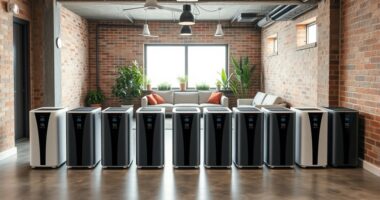
Choosing an air purifier for a garage depends on what you do there: a unit that handles everyday dust may not keep up with sanding, exhaust, or solvent fumes. I rank the MOOKA PR1 first for its large stated coverage, washable pre-filter, and PM2.5 display; the KNKA APH4000 is a stronger fit when its listed CADR and dual-filter design matter most; and the smaller Levoit Core 300-P suits a compact, enclosed work area where independently verified performance is a priority. The tradeoff is between airflow and room size, convenience features, and how well the purifier addresses the specific pollutants your garage produces. These are room air cleaners, so I would not treat any of them as a replacement for ventilation or source control around vehicle exhaust, fumes, or heavy dust.

Get garden gear delivered free with Prime
- Fast, free delivery on millions of items
- Prime Video, Amazon Music and more included
- Member-only deals all year
Complete the kit


Key Takeaways
- The MOOKA PR1 combines the largest stated coverage here, a washable pre-filter, and a live PM2.5 display; check its 3–6 month filter schedule and clean its sensor.
- The KNKA APH4000 lists a 226 CFM smoke/dust/PM2.5 CADR and a 244 CFM pollen CADR, making its airflow figures easier to compare than coverage claims alone.
- The Levoit Core 300-P is the compact pick with AHAM VERIFIDE performance data, but its listed 222 ft² room rating is modest for a typical garage.
- The second MOOKA model shares a 2,200 ft² coverage claim and adds a 20 dB sleep mode, while offering fewer fan speeds than the PR1.
- None of the listed specifications establish protection from carbon monoxide or prove removal of every garage chemical vapor; use appropriate ventilation and source controls.
| MOOKA PR1 Air Purifier for Home Large Room up to 2200 sq.ft with Washable Filter, PM 2.5 Display & Air Quality Sensor (White) |  | Best Overall for Large Garages | Coverage claim: Up to 2,200 sq. ft. | Filtration: Four-stage HEPA filtration with washable pre-filter | Fan modes: Six, including Sleep, Auto, and Pet | VIEW ON AMAZON | See Our Full Breakdown |
| KNKA APH4000 Air Purifier for Home, Black |  | Best for Airflow Data | Coverage claim: 1,695 sq. ft. per hour | Air changes: 4.8 per hour in rooms up to 350 sq. ft. | CADR: 226 CFM smoke/dust/PM2.5; 244 CFM pollen | VIEW ON AMAZON | See Our Full Breakdown |
| MOOKA Air Purifier for Large Rooms, White |  | Best Quiet Large-Room Pick | Coverage claim: Up to 2,200 sq. ft. | Filtration: Three-stage with washable pre-filter and HEPA filter | Fan speeds: Four | VIEW ON AMAZON | See Our Full Breakdown |
| Levoit Core 300-P Air Purifier for Home, Bedroom, and Office |  | Best Verified Compact Pick | Power: 56 W | CADR: 143 CFM smoke; 153 CFM dust; 167 CFM pollen | Coverage: 222 sq. ft. at 4.8 air changes/hour; 1,073 sq. ft. at 1 air change/hour | VIEW ON AMAZON | See Our Full Breakdown |
| VOOPNU Air Purifier for Home, High Efficiency Filter Up to 1076 Ft², White |  | Best Compact Placement Pick | Coverage claim: Up to 1,076 sq. ft. | Dimensions: 6.69 × 6.69 × 9.84 inches | Filtration: Triple-layer, 360-degree intake; 99.97% filtration claim | VIEW ON AMAZON | See Our Full Breakdown |
| air purifier for garage | Coverage claim | Filtration | Sleep noise |
|---|---|---|---|
| MOOKA PR1 Air Purifier for Hom | Up to 2,200 sq. ft. | Four-stage HEPA filtration with washable pre-filter | — |
| KNKA APH4000 Air Purifier for | 1,695 sq. ft. per hour | Dual three-stage cartridges with washable pre-filter and activated carbon | 22–24 dB |
| MOOKA Air Purifier for Large R | Up to 2,200 sq. ft. | Three-stage with washable pre-filter and HEPA filter | As low as 20 dB |
| Levoit Core 300-P Air Purifier | — | — | 24 dB |
| VOOPNU Air Purifier for Home | Up to 1,076 sq. ft. | Triple-layer, 360-degree intake; 99.97% filtration claim | — |
More Details on Our Top Picks
MOOKA PR1 Air Purifier for Home Large Room up to 2200 sq.ft with Washable Filter, PM 2.5 Display & Air Quality Sensor (White)
The MOOKA PR1 takes the top spot because its stated coverage reaches 2,200 sq. ft. and it combines a washable pre-filter with a PM2.5 display and auto mode. That mix is useful in a garage where dust levels can shift during cleanup or light projects: the pre-filter can catch larger debris, and the sensor gives a visible particle reading. Its Pet Mode and six fan settings add flexibility that the four-speed MOOKA model lacks.
Compared with the KNKA APH4000, the PR1 offers broader stated coverage but the KNKA supplies explicit CADR figures, which make airflow comparison more concrete. The PR1’s 26 dB sleep mode is quiet for an adjacent living area, though low noise is less relevant during noisy work. Its main tradeoffs are filter changes every 3–6 months and sensor upkeep; clean the sensor to maintain readings. The one-minute startup indicator flash may also puzzle a new owner. I would choose it for general particle management, not as a solution for exhaust or chemical vapors.
Pros:- Stated coverage up to 2,200 sq. ft.
- Washable pre-filter helps intercept larger debris.
- PM2.5 display and auto fan adjustment.
- Six modes, including Pet Mode and a 26 dB sleep setting.
Cons:- Main filters need replacement every 3–6 months.
- Sensor requires regular cleaning, and the startup indicator flash may confuse users.
Best for: Garage owners who want broad stated coverage, particle monitoring, and auto operation for everyday dust and pet-related particles.
Not ideal for: People who need documented high CADR for a demanding workshop or need protection from carbon monoxide, exhaust, or chemical gases.
- Coverage claim:Up to 2,200 sq. ft.
- Filtration:Four-stage HEPA filtration with washable pre-filter
- Fan modes:Six, including Sleep, Auto, and Pet
- Noise:As low as 26 dB in Sleep mode
- Monitoring:PM2.5 sensor and real-time display
- Filter interval:Every 3–6 months
- Certifications:CARB, ETL, DOE, FCC; described as having no ozone release
Our verdict“I recommend the PR1 as the most versatile large-coverage pick here, provided its coverage claim suits the space and the garage has separate ventilation for fumes.”
KNKA APH4000 Air Purifier for Home, Black
The KNKA APH4000 ranks second, and could be the better choice when you want airflow figures to compare against a work area. Its listed CADR is 226 CFM for smoke, dust, and PM2.5 and 244 CFM for pollen; it also lists four air changes per hour in rooms up to 350 sq. ft. Those numbers offer a more useful reference than a large coverage claim alone, although they still do not establish performance in every garage layout.
Its dual-intake, dual-filter design and PET, ECO, Sleep, and Auto modes make it more workshop-oriented on paper than the compact Levoit, which is rated for a much smaller frequently refreshed room. Sleep noise is listed at 22–24 dB, but busy workspaces often call for airflow over quiet operation. The APH4000’s disadvantages are recurring filter replacement every 3–6 months and the need to remove the protective plastic from filters before installation. I place it below the PR1 because the PR1 pairs a similar large-space pitch with a washable pre-filter and six modes, while KNKA’s strongest advantage is its stated CADR.
Pros:- Listed CADR of 226 CFM for smoke, dust, and PM2.5.
- Dual three-stage filter cartridges and dual-intake airflow.
- PET, ECO, Auto, and Sleep modes.
- Low listed Sleep mode noise of 22–24 dB.
Cons:- Filters require replacement every 3–6 months.
- Protective plastic must be removed from the filters before use.
Best for: Buyers who want listed CADR values, dual filters, and a particle-focused purifier for a defined workshop zone.
Not ideal for: Anyone choosing solely by its 1,695 sq. ft. maximum claim, or seeking a purifier with a longer stated filter interval.
- Coverage claim:1,695 sq. ft. per hour
- Air changes:4.8 per hour in rooms up to 350 sq. ft.
- CADR:226 CFM smoke/dust/PM2.5; 244 CFM pollen
- Filtration:Dual three-stage cartridges with washable pre-filter and activated carbon
- Modes:PET, ECO, Sleep, and Auto
- Sleep noise:22–24 dB
- Filter interval:Every 3–6 months
Our verdict“I would pick the APH4000 over the broader-claim MOOKA models when listed CADR is the deciding factor and the garage’s working zone is well defined.”
MOOKA Air Purifier for Large Rooms, White
This MOOKA Large Rooms model shares the PR1’s stated 2,200 sq. ft. coverage, but its distinguishing feature is a sleep setting listed as low as 20 dB. That makes it the more appealing of the two MOOKA units if the garage connects to a home office or quiet room and the purifier will run for long periods. It has a washable pre-filter, a PM2.5 sensor, and auto mode, so its basic maintenance and monitoring package remains useful for ordinary airborne particles.
Compared with the PR1, this model has four fan speeds instead of six and a simpler three-stage filtration description. It still includes a timer, child lock, filter reminder, and aroma pad, though essential oil is not included. Its stated 0.63 kWh consumption applies to maximum speed over 24 hours, not every setting. The information provided does not include CADR, so I would favor the KNKA if measured airflow data is central to the choice. The large coverage claim should not be read as proof that it can clear an entire garage quickly.
Pros:- Stated coverage up to 2,200 sq. ft.
- Washable pre-filter and PM2.5 display with Auto mode.
- Sleep mode listed as low as 20 dB.
- Timer, child lock, and filter reminder.
Cons:- Only four fan speeds; the supplied details do not give CADR.
- Replacement filters are separate, and the aroma pad does not include oil.
Best for: People who value low noise and auto particle monitoring in a large adjacent space or a garage used for light, non-fume-generating tasks.
Not ideal for: Workshop users who need published CADR figures, frequent speed adjustments, or a dedicated solution for exhaust and chemical vapors.
- Coverage claim:Up to 2,200 sq. ft.
- Filtration:Three-stage with washable pre-filter and HEPA filter
- Fan speeds:Four
- Monitoring:PM2.5 sensor, digital display, and Auto mode
- Sleep noise:As low as 20 dB
- Timer:2, 4, 6, or 8 hours
- Maximum-speed energy figure:0.63 kWh running at maximum speed for 24 hours
Our verdict“I would choose this MOOKA over the PR1 when its quieter sleep setting matters more than extra fan modes or a more detailed filtration description.”
Levoit Core 300-P Air Purifier for Home, Bedroom, and Office
The Levoit Core 300-P is the compact, data-forward option in this lineup. Its AHAM VERIFIDE designation and smoke, dust, and pollen CADR figures make its performance easier to compare than models described mainly through maximum coverage. It is rated to refresh a 222 sq. ft. room 4.8 times per hour, so I would reserve it for a small enclosed garage bay, a workshop corner, or a nearby room rather than expect it to serve a broad garage.
Against the VOOPNU, the Levoit has a more clearly stated frequent-refresh room size and separate CADR values, while VOOPNU claims coverage to 1,076 sq. ft. at a lower refresh detail. The Core 300-P’s 24 dB Sleep mode, display-off option, and timer suit spaces where noise and light matter. Its key limitation is scale: the 1,073 sq. ft. figure corresponds to only one air change per hour. It is also specified for 120V use in the United States, and genuine replacement filters are recommended. That makes it a credible small-space pick, not my first choice for an open garage.
Pros:- AHAM VERIFIDE with separate smoke, dust, and pollen CADR values.
- Rated for 4.8 air changes per hour in 222 sq. ft.
- Quiet 24 dB Sleep mode and display-off option.
- Timer offers 2, 4, 6, or 8 hours.
Cons:- Frequent-refresh rating covers only 222 sq. ft.
- Specified for 120V US use; genuine replacement filters are recommended.
Best for: A buyer with a small, enclosed garage area who values independently verified room performance and clear CADR figures.
Not ideal for: Anyone trying to clean a large or open garage with one unit, or using power outside the stated 120V US specification.
- Power:56 W
- CADR:143 CFM smoke; 153 CFM dust; 167 CFM pollen
- Coverage:222 sq. ft. at 4.8 air changes/hour; 1,073 sq. ft. at 1 air change/hour
- Filtration claim:99.97% for 0.1–0.3 μm particles
- Sleep noise:24 dB
- Timer:2, 4, 6, or 8 hours
- Voltage and certification:120V US; AHAM VERIFIDE, FCC, ETL, CARB compliant
Our verdict“I recommend the Core 300-P for a compact, enclosed garage zone where performance data matters more than broad coverage.”
VOOPNU Air Purifier for Home, High Efficiency Filter Up to 1076 Ft², White
The VOOPNU purifier is the smallest unit listed, measuring 6.69 by 6.69 by 9.84 inches, which makes it easy to place on a shelf or tuck beside a workbench. Its 360-degree intake and one-tap controls favor simple operation. The stated cleaning rate of 250 sq. ft. every 15 minutes gives a more concrete reference point than its maximum 1,076 sq. ft. coverage claim, though neither figure alone tells me how it will perform in a garage with obstacles or ongoing dust generation.
Compared with the Levoit, VOOPNU is physically smaller and claims wider coverage, while Levoit provides AHAM VERIFIDE status and separate CADR values. VOOPNU’s 22 dB noise claim and essential oil tray may suit a quiet corner, but the scent feature does not improve pollutant removal. The provided description does not specify a CADR or filter replacement interval, and it recommends continuous operation, which can add electricity use. I rank it fifth because the garage-specific buying case is less well supported by airflow data than the APH4000 or Core 300-P.
Pros:- Compact 6.69 × 6.69 × 9.84-inch body.
- 360-degree intake and simplified one-tap controls.
- Listed cleaning rate of 250 sq. ft. every 15 minutes.
- Low listed noise of 22 dB.
Cons:- No CADR or filter replacement interval is supplied in the product details.
- Recommended continuous use may increase electricity consumption; genuine filters are advised.
Best for: Someone with a small garage corner or bench area who needs a tiny footprint and simple controls for general particle filtration.
Not ideal for: Large-garage owners, buyers who want published CADR data, or anyone relying on fragrance or an air purifier to address fumes.
- Coverage claim:Up to 1,076 sq. ft.
- Dimensions:6.69 × 6.69 × 9.84 inches
- Filtration:Triple-layer, 360-degree intake; 99.97% filtration claim
- Cleaning rate:250 sq. ft. every 15 minutes, described as lab tested
- Noise:As low as 22 dB
- Controls:One-tap operation and essential oil tray
- Certifications:DOE, ETL, FCC, CARB, CE, ROHS
Our verdict“I would choose VOOPNU when compact placement is the main constraint, but its limited airflow detail keeps it behind the more measurable alternatives.”

How We Picked
I ranked these five around the needs that separate garage use from ordinary bedroom or living-room use: stated coverage and airflow, filtration and pre-filter maintenance, and practical controls for changing conditions. A garage can be much larger than the room sizes where quiet home purifiers are usually most useful, and airborne contaminants vary widely between a dusty storage space and a workshop with exhaust or chemical fumes. I therefore give more weight to the KNKA’s listed CADR and the larger coverage claims than to low noise figures alone.
I also compared each model’s monitoring and upkeep. A washable pre-filter can catch larger debris before it reaches the main filter, while an air-quality sensor or display helps show changes in measured particles. Those conveniences do not eliminate filter replacements, and a PM2.5 reading does not identify gases or every hazard. Where the supplied details do not specify a CADR or a pollutant-specific gas rating, I avoid treating broad coverage or filtration claims as a guarantee of garage performance. The ranking favors versatility for a range of garages, then more specialized strengths such as independently verified room performance or compact placement.
| air purifier for garage | Filtration |
|---|---|
| MOOKA PR1 Air Purifier for Hom | Four-stage HEPA filtration with washable pre-filter |
| KNKA APH4000 Air Purifier for | Dual three-stage cartridges with washable pre-filter and activated carbon |
| MOOKA Air Purifier for Large R | Three-stage with washable pre-filter and HEPA filter |
| Levoit Core 300-P Air Purifier | — |
| VOOPNU Air Purifier for Home | Triple-layer, 360-degree intake; 99.97% filtration claim |
Factors to Consider When Choosing Air Purifier For Garage
I would start with the garage’s size and source of pollution, then compare airflow and upkeep. A purifier can reduce airborne particles in a room, but garage conditions vary and a unit’s coverage claim does not guarantee fast cleaning in an open space.
Match airflow to the usable area
Check CADR and the area at which the purifier can provide several air changes per hour. The KNKA lists 226 CFM for smoke, dust, and PM2.5 and specifies 4.8 changes per hour up to 350 sq. ft. The Levoit gives separate CADR values and a 222 sq. ft. room rating at the same refresh rate. By comparison, both MOOKA products state coverage up to 2,200 sq. ft. without a CADR in the supplied specifications. Treat maximum coverage as a broad sizing claim; a large or open garage may need multiple units or mechanical ventilation.
Identify the pollutant first
Washable pre-filters on the MOOKA and KNKA models can catch larger debris such as hair and some workshop dust before it reaches the main filter. HEPA-style filtration targets airborne particles, while activated carbon can help with some odors. The supplied details do not establish removal rates for particular garage gases or solvents. Do not use a room purifier as a substitute for ventilation, dust extraction, safe storage, or source control when working with exhaust, paints, cleaners, or fuels.
Treat sensors as particle information
The PR1 and second MOOKA include PM2.5 displays and automatic operation; the KNKA also provides a real-time air-quality display. These features can show changes in measured particles and adjust a fan, which is convenient when conditions fluctuate. They do not identify every pollutant or signal carbon monoxide safety. Keep sensor areas clean as directed, and use a dedicated detector where a garage hazard calls for one.
Plan for filter upkeep and placement
The PR1 and KNKA specify filter replacement every 3–6 months, so ongoing filter access matters. The second MOOKA has a 2,000-hour reminder, while the supplied VOOPNU details do not specify an interval. Place an intake and outlet where stored items will not block circulation; avoid putting the unit directly in heavy dust or where water, impact, or debris can reach it. A washable pre-filter reduces some maintenance burden, but it does not remove the need to replace the main filter.
Use noise and controls as tie-breakers
For a garage connected to living space, quieter operation may matter: the second MOOKA lists 20 dB, VOOPNU 22 dB, KNKA 22–24 dB, Levoit 24 dB, and PR1 26 dB in their respective low-noise settings. Garage work often masks these differences, so I would prioritize airflow and filter fit first. Timers, auto modes, and display controls add convenience; they do not change which particle types the filter captures.
Frequently Asked Questions
Can an air purifier remove car exhaust from a garage?
A room air purifier should not be relied on to make vehicle exhaust safe. The listed models focus on airborne particles, and their supplied specifications do not establish protection from carbon monoxide or all exhaust gases. Do not run a vehicle in an enclosed garage; use appropriate ventilation and a carbon monoxide detector where applicable.
Which of these purifiers suits a large garage best?
The MOOKA PR1 and the second MOOKA both claim coverage up to 2,200 sq. ft. The PR1 adds six fan modes, Pet Mode, and a washable pre-filter; the second model has a quieter 20 dB sleep setting. The KNKA provides explicit CADR figures, which can be more useful for sizing a working zone. Confirm room size and airflow needs rather than relying on a maximum coverage number alone.
Is a washable pre-filter useful in a workshop?
It can catch larger particles such as hair and coarse dust before they reach the main filter, which can make routine upkeep easier. The MOOKA models and KNKA include washable pre-filters. Follow the manufacturer’s cleaning and drying directions, and keep using the main filter as specified; a washable pre-filter does not capture every fine particle or vapor.
Does a PM2.5 display tell me whether garage air is safe?
No. A PM2.5 display reports a particle measurement, not a complete inventory of garage pollutants. The PR1 and second MOOKA provide this type of display, and KNKA lists a real-time air-quality display. Such readings can help track particulate changes, but they do not establish carbon monoxide or chemical vapor safety.
How often do I need to replace the filters?
The PR1 and KNKA list a replacement interval of every 3–6 months. The second MOOKA gives a reminder after 2,000 hours, while the supplied information for the Levoit and VOOPNU does not give a specific interval. Actual timing depends on conditions and use, so check each manufacturer’s instructions and the filter indicator where available.
Conclusion
For a large garage used for general particle control, I would start with the MOOKA PR1 for its coverage claim, washable pre-filter, and auto monitoring. Choose the KNKA APH4000 if published CADR values are your main comparison point, or the second MOOKA if low noise matters near living space. For a small enclosed bay, the Levoit Core 300-P offers the clearest verified room-performance data; the VOOPNU fits when a compact footprint matters most. Whichever model you choose, match it to the space and pollutant, and use ventilation and source controls for garage fumes.
Halloween Picks

HOPOCO Halloween Pumpkin Fog Machine with 12 LED Colors and 4 Light Modes

Gemmy 6.4 ft Beetlejuice Animatronic Halloween Decoration with Spinning Head

Haunted Hill Farm 4.6-Ft. Spinning Beatrix Halloween Animatronic
As an affiliate, we earn on qualifying purchases.