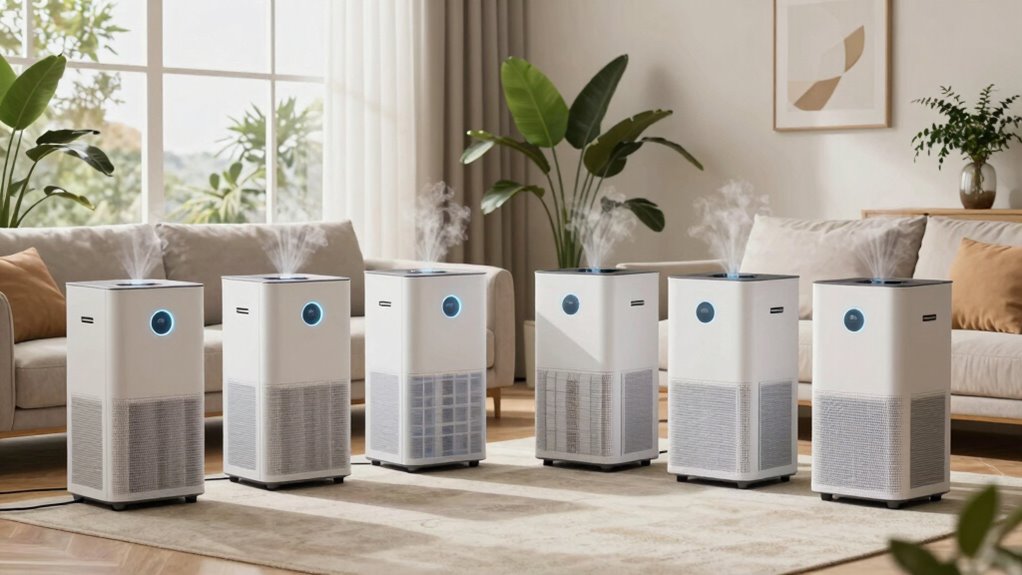

For a medical-grade air purifier for asthma, my best overall pick is the AirDoctor AD5500 for its combination of high-capacity filtration and large-room coverage. The IQAir HealthPro Plus XE stands out for buyers prioritizing advanced particle filtration, while the Levoit Core 300-P is a simpler, more compact option for a smaller room. The main tradeoffs are coverage, filtration design, noise, and ongoing filter costs; a purifier’s label alone cannot predict how well it will fit your space. Air purifiers can reduce airborne particles but do not replace asthma medication or clinical advice. Read on for the full comparison and guidance on matching a model to your room and routine.

Get garden gear delivered free with Prime
- Fast, free delivery on millions of items
- Prime Video, Amazon Music and more included
- Member-only deals all year
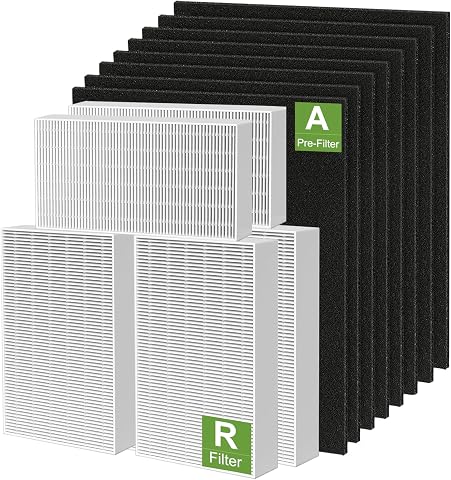
Complete the kit


Key Takeaways
- The AirDoctor AD5500 ranks first for broad room coverage: its high-capacity design makes it a stronger whole-home or extra-large-room candidate than the smaller Levoit Core 300-P.
- IQAir and AirDoctor take different routes to premium filtration: the HealthPro Plus XE emphasizes HyperHEPA filtration and connected controls, while the AD5500 pairs UltraHEPA filtration with carbon filtration.
- The Levoit Core 300-P favors simplicity and smaller spaces: it is easier to place than the large-room models, but its scale makes it a poor substitute when one unit must clean a broad area.
- The two AirDoctor models serve different coverage needs: the AD5500 is the more suitable pick for very large spaces, while the AD3500 is the more restrained choice for buyers who want AirDoctor filtration without the largest footprint.
- Added features do not replace room matching: GermGuardian’s UV-C and the iAdaptAir 2.0’s H13 HEPA filtration may appeal for specific preferences, but actual room fit, filter upkeep, and operating noise should guide the final choice.
| AirDoctor AD5500 Air Purifier for Whole Home and Extra Large Rooms, UltraHEPA and Carbon Filtration |  | Best for Whole-Home Coverage | Model: AD5500 | Coverage: Up to 4,172 ft² in one hour | Rapid cleaning coverage: 1,043 ft² in 15 minutes | VIEW ON AMAZON | See Our Full Breakdown |
| GermGuardian 22″ Tower HEPA Air Purifier with UV-C Light (AC4825E) |  | Best for a Small Bedroom | Model: AC4825E | Height: 22 inches | Filtration: True HEPA with activated-carbon pre-filter | VIEW ON AMAZON | See Our Full Breakdown |
| Levoit Core 300-P Air Purifier |  | Best for Quiet Bedroom Use | Model: Core 300-P | Motor power: 56 W | Smoke CADR: 143 CFM | VIEW ON AMAZON | See Our Full Breakdown |
| Air Oasis iAdaptAir 2.0 H13 HEPA Air Purifier |  | Best for Connected Controls | CADR: 530 CFM | Coverage: 795 ft² at 5 air exchanges per hour; up to 3,975 ft² per hour | Filtration: Five-stage: H13 HEPA, carbon, silver ion screen, bipolar ionization, and UV light | VIEW ON AMAZON | See Our Full Breakdown |
| AirDoctor AD3500 Air Purifier |  | Best for Large Rooms Without Whole-Home Scale | Model: AD3500 | Room coverage: 630 ft² in 15 minutes; up to 2,520 ft² in one hour | Filtration: Pre-filter, premium activated carbon filter, and UltraHEPA filter | VIEW ON AMAZON | See Our Full Breakdown |
| IQAir HealthPro Plus XE Air Purifier with HyperHEPA Filtration and WiFi |  | Best for Fine-Particle Filtration | Coverage area: Up to 1,125 sq ft | Filtration efficiency: 99.995% of airborne particles | Smallest stated particle size: Down to 0.003 microns | VIEW ON AMAZON | See Our Full Breakdown |
| medical grade air purifier for asthma | Model | Filtration | Filtration efficiency | Room coverage |
|---|---|---|---|---|
| AirDoctor AD5500 Air Purifier | AD5500 | Pre-filter, premium activated carbon filter, and UltraHEPA filter | — | — |
| GermGuardian 22" Tower HEPA Ai | AC4825E | True HEPA with activated-carbon pre-filter | 99.97% of particles as small as 0.1 microns | 153 ft² every 12.5 minutes; up to 743 ft² per hour |
| Levoit Core 300-P Air Purifier | Core 300-P | — | 99.97% for 0.1–0.3 μm airborne particles | 222 ft² refreshed 4.8 times per hour; 1,073 ft² refreshed once per hour |
| Air Oasis iAdaptAir 2.0 H13 HE | — | Five-stage: H13 HEPA, carbon, silver ion screen, bipolar ionization, and UV light | — | — |
| AirDoctor AD3500 Air Purifier | AD3500 | Pre-filter, premium activated carbon filter, and UltraHEPA filter | — | 630 ft² in 15 minutes; up to 2,520 ft² in one hour |
| IQAir HealthPro Plus XE Air Pu | — | — | 99.995% of airborne particles | — |
More Details on Our Top Picks
AirDoctor AD5500 Air Purifier for Whole Home and Extra Large Rooms, UltraHEPA and Carbon Filtration
For asthma households trying to clean air across a large shared area, I rank the AirDoctor AD5500 first for its unusually broad stated coverage and particle filtration. Its UltraHEPA filter is rated to capture 99.99% of airborne particles at 0.003 microns, while activated carbon and potassium permanganate also target odors and gases—a wider filtration brief than the smaller-room GermGuardian AC4825E. PM2.5 sensing and Auto Mode can adjust operation as readings change, so the unit does not rely solely on a manually chosen speed. The tradeoff is scale: this may be more purifier than a bedroom or compact apartment needs, and its specified filter replacement schedule adds ongoing upkeep. I would choose it over the AD3500 when broad coverage matters more than a smaller footprint.
Pros:- Stated coverage reaches up to 4,172 ft² in one hour.
- UltraHEPA filtration is rated to capture 99.99% of particles at 0.003 microns.
- Activated carbon and potassium permanganate target odors and gases as well as particles.
- PM2.5 sensing, Auto Mode, and a color-coded display support automatic air-quality response.
Cons:- Its large-area capacity may be unnecessary for smaller rooms.
- The carbon and UltraHEPA filters have scheduled replacement intervals, creating ongoing maintenance.
- Genuine AirDoctor replacement filters are recommended.
Best for: Households with asthma that need one purifier for a very large open-plan living area or connected common spaces.
Not ideal for: People purifying a single small bedroom, or buyers who want to minimize the size of the unit and scheduled filter replacements.
- Model:AD5500
- Coverage:Up to 4,172 ft² in one hour
- Rapid cleaning coverage:1,043 ft² in 15 minutes
- Filtration:Pre-filter, premium activated carbon filter, and UltraHEPA filter
- Particle capture:99.99% at 0.003 microns
- Air-quality monitoring:PM2.5 sensors with Halo color-coded display
- Fan speeds:6
- Filter replacement:Carbon filter every 6 months; UltraHEPA filter every 12 months
Our verdict“Choose the AD5500 when broad coverage and ultrafine-particle filtration matter more than a compact size or simpler filter upkeep.”
GermGuardian 22″ Tower HEPA Air Purifier with UV-C Light (AC4825E)
I see the GermGuardian AC4825E as a straightforward choice for a smaller bedroom, where its True HEPA filter and sleep mode are more relevant than the huge coverage claims of the AirDoctor AD5500. It is rated to capture 99.97% of particles as small as 0.1 microns, and the activated-carbon pre-filter can help with common household odors. The 153 ft² room figure—circulated every 12.5 minutes—gives a more useful benchmark for regular room cleaning than its larger hourly coverage figure. Three fan speeds include a sleep setting, and its CARB, ETL, and Zero Ozone credentials offer helpful product details. The tradeoff is limited rapid-cleaning reach compared with the Levoit Core 300-P’s stated 222 ft² refreshed 4.8 times per hour; the optional UV-C bulb also brings another replacement item.
Pros:- True HEPA filtration is rated at 99.97% for particles as small as 0.1 microns.
- Activated-carbon pre-filter targets pet and cooking odors.
- Three fan speeds include a sleep mode for nighttime operation.
- CARB certified, ETL certified, and Zero Ozone verified.
Cons:- The stated room size for frequent circulation is limited to 153 ft².
- The optional UV-C bulb is an additional replacement component.
- Replacement filters and bulbs require ongoing upkeep.
Best for: Asthma sufferers seeking a tower-style purifier for a small bedroom, with a sleep mode and HEPA filtration.
Not ideal for: People who need fast air turnover in a large room or want to avoid maintaining both a filter and an optional UV-C bulb.
- Model:AC4825E
- Height:22 inches
- Filtration:True HEPA with activated-carbon pre-filter
- Filtration efficiency:99.97% of particles as small as 0.1 microns
- Room coverage:153 ft² every 12.5 minutes; up to 743 ft² per hour
- Fan speeds:3, including sleep mode
- UV-C light:Optional
- Certifications:CARB certified, ETL certified, and Zero Ozone verified
Our verdict“Pick the AC4825E for a smaller bedroom and simple HEPA-focused filtration, but choose a higher-capacity model for a larger space.”
Levoit Core 300-P Air Purifier
For a bedroom where nighttime noise and manageable room size guide the choice, the Levoit Core 300-P has a clearer fit than the high-capacity AirDoctor AD3500. Its Sleep Mode is rated as low as 24 dB, and the display can be switched off, reducing light and sound distractions while the purifier runs. The stated room performance—222 ft² refreshed 4.8 times per hour—offers a practical match for many individual rooms, while its smoke, dust, and pollen CADR figures help distinguish its airflow ratings. Levoit lists 99.97% filtration efficiency for 0.1–0.3 μm particles. That makes it a compact-room option, not a substitute for the broad coverage of the AD3500 or AD5500. The supplied details do not specify carbon filtration, so buyers focused on odors and gases should compare its filter configuration before choosing.
Pros:- Sleep Mode noise is rated as low as 24 dB.
- Room coverage is stated as 222 ft² refreshed 4.8 times per hour.
- Display lights can be turned off, and the unit has a check-filter indicator.
- AHAM Verified, FCC Certified, ETL Listed, and CARB Compliant.
Cons:- Its stated frequent-cleaning room size is much smaller than the AirDoctor AD3500’s coverage.
- The provided product data does not specify activated-carbon filtration for odors and gases.
- The 120V model is specified for use in the United States, and official replacement filters are recommended.
Best for: People with asthma who want a quiet purifier for a bedroom up to the stated 222 ft² room size and prefer a dark, low-noise sleep setting.
Not ideal for: Households needing whole-home coverage, or buyers who specifically want documented activated-carbon filtration for odors and gases.
- Model:Core 300-P
- Motor power:56 W
- Smoke CADR:143 CFM
- Dust CADR:153 CFM
- Pollen CADR:167 CFM
- Room coverage:222 ft² refreshed 4.8 times per hour; 1,073 ft² refreshed once per hour
- Filtration efficiency:99.97% for 0.1–0.3 μm airborne particles
- Sleep Mode noise:24 dB
- Timer:2, 4, 6, or 8 hours
Our verdict“Choose the Core 300-P for quiet, focused bedroom cleaning, not for large-room coverage or a clearly specified gas-filtration setup.”
Air Oasis iAdaptAir 2.0 H13 HEPA Air Purifier
The Air Oasis iAdaptAir 2.0 stands apart from the lineup through its combination of broad stated coverage and Wi-Fi scheduling. Its CADR is listed at 530 CFM, with coverage of 795 ft² at five air exchanges per hour—a more informative asthma-focused benchmark than its 3,975 ft² per-hour figure alone. The five-stage system includes H13 HEPA and carbon filtration alongside a silver ion screen, bipolar ionization, and UV light. Compared with the AirDoctor AD5500, it offers app-connected scheduling and a stated filter life of up to two years, but its listed smallest particle size is 0.05 microns rather than 0.003 microns. The added treatment stages and coverage figures are based on manufacturer-described testing and claims, so I would weigh the documented room exchange rate and controls more heavily than broad pollutant-reduction promises.
Pros:- CADR is listed at 530 CFM, with stated coverage of 795 ft² at five air exchanges per hour.
- H13 HEPA and carbon filtration are part of a five-stage system.
- Wi-Fi controls support schedules and filter-life monitoring.
- Digital particle-count monitoring can trigger automatic fan-speed adjustment.
Cons:- Its listed smallest particle size is 0.05 microns, larger than the 0.003-micron figure stated for the AirDoctor AD5500.
- The five-stage system includes several technologies beyond HEPA and carbon, which may not suit buyers seeking a simpler setup.
- Broad coverage and pollutant-reduction statements rely on stated claims and laboratory testing.
Best for: People with asthma who want scheduled Wi-Fi control, air-quality monitoring, and a purifier sized for a large room at five air exchanges per hour.
Not ideal for: Buyers who prefer a simpler HEPA-and-carbon system, or who want particle-capture specifications matching the 0.003-micron claim of the AirDoctor models.
- CADR:530 CFM
- Coverage:795 ft² at 5 air exchanges per hour; up to 3,975 ft² per hour
- Filtration:Five-stage: H13 HEPA, carbon, silver ion screen, bipolar ionization, and UV light
- Smallest particle size:0.05 microns
- Filter life:Up to 2 years between changes
- Controls:Wi-Fi enabled with schedules and filter-life monitoring
- Air-quality sensor:Digital particle count with green, orange, and red indicator lights
- Wi-Fi chip:Removable
Our verdict“Choose the iAdaptAir 2.0 if app scheduling and large-room air exchange matter more to you than the AirDoctor models’ smaller stated particle-capture size.”
AirDoctor AD3500 Air Purifier
I place the AirDoctor AD3500 between compact bedroom purifiers and the whole-home AD5500: it is intended for substantial room coverage without the larger model’s full reach. Its stated capacity is 630 ft² in 15 minutes, with coverage up to 2,520 ft² in one hour, and its UltraHEPA filter is rated to capture 99.99% of airborne particles at 0.003 microns. Activated carbon adds a layer aimed at odors and gases, while PM2.5 monitoring and Auto Mode can respond to changing readings. Compared with the AD5500, this is the more restrained AirDoctor option; compared with the Levoit Core 300-P, it is designed for much larger spaces. The tradeoff is scheduled filter replacement, and the product data recommends genuine AirDoctor filters. I would match it to a large room rather than interpret the hourly figure as a single-room frequent-cleaning rating.
Pros:- Stated coverage is 630 ft² in 15 minutes and up to 2,520 ft² in one hour.
- UltraHEPA filtration is rated to capture 99.99% of particles at 0.003 microns.
- Activated carbon filtration targets odors and gases alongside particles.
- PM2.5 sensors, Auto Mode, and a color-coded display help respond to changing air readings.
Cons:- Its stated coverage is below the AirDoctor AD5500’s whole-home-scale figure.
- The carbon and UltraHEPA filters have separate scheduled replacement intervals.
- The manufacturer recommends genuine AirDoctor replacement filters.
Best for: Asthma households that need a large-room purifier with automatic PM2.5 response but do not need the AD5500’s broader stated coverage.
Not ideal for: People purifying a small bedroom, or buyers seeking to avoid recurring filter replacement and brand-specific replacement recommendations.
- Model:AD3500
- Room coverage:630 ft² in 15 minutes; up to 2,520 ft² in one hour
- Filtration:Pre-filter, premium activated carbon filter, and UltraHEPA filter
- Particle capture:99.99% at 0.003 microns
- Controls:Auto Mode, 4 fan speeds, timer, and filter indicator
- Air-quality monitoring:PM2.5 sensors with color-coded display
- Filter replacement:Carbon filter every 6 months; UltraHEPA filter every 12 months
- Eligibility:FSA and HSA eligible
Our verdict“Pick the AD3500 for large-room cleaning and automatic air monitoring when the AD5500’s broader stated capacity would be more than you need.”
IQAir HealthPro Plus XE Air Purifier with HyperHEPA Filtration and WiFi
I’d rank the HealthPro Plus XE for asthma households prioritizing fine-particle capture across a large room. Its stated filtration efficiency is 99.995% down to 0.003 microns, and coverage reaches up to 1,125 sq ft, making it a different kind of pick from the compact Levoit Core 300-P. The AirVisual app and automatic modes add remote control and sensor-led adjustments, which can help owners monitor changing air conditions without manually changing settings.
The tradeoff is that the supplied details do not establish the noise level, filter replacement schedule, or confirmed warranty terms. The listed 10-year limited warranty may apply, but I’d verify it with the manufacturer before buying. Compared with the GermGuardian tower, this IQAir is aimed at larger spaces and finer particle capture, but shoppers seeking a simpler unit may not need its app features or broad coverage.
Pros:- Rated to capture 99.995% of airborne particles down to 0.003 microns
- Coverage specified for spaces up to 1,125 sq ft
- AirVisual app supports remote control and air-quality monitoring
- Three automatic modes adjust filtration using sensor readings
Cons:- Warranty duration and coverage require confirmation with the manufacturer
- The supplied product details do not specify noise levels or filter replacement intervals
- Its large-room capacity and connected controls may be unnecessary for smaller spaces
Best for: People with asthma who want fine-particle filtration and app-based air monitoring in a large shared living area.
Not ideal for: Buyers furnishing a small bedroom or seeking a basic, compact purifier; its stated coverage and connected features may exceed their needs, and warranty terms need confirmation.
- Coverage area:Up to 1,125 sq ft
- Filtration efficiency:99.995% of airborne particles
- Smallest stated particle size:Down to 0.003 microns
- Connectivity:WiFi; IQAir AirVisual app
- Automatic modes:3
- Energy efficiency:Up to 3 times more energy-efficient than predecessors
- Manufactured in:Switzerland
- Warranty:May be backed by a 10-year limited warranty; confirm details with the manufacturer
Our verdict“Choose the HealthPro Plus XE if fine-particle capture, large-room coverage, and app monitoring matter more than a simpler setup.”

How We Picked
I ranked these six models around the needs that matter most for asthma-focused particle reduction: filtration design, suitable room coverage, day-to-day usability, and maintenance. I also weighed how clearly each purifier’s strengths match a real buyer need, from a compact bedroom unit to a larger shared space. Because product claims and room ratings can depend on test conditions, I treated coverage as a matching guide rather than a promise of clinical benefit.
The AirDoctor AD5500 ranks first for its large-space orientation and combined UltraHEPA and carbon filtration. IQAir’s HealthPro Plus XE follows for buyers who put specialized particle filtration and connected controls ahead of simplicity. The AirDoctor AD3500 and Air Oasis iAdaptAir 2.0 occupy more targeted positions, while GermGuardian and Levoit offer simpler or smaller-room approaches with different feature and scale tradeoffs. I did not treat UV-C, an app, or a medical-sounding label as a substitute for filtration performance, correct placement, and manageable filter replacement.
| medical grade air purifier for asthma | Model | Filtration |
|---|---|---|
| AirDoctor AD5500 Air Purifier | AD5500 | Pre-filter, premium activated carbon filter, and UltraHEPA filter |
| GermGuardian 22" Tower HEPA Ai | AC4825E | True HEPA with activated-carbon pre-filter |
| Levoit Core 300-P Air Purifier | Core 300-P | — |
| Air Oasis iAdaptAir 2.0 H13 HE | — | Five-stage: H13 HEPA, carbon, silver ion screen, bipolar ionization, and UV light |
| AirDoctor AD3500 Air Purifier | AD3500 | Pre-filter, premium activated carbon filter, and UltraHEPA filter |
| IQAir HealthPro Plus XE Air Pu | — | — |
Factors to Consider When Choosing Medical Grade Air Purifier For Asthma
Before choosing a purifier, I would match the device to the room and the particles you want to reduce, then check whether its upkeep fits your household. These broader checks can prevent paying for excess capacity or buying a compact unit that cannot serve the intended space.
Match Clean-Air Capacity to the Room You Use
Start with the room where asthma triggers are most disruptive, such as a bedroom, rather than assuming one purifier will clean an entire home. Room-coverage figures may be based on different air-change assumptions, so compare the underlying conditions when manufacturers provide them. A larger stated area can mean fewer units, but it does not guarantee the same level of particle removal in every layout. Open doors, high ceilings, and connected rooms can dilute the effect of a single machine. A common mistake is sizing a unit for the floor area while ignoring how often air needs to circulate. If you want to cover several rooms, multiple correctly sized purifiers may be more practical than moving one oversized unit around.
Focus on Particle Filtration, Not the Word “Medical”
“Medical-grade” is not a single guarantee of asthma relief or a universal performance standard for home purifiers. Look for clear information about the filter type, particle capture claims, and whether the complete unit has been tested under stated conditions. A HEPA-style designation, a proprietary filter name, and a certification are not interchangeable claims, so check what each one actually means. Carbon media may help with some odors and gases, but its amount and replacement schedule affect how useful it is. UV-C is a separate feature and should not distract from the purifier’s particle filtration or airflow. Treat health claims cautiously, and ask a clinician about asthma management rather than relying on a device to control symptoms.
Check Noise at the Speed You Will Actually Use
A purifier’s highest fan setting may be useful for rapid cleaning, but many people run these machines for long periods at lower speeds. Compare noise information across fan settings instead of choosing solely by a maximum airflow figure. For a bedroom, a quiet low setting can be more useful than a powerful unit that gets switched off overnight. Auto modes and sensors may adjust fan speed, but they do not remove the need to check how the machine behaves in your preferred space. Place the purifier where airflow is not blocked by curtains, furniture, or a wall. If you are sensitive to sound, prioritize a model whose everyday setting feels sustainable over one with features you may rarely use.
Budget for Replacement Filters and Cleaning
The purchase decision includes replacement filters, their availability, and the steps required to change them. Check the manufacturer’s recommended replacement interval and whether it varies with use, dust, pets, or smoke exposure. A filter-life indicator can help with planning, but it does not remove the need to inspect and maintain the unit as directed. Washable prefilters may collect larger debris, while the main particle filter usually has different care instructions; never wash a filter unless the maker says it is washable. A common mistake is buying a purifier that fits the room but not the household’s maintenance routine. Before committing, confirm that replacement parts are easy to identify and that the unit’s ongoing care is realistic for you.
Weigh Extra Features Against Your Actual Triggers
Additional functions can be useful, but they should solve a specific problem rather than simply add complexity. Carbon filtration may suit households concerned about some odors, while app controls can help people who want remote scheduling or status checks. UV-C is a separate technology from mechanical particle filtration, so do not assume it improves a purifier’s ability to capture common airborne particles. Sensors can guide automatic operation, but sensor readings may not represent every allergen or pollutant in the room. If asthma triggers are uncertain, first identify likely sources with help from a clinician or a qualified indoor-air professional. Paying for a feature makes more sense when you can name the household need it addresses.
Plan Placement and Household Use Before Buying
Think about where the purifier will live, how air will move around it, and whether its size fits the room. Units designed for large spaces can take up more floor area and may be less convenient to move between rooms. Compact models are easier to position but should not be expected to perform like a high-capacity machine in a large open area. Keep intake and outlet paths clear, and follow the maker’s clearance guidance. Homes with pets, frequent cooking, or outdoor smoke may place a heavier load on filters than a lightly used room. A good match is the purifier that can run consistently in the right location, not simply the one with the longest feature list.
Frequently Asked Questions
Can an air purifier replace asthma medication or an asthma action plan?
No. A room air purifier may reduce some airborne particles, but it does not treat airway inflammation or replace prescribed medication, an inhaler, or an asthma action plan. Keep following your clinician’s instructions and discuss persistent symptoms or changes in medication needs with them. A purifier is best viewed as one possible part of reducing indoor exposure, alongside identifying triggers and keeping the room clean. Do not delay medical care during worsening breathing symptoms.
Should I buy one large purifier or separate units for multiple rooms?
Choose based on where you spend time and whether rooms are separated by doors or walls. One large unit is most useful when the target area is open and its coverage suits that layout; it will not reliably clean closed bedrooms elsewhere in the home. Separate units can provide more direct coverage in regularly occupied rooms, though they add filter and placement tasks. Start with the bedroom or another high-priority space if you are unsure. Compare room ratings using similar air-change assumptions before deciding that a single unit covers your whole home.
Does a higher-grade HEPA filter automatically mean better asthma protection?
Not by itself. The filter’s stated capture performance matters, but so do airflow, room size, sealing, fan speed, and how consistently the machine runs. A strong filter in an undersized or poorly placed purifier may not clean the room as effectively as expected. Product labels also use different terms, so check the manufacturer’s test details instead of relying on a grade name alone. For asthma, ask your clinician which indoor triggers are relevant to your situation and treat a purifier as an exposure-reduction tool, not a medical treatment.
Is carbon filtration worth choosing if my main concern is asthma?
Carbon filtration can be useful when odors or certain gases are part of the household concern, but it is distinct from particle capture. If pollen, dust, or other airborne particles are your primary concern, prioritize a well-matched particle filter and adequate airflow first. Carbon performance depends on the quantity and type of media, as well as how quickly it becomes saturated. Check replacement guidance and do not assume a thin carbon layer will handle every odor or chemical. The right choice depends on your specific indoor sources, not on the presence of carbon alone.
How long should I run an air purifier in a room used for sleeping?
Follow the manufacturer’s instructions, then choose a fan setting that you can comfortably run for the time the room is occupied. Continuous operation can keep air circulating, while a higher setting may be useful when the room is unoccupied if noise is a concern. Closing the bedroom door may help limit air exchange with other areas, but it also means the purifier is primarily serving that room. Keep the unit’s intake and outlet unobstructed and replace filters on the schedule suited to your use. If noise or airflow makes overnight operation impractical, seek guidance on placement and settings rather than leaving the device off by default.
Conclusion
For most buyers seeking a single purifier for a larger area, I would start with the AirDoctor AD5500 as best overall. The Levoit Core 300-P is my best value-style pick for a smaller room, while the AirDoctor AD3500 is a more measured choice for buyers who want AirDoctor filtration without the AD5500’s large-space focus. For a premium filtration setup with connected controls, the IQAir HealthPro Plus XE is the specialist option; the GermGuardian may suit someone who wants a straightforward tower with UV-C as an added feature. Buyers who prioritize H13 HEPA filtration can look closely at the Air Oasis iAdaptAir 2.0. Whichever model you choose, match its capacity to the room, check filter upkeep and noise, and keep your asthma care plan at the center of the decision.
Halloween Picks
halloween
As an affiliate, we earn on qualifying purchases.