For a return air purifier in a ducted system, my best overall pick is the Aprilaire 1410, which uses a MERV 11 filter to capture particles as air passes through the HVAC system. The Honeywell F300E1019 offers an electronic air-cleaning approach, while the Air Health Haven Plus combines UV-C, PCO, and carbon filtration for buyers seeking several treatment methods. The main tradeoff is choosing between particle filtration, added air-treatment technologies, and the work required to fit and maintain the equipment. Duct dimensions, airflow, and compatibility with the existing system matter as much as the purifier type. Read on for the full comparison and guidance on which option suits your home.

Get garden gear delivered free with Prime
- Fast, free delivery on millions of items
- Prime Video, Amazon Music and more included
- Member-only deals all year
Complete the kit


Key Takeaways
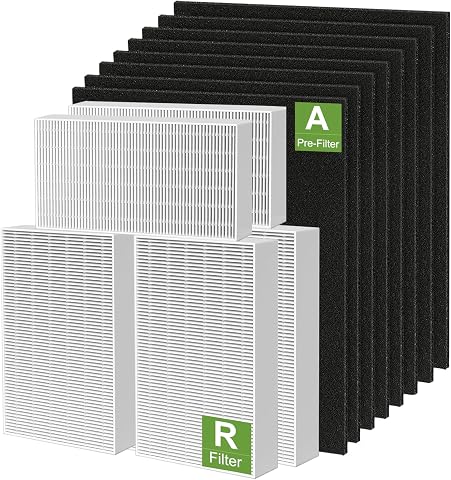
- Aprilaire 1410 is the straightforward particle-filtration pick: its MERV 11 filter makes it a clear fit for buyers who want a conventional whole-house air cleaner in a 16 x 25-inch format.
- Honeywell F300E1019 takes a different route: it is an electronic air cleaner, so buyers should weigh that approach against the replaceable-filter setup of the Aprilaire.
- UV and PCO models target different priorities: the Honeywell UV Air Purifier, REKO Lighting R2000, and Air Health Haven Plus add treatment technologies, with the Haven Plus also listing carbon filtration.
- The 24V ozone-free scrubber and Ductworx system are not interchangeable with a standard filter cabinet: confirm their installation method and HVAC compatibility before choosing them.
- Fit and service needs shape the ranking: matching the unit to the return duct, available space, airflow, and a realistic maintenance plan matters more than choosing the option with the longest feature list.
| Honeywell F300E1019 Electronic Air Cleaner, 16 x 25 Inches, Gray | 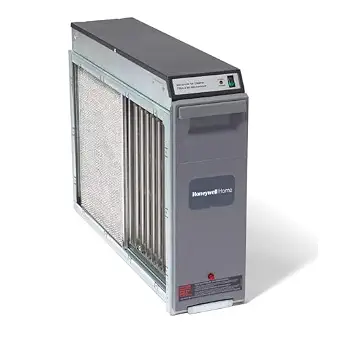 | Best for Low-Resistance Particle Capture | Model: F300E1019 | Nominal size: 16 x 25 inches | Product dimensions: 4.06 x 11.22 x 9.17 inches (D x W x H) | VIEW ON AMAZON | See Our Full Breakdown |
| Honeywell UV Air Purifier with AirBRITE Odor Absorption (UV2400U5000) |  | Best for Odor and VOC Treatment | Model: UV2400U5000 | Voltage: 24V | Technology: UV air purification | VIEW ON AMAZON | See Our Full Breakdown |
| 24V Ozone-Free HVAC Duct-Mount Whole-Home Air Scrubber |  | Best for Large Homes | Power: 24V | Mounting: HVAC duct mount | Coverage: Up to 3,000 sq. ft. | VIEW ON AMAZON | See Our Full Breakdown |
| Air Health Haven Plus HVAC Air Purifier with 16-Inch UV-C Light, PCO Technology, and Carbon Filtration |  | Best Multi-Stage Treatment | UV-C lamp: 16-inch, 30-watt | Output wavelength: 253.7 nm | Treatment: UV-C, PCO technology, and permanent self-cleaning carbon filters | VIEW ON AMAZON | See Our Full Breakdown |
| Ductworx HVAC Air Purification Enhancement System |  | Best for Existing HVAC Integrations | System type: HVAC air purification enhancement system | Installation location: Heating and cooling ducts | Compatibility: Designed to integrate with existing HVAC setups | VIEW ON AMAZON | See Our Full Breakdown |
| REKO Lighting R2000 Dual UV-C Air Purifier for HVAC Ducts |  | Best Dual-Lamp UV-C Pick | Lamp type: Dual UV-C | Wavelength: 253.7 nm | Compatible air systems: 1–5 tons | VIEW ON AMAZON | See Our Full Breakdown |
| Aprilaire 1410 Whole-House Air Cleaner with MERV 11 Filter, 16 x 25 in. |  | Best for Particle Capture | Model: 1410 | Filter class: MERV 11 | Filter area: 28.3 sq. ft. | VIEW ON AMAZON | See Our Full Breakdown |
More Details on Our Top Picks
Honeywell F300E1019 Electronic Air Cleaner, 16 x 25 Inches, Gray
I’d put the Honeywell F300E1019 first for buyers who need a return-side cleaner built for a forced-air system and want particle capture without much added airflow resistance. It is designed for gas, oil, and electric furnaces and air conditioners, and the supplied description says it captures up to 98% of particles passing through. Its post-filter adds another treatment stage, while the low pressure drop may suit systems where preserving airflow matters. Compared with the Aprilaire 1410, which uses a MERV 11 filter, this electronic cleaner is the more specialized choice; the Aprilaire offers a conventional filter approach. The tradeoffs are fit and upkeep: duct dimensions must match one of four sizes, and no warranty is included. I’d verify cabinet dimensions and installation compatibility before choosing it.
Pros:- Captures up to 98% of particles passing through, according to the product description
- Includes a performance-enhancing post-filter
- Designed for gas, oil, and electric forced-air systems
- Very low pressure drop
Cons:- No warranty is included
- Compatibility depends on matching the cleaner size to duct dimensions
Best for: Homeowners with a compatible forced-air return who prioritize particle capture and low added airflow resistance.
Not ideal for: Buyers who need a clearly stated warranty or cannot confirm that the 16 x 25-inch size fits their ductwork.
- Model:F300E1019
- Nominal size:16 x 25 inches
- Product dimensions:4.06 x 11.22 x 9.17 inches (D x W x H)
- Particle retention size:1 micron
- Particle capture:Up to 98% of particles passing through (product description)
- Power source:Corded electric
- Compatible systems:Forced-air gas, oil, and electric furnaces and air conditioning systems
- Warranty:No warranty included
Our verdict“Choose this Honeywell when its cabinet fits your return and low-resistance particle capture matters more than warranty coverage.”
Honeywell UV Air Purifier with AirBRITE Odor Absorption (UV2400U5000)
The Honeywell UV2400U5000 has a narrower job than the F300E1019: its supplied details focus on odor absorption and VOC reduction, not a quantified particle-capture rate. That makes it a possible fit for ducted systems where household smells or volatile compounds are the main concern, while the Aprilaire 1410 is the clearer option in this group for buyers seeking a specified MERV-rated particle filter. The UV lamp runs continuously and calls for annual replacement, giving owners a predictable maintenance interval but an ongoing task. I’d rank this below the more fully specified HVAC treatments because the source provides little detail on installation, airflow, or coverage. It may complement a broader filtration plan, but the available information does not show that it can replace one.
Pros:- AirBRITE technology is described as absorbing odors
- Designed to reduce VOCs
- Uses a 24V power supply
- Annual lamp replacement provides a stated maintenance interval
Cons:- Lamp requires annual replacement
- Product data provides limited detail about coverage and installation
- No particle-capture rate is provided
Best for: Homeowners with a compatible 24V HVAC setup who chiefly want duct-mounted odor absorption and VOC reduction.
Not ideal for: Buyers seeking documented particle-removal performance, coverage details, or extensive installation specifications.
- Model:UV2400U5000
- Voltage:24V
- Technology:UV air purification
- Odor function:AirBRITE odor absorption
- VOC function:Designed to reduce volatile organic compounds
- Lamp operation:Continuous
- Lamp maintenance:Replace annually
Our verdict“Consider this Honeywell for odor and VOC treatment in a compatible ducted system, while relying on a specified filter for particle removal.”
24V Ozone-Free HVAC Duct-Mount Whole-Home Air Scrubber
For a larger ducted home, this 24V air scrubber stands out for its stated coverage of up to 3,000 square feet and zero-ozone design. It mounts in the HVAC duct, so treatment is aimed at air moving through the central system rather than at a single room. Compared with the Honeywell UV2400U5000, which is described mainly in terms of odors and VOCs, this model gives buyers a clearer whole-home coverage figure. That figure does not establish a particle-capture rate, though, and the source provides fewer treatment details than the Air Health Haven Plus, which specifies UV-C, PCO, and carbon stages. Professional installation is recommended, and its cell bulbs need replacement within two years. I’d favor it when coverage and ozone-free operation are priorities and installation help is available.
Pros:- Designed for whole-home HVAC duct installation
- Rated for spaces up to 3,000 square feet
- Certified to produce zero ozone
- Mounting hardware and an installation manual are included
Cons:- Professional installation is recommended
- Cell bulbs require replacement within two years
- No particle-capture rate is supplied
Best for: Owners of larger homes with central HVAC who want a duct-mounted, zero-ozone treatment unit and can arrange installation.
Not ideal for: DIY buyers seeking a clearly detailed treatment method or homeowners who need a stated particle-removal rate.
- Power:24V
- Mounting:HVAC duct mount
- Coverage:Up to 3,000 sq. ft.
- Ozone:Zero ozone
- Cell bulb replacement:Within 2 years
- Included:Air scrubber unit, mounting hardware, and installation manual
- Installation guidance:Professional installation recommended
Our verdict“Pick this scrubber for a large central-HVAC home when its stated coverage and zero-ozone design outweigh the need for DIY simplicity or particle-capture data.”
Air Health Haven Plus HVAC Air Purifier with 16-Inch UV-C Light, PCO Technology, and Carbon Filtration
The Air Health Haven Plus offers the broadest stated mix of treatment methods here: UV-C, PCO, and permanent self-cleaning carbon filters. That combination is aimed at microorganisms, VOCs, and odors as air moves through the duct, giving it a wider stated treatment scope than the odor-focused Honeywell UV2400U5000. It also comes with mounting hardware and a hole saw, and its roughly 15-minute installation claim makes it more approachable for a capable DIY owner than the 24V Ozone-Free HVAC Air Scrubber, for which professional installation is recommended. The tradeoff is that installation still requires cutting into the duct, while the lamp warranty lasts only 90 days despite a 10-year limited warranty on the unit. I’d choose it for multi-stage treatment when those installation and lamp-coverage limits are acceptable.
Pros:- Combines UV-C, PCO, and permanent self-cleaning carbon filtration
- Designed to address microorganisms, VOCs, and odors
- Includes mounting hardware and a hole saw
- Does not produce ozone
Cons:- Requires installation in the HVAC duct system
- Lamp warranty is limited to 90 days
- The supplied details do not state a particle-capture rate
Best for: DIY-minded homeowners who want UV-C, PCO, and carbon treatment in one duct-mounted unit, with stated odor and VOC coverage.
Not ideal for: Buyers who want a simple return filter replacement, cannot modify their ductwork, or need longer lamp warranty coverage.
- UV-C lamp:16-inch, 30-watt
- Output wavelength:253.7 nm
- Treatment:UV-C, PCO technology, and permanent self-cleaning carbon filters
- Installation:About 15 minutes; compatible with metal or duct board
- Ozone production:Does not produce ozone
- Unit warranty:10 years limited
- Lamp warranty:90 days
- Included components:Manifold, ballast, UV-C lamp, carbon filters, hole saw, mounting plate, and hardware
Our verdict“Choose the Haven Plus for ducted multi-stage treatment if you can handle the duct installation and accept the short lamp warranty.”
Ductworx HVAC Air Purification Enhancement System
The Ductworx HVAC Air Purification Enhancement System is the least documented choice in this group, so I’d place it behind the models with defined treatment methods and specifications. Its described strength is integration with existing HVAC setups, which may appeal to owners looking to add duct-based treatment without choosing a standalone room unit. Compared with the Honeywell F300E1019, however, Ductworx has no supplied particle-capture figure or cabinet dimensions to help confirm return-side fit. The product description also leaves its specific purification technology unclear, making direct comparison with the UV-C and carbon stages in the Air Health Haven Plus difficult. The claimed low-maintenance design is attractive, but possible pressure drop and potential need for professional installation complicate the fit. I’d only shortlist it after confirming compatibility and treatment details with the seller or installer.
Pros:- Designed to integrate with existing HVAC setups
- Treats air within heating and cooling ducts
- Described as low maintenance
- Compatible with popular purification technologies, according to the product data
Cons:- No technical specifications are supplied for dimensions, power, or filtration performance
- May require professional installation
- May slightly increase system pressure drop
Best for: Homeowners with an existing HVAC system who have installer or seller support to confirm fit and the unit’s treatment method.
Not ideal for: Buyers who need published filtration specifications, known dimensions, or clear evidence of how the unit treats contaminants.
- System type:HVAC air purification enhancement system
- Installation location:Heating and cooling ducts
- Compatibility:Designed to integrate with existing HVAC setups
- Maintenance:Described as low maintenance
- Installation guidance:May require professional installation
- Airflow consideration:Potential slight increase in system pressure drop
Our verdict“Shortlist Ductworx only if an installer can verify its duct fit and treatment details for your system.”
REKO Lighting R2000 Dual UV-C Air Purifier for HVAC Ducts
The R2000’s dual UV-C lamps make it a fit for ducted systems where a homeowner wants ultraviolet treatment inside the HVAC pathway. It is rated for 1–5 ton air systems and uses 253.7 nm lamps, while the Aprilaire 1410 takes a different approach: its MERV 11 filter captures particles such as dust, pollen, and pet dander. That distinction matters because the R2000 is a duct-mounted UV-C unit, not a substitute for a particle filter. Its 10-foot cord and included mounting hardware give installers useful reach and a defined mounting setup, but installation requires cutting two 1.75-inch holes in the duct. Compared with the Honeywell UV Air Purifier with AirBRITE Odor Absorption, this model’s listed strengths center on its two lamps and duct fit; the product data does not specify odor media or particle capture.
Pros:- Dual UV-C lamps for in-duct installation
- Specified for HVAC systems rated 1–5 tons
- Includes a template and self-drilling mounting screws
- 10-foot power cord with plug
Cons:- Installation requires cutting two 1.75-inch holes in the duct
- Must be mounted inside an HVAC duct
- Product data does not specify particle filtration or odor absorption
Best for: Homeowners with a 1–5 ton ducted HVAC system who want a dual-lamp UV-C unit and can arrange in-duct installation.
Not ideal for: Renters or homeowners who cannot cut into ductwork, or buyers seeking a specified MERV-rated particle filter in the same unit.
- Lamp type:Dual UV-C
- Wavelength:253.7 nm
- Compatible air systems:1–5 tons
- Voltage:120V
- Frequency:50/60 Hz
- In-duct dimension:8 inches
- Power cord:10 feet
- Installation:Two 1.75-inch holes; template and self-drilling screws included
Our verdict“Choose the R2000 for dual-lamp UV-C treatment in a compatible ducted system if you can accommodate in-duct installation.”
Aprilaire 1410 Whole-House Air Cleaner with MERV 11 Filter, 16 x 25 in.
The Aprilaire 1410 stands apart from the R2000 because it uses a MERV 11 pleated filter to capture listed particles including dust, pollen, pet dander, and smoke. For buyers focused on circulating airborne particles through a ducted system, that gives it a clearer filtration role than the R2000’s UV-C lamps. Its 28.3-square-foot filter area is designed to limit airflow restriction, and the self-sealing design helps keep air from bypassing the filter. The cabinet is 6.75 inches wide and made of galvanized steel. The tradeoff is ongoing filter replacement: the included filter is described as lasting about a year under typical use, and a MERV 13 replacement is mentioned but does not come standard. Unlike the UV-based Honeywell UV Air Purifier with AirBRITE Odor Absorption, the Aprilaire’s listed approach is particle filtration rather than UV-C treatment.
Pros:- MERV 11 filter captures several common airborne particles
- Self-sealing design helps reduce unfiltered air bypass
- 28.3-square-foot filter area is designed for low airflow restriction
- Filter replacement is described as fast and simple
Cons:- Disposable filter requires periodic replacement
- MERV 13 replacement filter is not included as standard
- Particle filtration does not provide the UV-C approach offered by duct-mounted UV models
Best for: Households with ducted HVAC that want a whole-house filter for common particles such as dust, pollen, and pet dander.
Not ideal for: Buyers who want UV-C treatment or who prefer a system without periodic disposable-filter replacement.
- Model:1410
- Filter class:MERV 11
- Filter area:28.3 sq. ft.
- Particle retention size:1 micron
- Contaminants filtered:Dust, pet dander, pollen, smoke
- Cabinet width:6.75 in.
- Cabinet material:Galvanized steel
- Filter replacement interval:About once a year under typical use
Our verdict“Choose the Aprilaire 1410 if particle capture is your priority and you are comfortable replacing its filter about once a year.”

How We Picked
I compared the seven options by the job each is designed to do in a ducted return-air setup: capture particles with a filter, clean air electronically, or add UV, PCO, carbon, or scrubber treatment. I gave priority to clearly stated features, recognizable filter specifications, and how directly each product appears to fit a whole-house HVAC installation. The Aprilaire 1410 ranks first for its defined MERV 11 filtration and 16 x 25-inch format; Honeywell’s F300E1019 follows as a distinct electronic alternative. Products with UV or combined treatment features earn consideration for buyers with those priorities, but their fit and servicing requirements need closer checking.
This is a feature and use-case comparison, not a claim of independently measured cleaning performance. Product names and supplied details do not establish airflow impact, duct dimensions beyond those stated, installation complexity, or ongoing component costs. I treat those unknowns as real buyer tradeoffs rather than filling them in with assumptions, and recommend verifying system specifications and installation needs before purchase.
Factors to Consider When Choosing Return Air Purifier For Ducted System
Choosing a return-air purifier starts with the HVAC system it must work inside. These factors can help you compare technologies and avoid selecting a unit that conflicts with your ductwork, airflow needs, or maintenance habits.
Match the Unit to the Return Duct
Measure the available opening and installation space, then compare them with the product’s required dimensions and mounting arrangement. A stated 16 x 25-inch size may describe a filter or cabinet format, so check the product documentation for the exact measurement reference. Also inspect clearance around the unit for filter access, wiring, or lamp replacement. A tight fit can turn routine service into a recurring hassle. Ask an HVAC professional to check compatibility if the return plenum or system layout is unusual.
Choose the Treatment Type for Your Main Concern
Particle filters, electronic cleaners, UV-C lamps, PCO systems, and carbon media serve different roles, so compare the treatment method with the concern you want to address. A MERV rating describes a filter’s particle-capture classification; it does not describe UV or odor treatment. UV and PCO features add another mechanism, but their presence alone does not show how much benefit a specific installation will deliver. Carbon media is relevant to buyers focused on certain odors, though media amount and replacement intervals need checking. Avoid treating a longer feature list as proof that one unit handles every air-quality concern.
Check Airflow and HVAC Compatibility
Any device placed in a return path needs to work with the blower and duct design. A restrictive filter or poorly sized cabinet can affect airflow, so confirm the system’s approved filter dimensions and pressure-drop limits before upgrading. For electronic or lamp-based devices, check electrical requirements, clearances, and whether the equipment operates with the existing HVAC controls. A 24V label is only one compatibility detail; verify wiring and control requirements in the manual. When those specifications are unclear, a qualified HVAC installer can assess the system before purchase.
Plan for Maintenance Before You Buy
Each treatment type creates a different service routine. Filter-based units need periodic filter inspection and replacement, while electronic collectors and UV lamps may have cleaning or component replacement schedules. Carbon media also has a finite service life, and the right interval depends on the product instructions and use conditions. Check how components are accessed and whether the needed replacements are readily available. The easiest unit to maintain is often the one that will stay in service as intended.
Know What the Product Claims Can and Cannot Tell You
Names such as air scrubber or purifier describe a category, not a guaranteed result in every home. Look for clear documentation on tested performance, compatible airflow, coverage assumptions, and replacement parts. If a listing gives few technical details, do not infer efficacy from a product label or technology name alone. For concerns such as smoke, allergens, or odors, identify which pollutants the device is designed to address and whether source control or ventilation is also needed. This keeps the purchase tied to a stated need instead of a broad promise.
Decide When a More Complex System Is Worth It
A basic filter cabinet may suit buyers who want familiar particle filtration and a simple service plan. Added UV, PCO, electronic, or carbon features can make sense when their specific function matters and the buyer is prepared to maintain the extra components. Compare the full ownership demands, including inspections, replacement parts, and installation constraints, rather than focusing only on what is built into the unit. If your main goal is clearer particle filtration, added treatment methods may not be necessary. If you have a specific odor or treatment concern, first verify that the product documentation addresses it.
Frequently Asked Questions
Can I install a return-air purifier in any ducted HVAC system?
No single unit fits every system. Cabinet dimensions, return-duct layout, blower capacity, electrical supply, and control wiring can all limit compatibility. Check the manufacturer’s installation requirements against your equipment before ordering. If the product requires duct modification or electrical work, have an HVAC professional confirm the installation plan.
Should I choose a MERV filter or a UV purifier for my return duct?
That depends on what you want the device to do. A MERV-rated filter is classified for capturing particles, while a UV purifier uses light as an additional treatment method; the specifications are not directly comparable. Check whether your HVAC system can accommodate the filter’s airflow requirements and whether the UV unit’s installation and lamp service suit your setup. Some homes may use more than one approach, but compatibility and the product’s documented purpose should guide that decision.
Will a return-air purifier remove odors throughout my home?
Odor reduction depends on the odor source, how air moves through the system, and the treatment media or technology used. Carbon filtration is specifically listed on the Air Health Haven Plus, but the presence of carbon does not establish how much odor it will remove or for how long. Ask for documentation about media capacity and replacement intervals, and address persistent odors at their source where possible. A duct-mounted unit should not be treated as a substitute for ventilation or source control.
How do I know whether a purifier could restrict HVAC airflow?
Check the purifier’s airflow and pressure-drop information alongside the HVAC manufacturer’s requirements for filters and accessories. A filter that is too restrictive for a particular blower or installation can interfere with system performance. Product descriptions may not provide enough data to make that determination. If the specifications are missing or unclear, ask an HVAC technician to check static pressure and system compatibility before installation.
What maintenance should I expect from a duct-mounted air purifier?
Expect a schedule tied to the treatment method: filters need inspection and replacement, electronic collectors may need cleaning, and UV lamps or carbon media may require periodic replacement. The exact intervals vary by model and operating conditions, so follow the product manual rather than relying on a generic calendar. Before buying, confirm that replacement components can be sourced and that the unit can be accessed without major duct work. A maintenance plan that fits your routine is more useful than features you cannot keep serviced.
Conclusion
For a clear whole-house particle-filtering choice, I recommend the Aprilaire 1410 as best overall, with the Honeywell F300E1019 as the main alternative for buyers who prefer an electronic air cleaner. The Aprilaire is also my best for beginners among these picks because its MERV 11 filter makes its role easy to understand, though installation and system fit still need checking. I would consider the Air Health Haven Plus the best premium-style option for buyers seeking UV-C, PCO, and carbon in one system, provided its service needs suit their plans. For a value-focused choice, compare the REKO Lighting R2000 and 24V ozone-free scrubber against your duct and electrical requirements; the available feature descriptions do not establish total ownership costs. Choose the Honeywell UV Air Purifier or Ductworx when their specific configuration matches your HVAC setup, and confirm all fit and performance details before ordering.
Halloween Picks
halloween
As an affiliate, we earn on qualifying purchases.